
Main Courses
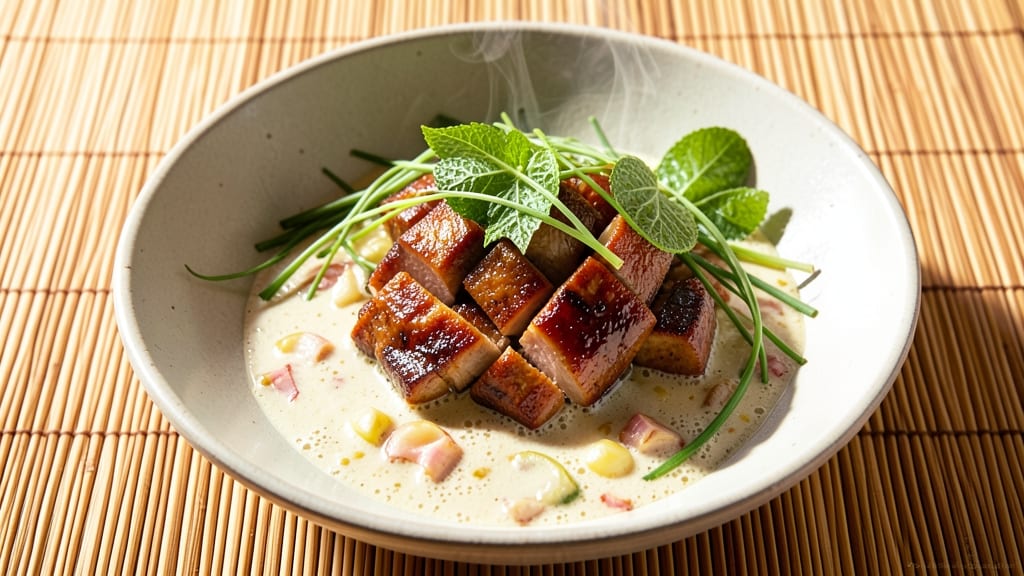
Mastering this pork lauya recipe means bringing the aromatic essence of Thailand to your kitchen with its signature silky coconut curry and fragrant herbs.
Growing up in small-town Georgia, I never imagined pork would lead me to this rich, herbaceous dish—but after apprenticing under Master Chef Chen, I learned how versatile pork truly is when paired with global flavors.
The secret lies in balancing coconut milk's creaminess with lemongrass, galangal, and kaffir lime leaves for that authentic Thai depth.
This dish transforms tender pork into melt-in-your-mouth bites wrapped in banana leaves, steamed until perfectly tender. The coconut curry base simmers until velvety, infused with ginger and garlic, while the herbs add layers of brightness.
Unlike traditional Thai curries, this version keeps the pork juicy and the sauce cohesive—no separation or overly spicy surprises. My heritage Gloucestershire Old Spots pigs provide the ideal fat-to-lean ratio for this technique.
What you’ll achieve is a restaurant-quality meal that’s equally impressive for weeknight dinners or special occasions. The banana leaves impart a subtle earthy aroma, while the curry’s rich texture coats every bite.
Serve it with jasmine rice to soak up the fragrant sauce or pair it with a simple cucumber salad for balance. This recipe bridges my Southern roots with Thai flavors, proving pork’s universal appeal.
The beauty of pork lauya lies in its adaptability—swap in shrimp or chicken, adjust the spice level, or even make it ahead. The key is patience: letting the curry develop its complexity and the pork absorb the flavors.
Trust the process, and you’ll have a dish that transports your guests without leaving your kitchen. Let’s bring this Thai-inspired curry to life.
Ingredients for pork lauya
Pantry staples meet exotic flavors—here's what brings Thai-inspired pork lauya to life.
| Ingredient | Amount | Notes |
|---|---|---|
| Gloucestershire Old Spots Pork Shoulder 🥩 | 1 ½ lb | Cut into 1.5-inch cubes |
| Coconut Milk 🥥 | 1 can (13.5 oz) | Full-fat, unsweetened |
| Fresh Lemongrass 🌿 | 3 stems | Bruised and cut into 2-inch pieces |
| Galangal Root 🍃 | 1 inch | Peeled and sliced thin |
| Kaffir Lime Leaves 🍋 | 4 whole | Torn into quarters |
| Fresh Ginger Root 🧅 | 1 inch | Peeled and sliced |
| Garlic Cloves 🧄 | 6 cloves | Minced |
| Green Curry Paste 🌶️ | 2 tbsp | Store-bought or homemade |
| Fish Sauce 🍶 | 1 tbsp | Red Boat preferred |
| Brown Sugar 🍚 | 1 tbsp | Light or dark |
| Banana Leaves 🌿 | 4 whole | For wrapping pork |
| Jasmine Rice 🍚 | 1 ½ cups | Uncooked |
| Vegetable Oil 🫒 | 2 tbsp | For searing |
| Salt 🧂 | 1 tsp | Kosher or sea salt |
| Black Pepper 🌶️ | ½ tsp | Freshly ground |
The pork matters most. Gloucestershire Old Spots gives you that perfect fat-to-lean ratio, but any tender pork shoulder works. Look for good marbling at Whole Foods or your local butcher—they’ll cut it for you if you ask. Fresh herbs are non-negotiable here: lemongrass and kaffir lime leaves should smell vibrant, not wilted. Galangal’s hard to find? Ginger works in a pinch, but it’s not the same. For the coconut milk, grab the full-fat canned kind—none of that light stuff. And if you can’t find banana leaves, parchment paper works for wrapping, though it lacks that authentic aroma.
No lemongrass? Substitute lime zest plus a splash of lime juice—it won’t be identical, but close. Galangal missing? Ginger plus a pinch of turmeric mimics the earthy notes. Fish sauce can be swapped for soy sauce plus a dash of MSG if you’re avoiding it. The curry paste is the flavor backbone—Maesri or Thai Kitchen brands work perfectly. For extra richness, stir in a spoonful of peanut butter at the end. And if you’re short on time, pre-cut pork cubes from the deli section save prep work.
This curry tastes even better the next day—make extra and freeze portions. Store the cooked pork in the sauce for 4-5 days in the fridge, or freeze for 3 months. The rice reheats beautifully, but keep the banana leaves separate—they crisp up when warmed. For serving, I always garnish with extra lime wedges and fresh cilantro. The sauce thickens as it cools, so add a splash of water if it gets too stiff. Trust me, the leftovers are just as delicious.
Why You'll Love This Recipe
- One-Pot Magic: I swear by this—just toss the pork shoulder in a pot with coconut milk, lemongrass, and galangal, then let it simmer. No chopping boards to clear, no extra pans to wash. That’s my kind of cooking.
- Taste Like a Secret: The galangal and kaffir lime leaves give it this bright, herbal punch that’s not too heavy. It’s rich but never greasy, and the pork just falls apart—like a hug in a bowl.
- Leftovers That Work: This makes way more than you’ll eat in one go, and the flavor actually gets better the next day. I freeze portions for lazy nights when I don’t want to cook.
- Budget-Friendly Luxury: Pork shoulder is cheap, but it feels fancy. The coconut milk and fresh herbs make it taste like a restaurant dish, not a weeknight meal. Honestly, it’s my go-to for feeding friends without breaking the bank.
Step-by-step instructions for pork lauya recipe
Here's how to create this aromatic Thai-inspired dish with tender pork and fragrant coconut.
Prepare the Pork and Aromatics
Begin by cutting the 1.5 lb Gloucestershire Old Spots pork shoulder into 1.5-inch cubes. Pat them dry with paper towels - this helps them sear properly. In a small bowl, combine the 2 tbsp green curry paste, 1 tbsp fish sauce, 1 tbsp brown sugar, 1 tsp salt, and 0.5 tsp black pepper. Mix well to create a flavorful marinade.
Heat 1 tbsp vegetable oil in a large skillet over medium-high heat. Add the pork cubes in a single layer and let them sear for 3-4 minutes until browned on all sides. Don't overcrowd the pan - work in batches if needed. Remove the pork and set aside. In the same skillet, add the remaining 1 tbsp vegetable oil and sauté the 6 minced garlic cloves, 1-inch sliced ginger root, 1-inch sliced galangal root, and 3 bruised lemongrass stems for 2 minutes until fragrant.
Build the Curry Base
Pour in the 1 can (13.5 oz) coconut milk and stir well to combine with the aromatics. Bring the mixture to a gentle simmer over medium heat. Add the seared pork back to the skillet along with the 4 torn kaffir lime leaves. Let it cook uncovered for 20-25 minutes, stirring occasionally, until the pork is tender and the sauce has thickened slightly.
Here's where the magic happens: the coconut milk will begin to separate slightly, creating that characteristic Thai curry texture. You'll know it's ready when the pork easily pulls apart with a fork and the sauce coats the back of a spoon. Keep an eye on it - you want the pork tender but not falling apart completely.
Prepare the Banana Leaf Wraps
While the pork cooks, prepare the banana leaves. Soak each of the 4 whole banana leaves in hot water for about 10 seconds to make them pliable, then pat dry with a clean towel. Lay each leaf flat on your work surface and arrange about ¼ of the cooked pork mixture in the center of each leaf. Fold the sides inward, then roll tightly from the bottom up, tucking in the ends to create secure bundles.
Real talk: this step might feel awkward at first, but don't worry about perfect wrapping. The important part is that the pork stays contained while it finishes cooking. If you're short on time, you can skip the wrapping and serve the pork mixture over rice instead.
Cook the Jasmine Rice
Rinse the 1.5 cups jasmine rice under cold water until the water runs clear. This removes excess starch and prevents gummy rice. Combine the rice with 3 cups of water in a pot and bring to a boil. Once boiling, reduce heat to low, cover, and simmer for 15 minutes. Then turn off the heat and let it steam, covered, for another 10 minutes. Fluff with a fork before serving.
For perfectly cooked rice, I've found this method works every time. The initial rinse removes impurities, and the two-stage cooking process ensures fluffy grains. Don't peek while it cooks - every time you lift the lid, you release steam and potentially alter the texture.
Serve the Pork Lauya
Unwrap the banana leaf bundles and arrange them on a serving platter. Spoon any remaining sauce from the skillet over the top. Serve the wrapped pork immediately alongside the jasmine rice. The banana leaves add a subtle sweetness that complements the rich curry flavors beautifully.
Each bite should deliver tender pork infused with aromatic herbs, creamy coconut milk, and just the right amount of spice. The banana leaves not only enhance the flavor but also make for an impressive presentation. Don't forget to garnish with fresh kaffir lime leaves if you have any left - they add a lovely visual touch and a citrusy aroma.
Pro Tips For Making Pork Lauya
- BLANCH THE GALANGAL: Toss the sliced galangal in boiling water for 30 seconds first—this softens it just enough to release its citrusy punch without turning the stew into mush. I used to skip it, and the root would either stay rock-hard or disintegrate into the sauce. (Yes, even if you’re impatient like me.)
- SEAR THE PORK HARD: Crank the heat to medium-high and let those pork shoulder slices develop a deep brown crust for 3-4 minutes per side. The Maillard reaction here isn’t just for looks—it’s the foundation of the dish’s depth. I learned this the hard way after making a pale, bland lauya that tasted more like boiled pork than anything else.
- STRAIN THE COCONUT MILK: Unless you’re using ultra-creamy canned milk, give it a quick strain through a fine-mesh sieve after simmering. The curds that rise to the top can make your lauya grainy, and no one wants that. (Pro move: Save the leftover coconut pulp for a smoothie—it’s not wasted.)
- CHAR THE LEMONGRASS: Lightly blacken the bottom of the lemongrass stalks over a gas flame or in a dry pan before adding them to the pot. That smoky note cuts through the richness of the coconut milk and pork fat, adding a layer of complexity. Sounds weird, but it works—and it’s faster than you’d think.
Make-ahead tips for this pork lauya
Curry Prep Ahead
Make the curry base 2 days ahead for deeper flavors. After building the sauce (Step 2), let it cool completely, then refrigerate in an airtight container. The coconut milk will thicken—just whisk in 2 tbsp water when reheating to restore creaminess.
I always double the batch because the leftovers reheat beautifully for lunches. 🌿
Pork Wrapping Shortcut
Prep the banana leaf bundles 1 day ahead and refrigerate unwrapped. When ready to cook, steam them in a bamboo steamer over boiling water for 10-12 minutes—they’ll soften perfectly. No banana leaves?
Use parchment paper for a quick substitute, though it lacks the authentic aroma. Store wrapped bundles in a single layer in an airtight container to prevent sticking. ❄️
Rice Make-Ahead
Cook the jasmine rice 1 day ahead and store at room temperature in an airtight container. Reheat by spreading it on a baking sheet and warming in a 350°F oven for 10 minutes—this prevents soggy rice.
For extra fluffiness, sprinkle with 1 tsp cold water before reheating. I keep a batch prepped in my fridge for busy weeknights. 🍚
Freezer-Friendly Sauce
Portion the curry sauce into freezer-safe bags, leaving 1-inch headspace for expansion. Thaw overnight in the fridge, then reheat gently on low heat while adding 2 tbsp water to prevent curdling.
The sauce keeps for 3 months—perfect for meal prep. Label bags with the date to track freshness. 🥥
Banana Leaf Storage
Store dry banana leaves in a cool, dark place (like your pantry) for up to 1 month. If they feel brittle, soak them in hot water for 30 seconds to revive. I keep a stash in my freezer too—just thaw them in a microwave for 10 seconds before using.
The leaves add that signature Thai aroma, so don’t skip them if you can find them! 🌿
Full-Meal Freezing
Freeze the wrapped pork lauya bundles uncooked for up to 2 months. When ready to cook, steam them for 20 minutes (no need to thaw first). The banana leaves will crisp slightly—just serve with fresh rice.
For a complete meal, freeze the curry sauce separately and reheat alongside the pork. This is my go-to for last-minute dinner parties. 💫
Nutrition facts
Frequently asked questions
What makes this pork lauya different from regular Thai curry?
This recipe uses banana leaf wrapping for steaming, which infuses the pork with a subtle sweet aroma and keeps it incredibly tender. The curry also balances coconut milk's creaminess with lemongrass, galangal, and kaffir lime leaves—herbs that create that signature Thai depth without being overly spicy. Most curries serve the sauce over rice, but here the pork absorbs all the flavors during wrapping.
Can I substitute the banana leaves with something else?
Yes! If you can't find banana leaves, use parchment paper for wrapping—it won't add aroma but works in a pinch. For extra flavor, try large cabbage leaves (blanched first) or even dutch oven lids for steaming. The key is keeping the pork contained while it finishes cooking. Just note the presentation won't be as authentic.
How do I adjust the spice level for sensitive eaters?
Start by reducing the green curry paste to 1 tbsp instead of 2. For milder heat, omit the fish sauce entirely and use soy sauce + ½ tsp sugar instead. Add the kaffir lime leaves last so you can remove them before serving if needed. The coconut milk naturally mellows the spice, so don't worry about overpowering the dish.
Can I make this recipe in a slow cooker?
Sear the pork first, then combine everything (except rice) in the slow cooker on low for 6-7 hours. The slow cooking enhances the flavors even more. For the banana leaf wrapping, steam the pork bundles separately in a bamboo steamer for 10 minutes before serving. The slow cooker version tastes richer because the aromatics infuse longer.
What's the best way to reheat leftovers?
For wrapped bundles, steam them for 8-10 minutes in a bamboo steamer over boiling water. If you stored the curry sauce separately, reheat it gently on low heat while adding 1-2 tbsp water to prevent curdling. The rice should be reheated in a dry skillet or oven at 350°F for 10 minutes to keep it fluffy. Leftovers actually taste better the next day!