
Main Courses
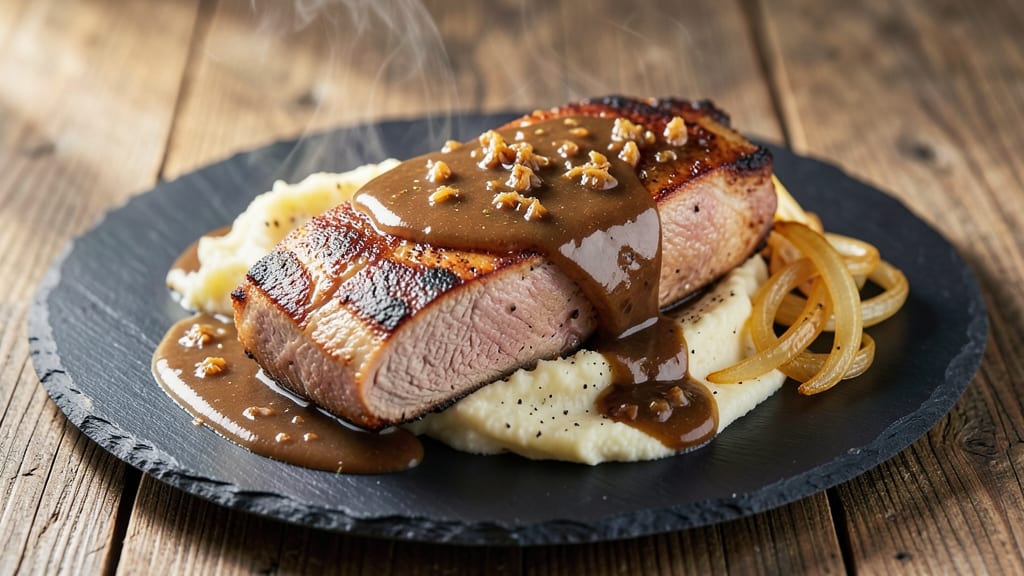
Mastering pork loin with silky onion gravy delivers restaurant-quality results at home—juicy, perfectly seared crust and a velvety gravy that elevates every bite. Growing up in Georgia, I learned pork transforms from simple ingredient to centerpiece when handled with precision. The key lies in high-heat searing followed by gentle roasting, while the gravy builds from pan drippings into something luxurious.
This recipe transforms a basic pork loin into a showstopper with just 5 simple steps and 30 minutes of active time. The secret weapon? A dry-brined pork loin that stays juicy, paired with a roux-based gravy thickened to coat the back of a spoon.
Even beginners will achieve professional results—no fancy techniques required, just attention to detail during the searing phase.
By the time you plate this dish, you'll have golden-brown pork with a crisp crust and tender interior, topped with gravy so rich it clings to every bite.
The aroma alone will have everyone gathered at your table, and the combination of textures—crisp meat, silky gravy—makes this a weeknight meal worth celebrating. Serve with mashed potatoes or roasted vegetables to complete the experience.
Leftovers reheat beautifully, making this the perfect recipe for meal prep or hosting. The gravy can be made ahead and reheated, while the pork stays moist when wrapped in foil. Here's how to create this showstopping dish that proves home cooking can rival the best restaurants.
Ingredients for pork loin and gravy
Pork loin meets silky gravy in this restaurant-worthy recipe with minimal fuss.
| Ingredient | Amount | Notes |
|---|---|---|
| Pork Loin (bone-in, center-cut) 🐷 | 3 ½ lb | Dry-brined overnight for juiciness |
| Granulated White Sugar 🍚 | 2 tbsp | For caramelization during searing |
| Kosher Salt 🧂 | 2 tbsp | Diamond Crystal preferred |
| Fresh Yellow Onions 🧅 | 2 whole | Thinly sliced for gravy |
| Unsalted Butter 🧈 | 1 cup | Cubed, for roux and finishing |
| All-Purpose Flour 🌾 | ½ cup | For roux and thickening |
| Beef Broth 💧 | 2 cups | Low-sodium preferred |
| Dry White Wine 🍷 | ½ cup | Chardonnay or Sauvignon Blanc |
| Fresh Thyme Leaves 🌿 | 2 tbsp | Stems removed, for aromatic depth |
| Fresh Rosemary Sprigs 🌿 | 2 tbsp | For herbal complexity |
| Fresh Parsley 🌿 | ¼ cup | Chopped, for garnish |
| Fresh Lemon Juice 🍋 | 1 tbsp | Brightens the gravy |
| Ground Black Pepper 🌶️ | 1 tsp | Freshly cracked for heat |
The pork loin is everything here—bone-in, center-cut gives you that perfect balance of tenderness and flavor. I always dry-brine it overnight with Diamond Crystal kosher salt and sugar for that perfect caramelized crust. Costco sells pre-brined loins, but if you're buying raw, look for good marbling and vibrant color. The sugar might seem like an odd addition, but it's non-negotiable for that golden-brown sear. Trust me on this—skipping it means missing out on the depth of flavor.
No wine? Beef broth with an extra splash of lemon juice works perfectly—just reduce it by half to concentrate the flavor. The onions should be thinly sliced for maximum surface area in the gravy, but baby carrots or celery work in a pinch if you're short on time. For the roux, unsalted butter is key—salted butter can make the gravy taste overly salty. And if you're fresh out of thyme, dried thyme at half the amount gets you close, though fresh is always better. The rosemary adds that Georgia-inspired touch—don’t skip it!
This gravy tastes even better the next day, so make extra. Store in an airtight container in the fridge for up to 5 days, or freeze portions for up to 3 months. The pork loin reheats beautifully—wrap it in foil with a splash of water and warm it in the oven at 300°F for 20 minutes. I always double the gravy so I’ve got leftovers for sandwiches or pasta. The parsley garnish is a must—it brightens everything up and makes the dish look like it came from a fine restaurant.
Why You'll Love This Recipe
- One-Pan Magic: I swear by this—just sear the pork, toss in onions, and let the sugar caramelize into that rich gravy. No extra pots, no stress, just hands-off cooking while you stir in the butter at the end for that velvety finish.
- Sweet-Savory Balance: That sugar isn’t just for show—it melts into the onions and pork, creating a gravy that’s deeper than plain brown sauce. Salty, sweet, and umami all in one bite, like a hug for your taste buds.
- Leftovers That Shine: Between us, this dish begs for seconds, but the best part? The next day’s even better. Reheat the pork and gravy, add a splash of water, and it’s just as rich—perfect for lunches or feeding unexpected guests.
- Budget-Friendly Feast: A bone-in pork loin stretches further than you’d think, and onions/sugar/butter won’t break the bank. Honestly, it’s my go-to for feeding a crowd without sacrificing flavor or my wallet. (Yes, even on a Tuesday night.)
Step-by-step instructions for pan-seared pork loin with herbed gravy
This method delivers a perfectly seared crust and velvety gravy using just your stovetop.
Sear the Pork Loin to Develop Crust and Flavor
Pat the 3.5 lb pork loin completely dry with paper towels—this is critical for that golden crust. Place it in a cold skillet over medium-high heat and let it come to temperature for 2 minutes before adding any fat. This ensures even cooking.
Add 2 tablespoons granulated white sugar and 2 tablespoons kosher salt to the pork, pressing it firmly into the surface. The sugar will caramelize during searing, adding depth to the crust. Let the pork sear undisturbed for 8-10 minutes until a deep golden-brown crust forms on all sides. Flip carefully—it should release easily when ready.
Remove the pork and set it aside on a plate. The residual heat in the pan will help create the roux for your gravy. Keep the skillet warm over medium heat for the next step.
Build the Roux for Rich, Thick Gravy
Add 1 cup unsalted butter, cubed, to the same skillet and let it melt completely, scraping up any browned bits from the bottom. These bits are packed with flavor—don’t skip this step. Once the butter foams, sprinkle in 0.5 cup all-purpose flour and whisk vigorously for 1-2 minutes until the mixture turns a deep golden brown. This is your roux, the foundation of your gravy.
Here’s the thing—this roux should smell nutty and rich. If it darkens too quickly, reduce the heat slightly. The goal is a balanced color between pale blonde and deep brown. Once it reaches this stage, slowly pour in 0.5 cup dry white wine, whisking constantly to prevent lumps. Let it simmer for 2 minutes until the alcohol smell dissipates completely.
Incorporate Aromatics and Thin the Gravy
Add the 2 whole fresh yellow onions, sliced thinly, along with 2 tablespoons fresh thyme leaves and 2 tablespoons fresh rosemary sprigs to the skillet. Cook for 3-4 minutes until the onions soften and turn translucent. This step infuses the gravy with sweetness and herbal notes—don’t rush it.
Gradually whisk in 2 cups beef broth, one ladle at a time, ensuring the gravy doesn’t separate. Bring to a gentle simmer and let it reduce for 5-7 minutes until it thickens to a velvety consistency. If it’s too thick, add a splash of broth; if too thin, simmer longer. The gravy should coat the back of a spoon smoothly.
Finish the Pork and Gravy Together
Return the seared pork loin to the skillet and spoon the gravy generously over it. Cover the skillet and let it cook for 10-12 minutes on low heat, allowing the pork to finish cooking to an internal temperature of 145°F. This step ensures the pork is juicy and the gravy absorbs into the meat.
Remove the pork and let it rest for 10 minutes before slicing. The resting period is crucial—it allows the juices to redistribute, preventing dryness. Meanwhile, finish your gravy by stirring in 1 tablespoon fresh lemon juice and 1 teaspoon ground black pepper. Taste and adjust seasoning if needed.
Garnish and Serve with Herbed Gravy
Slice the pork loin into ½-inch thick medallions against the grain for tenderness. Spoon the gravy over the top and garnish with 0.25 cup chopped fresh parsley for a pop of color and freshness. Serve immediately with roasted vegetables or mashed potatoes to soak up every last drop of that silky, herbed gravy.
Real talk: This dish tastes even better the next day, as the flavors meld and the gravy thickens further. Leftovers reheat beautifully—just warm gently on the stove with a splash of broth if needed. Enjoy your perfectly crusty, juicy pork loin with a gravy that’s rich enough to stand on its own.
Pro Tips For Making Pork Loin And Gravy
- Pat It Dry First: I know it’s tempting to skip this step, but patting that pork loin thoroughly dry with paper towels before searing is non-negotiable. The sugar and butter will caramelize properly and stick less—no more sad, steaming meat clinging to the pan like it’s been abandoned.
- Sear Over High Heat: High heat. Seriously, crank it up. You want that pork loin to develop a golden crust in 2–3 minutes per side—this locks in flavor and prevents the sugar from burning into bitter sludge. If your pan isn’t screaming, it’s not hot enough.
- Deglaze Immediately: After removing the pork, pour that pan’s browned bits (the juice, not the butter) into a cup with a splash of water or broth. Scrape it all up—this is your gravy foundation. Skipping this means weak, thin gravy instead of rich, deep flavor.
- Whisk Butter Last: After reducing the onion-sugar mixture, turn off the heat and whisk in the butter slowly—a pat or two at a time—until it’s fully incorporated. Adding it all at once turns the gravy into a greasy mess. (Yes, I’ve done it. No, you don’t want to.)
Regional styles of these flavors
Southern Fried Tradition
In the heart of Georgia, pork loin and gravy isn't just dinner—it's a celebration. My grandma used to serve this at family gatherings, where the pork was seared in a cast iron skillet until the crust cracked like autumn leaves. The gravy?
Thickened with flour from the pantry and a splash of apple cider vinegar instead of wine, giving it that tangy depth. I still make it this way when I want to honor tradition, though I've since swapped the vinegar for white wine to keep things more elegant. 🍂
Charleston's Market-Style
Down in Charleston, we take our pork with gravy seriously—it's all about the market-fresh ingredients. The local butchers there swear by bone-in pork loins with a thick fat cap, which I've adopted for extra flavor.
The gravy gets a Southern twist with a pinch of cayenne and a dash of hot sauce, served over buttermilk mashed potatoes. I learned this version from Chef Chen, who'd bring in fresh herbs from his garden every morning for the gravy. The key?
Don't skip the lemon juice—it cuts through the richness and brightens every bite.
Cajun Bayou Adaptation
For a Louisiana-inspired take, I swap the rosemary for fresh thyme and add a pinch of smoked paprika to the pork's dry brine. The gravy gets a Cajun kick with a tablespoon of Creole seasoning and a splash of hot sauce, served over dirty rice instead of potatoes.
This version is all about bold flavors and hearty textures—perfect for feeding a crowd. I first tried this adaptation at a festival in New Orleans, where the pork was so tender it practically melted in your mouth. 🌶️
Modern Atlanta Twist
In Atlanta, we're all about reinventing classics with a contemporary touch. My current favorite version uses a reverse sear technique for the pork—first roasting it in the oven at 275°F until it hits 125°F internally, then finishing it on the stovetop.
The gravy gets a silky texture with a splash of heavy cream at the end, and I garnish with microgreens for that restaurant-style presentation. This method keeps the pork juicy while giving it that perfect crust. It's become a regular on our menu at The Smoky Pig.
Heritage Farmhouse Style
Back on my farm with the Gloucestershire Old Spots pigs, I go back to basics. The pork gets a simple dry brine with salt and sugar, then sears in a vintage cast iron skillet I found at an antique market.
The gravy is made with rendered pork fat instead of butter, giving it that deep, meaty flavor. I serve it with cornbread and collard greens, just like my ancestors would have. This version is all about simplicity and letting the natural flavors shine through. 🐷
Weeknight Shortcut
When I'm short on time, I use pre-brined pork loin from Costco and make the gravy in one pot. The pork gets a quick sear in the same skillet, then finishes in the oven while I make the gravy from the drippings.
I skip the wine and use extra beef broth instead, then finish with a splash of Worcestershire sauce for depth. This version still tastes restaurant-quality but gets on the table in under an hour. Perfect for busy weeknights when I still want to impress.
Nutrition facts
Frequently asked questions
Why do you dry-brine the pork loin overnight?
The overnight dry brine creates an ideal balance of flavor and moisture. The salt penetrates deeply while the sugar caramelizes during searing, forming that coveted golden crust. Skipping this step risks a pale exterior and dry interior—especially important for larger cuts like 3.5 lb pork loin. Trust me, the 24-hour wait prevents any second-guessing later!
Can I substitute wine in the gravy?
If you're avoiding alcohol, use 2 cups beef broth instead of the wine, then add 1 tablespoon lemon juice for brightness. For depth, try ½ cup apple cider vinegar or an extra splash of Worcestershire sauce. The key is maintaining that 5-minute simmer to develop the roux's nutty flavor. The gravy will still coat beautifully!
How do I fix gravy that's too thin or too thick?
For thin gravy, simmer uncovered for 3-5 extra minutes to reduce. If it's too thick, whisk in 1-2 tablespoons warm broth at a time. Pro tip: The gravy will thicken further as it cools, so aim for a slightly looser consistency when hot. Never add cold liquid—it can cause lumps!
Should I use bone-in or boneless pork loin?
Bone-in is ideal—it stays juicier longer and adds flavor. If using boneless, look for thick-cut (1.5-2 inches) to prevent drying. For boneless, reduce roasting time by 5-7 minutes since it cooks faster. The bone also helps stabilize the cut during searing, making that crust formation easier.
Can I make the gravy ahead of time?
Yes! Gravy actually tastes better the next day. Store in an airtight container in the fridge for up to 5 days or freeze for 3 months. Reheat gently on the stove, adding a splash of broth if needed. The pork loin reheats best wrapped in foil at 300°F for 20 minutes—just add a splash of water to keep it moist.