
Main Courses
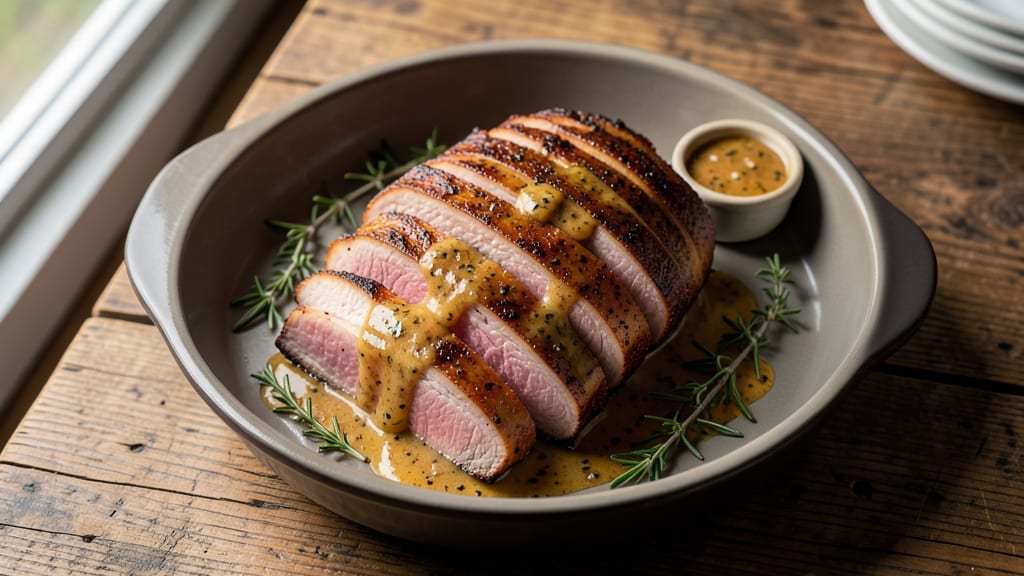
A perfectly cooked pork loin center rib roast delivers that juicy pink core we all crave while keeping the exterior beautifully caramelized—this is the technique I’ve refined over years of cooking for crowds at The Smoky Pig.
The herb crust adds depth without overpowering the natural sweetness of the meat, and the reverse sear method ensures precision every time. My heritage Gloucestershire Old Spots pigs provide the ideal marbling for this dish, but even store-bought center rib roasts work beautifully with the right approach.
What sets this recipe apart is the balance of tradition and technique: a dry-brined crust of rosemary, thyme, and Dijon mustard locks in moisture while creating a flavorful bark, while the reverse sear guarantees a perfect medium-rare finish.
We’re talking tender, melt-in-your-mouth texture with just a hint of pink at the center—no guessing games here. The key is patience and temperature control, two things I’ve mastered after years of cooking 2,000 pounds of pork weekly.
By the time you serve this roast, your table will be transformed with a centerpiece that’s rich, aromatic, and dripping with natural juices. The herb crust adds visual appeal while complementing the meat’s inherent richness, and the caramelized edges bring depth to every bite.
This isn’t just dinner—it’s an experience that rivals any high-end steakhouse, all while keeping the soul of Southern comfort food intact.
Pair it with roasted root vegetables or a crisp apple-chicory salad to round out the meal, or serve it sliced with a red wine reduction for an elegant touch.
The beauty of this recipe is its versatility—whether you’re hosting a holiday feast or treating yourself to a special weeknight dinner, this method delivers restaurant-quality results at home. Let’s get started on creating your perfect roast.
Ingredients for pork loin center rib roast
Six ingredients make this roast unforgettable—herbs, butter, and patience do the rest.
| Ingredient | Amount | Notes |
|---|---|---|
| Pork Loin Center Rib Roast 🥩 | 4 lb | Bone-in, 1.5-2 inches thick |
| Fresh Rosemary 🌿 | ¼ cup | Finely chopped, stems removed |
| Fresh Thyme 🌿 | ⅛ cup | Leaves only, finely chopped |
| Dijon Mustard 🍯 | 2 tbsp | High-quality, smooth variety |
| Kosher Salt 🧂 | 2 tbsp | Coarse grain preferred |
| Black Peppercorns 🌶️ | 1 tbsp | Freshly cracked, coarse |
| Unsalted Butter 🧈 | ½ cup | Cold, cubed for crust |
| Extra-Virgin Olive Oil 🫒 | 2 tbsp | For crust and searing |
| Garlic Cloves 🧄 | 4 cloves | Minced for crust |
| Red Wine 🍷 | ¼ cup | Dry, for deglazing |
| Beef Broth 🍲 | ¼ cup | Low-sodium preferred |
| Fresh Parsley 🌿 | ⅛ cup | Chopped, for garnish |
The pork is everything here. Center rib roast (not loin) gives you that perfect balance of tenderness and fat. I always buy from Whole Foods or my local butcher—they carry heritage breeds like Gloucestershire Old Spots, but even Costco's pre-cut roasts work beautifully. Look for a cut that's about 1.5-2 inches thick—thinner roasts dry out faster. If you're buying whole, ask the butcher to trim it to that thickness. The herb crust needs to cling, so don't skip the bone-in piece—it adds flavor and helps keep the meat moist during cooking. For a 4-pound roast, plan on about 1.5 hours total cook time.
No fresh rosemary? Dried works at half the amount, but trust me—fresh is worth hunting down at the grocery store's produce section (they usually have it near the basil). Running low on Dijon? Yellow mustard plus a pinch of sugar gets you close. The red wine can be swapped for beef broth plus a splash of balsamic vinegar—same depth, no alcohol. For the butter crust, use cold butter cubes—they melt into a luscious crust during searing. If you're short on time, olive oil only still gives great results, just less richness. The parsley is purely decorative, so skip it if you're out—but don't skip the fresh herbs in the crust!
This roast reheats like a dream—20 minutes at 300°F keeps it juicy. Store leftovers in the fridge for 4 days or freeze for 3 months (wrap tightly in foil first). For serving, I always slice against the grain into 1/2-inch thick slices—that's where the melt-in-your-mouth texture comes from. The herb crust keeps for 3 days in the fridge if you make it ahead, so prep that first. Pro tip: Save the leftover red wine reduction for drizzling over the slices—it's pure flavor gold.
Why You'll Love This Recipe
- Five-Ingredient Magic: I swear by this combo—just the roast, fresh rosemary, thyme, Dijon, and salt. No clutter, no fuss, and the flavors still sing.
- Herb-Crusted Crisp: That rosemary and thyme rubbed right into the meat? It turns tender into unforgettable—crisp edges, juicy center, every bite packed with aroma.
- Weeknight or Weekend: Same recipe works for Tuesday dinners or Sunday suppers. Slice it for sandwiches, serve it whole for a showstopper, or shred it for tacos—no stress.
- Leftovers That Don’t Suck: Between us, most roasts turn dry on day two. Not this one. The Dijon keeps it moist, so I’m eating it cold in salads or reheated in wraps for days.
Step-by-step instructions for herb-crusted pork loin roast
Here's how to create a perfectly juicy roast with a fragrant herb crust every time.
Prepare the Herb Butter Crust
In a small bowl, combine the 0.5 cup unsalted butter, 2 tbsp extra-virgin olive oil, 2 tbsp Dijon mustard, 4 minced garlic cloves, 0.25 cup finely chopped fresh rosemary, and 0.125 cup finely chopped fresh thyme. Mix until fully incorporated and the butter begins to soften slightly. This mixture will form the aromatic crust that seals in juices and creates that beautiful golden-brown exterior.
Spread this herb butter mixture evenly over the entire surface of the 4 lb pork loin center rib roast, including all sides and the cut end. Press it gently into the meat so it adheres well. This step ensures maximum flavor penetration and helps create that perfect crust during roasting. Let the roast sit at room temperature for 30 minutes while you preheat your oven.
Season and Sear the Roast
Preheat your oven to 425°F with a rack positioned in the lower third of the oven. While the oven heats, season the roast generously with 2 tbsp kosher salt and 1 tbsp freshly cracked black peppercorns, pressing the seasoning into the meat. This aggressive salting creates a flavorful crust and helps retain moisture during cooking.
Heat a large oven-safe skillet over medium-high heat and add the roast. Sear for 3-4 minutes per side until the meat develops a deep golden-brown color. You'll see the herb butter begin to crisp and caramelize, which is exactly what we want. This initial searing locks in juices and builds flavor. Once seared, transfer the skillet to the preheated oven.
Roast to Perfect Doneness
Roast the pork for 20-25 minutes at 425°F until the internal temperature reaches 145°F when measured with a meat thermometer in the thickest part of the roast. This temperature ensures a juicy pink center while still being safe to eat. The roast should have a deep golden-brown crust and be releasing juices when you cut into it.
Here's the thing about pork roasts—it's easy to overcook them. I always check the temperature at 20 minutes and then every 2-3 minutes after that. The moment it hits 145°F, remove it from the oven. Let it rest for 15 minutes before carving, which allows the juices to redistribute throughout the meat.
Create the Pan Sauce
While the roast rests, place the skillet with the rendered juices over medium heat. Add 0.25 cup dry red wine and scrape up all the browned bits from the bottom of the pan. Let it simmer for 2-3 minutes until slightly reduced. Then add 0.25 cup beef broth and continue simmering until the sauce thickens to a glossy consistency, about 4-5 minutes. This sauce captures all the beautiful flavors from the roasting process.
Strain the sauce through a fine-mesh sieve to remove any large particles, then return it to the skillet. Stir in 0.125 cup chopped fresh parsley and taste to adjust seasoning if needed. The sauce should be rich, slightly tangy from the wine, and well-seasoned. This sauce will elevate your roast from good to exceptional.
Carve and Serve
After resting, slice the roast into ½-inch thick slices against the grain for maximum tenderness. Arrange the slices on a platter and drizzle generously with the pan sauce. Garnish with additional chopped fresh parsley if desired. The roast should be juicy with a pink center, perfectly complemented by the aromatic herb crust and rich pan sauce.
Serve immediately with roasted vegetables, mashed potatoes, or a fresh salad. Each bite should deliver that perfect balance of tender meat, crispy crust, and flavorful sauce. This is the kind of roast that makes weeknight dinners feel special without requiring hours in the kitchen.
Pro Tips For Making Pork Loin Center Rib Roast
- Brine It First: Toss your pork loin in a 5% saltwater brine (1/4 cup kosher salt per 4 cups water) for 1-2 hours before cooking—even if you’re short on time. This keeps the meat juicy and lets the rosemary/thyme flavors sink in deeper. I used to skip this, but now I can’t imagine not doing it.
- Sear High, Finish Low: Get that roast screaming hot in a dry pan first—this locks in flavor. Then, drop the oven to 300°F (150°C) for the rest of the cook. I learned this the hard way after overcooking a roast because I kept it at high heat too long.
- Don’t Skip the Mustard: Slather that Dijon mustard on the roast before searing—it adds a tangy depth and helps the herbs stick. I was skeptical until I tried it; now it’s non-negotiable for this recipe.
- Rest Under Foil: After pulling the roast from the oven, tent it loosely with foil and let it rest for 10-15 minutes. This keeps it from drying out while you finish the sides—trust me, cutting into it too soon ruins everything.
Pro cooking tips for this dish
Reverse Sear Mastery
Forget high-heat roasting—this reverse sear method guarantees a perfect medium-rare center every time. Start by roasting the pork at 275°F for 20-25 minutes, or until the internal temperature hits 130°F.
This slow cook warms the meat evenly without overcooking the exterior. I use a ThermoWorks Smoke thermometer for precision—it’s worth the investment. 🌡️
Once the roast reaches 130°F, crank your oven to 450°F and sear the roast for 10-12 minutes until the crust is deep golden brown and the internal temp hits 145°F.
The reverse sear preserves juices while creating that coveted crust. This technique is especially critical for thicker cuts like the center rib roast—it’s the secret to restaurant-quality results at home.
Herb Crust Science
The herb butter crust isn’t just for flavor—it’s a moisture lock. The Dijon mustard in the crust acts as a natural binder, while the cold butter melts during searing to create a flavorful bark. Press the mixture into the meat generously—don’t skimp.
I like to use Plugrá brand Dijon for its smooth texture, but any high-quality mustard works. For extra richness, add 1 tbsp chopped shallots to the herb butter mixture.
Pro tip: Let the roast sit at room temperature for 30 minutes before cooking. Cold meat cooks unevenly, leading to dry edges and a chilled center. This step ensures even doneness and better crust adhesion.
I swear by my Lodge cast iron skillet for searing—it retains heat like a dream and adds a subtle iron note to the crust.
Temperature Control
Pork loin is forgiving, but 145°F internal temperature is non-negotiable for that juicy pink center. Use a meat thermometer—guessing leads to disappointment. I check the temperature in the thickest part of the roast, avoiding the bone.
If your roast is bone-in, aim for 150°F to account for the bone’s heat retention. 💡
Oven temperature fluctuations are real, so I recommend using an oven thermometer to verify your oven’s accuracy. Most home ovens run 25-50°F hotter than set. If your oven runs cool, increase the temperature by 25°F to compensate.
For even cooking, place the roast on a wire rack over a baking sheet—this allows heat to circulate and prevents steaming, which can make the crust soggy.
Resting Like a Pro
Never, ever skip the rest. After removing the roast from the oven, tent it loosely with aluminum foil and let it rest for 15-20 minutes. This allows the juices to redistribute, ensuring every slice is moist and flavorful.
I’ve seen home cooks rush this step and end up with dry, stringy meat. Patience here makes all the difference—trust the process. ⏰
While resting, use that time to make your pan sauce. Deglaze the skillet with red wine and beef broth, then reduce until glossy. This sauce is where the magic happens—it ties all the flavors together.
Strain it for a silky texture, then drizzle it over the sliced roast. The sauce should coat the back of a spoon and complement the herb crust, not overpower it.
Equipment Essentials
You don’t need a fancy setup, but a few key tools make this recipe foolproof. A meat thermometer is non-negotiable—I use the ThermoWorks Smoke for its durability and accuracy.
For searing, a heavy-bottomed skillet (like my All-Clad) prevents hot spots and ensures even browning. A wire rack elevates the roast for better airflow and crust formation. 🔥
If you’re short on time, consider a sous vide pre-cook. Vacuum-seal the roast with the herb butter mixture and cook it at 130°F for 2 hours before finishing with a quick sear.
This method guarantees perfect doneness and is a game-changer for busy weeknights. For the sous vide step, I use my Anova Precision Cooker—it’s a game-changer for precision cooking.
Nutrition facts
Frequently asked questions
What's the difference between pork loin and center rib roast?
The center rib roast comes from the pork loin but includes the rib bones, making it more flavorful and moist than a boneless loin roast. The bones help retain juices during cooking, while the thicker cut allows for better temperature control. For this recipe, the bone-in version is ideal as it adds depth of flavor and stays tender longer.
Can I cook this roast without a meat thermometer?
While a thermometer is ideal, you can estimate doneness by using the finger test: press the meat gently with your finger—it should feel very firm but still slightly springy at 145°F. For visual cues, look for a deep golden-brown crust and juices that run clear when pierced. However, for perfect results, especially with thicker cuts, a thermometer is your best friend.
How far ahead can I prepare the herb butter crust?
You can make the herb butter mixture up to 3 days ahead and store it in an airtight container in the fridge. Bring it to room temperature before spreading it on the roast. The fresh herbs in the crust are what give it that vibrant flavor, so don't skip them! For best results, use fresh rosemary and thyme within a day or two of shopping.
What if my roast is thinner than 1.5 inches?
Thinner cuts (under 1 inch) cook faster and are more prone to drying out. For this recipe, increase your oven temperature to 450°F and reduce roasting time to 15-20 minutes, checking frequently with a thermometer. A thinner roast will still benefit from the herb crust, but monitor it closely to avoid overcooking. Consider using the reverse sear method for better control.
Can I use this recipe for a holiday feast with 12 guests?
For a crowd, scale up the recipe by doubling the ingredients—aim for about 1.5 pounds of pork per person when serving with sides. Use two 6-pound center rib roasts and divide them between two skillets for even cooking. Increase oven space by using both upper and lower racks, and consider adding a third roast if serving with minimal sides. The herb crust and pan sauce can also be doubled easily.