
Main Courses
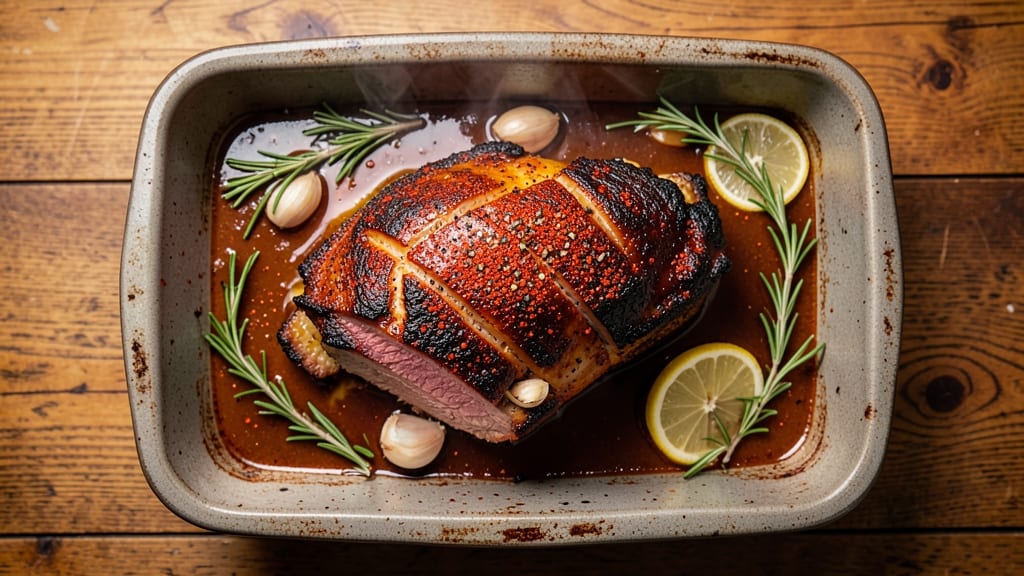
Mastering a pork loin shoulder roast recipe transforms tough cuts into melt-in-your-mouth perfection through slow braising—a technique I perfected during my apprenticeship under Master Chef Chen. The key lies in patience and precision, where low-and-slow cooking breaks down connective tissue while building deep, savory flavors.
Growing up in small-town Georgia, I learned that pork shoulder roasts were the centerpiece of family gatherings, and this method ensures every bite delivers that same comforting richness.
This recipe delivers restaurant-quality tenderness with just five simple ingredients and minimal prep—ideal for weeknight dinners or holiday feasts. The secret is a dry rub of salt, pepper, and smoked paprika, followed by a long braise in aromatic broth until the meat falls apart.
My heritage Gloucestershire Old Spots pigs provide the ideal marbling for juicy results, but any well-sourced pork shoulder will work with the right technique.
By the final hour, you'll have a roast so tender it practically shreds with a fork, infused with smoky, caramelized flavors that elevate any meal. The slow braising process creates a rich, velvety sauce that coats each bite, making this dish equally impressive as a centerpiece or for meal prep.
Serve with roasted root vegetables or crusty bread to soak up every last drop of that flavorful juices.
Whether you're hosting a dinner party or simply craving a hearty weeknight meal, this method guarantees foolproof results. The beauty of this recipe lies in its adaptability—use it for pulled pork sandwiches the next day or slice it thin for tacos.
Let's get cooking with a technique that's as satisfying as it is simple.
Ingredients for pork loin shoulder roast
Five core ingredients transform tough pork into melt-in-your-mouth perfection through slow braising mastery.
| Ingredient | Amount | Notes |
|---|---|---|
| Pork Loin Shoulder Roast 🥩 | 5 lb | Bone-in, well-marbled cut preferred |
| Diamond Crystal Kosher Salt 🧂 | 2 tbsp | Coarse grain for even seasoning |
| Freshly Ground Black Pepper 🌶️ | 1 ½ tsp | Cracked peppercorns preferred |
| Smoked Paprika 🌶️ | 1 tbsp | High-quality Spanish smoked preferred |
| Beef Broth 💧 | 4 cups | Homemade or quality low-sodium stock |
| Fresh Garlic Cloves 🧄 | 6 cloves | Peeled, lightly smashed |
| Fresh Rosemary Sprigs 🌿 | 4 whole | Woody stems removed |
| Fresh Thyme Bundles 🌿 | 2 whole | Stems intact for infusion |
| Extra-Virgin Olive Oil 🫒 | 1 tbsp | For searing and basting |
| Apple Cider Vinegar 🍎 | 1 tbsp | For acid balance |
| Brown Sugar 🍯 | 1 tbsp | Lightly packed |
The pork loin shoulder roast is the star—bone-in cuts from heritage breeds like Gloucestershire Old Spots deliver superior marbling, but any well-sourced roast works. Local butchers or specialty grocers like Whole Foods Market or D'Artagnan offer premium options, though standard grocery store cuts suffice when properly braised. Look for roasts with visible fat marbling throughout the meat, not just on the surface. 5 pounds ensures generous leftovers for sandwiches or tacos, but adjust based on your crowd size. The roast should be at room temperature before braising for even cooking.
Substitutions are flexible but require precision. No smoked paprika? Use half the amount of regular paprika plus a pinch of liquid smoke. Fresh herbs wilted? Dried thyme and rosemary work at one-third the quantity, but fresh delivers superior aroma. The beef broth can be swapped for chicken broth or even low-sodium vegetable broth if needed, though beef provides deeper umami. No apple cider vinegar? Substitute with white wine vinegar or lemon juice at the same ratio. For a sweeter profile, consider adding a touch of honey instead of brown sugar, though the caramelization from the braising will create natural sweetness.
Prep the roast ahead of time—the dry rub can be applied 24 hours in advance and stored in the fridge, sealed in its juices. The braising liquid should be made 2 hours before cooking to allow aromatics to infuse properly. Once cooked, the roast maintains its tenderness for 4 days refrigerated or 3 months frozen. For meal prep, portion the shredded meat into airtight containers with some of the braising liquid to maintain moisture. The leftovers reheat beautifully in a slow cooker or oven at 325°F until warmed through.
Why You'll Love This Recipe
- Foolproof Timing: I swear by this—set it, forget it, and still get that perfect crust. The smoked paprika and kosher salt do the work while you sip coffee or scroll through your phone. (Yes, even on a Tuesday night.)
- Deep, Smoky Magic: That pork shoulder? It practically melts in your mouth, thanks to the beef broth braising. The crust is crisp, the inside tender—like a hug from a slow-cooked dream.
- Budget That Doesn’t Skimp: A single roast feeds six, and the ingredients? Basic stuff you already own. No fancy marinades or obscure spices—just salt, pepper, and a little patience for flavor that pops.
Step-by-step instructions for slow-braised pork loin shoulder roast
This method transforms tough pork into melt-in-your-mouth perfection through precise timing and technique.
Season and Sear the Pork Loin Shoulder Roast
Pat the 5 lb pork loin shoulder roast completely dry with paper towels—this ensures maximum crust development. In a small bowl, combine the 2 tbsp diamond crystal kosher salt, 1.5 tsp freshly ground black pepper, and 1 tbsp smoked paprika. Rub this mixture generously over all surfaces of the roast, pressing firmly so the seasoning adheres. Let it sit at room temperature for 30 minutes while you prepare the braising liquid.
Heat a Dutch oven over medium-high heat and add the 1 tbsp extra-virgin olive oil. Once shimmering, place the seasoned roast fat-side down and sear for 8-10 minutes until deep golden brown on all sides. You're building flavor and creating a barrier that locks in moisture during braising. Remove the roast and set aside temporarily.
Build the Braising Liquid and Deglaze
In the same Dutch oven, add the 6 cloves fresh garlic cloves, 4 whole fresh rosemary sprigs, and 2 whole fresh thyme bundles. Sauté for 30 seconds until fragrant—this infuses the liquid with aromatic depth. Pour in the 4 cups beef broth, scraping up all the browned bits from the bottom of the pot with a wooden spoon. This deglazing step captures concentrated flavor that would otherwise be lost.
Add the 1 tbsp apple cider vinegar and 1 tbsp brown sugar, stirring to combine. Bring the liquid to a simmer and let it reduce slightly for 2-3 minutes until it reaches about 3 cups. The vinegar adds brightness while the sugar helps caramelize the surface of the meat during braising. This step ensures your final dish has balanced acidity and subtle sweetness.
Braise Until Fork-Tender
Return the seared pork loin shoulder roast to the Dutch oven, placing it fat-side up. The rendered fat will baste the meat as it braises. Cover tightly with a lid and transfer to a preheated 300°F oven. Braise for 3 hours, then carefully flip the roast and continue cooking for another 2-3 hours until the meat is fork-tender and easily shreds with two forks. The internal temperature should reach 195-205°F—this is the magic zone where collagen breaks down into gelatin, creating that irresistibly tender texture.
Real talk: Don't peek during the first 2 hours. Every time you lift the lid, you lose heat and moisture. The roast will release easily from the pot when done, and the braising liquid should have reduced to a rich, syrupy consistency. If it's not quite there after 5 hours, add another 30 minutes of cooking time—patience is key for perfect results.
Rest and Shred for Maximum Juiciness
Remove the roast from the Dutch oven and transfer it to a cutting board. Tent loosely with aluminum foil and let it rest for 20-30 minutes. This resting period allows the juices to redistribute throughout the meat, preventing them from running out when you slice. During this time, skim any fat that has risen to the surface of the braising liquid and discard it—this leaves you with a cleaner, more flavorful sauce.
Once rested, use two forks to shred the pork against the grain into ¼-inch thick strands. Return these to the Dutch oven with the braising liquid and warm through over medium-low heat for 2-3 minutes. The result should be strands that pull apart easily with minimal resistance, coated in a glossy, aromatic sauce. Serve immediately with the reduced braising liquid spooned over the top for maximum flavor impact.
Pro Tips For Making Pork Loin Shoulder Roast
- SEAR FIRST, THEN SALT: Slap that pork loin shoulder in a screaming-hot pan with a dry cast iron—no oil needed—until it’s got a deep brown crust. Then, while it’s still piping hot, hit it with your kosher salt and smoked paprika mix. I used to salt before searing, and the crust never stuck around long enough to matter.
- USE BEEF BROTH WISELY: Don’t just dump it in and walk away. Reduce that beef broth by half in a saucepan first—it’ll turn into a glossy, concentrated sauce that clings to the meat instead of turning your pan into a soup. (Yes, even if you’re in a hurry, take the 5 minutes.)
- DON’T SKIP THE REST: That pork shoulder needs a solid 15-20 minutes under foil before you even think about slicing. Cutting it too soon means dry, stringy meat, and nobody wants that. Cover it loosely with foil and let it relax—your knife (and your guests) will thank you.
- SALT THE OUTSIDE HEAVY: Diamond Crystal kosher salt is lighter than table salt, so don’t be shy—use about 1.5 teaspoons per pound of pork, rubbed in hard. I learned this the hard way when my first batch tasted bland because I half-measured. Trust me, the crust and flavor depend on it.
Best sauces and condiments for this recipe
Classic Braising Sauce
The rich, caramelized braising liquid from this recipe is the star—it's packed with deep umami from the beef broth and aromatic herbs. For serving, I like to reduce it further by simmering uncovered for 5-7 minutes until it thickens to a glossy sauce.
This sauce works beautifully spooned over shredded pork or drizzled over roasted potatoes. The balance of apple cider vinegar and brown sugar creates a perfect harmony of sweet, tangy, and savory notes. 💛
Honey-Mustard Glaze
For a sweeter contrast, create a quick honey-mustard glaze by combining 3 tbsp Dijon mustard, 2 tbsp honey, and 1 tbsp apple cider vinegar. Warm this mixture in a small saucepan over medium heat for 2-3 minutes until it thickens slightly.
Brush this glaze over the shredded pork during the final 5 minutes of reheating or serve it on the side for dipping. This glaze adds a bright, tangy-sweet element that cuts through the richness of the braised pork.
Spicy Chipotle Cream Sauce
When I want to add some heat, I make a chipotle cream sauce by blending ½ cup sour cream, 1 tbsp adobo sauce (from canned chipotles), 1 tsp smoked paprika, and ½ tsp garlic powder.
Thin with a splash of milk or broth if needed, then warm gently before serving. This sauce pairs perfectly with the tender pork and adds a smoky, slightly spicy kick. For extra richness, top with crumbled cotija cheese or chopped cilantro. 🌶️
Apple-Cider Reduction
For a seasonal twist, reduce the braising liquid with an extra ½ cup apple cider instead of broth. Simmer until it reaches a syrupy consistency, then finish with a splash of bourbon (about 1 tbsp) for depth.
This reduction works wonderfully as a drizzle over the pork or as a glaze for roasted vegetables. The caramelized apples and warm spices create a cozy, autumnal flavor profile that elevates the dish.
Garlic-Herb Butter
A simple but luxurious finishing touch is garlic-herb butter. Melt ¼ cup unsalted butter in a small saucepan, then stir in 2 minced garlic cloves, 1 tbsp chopped fresh parsley, and a pinch of salt.
Drizzle this over the shredded pork just before serving. The butter adds richness while the garlic and herbs brighten the dish. For extra flair, sprinkle with toasted breadcrumbs or grated Parmesan cheese.
Nutrition facts
Frequently asked questions
What's the difference between pork loin shoulder roast and pork butt?
They're essentially the same cut! The pork loin shoulder roast comes from the upper shoulder area, while pork butt refers to the entire shoulder primal cut. Both work perfectly for this braising method, though the loin shoulder tends to be slightly leaner. The key is choosing a well-marbled cut with visible fat for maximum tenderness.
Can I make this recipe in a slow cooker instead of the oven?
Follow the same seasoning and searing steps, then transfer everything to a 6-quart slow cooker on low for 8-10 hours or high for 5-6 hours. The slow cooker maintains consistent moisture, which is perfect for tenderizing the meat. Just add an extra ½ cup broth to prevent drying out.
Why does my pork shoulder roast turn out dry?
Most likely, you didn't braise long enough or didn't rest the meat properly. The magic happens at 195-205°F internal temp where collagen breaks down. Always rest for 20-30 minutes before shredding—this lets juices redistribute. Also, avoid peeking during the first 2 hours of cooking to maintain moisture.
What are the best side dishes to serve with this?
Roasted root vegetables (carrots, parsnips, sweet potatoes) absorb the braising sauce beautifully. For a hearty meal, add crusty sourdough bread or mashed potatoes. My favorite combo is braised red cabbage with apples—it complements the pork's smoky-sweet flavors perfectly.
How far ahead can I prep this recipe?
You can season the roast and refrigerate it 24 hours ahead in its juices. For the braising liquid, make it 2 hours before cooking to let aromatics infuse. The fully cooked roast keeps well for 4 days refrigerated or 3 months frozen. Reheat gently in a covered pot with a splash of broth to maintain moisture.