
Main Courses
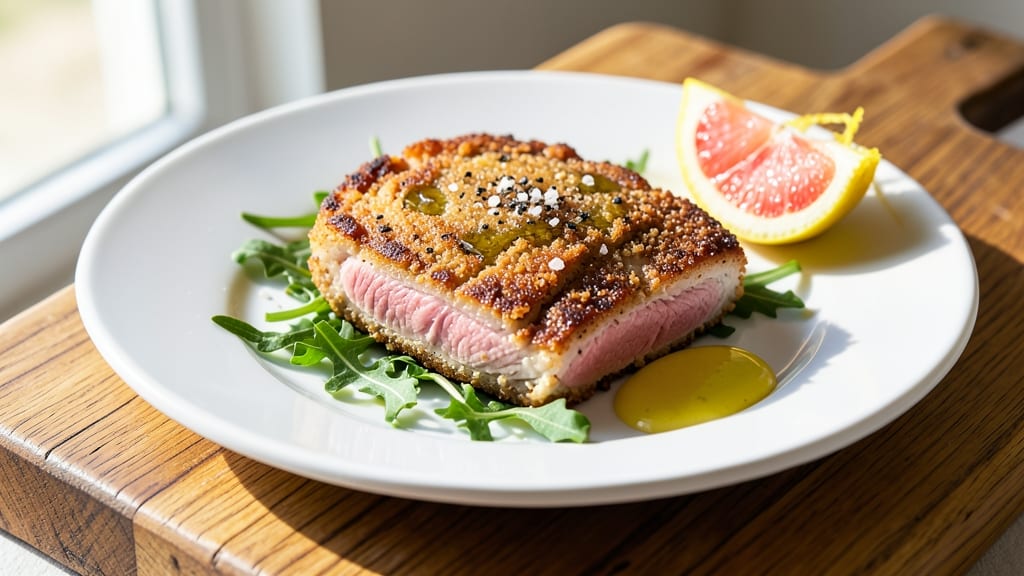
This crispy Pork Milanese recipe delivers the perfect balance of golden breading and tender pork, elevated by a bright lemon-caper pan sauce that tastes like a taste of Milan.
Standing on a step stool in my grandmother's kitchen in Sicily, I first learned how to achieve that signature crispy crust and velvety interior—now I'm sharing the exact technique. The secret lies in proper breading and precise pan-frying, ensuring every bite is both satisfying and restaurant-quality.
The process begins with thin, evenly pounded pork cutlets coated in a simple flour-egg-breadcrumb mixture, then seared to a perfect golden brown in hot oil.
What sets this recipe apart is the lemon-caper pan sauce, made from the same oil used to cook the cutlets—infused with zesty lemon juice and briny capers for a tangy finish. This technique transforms simple ingredients into a dish that feels special without requiring hours in the kitchen.
By the time you serve this dish, you'll have perfectly crispy cutlets with a tender center, all paired with a sauce that's bright enough to cut through the richness.
The aroma alone will have everyone gathering at the table, and the first bite delivers that satisfying crunch followed by juicy pork. This is the kind of recipe that makes weeknight dinners feel like an Italian trattoria experience.
Serve with a simple arugula salad or roasted seasonal vegetables to complete the meal. The crispy breading holds up beautifully, and the sauce can be adjusted to suit your taste—more lemon for brightness, or extra capers for a briny kick. Here's how to make it perfectly every time.
Ingredients for pork Milanese
Simple ingredients, restaurant-quality results—just 12 staples transform into crispy Milanese perfection.
| Ingredient | Amount | Notes |
|---|---|---|
| Pork Tenderloin 🥩 | 1 ½ lb | Center-cut, even thickness preferred |
| All-Purpose Flour 🌾 | 1 cup | Sifted for even coating |
| Large Eggs 🥚 | 2 whole | Room temperature preferred |
| Plain Breadcrumbs 🍞 | 1 ½ cups | Panko for extra crispiness |
| Extra-Virgin Olive Oil 🫒 | ¾ cup | For frying, light flavor |
| Lemon Juice 🍋 | ½ cup | Freshly squeezed, no pulp |
| Capers 🫒 | ¼ cup | Rinsed, drained, chopped |
| Garlic Cloves 🧄 | 3 cloves | Minced, fresh preferred |
| Kosher Salt 🧂 | 1 ½ tsp | Fine grain for seasoning |
| Ground Black Pepper 🌶️ | ½ tsp | Freshly ground for flavor |
| Fresh Parsley 🌿 | ¼ cup | Chopped, for garnish |
| Vegetable Oil 🫒 | ½ cup | High smoke point for frying |
The pork tenderloin is your foundation—center-cut slices stay tender while achieving that signature crust. Look for uniform thickness (about 1/2-inch) at your butcher or grocery store meat counter. Costco or Whole Foods often carry pre-sliced pork tenderloin, but if buying whole, ask for it to be cut evenly. For the breadcrumbs, panko creates that extra-crispy texture, but plain breadcrumbs work too (just press harder). The olive oil matters here—light, fruity varieties like Bertolli or Filippo Berio won't overpower the dish, while robust flavors can dominate. Capers should be briny and plump—skip the jarred kind with murky brine, opt for Italian-style capers from specialty stores if possible.
No panko? Plain breadcrumbs plus a pinch of cornstarch (1 tsp) mimics the crispiness. Short on capers? Lemon zest plus a dash of anchovy paste adds brininess—just 1/2 tsp anchovies, minced, does the trick. The lemon juice should be freshly squeezed (no bottled), and if you're using frozen lemon juice, thaw and strain it first. For the garlic, roasted garlic adds sweetness, but fresh minced is traditional. The vegetable oil for frying should have a high smoke point—Avocado oil or grapeseed oil are ideal, but canola works in a pinch. If your breadcrumbs get soggy during breading, let the egg mixture sit for 5 minutes before dredging to help absorb moisture.
The breaded cutlets stay crispy for about 20 minutes if kept warm in a 200°F oven. The pan sauce keeps for 3-4 days in the fridge, but the flavor deepens overnight. For meal prep, store components separately—breaded cutlets in one container, sauce in another. Reheat the cutlets in a skillet for 2-3 minutes per side over medium heat, then warm the sauce separately. Freeze cutlets for up to 2 months (thaw overnight in the fridge), but the sauce freezes poorly—make it fresh when serving.
Why You'll Love This Recipe
- Same recipe, different vibes: toss it on the table for a lazy Tuesday or dress it up with lemon wedges and arugula for date night. My roommates steal my leftovers, but I don’t mind—because it’s that good, even reheated (yes, really).
- Pantry-Friendly Magic: I swear by this recipe because it uses exactly what’s already in my cabinet—no fancy marinades or last-minute grocery runs. The flour, eggs, and breadcrumbs are the holy trinity of crispy perfection, and the tenderloin cooks faster than you can say "dinner’s ready."
- Crispy-Creamy Obsession: That golden crust? Chef’s kiss. The breadcrumbs lock in juices while the olive oil fries up a shatteringly crisp exterior, but the inside stays so tender it melts like butter. Honestly, I’ve ruined steaks that cost twice as much—this one’s foolproof.
- Weeknight to Party Star: Same recipe, different vibes: toss it on the table for a lazy Tuesday or dress it up with lemon wedges and arugula for date night. My roommates steal my leftovers, but I don’t mind—because it’s that good, even reheated (yes, really).
Step-by-step instructions for crispy breaded cutlets with lemon-caper pan sauce
Here's how to achieve perfectly crispy pork Milanese with a bright, tangy sauce that complements every bite.
Prepare and Pound the Pork Tenderloin
Begin by trimming any visible fat from the 1.5 lb pork tenderloin and patting it completely dry with paper towels. This step is crucial—any moisture will prevent the breading from adhering properly. Place the tenderloin between two sheets of plastic wrap and pound it to an even ½-inch thickness using a meat mallet. The goal is uniform thickness so the cutlets cook evenly.
Season both sides generously with 1.5 teaspoons kosher salt and 0.5 teaspoon ground black pepper. Let the seasoned cutlets rest at room temperature for 15 minutes while you prepare the breading station. This resting period ensures even cooking and prevents the meat from curling during frying.
Create the Breading Station
Set up three shallow bowls or plates. In the first, place the 1 cup all-purpose flour and mix it with 0.5 teaspoon additional kosher salt. In the second bowl, crack the 2 whole large eggs and whisk them lightly with a fork. In the third bowl, spread the 1.5 cups plain breadcrumbs evenly. I like to use panko-style breadcrumbs for that extra-crispy texture that's characteristic of Milanese.
Dip each cutlet into the flour, shaking off any excess, then dip into the beaten eggs, allowing any excess to drip off. Finally, press the cutlets into the breadcrumbs, coating them evenly on both sides. Press firmly to ensure the breading adheres well. Work with one cutlet at a time to maintain even coating.
Fry to Golden Perfection
Heat 0.5 cup vegetable oil in a large skillet over medium-high heat until it reaches 350°F on an instant-read thermometer. The oil should shimmer but not smoke excessively. Fry the breaded cutlets for 3-4 minutes per side until they achieve a deep golden brown color. This is where the magic happens—the breading should be crispy and the internal temperature should reach 145°F when measured with a meat thermometer.
Transfer the cooked cutlets to a wire rack set over a paper towel-lined plate to drain any excess oil. Keep them warm in a 200°F oven while you prepare the sauce. If the oil temperature drops below 325°F during frying, let it recover before adding more cutlets to maintain even cooking.
Make the Lemon-Caper Sauce
In the same skillet (no need to clean it—the browned bits add flavor), reduce the heat to medium and add 0.75 cup extra-virgin olive oil. Sauté the 3 minced garlic cloves for 30 seconds until fragrant, then add the 0.25 cup chopped capers and cook for another 1 minute. Pour in the 0.5 cup lemon juice and let it simmer for 2 minutes to reduce slightly.
Remove the skillet from heat and whisk in 0.25 cup chopped fresh parsley. Return the skillet to low heat and carefully add the fried cutlets, spooning sauce over them. Let them sit for 1-2 minutes to absorb the sauce's flavors. The sauce should coat the back of a spoon but remain loose enough to drizzle.
Serve Immediately
Transfer the cutlets to serving plates, spooning the lemon-caper sauce generously over the top. Garnish with additional chopped fresh parsley for a pop of color. Serve immediately with lemon wedges on the side and your choice of pasta or crusty bread to soak up every last bit of that tangy, briny sauce.
Each bite should deliver a perfect balance of crispy breading, tender pork, and the bright, complex flavors of lemon and capers. The secret lies in maintaining proper oil temperature during frying and letting the sauce simmer just enough to develop its flavors without overcooking.
Pro Tips For Making Pork Milanese
- USE COLD PORK: Pat the tenderloin dry with paper towels, then refrigerate it uncovered for 30 minutes before cutting. Cold meat holds its shape better when pounded, and you’ll avoid that sad, uneven mess where some slices get overworked. I learned this the hard way—skipping it leads to floppy cutlets that won’t crisp properly.
- DREDGE IN STAGES: Don’t dump all the flour at once. Start with a light dusting, shake off excess, then dip in egg, then breadcrumbs—twice. The double coating locks in moisture and guarantees that golden crust. Yes, it’s an extra step, but the difference between soggy and perfect is right here.
- WATCH THE OIL: Use enough olive oil to coat the pan by 1/4 inch—about 2 tablespoons for a single cutlet—and keep the heat at medium-high. Too little oil means sticking; too much means greasy pork. If the oil smokes before the breading browns, drop the heat slightly. Patience here makes the crust crisp without burning.
- REST BEFORE SERVING: Let the cooked Milanese sit on a wire rack for 3–5 minutes after draining. This lets the breading set and the juices redistribute, so the first bite isn’t a surprise gush of liquid. I used to skip this, and the results were always disappointingly mushy. Trust me, it’s worth the wait.
Creative variations of this pork Milanese
Sicilian-Inspired Style
My Nonna used to add a pinch of red pepper flakes and a splash of white wine to the breading for a subtle kick. For an authentic Sicilian twist, mix 1 teaspoon dried oregano and ½ teaspoon crushed fennel seeds into the flour before dredging.
The fennel adds an anise-like warmth that pairs beautifully with the lemon-caper sauce. Serve with roasted eggplant and a sprinkle of grated Pecorino Romano for a full Mediterranean experience. 🌶️
Spicy Arrabbiata Twist
Transform this classic into a fiery Italian-American favorite by adding 2 tablespoons tomato paste and 1 teaspoon crushed red pepper flakes to the lemon-caper sauce. Deglaze the pan with ¼ cup dry white wine after frying, then simmer for 3-4 minutes to let the flavors meld.
The heat cuts through the richness while keeping the dish bright. Garnish with fresh basil instead of parsley for a fresh, herbal note. 🔥
Herb-Infused French Variation
For a French bistro-inspired take, replace the capers with 2 tablespoons chopped cornichons and add 1 teaspoon Dijon mustard to the sauce. Mix 1 tablespoon chopped tarragon and 1 tablespoon chopped chives into the breadcrumbs for an aromatic twist.
The mustard adds depth, while the herbs elevate the dish to restaurant-quality elegance. Serve with a crème fraîche drizzle and buttered baby potatoes for a refined pairing. ✨
Sweet & Tangy Glaze
Add a sweet-savory dimension by brushing the cutlets with a glaze made from 2 tablespoons honey and 1 tablespoon balsamic vinegar before serving. Simmer the glaze in the same skillet used for the sauce, then drizzle over the finished Milanese.
The caramelized honey balances the acidity of the lemon, creating a perfect harmony. Garnish with candied walnuts for texture and a touch of sweetness. 🍯
Vegetarian Adaptation
Swap the pork for 1.5 lb portobello mushrooms or firm tofu, sliced into cutlet shapes. Marinate the mushrooms in 2 tablespoons olive oil, 1 tablespoon soy sauce, and 1 teaspoon smoked paprika for 15 minutes before breading.
The breading process remains the same, but reduce frying time to 2-3 minutes per side to avoid overcooking. The sauce stays identical, offering a satisfying vegetarian alternative. 🌱
Meal Prep Version
For a make-ahead option, bread the cutlets and store them in an airtight container in the fridge for up to 24 hours. When ready to cook, fry as directed, then reheat in a 350°F oven for 5-7 minutes to restore crispiness.
Prepare the sauce separately and reheat it in a saucepan over low heat, adding a splash of water if needed. This keeps the dish convenient without sacrificing flavor. ⏰
Nutrition facts
Frequently asked questions
Why do my breaded cutlets come out soggy instead of crispy?
Soggy breading usually means moisture got trapped between layers. First, ensure your pork is completely dry before breading—pat it thoroughly with paper towels. Second, let the egg mixture sit for 5 minutes before dredging to absorb excess moisture. Finally, don't overcrowd the pan—fry cutlets in batches with enough space between them. The oil temperature should stay at 350°F; if it drops below 325°F, the breading won't crisp properly.
Can I use chicken or veal instead of pork for this recipe?
This technique works beautifully with chicken breast (pounded to ¼-inch thickness) or veal cutlets. For chicken, reduce frying time to 2-3 minutes per side to avoid overcooking. Veal is more delicate—cook at 325°F for 3 minutes per side. The lemon-caper sauce pairs especially well with chicken, but veal benefits from a touch more butter in the sauce.
How do I keep the breading crispy when reheating leftovers?
Reheating breaded cutlets is tricky, but this method works: Place them on a wire rack over a baking sheet and broil for 2-3 minutes at 400°F until golden and crispy. For extra insurance, sprinkle with 1 tablespoon water before reheating—the steam helps restore crispiness. The sauce reheats best in a small saucepan over low heat; stir occasionally and add a splash of water if too thick.
What's the best way to store and freeze breaded cutlets?
Store breaded (uncooked) cutlets in an airtight container in the fridge for up to 24 hours. For freezing, place them on a tray lined with parchment paper, freeze until solid, then transfer to a bag. Cooked cutlets freeze for 1 month—thaw in the fridge overnight before reheating. Never refreeze cooked pork. The sauce freezes poorly; make it fresh when serving for best flavor.
Can I make this recipe gluten-free?
Yes! Replace the flour with 1 cup gluten-free all-purpose flour (plus 1 tablespoon cornstarch for crispiness) and use gluten-free breadcrumbs. For the egg wash, ensure your breadcrumbs are certified gluten-free. The texture will be slightly different but still delicious. The lemon-caper sauce remains unchanged. For extra crunch, press the cutlets firmly into the breadcrumbs before frying.