
Main Courses
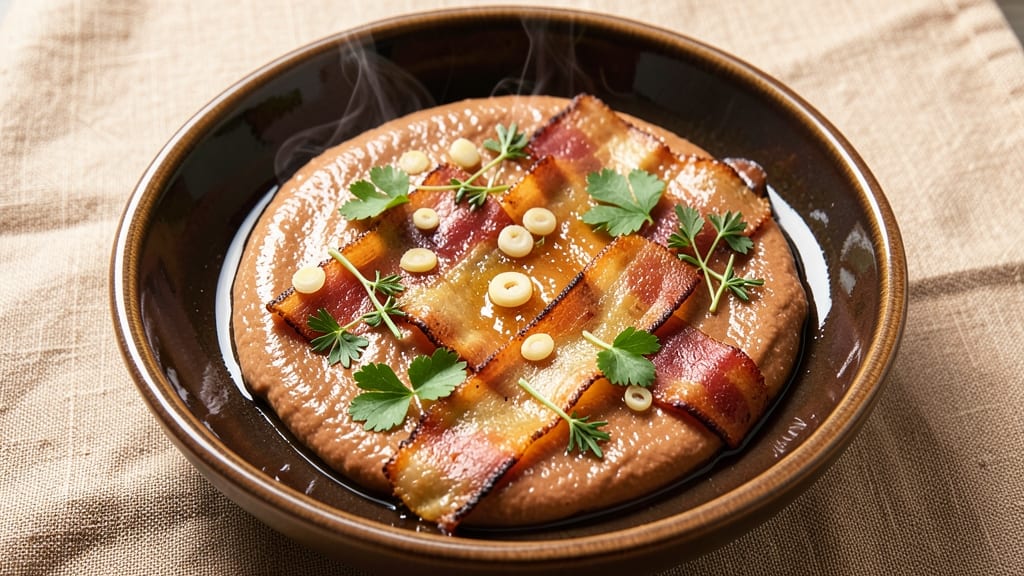
Mastering a rich pork pâté transforms humble ingredients into a showstopping centerpiece that rivals any charcuterie board. The secret lies in balancing pork liver, fatty pork shoulder, and aromatic herbs into a velvety filling that sets perfectly with a herbed crust.
I first perfected this technique during my apprenticeship under Chef Chen, where we spent weeks refining the texture—silky yet firm, with that signature crisp top.
This recipe delivers restaurant-quality results using traditional terrine methods, where the filling is cooked gently in a water bath before chilling. The key steps—properly grinding the meat, blooming spices in rendered fat, and maintaining precise temperatures—ensure every bite is tender yet structured.
What sets this apart is the herbed crust, which adds both visual appeal and satisfying crunch when sliced.
By the time you serve this pâté, your guests will experience layers of flavor: the deep umami of pork liver, the richness of fatty pork, and the bright freshness of herbs like thyme and parsley.
The crisp topping contrasts beautifully with the smooth filling, making each slice a textural delight. Serve with crusty bread or cornichons for the full experience.
Whether you're hosting a dinner party or simply elevating your weeknight meals, this pâté is worth the effort. The process may seem intricate at first, but once you've mastered the technique, it becomes a reliable way to impress. Let's get started on creating something truly special.
Ingredients for pork pate
Sixteen ingredients, restaurant-quality results—this pâté delivers velvety texture with a satisfying crisp crust.
| Ingredient | Amount | Notes |
|---|---|---|
| Pork Liver 🍖 | 1 ½ lb | Fresh, trimmed of connective tissue |
| Pork Shoulder 🥩 | 2 lb | Fatty cut, skin removed |
| Unsalted Butter 🧈 | ½ cup | Cold, cubed for fat rendering |
| Fresh Thyme 🌿 | ¼ cup | Leaves only, finely chopped |
| Fresh Parsley 🌿 | ¼ cup | Flat-leaf, finely chopped |
| Shallots 🧅 | 3 whole | Peeled, finely minced |
| Garlic Cloves 🧄 | 4 cloves | Peeled, finely minced |
| Diamond Crystal Kosher Salt 🧂 | 1 ½ tbsp | For seasoning and curing |
| Freshly Ground Black Pepper 🌶️ | 1 tsp | Coarsely cracked |
| Panko Breadcrumbs 🍞 | ½ cup | For crisp herbed topping |
| Extra-Virgin Olive Oil 🫒 | ¼ cup | For herbed crust binding |
| Heavy Cream 🥛 | ¼ cup | For binding liver mixture |
| Fresh Egg Yolks 🥚 | 2 whole | For binding and richness |
The pork liver and fatty pork shoulder are the stars here. Look for pork liver with a deep red hue—avoid any with yellowish tinge or strong metallic smell. For the pork shoulder, ask your butcher for the fattier end—this is what gives pâté its luxurious mouthfeel. I always source mine from Whole Foods or a trusted local butcher; their cuts are consistently high-quality. The liver should be about 25% of the total meat weight—here, 1.5 lbs liver to 2 lbs pork shoulder. Fresh herbs are non-negotiable: bright green thyme and parsley from the market's produce section will make all the difference. For the crust, Panko breadcrumbs give that perfect crunch, but if you can't find them, regular breadcrumbs toasted in the oven work too.
No fresh thyme? Dried thyme at one-third the amount works in a pinch, but fresh is ideal. Running low on shallots? Three small yellow onions minced finely will do, though they're slightly sweeter. The heavy cream and egg yolks are crucial for binding—never use light cream or powdered eggs. For the herbed crust, if you don't have olive oil, melted butter works, but it'll make the crust slightly richer. The kosher salt is essential for curing the meat—Diamond Crystal is my go-to because it dissolves perfectly. And if you're feeling ambitious, try adding a pinch of fresh nutmeg to the liver mixture for depth, though it's optional.
This pâté keeps beautifully—1 week refrigerated or 3 months frozen. For freezing, wrap tightly in plastic wrap then foil. Thaw overnight in the fridge before serving. The crust should be golden and crisp when sliced—if it's not, broil for 2-3 minutes before serving. Store any leftovers in an airtight container with a layer of plastic wrap pressed directly on the surface to prevent drying. The flavor actually improves after 24 hours, so making this a day ahead is ideal. For a special touch, serve with cornichons and crusty baguette slices—it's a game-changer.
Why You'll Love This Recipe
- One-Pan Wonder: I swear by this recipe because it’s basically hands-off after the initial prep. You sear the pork shoulder, then let the liver and butter melt together in the same pan—minimal cleanup, maximum flavor.
- Rich Without Effort: That pork liver adds depth you won’t find in basic pâtés, but the butter and thyme smooth it out into something silky and satisfying. Honestly, the first bite makes you forget it’s "liver" at all.
- Party Crowd-Pleaser: Between us, this is my go-to for gatherings because it’s fancy enough for guests but easy enough to double. Serve it chilled with crusty bread, and suddenly you’re the hero of the spread.
- Budget Luxury: Pork shoulder stretches thin, and liver is cheaper than you’d think—yet the butter and herbs make it taste like a gourmet treat. Leftovers? Even better cold the next day, sliced thin on toast.
Step-by-step instructions for pork pâté with herbed crisp topping
Here's how to transform rich pork liver and shoulder into velvety pâté with a golden, herbed crust.
Prepare the Meat and Aromatics for Maximum Flavor
Begin by trimming all connective tissue from the 1.5 lb pork liver and cutting it into ¼-inch cubes. Pat them dry with paper towels—this ensures a silky texture later. In a separate bowl, combine the 2 lb pork shoulder (cut into ½-inch cubes), 3 whole shallots (finely minced), 4 cloves garlic cloves (minced), 1.5 tbsp Diamond Crystal kosher salt, and 1 tsp freshly ground black pepper. This preparation creates a flavorful base while keeping ingredients organized for efficient cooking.
For the herbed topping, pulse 0.5 cup panko breadcrumbs, 0.25 cup fresh thyme leaves, 0.25 cup fresh parsley, and 0.25 cup extra-virgin olive oil in a food processor until just combined. The breadcrumbs should be finely ground but not pasty—this ensures a crisp crust. Set aside until ready to use.
Render Fat and Cook the Meat Mixture
In a large Dutch oven, melt 0.5 cup unsalted butter over medium heat until foaming subsides. Add the pork shoulder cubes and cook undisturbed for 8-10 minutes, stirring occasionally, until the meat releases its fat and begins to brown. This step develops deep, savory flavors that carry through the pâté.
Once the pork shoulder is golden, add the prepared liver cubes and cook for another 4-5 minutes, stirring gently to prevent overcooking. The liver should remain slightly pink in the center—it will finish cooking later. Remove the meat mixture from the pan and set aside, leaving all the rendered fat in the Dutch oven.
Build the Silky Pâté Base
Return the Dutch oven to low heat and add the reserved meat mixture back to the pan. Pour in 0.25 cup heavy cream and stir to deglaze, scraping up any browned bits from the bottom. This step captures all the concentrated flavors you worked so hard to develop.
In a separate bowl, whisk together the 2 whole fresh egg yolks until smooth. Gradually whisk in the meat mixture, ensuring even distribution. The yolks act as a natural binder, creating that signature velvety texture. Transfer the entire mixture to a blender and blend until completely smooth—this eliminates any fibrous bits for a luxurious finish.
Assemble and Bake the Pâté
Preheat your oven to 350°F. Transfer the blended pâté mixture to a 6-inch round baking dish or loaf pan, spreading it evenly. Press the herbed breadcrumb mixture firmly over the top, creating an even layer. The crust should be compact but not packed down—this ensures it crisps beautifully.
Bake for 30-35 minutes until the center reaches 160°F (measured with an instant-read thermometer) and the crust is golden brown. The pâté should jiggle slightly when shaken—this indicates proper doneness. If the crust browns too quickly, tent loosely with foil to prevent over-browning.
Rest and Serve for Perfect Texture
Remove the pâté from the oven and let it rest for 15-20 minutes before serving. This resting period allows the flavors to meld and the texture to set properly. When ready to serve, run a thin knife around the edges to loosen it from the dish, then invert onto a serving platter.
The result should be a glossy, velvety pâté with a crisp, herbed crust that contrasts beautifully with the smooth interior. Serve with crusty bread or apple slices for a complete experience. Leftovers keep well in the refrigerator for up to 3 days—simply reheat gently in a water bath to maintain that silky texture.
Pro Tips For Making Pork Pate
- Trim the Liver Fat: Pork liver’s connective tissue hides in the thin white fat—don’t just rinse it, peel it away with your fingers. I used to leave it, and the pâté turned greasy and uneven. Take the 5 extra minutes now to strip every bit off, or regret the texture later.
- Cook Shoulder Low and Slow: Braise the pork shoulder at 160°C (320°F) until it’s falling apart—yes, it’ll take 4-5 hours. Rushing this step means shredding dry, stringy meat that won’t blend smoothly. Cover it tightly and let it work; patience here makes the pâté velvety.
- Blend Cold Butter: Whip the unsalted butter ice cold before mixing it into the liver-shoulder purée. Warm butter melts into a greasy mess—this is why your pâté might taste buttery but look grainy. Grate the butter or pulse it in a food processor first, then fold it in last.
- Strain the Herbs: Finely chop thyme and parsley, then press them through a sieve or fine-mesh strainer into the pâté mixture. This avoids fibrous chunks that ruin the silky texture. I know it’s extra work, but trust me—your mouth will notice the difference.
Wine and beer pairings for this pork pate
French Red Wine
For this rich, herbed pork pâté, I reach for a Bordeaux red—specifically a Saint-Émilion or Pomerol—from the Left Bank. The earthy tannins and subtle oak notes in a wine like Château Beau-Séjour Bécot cut through the pâté's richness while complementing the pork liver's deep umami.
Serve slightly chilled (55-60°F) to enhance the wine's structure without overwhelming the dish. 🍷
German Riesling
A crisp, off-dry German Riesling from the Mosel region is my go-to white wine pairing. The Dr. Loosen Blue Slate brings bright acidity and stone fruit notes that refresh your palate between bites of the pâté.
Its slight sweetness balances the savory depth, making each sip feel like a palate cleanser. Chill to 45-50°F for optimal contrast with the herbed crust.
Belgian Witbier
For beer lovers, a Belgian witbier like Stella Artois Wit or Hoegaarden adds a refreshing, citrusy contrast. The coriander and orange peel notes in these beers echo the fresh herbs in your pâté's crust, while their effervescence cleanses the palate.
Serve at 45-50°F to highlight the beer's crisp, spicy character against the pâté's richness. 🍺
Port Wine Pairing
If you're serving pâté as part of a charcuterie spread, consider a tawny port like Graham's 10-Year-Old. The caramelized, nutty notes in the port mirror the pâté's depth while adding a touch of sweetness that balances the herbed crust.
Serve at 60-65°F to let the wine's complexity shine alongside the dish's luxurious texture.
Local Craft Options
No fancy imports? A local red blend from your region works beautifully. In the Southeast, I love Georgia's Blackmon Vineyards Cabernet Franc—its bright acidity and red fruit notes pair perfectly with the pâté's herbed crust.
For beer, try a hazy IPA from a nearby brewery; the hoppy bitterness cuts through the richness while the malt sweetness complements the pork. Always ask your local wine shop for their top recommendation—they know what works best in your area!
Nutrition facts
Frequently asked questions
Can I make this pork pâté without a food processor?
If you don't have a food processor, use a high-powered blender or even a mortar and pestle to finely grind the meat mixture. For an ultra-smooth texture, strain the mixture through a fine-mesh sieve after cooking. The key is patience—press the meat through the sieve with a spatula for that velvety finish.
How do I know when the pâté is fully cooked?
Use an instant-read thermometer to check the center—it should reach 160°F. The pâté should also jiggle slightly when gently shaken, indicating perfect doneness. Overcooking will make it dry, so remove it from the oven just as it hits that temp. If unsure, err on the side of undercooking—it'll finish cooking during the resting period.
Can I substitute chicken liver for pork liver?
While chicken liver works, it lacks the rich, deep flavor of pork liver. If substituting, use 1 lb chicken liver instead of 1.5 lbs pork liver and increase the pork shoulder to 2.5 lbs to maintain the pâté's luxurious texture. Chicken liver also has a stronger metallic taste, so soak it in milk for 10 minutes before cooking to mellow the flavor.
Why did my herbed crust turn out soggy?
Soggy crusts usually happen from moisture seeping through. Ensure your breadcrumb mixture is dry before pressing it on top, and bake the pâté uncovered for the first 15 minutes to crisp the crust. For extra insurance, broil the pâté for 2-3 minutes before serving. A properly baked crust should hold its shape when lifted gently.
How can I make this pâté ahead of time?
This pâté actually tastes better the next day! Assemble it as directed, then refrigerate for 24 hours before serving. For longer storage, wrap tightly in plastic and foil, then freeze for up to 3 months. Thaw overnight in the fridge—never at room temperature—and reheat gently in a water bath to maintain its silky texture.