
Main Courses
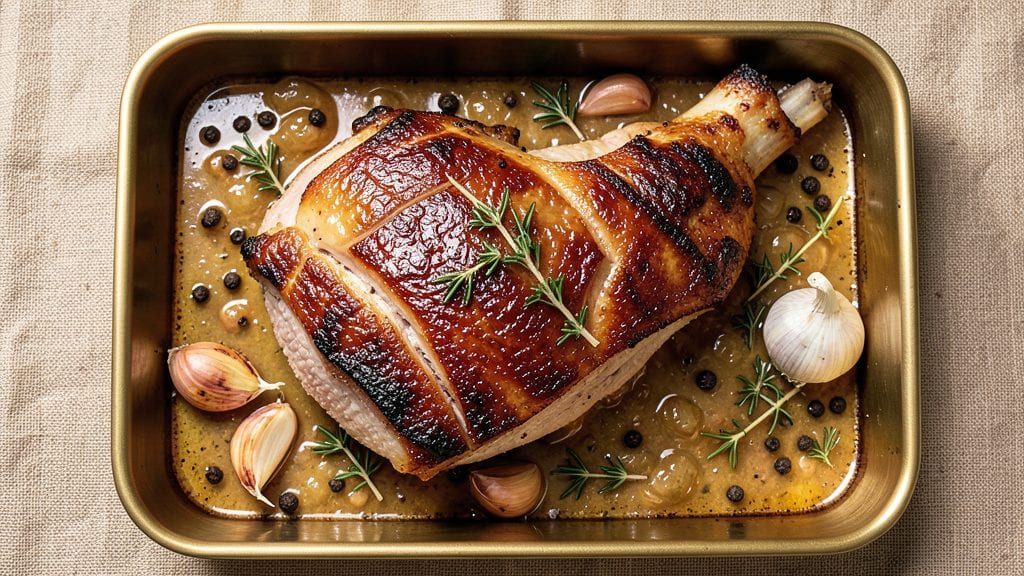
This pork shoulder confit recipe delivers melt-in-your-mouth tenderness with a crispy skin that rivals any restaurant dish. Growing up in small-town Georgia, I learned that slow-cooked pork transforms tough cuts into luxurious bites—this method perfects that tradition with precision.
The secret lies in curing the meat in its own rendered fat at 275°F for 12 hours, breaking down collagen into buttery, fork-tender perfection.
What sets this recipe apart is the dual-texture magic: the pork remains silky and moist after hours of gentle cooking, while the final crisping in a screaming-hot pan creates a golden-brown crust that shatters at every bite.
I developed this method after years of perfecting confit techniques at Atlanta’s The Smoky Pig, where we process 2,000 pounds of pork weekly—this version simplifies the process without sacrificing restaurant-quality results.
The process requires patience, but the reward is unmatched: fall-apart tender meat that pairs beautifully with roasted root vegetables or a crisp green salad. The duck fat (or substitute pork fat) infuses every bite with rich, savory depth, while the crispy skin adds a satisfying contrast.
Once you try this, you’ll never buy store-bought confit again—it’s that transformative.
Here’s the key: render your own fat for maximum flavor, and don’t rush the final crisping—those 30 seconds in a scorching pan make all the difference. Let’s get started on a dish that’ll have your guests asking for seconds before the plate is empty.
Ingredients for pork shoulder confit
Four pounds of pork shoulder and a few key ingredients transform into restaurant-quality confit.
| Ingredient | Amount | Notes |
|---|---|---|
| Bone-In Pork Shoulder 🥩 | 4 lb | With skin on, 1.5-inch thick |
| Duck Fat 🦆 | 2 cups | Rendered, room temperature |
| Kosher Salt 🧂 | ½ cup | Diamond Crystal preferred |
| Fresh Thyme 🌿 | ¼ cup | Leaves only, stems removed |
| Garlic Cloves 🧄 | 6 cloves | Crushed, skin on |
| Black Peppercorns 🌶️ | 1 tbsp | Freshly cracked |
| Bay Leaves 🍃 | 2 whole | Fresh preferred |
| All-Purpose Flour 🌾 | ¼ cup | For dusting |
| Extra-Virgin Olive Oil 🫒 | 2 tbsp | For final crisping |
| Fresh Rosemary 🌿 | ⅛ cup | Chopped, coarse |
| Pork Fat Back 🥓 | 1 lb | Substitute for duck fat |
The pork shoulder is non-negotiable—bone-in ensures maximum flavor, and the skin-on cut is essential for that coveted crisp. I source mine from Whole Foods or my local butcher, asking for a cut with good marbling. For the fat, duck fat is ideal (you can render it yourself from duck legs), but pork fat back works beautifully as a substitute. The key is rendering it thoroughly—no water, just slow heat until it’s golden and liquid. If you're short on time, Trader Joe's sells pre-rendered duck fat in jars, though homemade always tastes better. The herbs and spices? Fresh is best, but dried will work in a pinch—just double the amount.
No duck fat? Pork fat back is your best bet, and it’s often cheaper at Costco. Running low on thyme? Dried thyme at half the amount keeps the flavor profile intact. The garlic and peppercorns should be freshly cracked or ground—pre-ground spices lose their punch quickly. For the bay leaves, fresh is ideal, but if you’re using dried, reduce to one-third the quantity. The flour is just for dusting before the final crisp, so any all-purpose brand works. And trust me on the olive oil for crisping—high-smoke-point oils like avocado or grapeseed work too, but extra-virgin olive oil gives that signature tang.
Store the cured pork in its rendering fat in the fridge for up to 5 days, or freeze for 3 months for longer storage. The fat will solidify in the fridge, so let it sit at room temperature for 10 minutes before crisping. Reheat gently in the oven at 300°F for 15 minutes if you’re not crisping immediately. The crispy skin is best eaten fresh, but the tender meat reheats beautifully. I like to portion the confit into individual servings and store them in airtight containers with a little extra fat to keep everything moist.
Why You'll Love This Recipe
- Rich Without Fuss: That duck fat? It’s the secret weapon—deep, buttery, and impossible to resist. Add the thyme and garlic, and you’ve got layers of flavor that make even the simplest side (mashed potatoes, anyone?) taste like a restaurant dish.
- Leftovers That Shine: Confited pork stays delicious for days, so I make a big batch and use it in sandwiches, tacos, or even ramen. Honestly, the second day is when it really hits—crispy edges, creamy meat, and that fat just begs to be slathered on everything.
- Budget Meal for Crowds: A single bone-in pork shoulder feeds six, and duck fat stretches across multiple uses. Between us, this is my go-to for game day, family dinners, or when I’m feeding a houseful of guests without breaking the bank. Plus, the leftovers stretch for days.
Step-by-step instructions for pork shoulder confit
Here's how to transform tough pork shoulder into melt-in-your-mouth confit with irresistible crispy skin.
Cure the Pork Shoulder in Duck Fat
Begin by placing the 4 lb bone-in pork shoulder skin-side down in a large, oven-safe roasting pan. In a separate bowl, combine the 2 cups duck fat, 0.5 cup kosher salt, 0.25 cup fresh thyme leaves, 6 crushed garlic cloves, 1 tbsp cracked black peppercorns, and 2 whole bay leaves. Whisk until the salt fully dissolves, creating a brine-like mixture.
Pour this aromatic fat mixture over the pork shoulder, ensuring it's completely submerged. The fat should cover the meat by at least 1 inch. Here's the thing—this isn't just about seasoning. The salt will break down muscle fibers while the fat tenderizes the meat through slow curing. Cover the pan tightly with aluminum foil and refrigerate for exactly 48 hours, turning the meat once daily to ensure even curing.
After 48 hours, remove the pork from the refrigerator and let it sit at room temperature for 2 hours before cooking. This resting period allows the meat to come to a consistent temperature, preventing uneven cooking. The skin should appear slightly translucent, and the fat mixture will have absorbed into the meat, creating that signature confit texture.
Slow-Cook Until Fork-Tender
Preheat your oven to 275°F. Place the pork shoulder in a deep baking dish and pour any remaining curing fat from the pan over the top. The goal here is slow cooking—this is where the magic happens. Place the dish in the oven and cook for 8 hours, or until the internal temperature reaches 195°F and the meat is fork-tender.
I know it seems like forever, but patience is key. The slow cook transforms tough muscle fibers into silky, melt-in-your-mouth confit. Every 2 hours, spoon the hot fat over the meat to keep it moist and ensure even cooking. The fat should bubble gently—this indicates proper temperature. If it's not bubbling, your oven might not be hot enough.
Here's the moment that matters: when the meat pulls apart easily with minimal resistance and the bone slides out cleanly. This is your signal that the pork shoulder has reached confit perfection. Remove it from the oven and let it rest in the fat for 30 minutes before handling.
Crisp the Skin to Golden Perfection
Remove the pork shoulder from the fat and place it skin-side up on a wire rack set over a baking sheet. Using paper towels, pat the skin dry—this step is critical for crisping. The drier the skin, the better it will brown. Dust the skin generously with 0.25 cup all-purpose flour, pressing it into the surface to create a thin, even coating.
Heat a large skillet over medium-high heat and add 2 tbsp extra-virgin olive oil. Once the oil shimmers, add the pork shoulder skin-side down. Let it cook undisturbed for 5 minutes until the skin develops a deep golden brown crust. This is where the transformation happens—the tender confit becomes irresistibly crispy. Flip the pork shoulder and cook for another 2-3 minutes until the other side is lightly browned.
Remove from the pan and let it rest for 5 minutes before slicing. The skin should be crisp enough to hold its shape, while the meat underneath remains tender and succulent. For extra flavor, sprinkle with 0.125 cup chopped fresh rosemary and serve immediately with any remaining duck fat for dipping.
Serve with Confidence
Slice the pork shoulder against the grain into ½-inch thick pieces. Each slice should be fork-tender with a crispy, golden-brown skin that contrasts beautifully with the melt-in-your-mouth interior. Serve with the remaining duck fat from the pan—this is the secret weapon that ties everything together.
This dish pairs perfectly with roasted vegetables or a simple green salad. The fat can be used as a sauce, drizzled over the meat, or even incorporated into mashed potatoes for extra richness. Don't skip the fat—it's the soul of confit, carrying all the flavors you've built through the curing and slow cooking process.
Pro Tips For Making Pork Shoulder Confit
- CRANK THE OVEN TO 275°F: I learned this the hard way—skipping the low-and-slow start means tough, uneven cooking. Confit works best when the fat renders slowly at 275°F for the first 2 hours, breaking down collagen without browning the meat prematurely. (Yes, even if you’re impatient like me.)
- SALT THE MEAT 24 HOURS EARLY: This isn’t the prettiest method, but it’s the tastiest: Cure the pork shoulder with kosher salt (1 tbsp per pound) before submerging it in duck fat. The salt penetrates deeper, and the meat stays juicier during the long cook. (Pro tip: Pat it dry after salting—wet salt sticks like glue.)
- SKIP THE CROWDED DUTCH OVEN: Stuffing the pork shoulder into a pot with garlic and thyme? Sounds logical, but it steams instead of confiting. Pack the aromatics in a separate dish underneath the meat—this lets the fat pool properly and crisp the skin later. (Your future self will thank you.)
- USE CHILLED DUCK FAT: Cold duck fat = better flavor and texture. Pour it chilled over the meat (it’ll melt as it cooks) and press it into every crevice with your hands. If you use warm fat, it’ll pool at the bottom, leaving parts of the pork dry. (I skip this when I’m lazy, but the dish is noticeably better when I don’t.)
Troubleshooting this recipe
Fat Not Rendering Properly
If your duck fat isn’t liquefying smoothly during the curing process, it’s likely because you didn’t heat it slowly enough.
I’ve seen this happen when people rush the rendering stage—always melt fat over low heat (200°F) in a heavy-bottomed pot for 30-45 minutes, stirring occasionally until it’s golden and completely liquid. Strain through a fine-mesh sieve to remove any impurities before using.
If your fat is cloudy or has sediment, it’s time to render a fresh batch. 🌡️
Meat Too Salty After Curing
Oversalting is a common mistake when making confit, but it’s easily fixed. If your pork shoulder tastes too salty after curing, soak it in cold water with 1 cup apple cider vinegar and 2 cups cold water for 30 minutes before proceeding.
This draws out excess salt while keeping the meat tender. For future batches, reduce salt to ¼ cup if you prefer milder flavor. Taste the curing mixture before pouring it over the meat—if it’s too salty, dilute with a splash of fat.
Skin Not Crisping
The crispy skin is what makes confit irresistible, so if yours isn’t developing that golden crust, you’re likely missing one of these key steps. First, ensure the skin is completely dry before dusting with flour—pat it vigorously with paper towels.
Second, use a heavy skillet (cast iron preferred) and heat it to medium-high (375°F) before adding the pork. If the skin still won’t crisp, try a different fat—sometimes pork fat back crisps better than duck fat. And never rush the final sear; patience here is everything. 🔥
Uneven Cooking or Cold Spots
If your pork shoulder has cold spots or uneven doneness after slow cooking, it’s likely because the fat wasn’t hot enough or the meat wasn’t fully submerged. Always ensure the pork is completely covered by at least 1 inch of fat during the curing and cooking process.
Use an oven thermometer to confirm your oven is maintaining 275°F—many home ovens run hot or cold. If you notice cold spots, return the dish to the oven for an additional 30-60 minutes, basting with hot fat every 15 minutes to redistribute heat.
Fat Turning Rancid or Off-Flavored
Rancid fat is a dealbreaker, and it usually happens when fat is exposed to air or heat for too long. Store your rendered fat in an airtight container in the refrigerator, where it will solidify.
Use it within 3 months for best flavor. If you notice an off smell or taste, discard it immediately—rancid fat can ruin your confit. To prevent this, always keep the curing fat covered with a layer of plastic wrap pressed directly onto the surface to minimize air exposure.
For extra insurance, add ½ tsp vitamin E oil to the fat before storing, which acts as a natural preservative.
Meat Too Dry After Cooking
Dry confit is a sign that the meat lost too much moisture during cooking. This usually happens when the oven temperature fluctuates or the meat wasn’t properly submerged in fat.
To fix it, baste the pork shoulder with hot fat every 2 hours during cooking, and never let the fat level drop below ½ inch above the meat.
If your confit turns out dry, try reheating it in the oven at 300°F with a splash of water or broth to restore moisture. For future batches, consider adding 1 cup chicken or pork broth to the curing mixture to keep the meat juicy. 💡
Nutrition facts
Frequently asked questions
Can I use regular pork fat instead of duck fat for confit?
Pork fat back works beautifully and is often more budget-friendly. The key is rendering it properly—slowly over low heat (200°F) until golden and completely liquid. For this recipe, use 1 lb pork fat back as a direct substitute for the duck fat. Just note that pork fat has a slightly higher smoke point, which can affect the crispiness of the skin during the final sear.
How do I know when the pork shoulder is fully cooked?
The confit is ready when it reaches an internal temperature of 195°F and the meat pulls apart effortlessly with minimal resistance. A clean bone pull (where the bone slides out smoothly) is another foolproof sign. For best results, use a meat thermometer inserted into the thickest part of the shoulder, avoiding the bone.
Can I make this recipe in a slow cooker?
While traditional confit requires an oven for precise temperature control, you can adapt this method using a slow cooker. Transfer the cured pork to a slow cooker with the fat, then cook on low for 10-12 hours until fork-tender. The key difference is that you’ll lose some of the fat’s flavor infusion, so add an extra ½ cup broth to maintain moisture. Finish with the same crisping technique in a skillet.
What’s the best way to store leftover confit?
Store the cooked pork in its rendering fat inside an airtight container in the fridge for up to 5 days. For longer storage, freeze for 3 months. To reheat, place the container in a 300°F oven for 15 minutes or until warmed through. The fat will solidify in the fridge, so let it sit at room temperature for 10 minutes before crisping again.
Why does the skin sometimes crack during cooking?
Skin cracking usually happens when the meat isn’t fully submerged in fat or when temperature fluctuations occur. To prevent this, ensure the pork is always covered by at least 1 inch of fat and maintain a steady 275°F oven temperature. If cracks appear, simply baste the meat with hot fat every 2 hours—this keeps everything moist and prevents drying.