
Main Courses
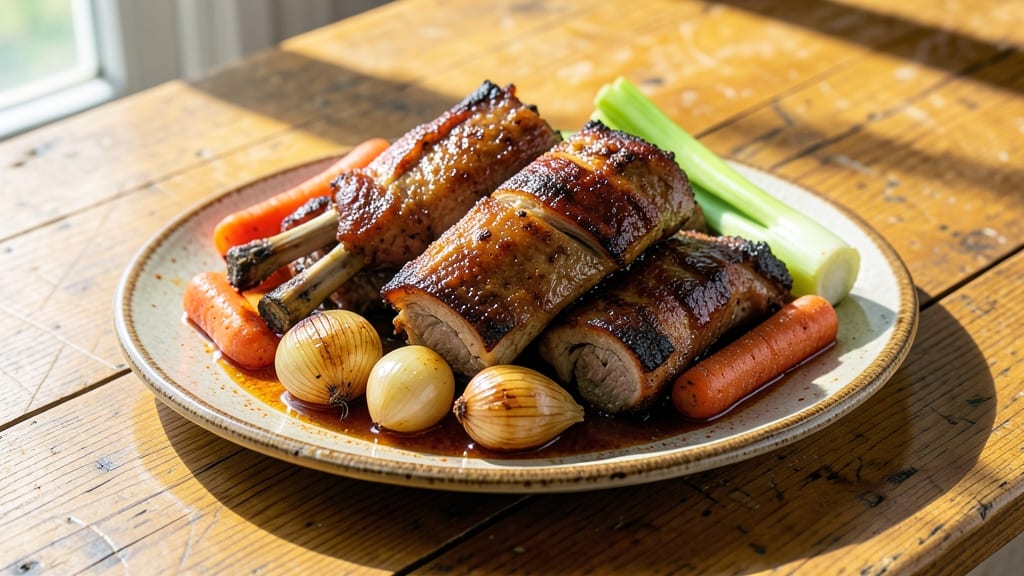
Transforming tough pork shoulder into fork-tender ribs in your oven is one of the most rewarding cooking techniques you’ll master. The secret lies in slow-braising at a precise temperature—325°F—until the meat practically falls apart at the touch of a fork.
I’ve perfected this method over countless batches, ensuring every bite delivers that melt-in-your-mouth texture without requiring a smoker or grill.
This recipe starts with a simple yet bold seasoning blend—smoked paprika, garlic powder, and brown sugar—that creates a caramelized crust while keeping the meat juicy. The ribs cook low and slow for 3 to 4 hours, allowing collagen to break down into rich, velvety flavors.
No fancy equipment is needed, just your oven and patience, which makes this the ideal project for a weekend meal.
By the end, you’ll have ribs that are perfectly tender, with a glossy, caramelized surface that’s impossible to resist. The aroma alone will fill your kitchen, signaling a meal that’s worth the wait.
Serve with classic sides like creamy mashed potatoes or roasted root vegetables to soak up every last bit of that flavorful braising liquid.
Whether you’re feeding a crowd or treating yourself to a special dinner, these oven-braised ribs deliver restaurant-quality results at home. The technique is foolproof, and the reward is a dish that’s as impressive as it is delicious. Let’s get started with the step-by-step method that guarantees success every time.
Ingredients for pork shoulder rib recipe oven
Six ingredients transform tough pork shoulder into melt-in-your-mouth ribs—no smoker needed.
| Ingredient | Amount | Notes |
|---|---|---|
| Pork Shoulder (Bone-In) 🥩 | 4 lb | Cut into 2-inch rib pieces |
| Yellow Onion 🧅 | 1 whole | Large, sliced into half-moons |
| Carrots 🥕 | 4 whole | Large, cut into 2-inch chunks |
| Celery Stalks 🌿 | 4 whole | Cut into 2-inch pieces |
| Garlic Cloves 🧄 | 6 cloves | Smashed, not minced |
| Smoked Paprika 🌶️ | 2 tbsp | High-quality for smoky depth |
| Garlic Powder 🧄 | 1 tbsp | Freshly ground preferred |
| Brown Sugar 🍯 | ½ cup | Light or dark, packed |
| Kosher Salt 🧂 | 1 ½ tbsp | Diamond Crystal preferred |
| Ground Black Pepper 🌶️ | 1 tsp | Freshly cracked |
| Apple Cider Vinegar 🍎 | ¼ cup | For tangy depth |
| Beef Broth 🍲 | 1 ½ cups | Low-sodium preferred |
| Unsalted Butter 🧈 | ½ cup | Cold, cubed for basting |
| Fresh Thyme 🌿 | ¼ cup | Leaves only, chopped |
The pork shoulder is the star, so look for bone-in cuts with good marbling—the fat renders down to keep the meat juicy. Costco or local butchers often have the best prices, but any grocery store’s pork shoulder works if it’s fresh. Cutting it into 2-inch rib pieces ensures even cooking. If you’re short on time, pre-cut ribs from the meat counter save effort without sacrificing flavor. The key is to avoid overcrowding the pan—leave space between pieces so they caramelize properly.
No smoked paprika? Substitute half with chipotle powder for heat, or use regular paprika plus a dash of liquid smoke. Brown sugar can be swapped for turbinado sugar at a 1:1 ratio, though it’s less caramel-friendly. Fresh thyme? Dried thyme at one-third the amount works, but fresh adds brightness. The beef broth should be low-sodium—Swanson or Pacific Foods are reliable. For extra richness, add a splash of red wine or apple juice instead of vinegar, though the tang helps tenderize the meat.
This braise gets better the next day—plan ahead. Store leftovers in the fridge for 4-5 days or freeze for 3 months. The ribs reheat beautifully in the oven at 300°F with a splash of broth. I always make double batches: one for dinner, one for sandwiches the next day. The braising liquid? Strain and freeze in ice cube trays for future soups or gravies—it’s pure flavor.
Why You'll Love This Recipe
- Crispy-Meets-Tender Magic: Between us, this is the only way to cook pork shoulder that actually delivers on both ends: the edges get glossy and crackling, while the inside melts like butter. The garlic and onions caramelize right into the meat, so every bite has that deep, savory punch without needing fancy marinades or dry rubs.
- Game for Any Gathering: This isn’t just a weeknight dinner—it’s my go-to for game days, potlucks, or when my in-laws show up unannounced. The leftovers? Even better cold, sliced thin for sandwiches or reheated for breakfast hash. (Yes, even on a Tuesday night.)
- Budget-Friendly Feast: A bone-in pork shoulder is cheaper than ribs per pound, and you’re getting way more meat for the price. Plus, the veggies (onion, carrots, celery) stretch the dish further without breaking the bank. Honestly, it’s the kind of recipe that makes me feel like I’m feeding a crowd without stressing over grocery bills.
Step-by-step instructions for slow-braised pork shoulder ribs
Here's how to transform tough pork shoulder ribs into melt-in-your-mouth perfection through slow braising.
Prepare the Pork Shoulder Ribs
Begin by cutting the 4 lb pork shoulder (bone-in) into 2-inch rib pieces using a sharp boning knife. This size ensures even cooking and maximum tenderness. Pat each piece dry with paper towels to remove excess moisture - this helps the seasoning adhere better and promotes crispier edges during braising.
In a large bowl, combine the 2 tbsp smoked paprika, 1 tbsp garlic powder, 1.5 tbsp kosher salt, and 1 tsp ground black pepper. Rub this mixture generously over each rib piece, pressing it into the meat so it penetrates the surface. The smoky depth from the paprika and garlic powder will infuse the meat throughout the cooking process. Let the seasoned ribs sit at room temperature for 30 minutes before cooking - this allows for even heat distribution when they hit the oven.
Build the Braising Liquid
In a large Dutch oven or heavy pot with a lid, melt the 0.5 cup unsalted butter over medium heat. Add the sliced 1 whole yellow onion, 4 whole carrots (cut into 2-inch chunks), 4 whole celery stalks (cut into 2-inch pieces), and the 6 smashed garlic cloves. Cook for 8-10 minutes until the vegetables soften and the onions become translucent. This step develops the flavor base for your braising liquid.
Stir in the 0.5 cup brown sugar, 0.25 cup apple cider vinegar, and 1.5 cups beef broth. Bring to a simmer and let it cook for 5 minutes to allow the sugars to caramelize slightly and the vinegar to mellow. The resulting liquid should have a rich, aromatic depth that will penetrate the pork beautifully. Remove from heat and set aside for now - we'll use this as our braising liquid.
Braise the Ribs Low and Slow
Preheat your oven to 300°F. Carefully add the seasoned ribs to the Dutch oven, arranging them in a single layer. Pour the prepared braising liquid over the ribs until they're completely submerged - if needed, add a splash of water to ensure full coverage. The liquid should come about halfway up the ribs.
Cover the Dutch oven tightly with a lid and place it in the preheated oven. Here's where patience pays off - braise the ribs for 3 hours before checking for doneness. The low temperature and long cooking time break down the connective tissue, transforming tough meat into fork-tender perfection. After 3 hours, check the internal temperature using a meat thermometer - it should read 195-200°F in the thickest part of the meat.
Finish and Rest the Ribs
If the ribs aren't yet fork-tender, return them to the oven for 30-minute increments until they reach the proper temperature. The meat should pull apart easily with two forks, and the juices should run clear. During the final 30 minutes of cooking, sprinkle the chopped 0.25 cup fresh thyme over the ribs - this adds a bright, herbal note that complements the rich braising flavors.
Once the ribs are perfectly tender, carefully remove them from the Dutch oven and transfer to a serving platter. Let them rest for 15 minutes before serving. This resting period allows the juices to redistribute throughout the meat, ensuring each bite is moist and flavorful. The braising liquid can be reduced slightly on the stovetop for a thicker sauce, or served as-is for dipping.
Pro Tips For Making Pork Shoulder Rib Recipe Oven
- SEAR FIRST, LOW AND SLOW: After burning three batches of pork shoulder, I finally learned—blast that bone-in meat in a screaming-hot pan for 5-6 minutes per side before the oven. The crust locks in flavor and keeps the meat from drying out during those long hours at 275°F. (Yes, even if you're impatient like me.)
- CHOP VEGETABLES UNIFORM: My grandmother swore by this, and she was right: dice onions, carrots, and celery into ½-inch chunks—no big hunks, no tiny specks. They’ll cook evenly, infuse flavor faster, and you won’t end up with mushy carrots or raw celery centers. (Use a knife sharp enough to make it worth your time.)
- SKIP THE CROWDED PAN: I used to pack the pork shoulder ribs too close together in the roasting pan, and they’d steam instead of brown. Leave at least 1 inch between each rib, and if your pan’s too small, use a second one. Better yet, use a wire rack over a baking sheet—airflow is your friend here.
- REST BEFORE SLICING: Sounds weird, but it works: pull the pork shoulder out of the oven at 195°F (it’ll hit 203°F while resting). Tent it with foil and let it sit for a solid 20 minutes. Cutting into it too soon turns tender meat into shredded sawdust. (Your future self will thank you.)
Perfect pairings for these flavors
Classic Side Pairings
Creamy garlic mashed potatoes are the ultimate classic pairing—mix 2 lbs Yukon Gold potatoes with ½ cup butter, ½ cup whole milk, and 4 minced garlic cloves until smooth. The richness balances the smoky ribs beautifully.
For a lighter option, try roasted Brussels sprouts tossed with 1 tbsp olive oil, ½ tsp smoked paprika, and a pinch of salt—roast at 400°F for 20 minutes until caramelized. 🥔
Bread for Soaking
Warm crusty sourdough bread or cornbread is perfect for mopping up the braising liquid. Toast slices in the oven at 375°F for 5-7 minutes until golden, then serve with extra sauce.
For a Southern twist, try buttermilk biscuits—use a Jiffy mix or homemade dough, brushed with melted butter before baking. The buttery layers soak up flavors like a dream. 🍞
Fresh Vegetable Contrast
Bright, crisp shaved fennel salad adds a refreshing contrast. Thinly slice 1 fennel bulb and toss with 2 tbsp olive oil, 1 tbsp lemon juice, and 1 tbsp chopped parsley.
The anise notes complement the smoky ribs without overpowering them. For heartier eaters, roasted carrots with 1 tbsp honey and ½ tsp cinnamon add natural sweetness. 🥕
Sauce Enhancements
Thicken the braising liquid into a glossy sauce by simmering it uncovered on the stovetop for 10-15 minutes until reduced by half. Stir in 1 tbsp cornstarch slurred with water for extra thickness.
For a tangy kick, whisk in 1 tbsp apple cider vinegar or a splash of hot sauce. Drizzle over ribs or serve as a dipping sauce. 🍯
Beverage Pairings
A bold red wine like Cabernet Sauvignon or Malbec stands up to the richness of the ribs. For beer lovers, a dark ale or stout (like Guinness) enhances the smoky, caramelized flavors.
Non-alcoholic options? Try sparkling apple cider or iced hibiscus tea—the acidity cuts through the fat beautifully. 🍷
Make-Ahead Sides
Prep sides ahead to streamline your meal. Mashed potatoes can be made 1 day ahead and reheated with extra butter. Roasted vegetables (like carrots or Brussels sprouts) keep well in the fridge for 2 days—just reheat in the oven at 350°F for 10 minutes.
Assemble the fennel salad just before serving to keep it crisp. Planning makes dinner stress-free! ⏰
Nutrition facts
Frequently asked questions
Why do I need to cut the pork shoulder into 2-inch rib pieces?
Even cooking is key for tender ribs. The 2-inch size ensures the center reaches 195-200°F while the edges caramelize. Larger pieces stay tough, while smaller pieces overcook. This balance guarantees perfect texture throughout every bite.
Can I use a different oven temperature than 300°F?
Yes, but adjust the time. At 275°F, cook 4-5 hours for extra tenderness. At 325°F, reduce to 2.5-3 hours. The goal is 195-200°F internal temp—never rush the process. A meat thermometer is your best friend here!
What if my ribs aren't tender after 3 hours?
Check the internal temp—if below 195°F, return to oven for 30-minute increments. Add ¼ cup water to the pot if the liquid evaporates. Overcrowding or high heat can cause toughness. Patience is key—these ribs need time to transform!
How can I make this recipe with less sugar?
Reduce brown sugar to ¼ cup and add 1 tsp cinnamon for depth. Use apple cider vinegar instead of white vinegar—the acidity helps tenderize without needing extra sweetness. The ribs will still caramelize beautifully!
Can I use frozen pork shoulder instead of fresh?
Yes, but thaw completely first in the fridge (24 hours) or use the cold-water method (sealed in a bag). Never microwave—it creates uneven cooking. Pat dry thoroughly after thawing to prevent steam from blocking seasoning.