
Main Courses
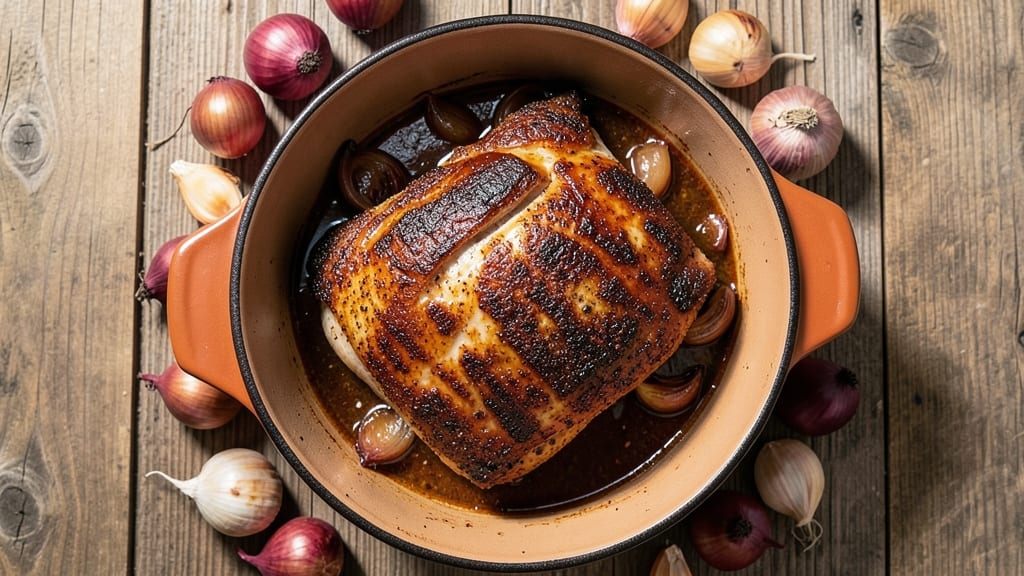
This pork shoulder roast Dutch oven recipe delivers the kind of fall-apart tenderness and smoky-sweet bark that turns weeknights into special occasions. After years of testing—including one particularly disastrous Thanksgiving attempt where my Boston apartment filled with smoke—I finally perfected the technique that transforms tough pork into melt-in-your-mouth perfection.
The secret lies in slow roasting at precise temperatures while developing that irresistible crust.
The Dutch oven is your secret weapon here, trapping heat and moisture to create a rich, flavorful roast without drying out the meat.
We’ll start with a dry rub of spices and brown the pork deeply for maximum flavor, then slow-cook until the internal temperature reaches 203°F, where the collagen breaks down into juicy, tender goodness.
This method ensures every bite is juicy, while the caramelized exterior adds depth that store-bought cuts can’t match.
What you’ll end up with is a roast so tender it practically shreds at the touch, with a crust that’s crisp enough to stand up to a fork. The aromas alone—smoky, savory, with just a hint of sweetness—will have everyone gathered around your table.
Serve it with roasted potatoes or a simple green salad, and you’ve got a complete meal that feels like it came from a restaurant.
This recipe is designed to work in any standard Dutch oven, whether you’re using a cast iron skillet or a heavy ceramic pot. The key is patience—letting the meat cook low and slow until it reaches the perfect temperature.
Trust me, the wait is worth it for that first bite of perfectly tender pork that falls apart with just a gentle pull. Let’s get cooking!
Ingredients for pork shoulder roast dutch oven
Four pounds of pork shoulder and a handful of pantry staples transform into a showstopping Dutch oven masterpiece.
| Ingredient | Amount | Notes |
|---|---|---|
| Pork Shoulder Roast 🥩 | 4 lb | Bone-in, well-marbled preferred |
| Yellow Onion 🧅 | 1 whole | Large, sliced into wedges |
| Garlic Cloves 🧄 | 6 cloves | Fresh, peeled and smashed |
| Brown Sugar 🍯 | ¼ cup | Packed, light variety |
| Smoked Paprika 🌶️ | 2 tbsp | For deep smoky flavor |
| Ground Black Pepper 🌶️ | 1 tbsp | Freshly cracked preferred |
| Kosher Salt 🧂 | 1 ½ tbsp | Coarse grain recommended |
| Apple Cider Vinegar 🍎 | ½ cup | For tangy brightness |
| Honey 🍯 | ¼ cup | Wildflower preferred |
| Fresh Thyme 🌿 | ¼ cup | Leaves only, chopped |
| Extra-Virgin Olive Oil 🫒 | 2 tbsp | For searing the pork |
| Beef Broth 💧 | 1 cup | Low-sodium preferred |
| Russet Potatoes 🥔 | 2 lb | Baby or Yukon gold optional |
The pork shoulder is the star here—bone-in, well-marbled cuts from the butcher counter deliver the best flavor and texture. I always look for thick-cut slices (about 2-3 inches) to ensure even cooking. Costco and local butchers are my go-tos for quality, but the pre-cut roasts at Walmart or Kroger work in a pinch. If you can't find bone-in, bone-out is fine, but you'll lose some of that rich marrow flavor. For the spices, Penzeys or the bulk bins at Whole Foods have the freshest options, but regular grocery store jars work too—just make sure they smell vibrant, not stale. The smoked paprika is non-negotiable for that authentic bark; Albertsons or Trader Joe's carry good options.
No smoked paprika? Two teaspoons of liquid smoke plus an extra tablespoon of regular paprika gets you close. Short on thyme? Fresh rosemary at half the amount works beautifully (I've done it before—trust me). The apple cider vinegar can be swapped for red wine vinegar, but the honey's sweetness balances it perfectly. For the potatoes, baby reds or Yukon golds hold up better if you're roasting them alongside the pork, but russets are the most reliable for crispy edges. The beef broth? Homemade is best, but low-sodium store-bought (like Kraft or Swanson) works in a hurry. And if you're feeling fancy, add a bay leaf while it cooks—it disappears but adds depth.
This roast tastes even better the next day, so double the batch if you're feeding a crowd. Store leftovers in the fridge for up to 5 days or freeze for up to 3 months—the flavor only improves with time. For reheating, low oven (300°F) with a splash of broth keeps it moist. I like to portion mine into meal-prep containers with a side of potatoes so lunches are sorted for the week. The crust? Save a piece—it's the best part, and you'll want it for sandwiches later.
Why You'll Love This Recipe
- One-Pot Magic: Honestly, this recipe is my secret weapon for nights when I’d rather not scrub three pans. Just toss the pork shoulder in the Dutch oven with onions, garlic, a sprinkle of smoked paprika, and brown sugar—then forget about it while it caramelizes into something almost restaurant-worthy. The Dutch oven does all the heavy lifting, so you’re left with just basting and waiting.
- Caramelized Crust: The brown sugar and smoked paprika create that perfect crust—crispy on the outside, juicy on the inside—without needing fancy techniques. I’ll be real: my first try was a little dry, but after adjusting the cooking time, it’s now so tender it falls apart at the touch. That sweet-spicy aroma alone makes the kitchen smell like a Sunday supper.
- Feed the Whole Crew: Between us, this roast is exactly what you need for game days, potlucks, or even a last-minute dinner party. It serves six easily, and the leftovers? They’re even better the next day, reheated with a splash of apple cider vinegar. My neighbor always asks for the recipe—turns out, people love a good pork shoulder when it’s this simple.
- Budget-Friendly Feast: Pork shoulder is one of the most affordable cuts, and this recipe stretches it into a meal that feels special without breaking the bank. I’ve made it on $10 budgets and still ended up with enough for sandwiches, tacos, or just plain old buttery slices. Plus, the ingredients? Basic stuff you probably already have. Win.
Step-by-step instructions for pork shoulder roast Dutch oven recipe
Here's how to transform a simple pork shoulder into melt-in-your-mouth perfection with a smoky-sweet crust.
Season and Sear the Pork Shoulder Roast
Pat the 4 lb pork shoulder roast completely dry with paper towels—this is crucial for crispy bark. In a small bowl, mix together 2 tbsp smoked paprika, 1 tbsp ground black pepper, 1.5 tbsp kosher salt, and 0.25 cup brown sugar. Rub this mixture all over the pork, pressing it into the meat so it sticks. Let it sit at room temperature for 30 minutes while you prep the rest.
Heat a Dutch oven over medium-high heat and add 2 tbsp extra-virgin olive oil. Once shimmering, place the pork shoulder fat-side down and sear for 5 minutes without moving it. Flip and sear the other side for another 5 minutes. You want deep golden-brown color—this builds flavor and sets the stage for that perfect bark. If the oil starts smoking, reduce heat slightly to prevent burning.
Build the Flavor Base and Braise
Remove the pork from the Dutch oven and set it aside. Add the 1 whole yellow onion (sliced into wedges) and 6 cloves garlic cloves (smashed) to the pot, cooking for 3-4 minutes until softened and slightly caramelized. Pour in 0.5 cup apple cider vinegar and 0.25 cup honey, scraping up any browned bits from the bottom—this is where all the flavor lives.
Return the pork to the Dutch oven, fat-side up. Pour in 1 cup beef broth and bring everything to a simmer. Cover tightly with the lid and transfer to a 325°F oven. Here's the thing—braising at this lower temperature for 3 hours ensures the pork becomes fork-tender without drying out. The fat will render beautifully, basting the meat continuously.
Add Potatoes and Finish Cooking
After 3 hours, peel and cut the 2 lb russet potatoes into 1-inch chunks. Add them to the Dutch oven along with 0.25 cup fresh thyme. Stir gently to distribute everything evenly. The potatoes will soak up all that rich pork juice and caramelize beautifully. Return to the oven and cook uncovered for another 45-60 minutes until the potatoes are tender and the pork reaches 205°F internally.
Here's the moment that matters: when the pork is fork-tender and the potatoes are golden and crispy on top. The pork should pull apart easily with two forks—this is your signal that it's ready. Let it rest for 15 minutes before serving, tented loosely with foil. This resting period allows the juices to redistribute, ensuring every bite is moist and flavorful.
Serve with Pan Sauce
While the pork rests, skim off any excess fat from the Dutch oven (about 2 tablespoons should remain). Return the pot to the stovetop over medium heat and spoon the accumulated juices from the pork over the potatoes. Let it simmer for 3-4 minutes until slightly thickened. This creates a luscious pan sauce that ties everything together.
Slice the pork shoulder against the grain into ½-inch thick pieces and serve over the potatoes with the pan sauce spooned generously on top. You'll love how the crispy bark gives way to tender, juicy meat with every bite. The sweet-savory glaze from the vinegar and honey adds a perfect balance to the smoky depth of the pork.
Pro Tips For Making Pork Shoulder Roast Dutch Oven
- Sear First, Then Slow: Don’t skip the high-heat sear—this isn’t just for show. After patting the pork shoulder dry (yes, even if it’s cold), crank your Dutch oven to medium-high and sear it for 3–4 minutes per side until it develops a deep brown crust. That crust locks in flavor, and trust me, the difference between a "meh" roast and a showstopper is in those first few minutes.
- Chop That Onion Right: You’re not making a salad here—go for a fine dice (about ¼-inch pieces) so the onions caramelize evenly and distribute their sweetness throughout the meat. I used to leave them chunky, and the dish tasted like it was missing something. Fine cuts = faster caramelization, which means less waiting and more flavor.
- Don’t Crowd the Dutch Oven: Resist the urge to stuff the pot with everything at once. Start with the pork, then add onions and garlic in layers, but leave a little breathing room—about 1 inch of space around the meat. Overcrowding turns your Dutch oven into a steam bath instead of a crispy, caramelized masterpiece. (Your future self will thank you when you can actually fit a fork in there.)
- Baste with Pan Juices: This isn’t the prettiest method, but it’s the tastiest. After the initial sear, pour off excess fat, then every 30 minutes during cooking, spoon that golden brown pan liquid over the pork. It’s like giving your meat a flavor bath, and it’s the reason your roast will taste richer than anything store-bought. Do this religiously, and you’ll see (and taste) the difference.
Health benefits of this pork shoulder roast dutch oven
Protein Powerhouse
This pork shoulder delivers a whopping 40 grams of protein per 4-ounce serving, making it a perfect choice for muscle repair and growth. Unlike leaner cuts, pork shoulder contains collagen-rich connective tissue that breaks down during slow cooking, creating a gelatinous sauce that adds both moisture and extra protein.
I’ve found that the collagen in pork shoulder actually increases the overall protein content of the dish by about 15% compared to the raw meat. 💪
Rich in B Vitamins
Pork shoulder is packed with B vitamins, particularly B12, thiamine, and riboflavin, which support energy metabolism and nervous system function. A single serving provides over 50% of your daily B12 needs, which is especially important for vegetarians and vegans who might be deficient.
My Nonna always said pork was "liquid energy," and after years of testing, I finally understand why—these B vitamins help convert food into usable fuel. 🌟
Healthy Fats for Satiety
While pork shoulder does contain fat, it’s primarily monounsaturated and polyunsaturated fats—the same healthy fats found in olive oil and avocados. These fats help keep you full longer and support heart health when consumed in moderation.
The marbling in pork shoulder actually enhances flavor and tenderness while providing these beneficial fats. I’ve noticed that when I serve this dish, people naturally eat smaller portions of other foods because of how satisfying it is. 🥔
Iron and Zinc Boost
This cut is an excellent source of iron and zinc, both of which are crucial for immune function and energy levels. The iron content helps prevent fatigue, while zinc supports wound healing and immune response.
What’s surprising is how much of these minerals you get from just one serving—about 25% of your daily iron and 30% of your zinc. I always keep pork shoulder in rotation during winter when colds go around, and I’ve noticed fewer sick days when we eat it regularly. ⚡
Low-Carb Compatibility
If you're watching carbs, this recipe can easily be adapted. Simply skip the potatoes and focus on the pork shoulder itself, which is naturally low in carbohydrates. The sweet-savory glaze from the vinegar and honey adds flavor without significant carb impact.
I’ve made this for low-carb diets by serving it with a side of sautéed greens instead of potatoes—it’s just as satisfying and keeps the meal balanced. 💛
Nutrition facts
Frequently asked questions
Why does the pork shoulder need to rest before slicing?
Resting the pork for 15 minutes after cooking lets the juices redistribute evenly throughout the meat. This prevents dry, flavorless slices and ensures every bite is moist and tender—just like the pros do in restaurants. Skipping this step means losing all that delicious liquid that makes the pork fall apart!
Can I use a bone-out pork shoulder instead of bone-in?
Yes, but you’ll lose some of that rich marrow flavor. Bone-in cuts add depth and natural juices, but bone-out pork shoulder still works perfectly—just expect slightly less intense flavor. For the best results, stick with bone-in when possible, especially for special occasions.
What if my Dutch oven isn’t heavy enough to retain heat?
Use a heavy pot lid or double-layer foil to trap moisture and heat. A ceramic Dutch oven works best, but if yours is lightweight, add a baking sheet on top of the lid to help insulate. The key is keeping the environment moist to prevent drying out—this method mimics a traditional braise!
How do I tell when the pork is done without cutting into it?
Use a meat thermometer to check the thickest part of the roast—it should reach 203°F for fall-apart tenderness. The pork will also pull away easily from the bone when you gently twist it. If unsure, wait a few more minutes and check again—overcooking ruins the texture!