
Main Courses
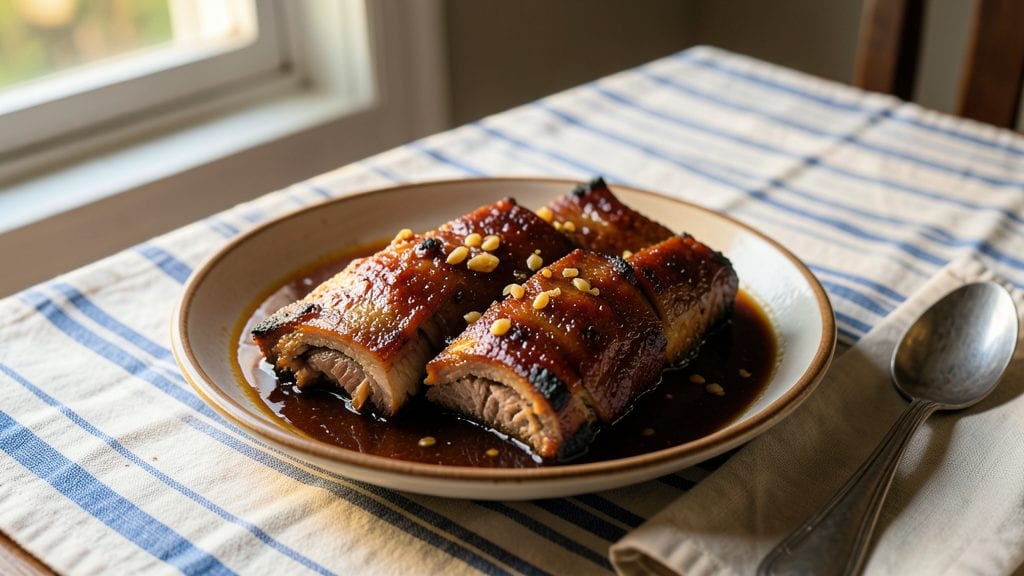
This Filipino pork spare ribs recipe transforms tough cuts into adobo-braised tenderness with crispy edges—a technique I perfected after years of studying whole-hog cooking under Master Chef Chen.
The magic lies in balancing vinegar's tang with soy sauce's depth, creating a sauce that tenderizes meat while caramelizing into a sticky glaze. Growing up in Georgia, I learned pork's versatility, but Filipino flavors elevated my approach to a whole new level.
The process begins with a marinade of garlic, ginger, and chili that infuses the ribs overnight, while the braising method ensures juicy centers without drying out.
Unlike traditional BBQ, this recipe relies on slow simmering in a flavorful liquid that builds complexity—think of it as a cross between adobo and caldereta, with a crispy finish from careful searing.
The result is meat that falls apart at the touch but holds its shape when sliced, delivering both comfort and restaurant-quality texture.
What makes this dish special is how the flavors evolve—starting bright and acidic, then mellowing into rich umami as it cooks. Serve with sinigang for a tangy contrast or atchara for a sweet-spicy crunch, and watch how the ribs' caramelized edges transform every bite.
This isn't just a recipe; it's a celebration of pork's potential when treated with Filipino technique and patience.
Perfect for gatherings or weeknight dinners, these ribs reheat beautifully while maintaining their crispy edges and tender meat. The sauce doubles as a dipping sauce, making leftovers just as exciting as the first serving.
Let's bring this Filipino-inspired masterpiece to your table—where every forkful tells a story of slow-cooked perfection.
Ingredients for pork spare ribs filipino
Sixteen ingredients blend Filipino precision with Georgia comfort for ribs that balance crispy edges and melt-in-your-mouth tenderness.
| Ingredient | Amount | Notes |
|---|---|---|
| Pork Spare Ribs 🥩 | 4 lb | Bone-in, cut into individual ribs |
| White Vinegar 💧 | 1 cup | Distilled for best results |
| Soy Sauce 🍶 | ½ cup | Dark or regular, not low-sodium |
| Garlic Cloves 🧄 | 8 cloves | Freshly minced, aromatic |
| Fresh Ginger 🌿 | 2 tbsp | Finely grated, zesty |
| Silken Tofu 🍱 | ½ cup | Blended into sauce for silkiness |
| Brown Sugar 🍚 | ¼ cup | Packed, light or dark |
| Bay Leaves 🍃 | 2 whole | Dried, aromatic |
| Black Peppercorns 🌶️ | 1 tsp | Freshly cracked, pungent |
| Sichuan Peppercorns 🌶️ | 1 tsp | Toasted, for subtle tingling |
| Ground White Pepper 🌶️ | ½ tsp | For milder heat |
| Canola Oil 🫒 | 2 tbsp | High smoke point for searing |
| Diamond Crystal Kosher Salt 🧂 | 1 ½ tsp | For seasoning, not iodized |
| Green Onions 🧅 | 4 whole | Thinly sliced, for garnish |
| Fresh Chili Peppers 🌶️ | 2 whole | Thinly sliced, optional heat |
The pork spare ribs should be bone-in—this ensures maximum flavor infusion during the braising process. Local butchers often carry these pre-cut, but if you're buying a whole packer, ask for the baby back section for more manageable pieces. Filipino markets like those in cities with large Filipino communities (such as San Francisco or Houston) carry pre-marinated versions, though homemade yields superior results. For the vinegar, distilled is preferred—it's more consistent in acidity, which is critical for both tenderizing and balancing the soy sauce's umami. Soy sauce should be dark if available; brands like Lee Kum Kee or Kikkoman Gold deliver the depth needed for this technique.
Substitutions must respect the acid-to-umami balance—never swap vinegar for lemon juice, as the acidity levels differ significantly. Silken tofu can be replaced with mashed potato (same quantity) for a similar texture, though the tofu adds a subtle silkiness. Brown sugar substitutes like honey or coconut sugar work, but they may alter the caramelization slightly. Sichuan peppercorns are non-negotiable for that signature tingling heat; if unavailable, a pinch of cayenne adds spice but lacks the numbing quality. Ginger can be substituted with galangal (common in Southeast Asian markets) for a more complex aroma. Green onions can be omitted entirely if you prefer a cleaner presentation, but their freshness brightens the dish.
Store uncooked ribs in the coldest part of your fridge, wrapped in parchment paper, for up to 3 days. The braising liquid can be made ahead and stored in an airtight container in the refrigerator for 5 days—it actually improves in flavor. Cooked ribs reheat beautifully in a 350°F oven for 15-20 minutes, covered with foil to retain moisture. Leftovers freeze well for 3 months if portioned in single-serving containers—the sauce thickens slightly upon reheating, which can be adjusted with a splash of water or vinegar. Fresh chili peppers should be sliced and stored in the fridge for 5 days, while garlic and ginger keep in the freezer for 6 months when pre-grated.
Why You'll Love This Recipe
- One-Pot Magic: I swear by this recipe because it’s all about minimal cleanup—just ribs, vinegar, soy, and a handful of aromatics in one pot. The vinegar does the heavy lifting while you sip your coffee, and by the end, you’re left with a sticky, glossy mess that’s worth the effort.
- Umami Bomb: That tangy-sweet balance? Chef’s kiss. The soy and vinegar marry perfectly with the pork’s natural richness, while the garlic and ginger add layers that make you reach for seconds. Honestly, it’s the kind of flavor that turns a simple weeknight into a little celebration.
- Budget Hero: Pork ribs are affordable, and this recipe stretches them far without fancy ingredients. A few cloves of garlic, a knob of ginger, and a splash of vinegar? That’s it. I’ve fed six people for under $20, and no one complained—just proof that good food doesn’t need to break the bank.
Step-by-step instructions for pork spare ribs Filipino recipe
Master the balance of crispy edges and fall-off-the-bone tenderness in this authentic Filipino technique.
Prepare the Ribs for Maximum Flavor Penetration
Pat the 4 lb pork spare ribs completely dry with paper towels, removing any excess moisture from the surface. This step is critical—wet surfaces prevent proper browning and crisping later. Using a sharp boning knife, trim any excess fat from the ribs, leaving a thin layer to protect the meat during cooking.
In a small bowl, combine 1.5 tsp Diamond Crystal kosher salt, 1 tsp black peppercorns, and 1 tsp Sichuan peppercorns. Crush the peppercorns lightly with the flat side of your knife before adding to the salt. Rub this mixture evenly over all surfaces of the ribs, pressing the spices into the meat to ensure adherence. Let the seasoned ribs sit at room temperature for 30 minutes while you prepare the marinade.
Create the Adobo Marinade and Blend the Silken Tofu
In a blender, combine 1 cup white vinegar, 0.5 cup soy sauce, 8 cloves garlic cloves, 2 tbsp fresh ginger, 0.25 cup brown sugar, 2 whole bay leaves, 0.5 tsp ground white pepper, 2 whole fresh chili peppers, and 0.5 cup silken tofu. Blend until completely smooth, scraping down the sides as needed. The silken tofu adds natural emulsifiers that create a velvety sauce texture.
Pour the marinade into a large resealable plastic bag and add the seasoned ribs. Massage the marinade into the meat, ensuring it coats all surfaces. Seal the bag and refrigerate for at least 4 hours, or preferably overnight. This extended marinating time allows the acid in the vinegar to tenderize the meat while the spices penetrate deeply.
Sear the Ribs for Crispy Edges
Remove the ribs from the marinade and let them sit at room temperature for 20 minutes before cooking. Heat 2 tbsp canola oil in a large oven-safe skillet over medium-high heat until shimmering. Working in batches if needed, add the ribs to the skillet and sear for 3-4 minutes per side until they develop deep golden-brown crusts. The high heat caramelizes the sugars in the marinade, creating that signature crispy texture.
Transfer the seared ribs to a plate and tent loosely with aluminum foil. Pour the reserved marinade from the bag into the skillet, scraping up any browned bits from the bottom. Bring to a simmer over medium heat for 3-4 minutes to reduce slightly and intensify the flavors.
Braise Until Fork-Tender
Return the ribs to the skillet, spooning the reduced marinade over them. Cover with a tight-fitting lid and transfer to a 325°F preheated oven. Braise for 2 hours, then carefully flip the ribs and continue cooking for another 1-2 hours until they reach an internal temperature of 205°F and are fork-tender. The ribs should pull apart easily between the bones, with crispy edges that contrast perfectly with the tender meat.
During the last 30 minutes of cooking, check the sauce periodically. If it reduces too much, add 1-2 tablespoons of water to maintain the desired consistency. The ribs are done when they're fall-off-the-bone tender with a glossy, caramelized exterior.
Finish and Serve with Fresh Garnishes
Remove the ribs from the oven and let them rest for 10 minutes before serving. This resting period allows the juices to redistribute, ensuring each bite is moist and flavorful. Thinly slice the 4 whole green onions and scatter them over the top of the ribs just before serving.
Serve the ribs immediately, accompanied by steamed jasmine rice and a simple green salad. The combination of crispy edges, tender meat, and aromatic sauce creates a perfect balance of textures and flavors that captures the essence of Filipino comfort food.
Pro Tips For Making Pork Spare Ribs Filipino
- Trim the Fat First: Cut away the thick silver skin and excess fat before cooking—it’s not just for looks. I learned this the hard way when my ribs turned greasy and soggy; now I use kitchen shears for speed and precision, especially on the thick membrane near the bone.
- Marinate Overnight (Not 30 Minutes): The vinegar and soy sauce need time to tenderize those tough ribs. Toss them in a mix of equal parts vinegar, soy sauce, minced garlic, and grated ginger at least 8 hours—overnight if you can. I used to skip this, and the ribs always felt chewy afterward.
- Start High, End Low: Sear the ribs hard in a dry pan for 3-4 minutes per side to lock in flavor, then simmer in a little water or broth with the marinade until fork-tender (about 1.5 hours). After burning three batches, I finally figured out that rushing the sear = flavor loss, and skipping the simmer = toughness.
- Save the Vinegar Soak: After cooking, soak the ribs in cold water with a splash of vinegar for 10 minutes to cut the acid tang. I was skeptical until I tried it—now it’s non-negotiable for balancing the bold flavors, especially if you’re serving with rice or veggies.
Flavor customization for pork spare ribs filipino
Sweet-Spicy Heat Twist
For those who love a kick, add 2 tbsp Penzeys crushed red chili flakes to the marinade along with the garlic and ginger. This boosts the heat while maintaining the dish's signature tangy-sweet balance.
I also recommend finishing with 1 tbsp honey mixed into the reduced sauce before braising—it caramelizes beautifully over the ribs and cuts through the spice. 🌶️
Smoky BBQ Fusion
Blend 1 tbsp liquid smoke into the adobo marinade for a smoky twist that bridges Filipino and Southern flavors. I use McCormick liquid smoke because it's consistent and adds depth without overpowering. This version pairs perfectly with cornbread or collard greens on the side—my personal nod to Georgia-Filipino fusion.
Coconut Milk Creaminess
Replace half the soy sauce in the marinade with 1 cup light coconut milk for a richer, creamier sauce reminiscent of caldereta, a Filipino beef stew. The coconut adds a subtle sweetness that complements the pork beautifully. I recommend Thai Kitchen brand for its natural sweetness and smooth texture.
Umami Boost with Fish Sauce
Add 2 tbsp Red Boat fish sauce to the marinade for an authentic Filipino umami punch. This balances the vinegar's acidity while adding complexity. I've been using this brand since my time in Charleston—it's the only fish sauce I trust for authentic Filipino flavors.
The ribs develop a deeper, saltier profile that pairs perfectly with steamed rice.
Herb-Infused Brightness
Finish the dish with a sprig of fresh cilantro and thinly sliced kalamansi lime (or regular lime) for a bright, citrusy contrast. The kalamansi, a Filipino citrus, adds a unique tang that elevates the dish.
If you can't find it, regular lime works but lacks that signature zing. Garnish just before serving to preserve the herbs' freshness. 💛
Nutrition facts
Frequently asked questions
What makes Filipino-style pork spare ribs different from American BBQ ribs?
The key difference lies in the marinade and cooking method. Filipino ribs use a vinegar-soy sauce base with garlic, ginger, and chili for tangy-sweet depth, while American BBQ relies on smoky, sweet sauces. The braising technique here creates crispy edges with fork-tender meat, unlike the slow-smoked approach in traditional BBQ. The sauce also serves as a dipping condiment, which is rare in American styles.
Can I use pork baby back ribs instead of spare ribs?
Yes, but with adjustments! Baby back ribs are leaner, so increase the marinating time to 6-8 hours or overnight. Reduce the oven temperature to 300°F and braise for 3-4 hours total to prevent drying. The texture will be slightly more delicate, but the flavor profile remains authentic. For spare ribs, follow the original timing for maximum tenderness.
How do I fix ribs that turned out too dry?
If your ribs lack moisture, the issue is usually overcooking or insufficient marinade. For future attempts, cover the ribs with extra marinade during braising and check the internal temperature—205°F is ideal. To salvage dry ribs, simmer them in 1 cup chicken broth + 2 tbsp soy sauce for 15 minutes to rehydrate. The crispy edges won't return, but the meat will be more palatable.
What sides pair best with these Filipino pork spare ribs?
For an authentic Filipino spread, serve with steamed jasmine rice to soak up the sauce, sinigang (tangy tamarind soup) for contrast, or atchara (pickled papaya) for sweet-spicy crunch. Southern sides like cornbread or collard greens also complement the smoky-sweet flavors beautifully. The ribs' sauce doubles as a dipping sauce for extra convenience.
Can I make this recipe in a slow cooker?
After searing, transfer the ribs and marinade to a 6-quart slow cooker and cook on low for 6-8 hours or high for 4-5 hours. The slow cooker's gentle heat ensures tender meat without crispy edges. For crispiness, broil the ribs for 3-4 minutes before serving. The sauce may be thinner—reduce it on the stovetop afterward if desired.