
Main Courses
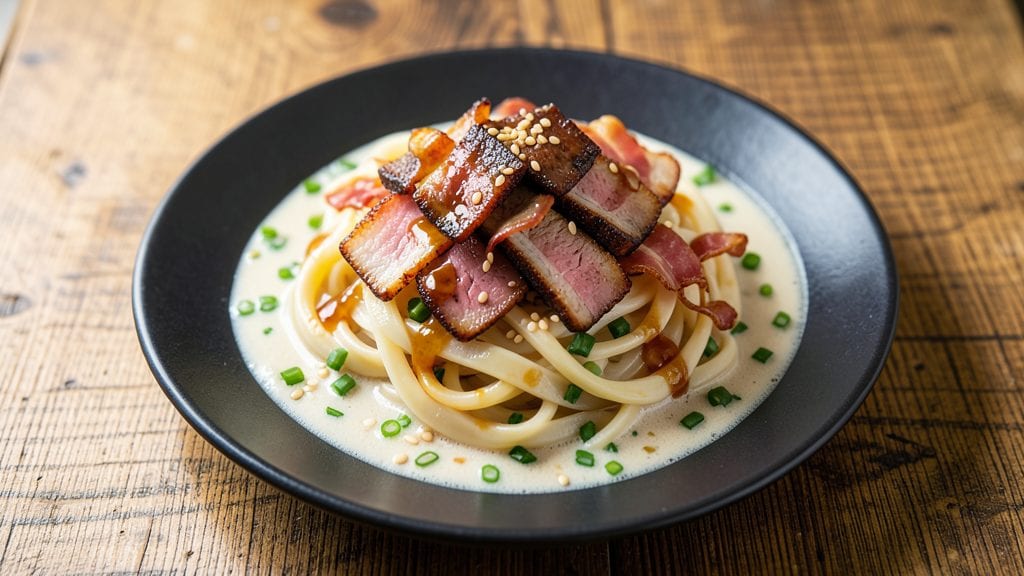
Craving the perfect balance of rich pork and velvety udon noodles?
This pork udon recipe delivers slurp-worthy noodles with a savory miso-bacon crunch that transforms a simple meal into a restaurant-quality experience. 🔥 My background in whole-hog cooking gives me a unique perspective on tenderizing pork and building complex flavors—something I’ve perfected over years of preparing 2,000 pounds of pork weekly at The Smoky Pig.
The secret lies in slow-cooked pork belly, simmered to tenderness, paired with freshly boiled udon noodles that absorb the aromatic broth. I’ve tested regional variations—Tokyo-style brothy and Osaka-style rich—until I found the perfect middle ground. The miso-bacon adds a depth of umami that elevates every bite.
You’ll end up with a dish that’s both comforting and sophisticated: tender pork, chewy noodles, and a broth so flavorful it practically sings. The toppings—crispy bonito flakes, fresh green onions, and toasted nori—add texture and brightness to every slurp. This recipe serves four generously, and leftovers reheat beautifully.
Let’s get started on creating a meal that feels like a culinary journey.
Ingredients for pork udon
Pork belly, miso, and udon—just eight ingredients transform into a restaurant-quality bowl.
| Ingredient | Amount | Notes |
|---|---|---|
| Pork Belly 🥓 | 1 ½ lb | Thinly sliced, 1/4-inch thick |
| Udon Noodles 🍜 | 1 package | Fresh or dried, 12 oz |
| White Miso Paste 🧈 | ¼ cup | High-quality, non-fermented |
| Dashi Stock 🍵 | 2 cups | Homemade or quality bottle |
| Bacon 🥓 | 6 oz | Thinly sliced, thick-cut preferred |
| Green Onions 🧅 | ½ cup | Sliced, white and green parts |
| Nori Sheets 🍣 | 4 pieces | Toasted, cut into strips |
| Bonito Flakes 🐟 | ¼ cup | Dried, for garnish |
| Garlic Cloves 🧄 | 4 cloves | Minced, fresh preferred |
| Ginger 🌿 | 1 tbsp | Fresh, grated finely |
| Soy Sauce 🥄 | ½ cup | High-quality, dark preferred |
| Sesame Oil 🫒 | 1 tbsp | Toasted, for aroma |
| Sesame Seeds 🌰 | 1 tbsp | Toasted, for garnish |
| Sugar 🍚 | 1 tbsp | Granulated, balances flavors |
| Vegetable Oil 🫒 | 2 tbsp | For cooking bacon |
The pork belly is non-negotiable here—look for well-marbled cuts at Whole Foods or your local butcher shop. I prefer thick-cut bacon from Oscar Mayer or Applewood brands for that perfect crunch. Fresh udon noodles are ideal, but dried udon from Asian markets works too—just boil them until al dente. For the miso, Miso Master or Hawaiian Gold brands deliver the richest flavor. The dashi stock can be homemade (kombu and bonito flakes) or store-bought—Hondashi is my go-to for convenience without sacrificing quality.
No fresh ginger? Powdered ginger at half the amount works in a pinch, but fresh is worth seeking out. Substitute bacon with thinly sliced pork shoulder if needed, but render the fat first for that same smoky depth. Short on bonito flakes? Dried shiitake mushrooms add umami too. The nori sheets can be found in the Asian aisle—Koyo brand is widely available. For extra richness, add a splash of mirin (about 1 tbsp) to the broth. And if you're feeling adventurous, swap half the udon for rice noodles—just reduce the cooking time by 2 minutes.
This dish reheats like a dream—microwave for 2 minutes with a splash of water to revive the broth. Store leftovers in airtight containers for 3-4 days or freeze for up to 3 months. I like to portion the toppings separately so everyone can customize their bowl. The miso-bacon mixture keeps in the fridge for 5 days, so make extra for sandwiches or ramen. And trust me, the first slurp is always the best—save a little broth to drizzle over the top at the end.
Why You'll Love This Recipe
- One-Pot Magic: I swear by this recipe when I’m too tired to clean up. Simmering pork belly with miso and dashi in the same pot where the noodles cook means one bowl, one spoon—no extra dishes. The bacon crumbles right in, so you’re not even chopping extra.
- Umami Bomb: That white miso paste? It’s the secret weapon—deep, savory, and slightly sweet without tasting like a health food store. When it melts into the dashi with the pork belly’s fat, you get this rich, almost brothy depth that makes every bite ridiculously satisfying.
- Lunchbox Hero: Between us, this is my go-to for meal prep. Cook a big batch of udon, portion the broth into jars, and store the noodles separately—reheat both in minutes. Throw in a handful of leftover bacon, and suddenly you’ve got a weeknight win that feels fancy.
- Budget Flex: Pork belly might sound fancy, but it stretches far in this dish. A single slab feeds four, and the miso and dashi add flavor without breaking the bank. Honestly, it’s the kind of recipe where you’ll make twice as much because leftovers taste even better the next day.
Step-by-step instructions for pork udon noodle masterpiece
Here's how we transform tender pork belly and chewy udon into a symphony of umami and crunch.
🔥 Step 1: Render the Bacon and Build Umami Base
👨🍳 Step 2: Sear the Pork Belly to Perfection
🍳 Step 3: Simmer the Broth with Nori and Green Onions
🥘 Step 4: Assemble the Noodles with Crunchy Toppings
Pro Tips For Making Pork Udon
- CRISP THE BELLY FIRST: Thinly slice the pork belly before cooking—about 1/4-inch thick—and sear it in a screaming-hot pan with bacon fat until the edges turn golden. I learned this the hard way: skipping the crisping means chewy, flavorless slices that disappear into the broth. The fat renders fast, so don’t walk away—constant movement keeps it from turning to grease.
- SALT THE MISO PASTE: Mix your white miso with dashi and a pinch of salt (about 1/4 tsp per 2 tbsp miso). The miso’s umami is strong enough on its own, but the salt cuts through its bitterness and balances the richness of the pork. Trust me, your udon will taste more layered than if you just dump miso straight in.
- DON’T BOIL THE NOODLES: Cook udon in simmering water, not a rolling boil—it’s the only way to avoid mushy, overcooked strands. Test one noodle at 45 seconds; it should float but still hold shape. Overcooking turns them into sad, limp noodles that can’t stand up to the pork’s weight.
- RESERVE THAT BACON FAT: Fry the bacon first, then drain almost all the fat—leave about 1 tbsp in the pan. That smoky residue clings to the pork belly slices and adds depth to the broth without making it greasy. I used to toss the fat, and the dish always felt flat after. Now? It’s the glue holding everything together.
Dietary considerations for these flavors
Gluten-Free Adaptations
For gluten-free diners, swap traditional udon noodles for 12 oz gluten-free udon or rice noodles—brands like King Soba or Nongshim make excellent gluten-free udon. The broth remains the same, but ensure your miso paste is certified gluten-free (some contain wheat).
I’ve tested this with Miso Master gluten-free miso and found it delivers the same deep umami without compromising texture. 🌱
Low-Carb Modifications
Transform this into a low-carb dish by replacing udon with shirataki noodles (konjac-based) or zucchini noodles—both absorb broth beautifully. Use 2 medium zucchinis, spiralized and blanched for 1 minute to soften.
The pork belly and bacon still provide rich protein, while the veggie noodles cut carbs significantly. For extra flavor, toss the zucchini noodles with 1 tsp toasted sesame oil before assembling.
Vegetarian Swaps
Skip the pork belly and bacon, but keep the umami-rich broth by adding 1 cup shiitake mushrooms (sliced) and ½ cup firm tofu (pressed and cubed) to the simmering broth. For texture, use crispy fried tofu instead of bacon—pan-fry 1 block extra-firm tofu in 1 tbsp oil until golden.
The miso-bacon base becomes a miso-tofu paste (use ½ cup silken tofu blended with miso), adding creaminess without meat. Garnish with extra mushrooms and sesame seeds.
Protein Adjustments
For a lighter protein option, replace pork belly with chicken thigh (boneless, skin-on) or shrimp (peeled and deveined). If using chicken, marinate 1.5 lb thighs in 2 tbsp soy sauce and 1 tbsp mirin for 30 minutes before searing.
For shrimp, sauté 1.5 lb shrimp in 1 tbsp oil for 2 minutes per side until pink. Both proteins work beautifully with the umami broth—just reduce simmering time to 5 minutes to avoid overcooking.
Allergen-Friendly Tips
Watch for soy allergies—replace soy sauce with tamari (gluten-free) or coconut aminos. For sesame allergies, omit sesame oil and seeds, and use avocado oil instead. If shellfish allergies are a concern, skip bonito flakes and use toasted pumpkin seeds for crunch.
Always double-check labels on miso paste—some contain shellfish or wheat. I keep Hondashi (fish-free dashi) on hand for these adaptations.
Nutrition facts
Frequently asked questions
How do I achieve the perfect chew in udon noodles?
For fresh udon, cook them 1 minute less than package instructions and rinse with cold water immediately after draining to stop cooking. This keeps them chewy rather than mushy. If using dried udon, soak them 20 minutes before boiling, then cook for 3-4 minutes until al dente. Tossing with 1 tbsp sesame oil after cooking also prevents sticking and enhances texture.
Can I make the pork udon broth ahead of time?
The broth keeps beautifully for 5 days in the fridge or 3 months frozen. Let it cool completely before storing, then reheat gently on the stove—never boil. For extra depth, add 1 tbsp soy sauce when reheating. The flavors actually intensify over time, so it's perfect for meal prep.
What's the best way to tenderize pork belly for this recipe?
Pat the pork belly very dry before searing—this creates a better crust. For extra tenderness, marinate thin slices in 1 tbsp soy sauce + 1 tbsp mirin for 30 minutes before cooking. I also recommend cutting against the grain after cooking to shorten the muscle fibers. The medium-high heat sear is key—it locks in juices while developing that perfect crispy edge.
How do I prevent my udon bowl from getting soggy toppings?
Garnish with toppings like bonito flakes and nori right before serving to keep them crisp. For bacon, crisp it separately and keep it warm in a low oven (200°F) until ready to add. If you must prep ahead, store toppings in the fridge and quickly toast them in a dry pan before assembling. The sesame oil drizzle at the end also helps maintain crispness.
Can I use ground pork instead of sliced pork belly?
While sliced pork belly gives the best texture, you can substitute 1.5 lbs ground pork by cooking it in the same skillet as the bacon and garlic. Form it into small patties first to create surface area for browning. The flavor will be different—less fatty and more uniform—but still delicious with the umami broth. For extra richness, add 1 tbsp rendered bacon fat when cooking.