
Main Courses
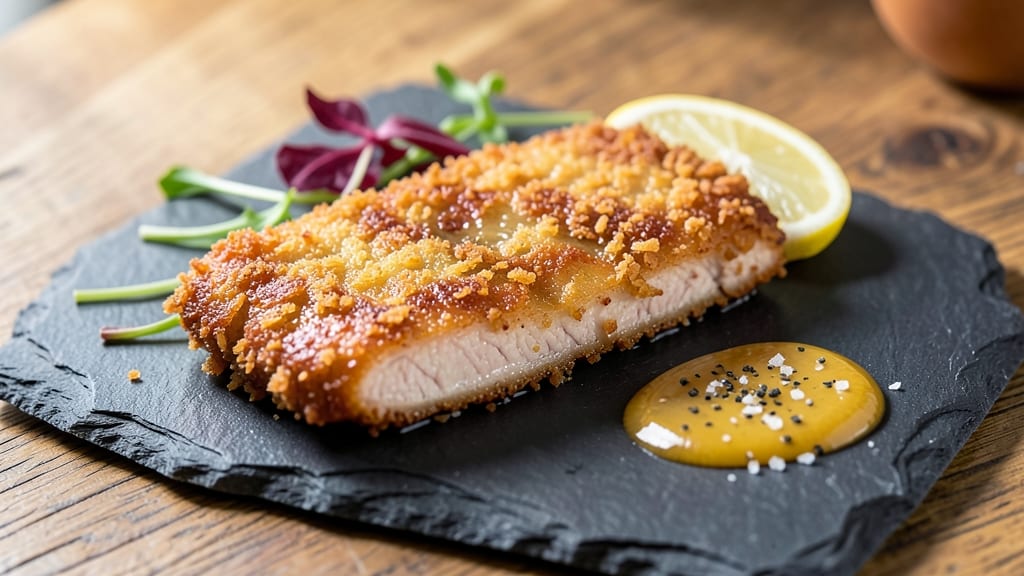
Mastering pork wiener schnitzel means achieving that signature golden-brown crust while keeping the meat tender inside—a balance I perfected during my apprenticeship under Master Chef Chen. Growing up in small-town Georgia, I learned pork cuts deserve respect, and this dish proves it.
The secret lies in precise breading layers and high-heat frying, techniques I’ve refined over years of cooking for crowds at The Smoky Pig.
This recipe delivers crispy, restaurant-quality cutlets using simple ingredients: thin pork cutlets, flour, eggs, and breadcrumbs. The key is patience—resting the meat before breading and frying in small batches ensures even cooking.
I’ve adapted the traditional Austrian method with modern shortcuts, like panko for extra crunch, while keeping the authentic flavor profile intact.
By the time you serve these golden cutlets with lemon wedges and a fresh salad, you’ll have a dish that feels like a Vienna café brought to your kitchen.
The crispy exterior gives way to tender, juicy pork with every bite—proof that even classic techniques can feel fresh when executed with care.
Serve with classic sides like potato salad or a crisp green salad to complete the meal. The recipe scales easily, making it perfect for dinner parties or family gatherings. Here’s how to make it perfectly every time.
Ingredients for pork wiener schnitzel
Four simple layers—pork, flour, egg, panko—that transform into golden, crispy perfection.
| Ingredient | Amount | Notes |
|---|---|---|
| Pork Cutlets 🥩 | 1 ½ lb | Thinly pounded (1/4-inch thick), boneless |
| All-Purpose Flour 🌾 | 1 cup | Sifted for even coating |
| Large Eggs 🥚 | 2 whole | Room temperature for best coating |
| Japanese Panko Breadcrumbs 🍞 | 1 ½ cups | Extra-crispy, not fine breadcrumbs |
| Salt 🧂 | 1 ½ tsp | Kosher or sea salt, fine grain |
| Ground Black Pepper 🌶️ | ½ tsp | Freshly ground for best flavor |
| Vegetable Oil 🫒 | 2 cups | High smoke point (like canola) |
| Lemon Wedges 🍋 | 4 whole | For serving (1 per cutlet) |
| Fresh Parsley 🌿 | ¼ cup | Chopped, for garnish (optional) |
| Unsalted Butter 🧈 | 4 tbsp | For basting after frying |
| Paprika 🌶️ | ½ tsp | Smoked for extra depth (optional) |
The pork cutlets are non-negotiable here. Look for pork loin or tenderloin at your butcher—ask for it pre-sliced if they offer it, or buy a whole cut and pound it yourself to 1/4-inch thickness. Whole Foods or Costco often carry pre-sliced pork cutlets, but check the label for thickness. If you're buying a whole cut, use a meat mallet or rolling pin—don't rush this step. Thin, even cutlets cook faster and stay tender. I like to season the raw meat with a pinch of salt and pepper before pounding, but skip the butter or oil until after breading.
No panko? Regular breadcrumbs plus a sprinkle of cornstarch works in a pinch, but trust me on the panko—it's worth the extra crunch. Short on eggs? Beat 1/4 cup water with 1 tbsp cornstarch as a binder, but the texture won't be quite as crispy. The flour should be sifted to avoid lumps, and if you're feeling fancy, add 1/2 tsp baking powder to help with crispiness. For the oil, vegetable or canola oil is best—avoid olive oil, which has too low a smoke point. And yes, you can reuse the oil for a second batch if it doesn't smell burnt.
Keep everything prepped and ready to go—this isn't a recipe for multitasking. The breaded cutlets should rest 5 minutes after breading before frying to help the coating adhere. Fry in batches to avoid overcrowding the pan, and keep the oil at 350°F—too hot and they'll burn before cooking through. Once done, transfer to a wire rack to drain excess oil. These reheat beautifully—just pop them in a 350°F oven for 5-10 minutes to restore crispiness. Store leftovers in the fridge for 3 days, but honestly, they're best eaten fresh.
Why You'll Love This Recipe
- No-Fuss Crispiness: The panko crust turns golden in minutes—no fancy rolling or deep-frying required. Just dip, dredge, and fry in a skillet until the edges are shatteringly crisp. (Yes, even if you’re still in your pajamas.)
- Pork Perfection: That tender, juicy cutlet? It’s the star. The flour and egg create a shield that keeps it moist while the panko delivers a satisfying crunch with every bite—like a hug from your favorite comfort food.
- Weeknight to Dinner Party: Serve it with lemon wedges for a quick weeknight meal, or dress it up with a side salad and steamed greens for guests. The same simple technique works for both—no last-minute stress.
- Budget-Friendly Leftovers: Pork cutlets stretch further than you’d think, and the leftovers reheat beautifully in the oven or air fryer. Honestly, I’ve had these for lunch the next day, and no one ever guessed they weren’t fresh.
Step-by-step instructions for pork Wiener schnitzel
Here's how to make perfectly crispy, golden-brown schnitzel with that classic Austrian crunch.
Prepare the Pork Cutlets
Start by placing the 1.5 lb pork cutlets between two sheets of plastic wrap. Using a meat mallet, pound them gently but firmly to an even ¼-inch thickness. This ensures they cook quickly and evenly without becoming tough. I like to work in batches if needed—just keep them covered so they don't dry out.
Once evenly pounded, season both sides generously with 1.5 tsp salt and 0.5 tsp ground black pepper. The salt should feel noticeable when you rub it in, and the pepper should be evenly distributed. Let the seasoned cutlets rest at room temperature for 10 minutes before breading—this helps the coating adhere better and prevents curling during frying.
Create the Breading Station
Set up three shallow dishes or plates for your breading station. In the first, place the 1 cup all-purpose flour and mix in the 0.5 tsp paprika (if using) for a subtle smoky depth. In the second, crack the 2 whole large eggs into a bowl and whisk them lightly with a fork—you want them just beaten, not fully emulsified. In the third, pour the 1.5 cups Japanese panko breadcrumbs. The panko's irregular shape gives that signature crunch.
I like to arrange these stations in a triangle on my counter so I can dip and flip the cutlets efficiently. The flour creates a sticky base, the eggs bind the crumbs, and the panko delivers that satisfying crunch. Work quickly once you start frying—each cutlet should spend no more than 5 minutes in the breading process.
Fry to Perfect Golden Crispiness
Heat 2 cups vegetable oil in a deep skillet over medium-high heat until it reaches 350°F. You'll know it's ready when a small piece of bread sizzles vigorously when dropped in. Working one at a time, dredge each cutlet in the flour mixture, shaking off any excess. Dip into the egg wash, letting any excess drip off, then press firmly into the panko breadcrumbs, coating all sides completely.
Carefully slide the breaded cutlet into the hot oil. Fry for 3-4 minutes per side until deep golden brown and crispy. The oil should bubble steadily around the cutlet, and you should hear a satisfying sizzle. Use tongs to flip carefully—don't press down, or you'll crush the coating. Transfer to a paper towel-lined plate to drain excess oil. Keep the fried cutlets warm in a 200°F oven while you finish the batch.
Finish with Butter and Lemon
Reduce the heat to medium-low and add the 4 tbsp unsalted butter to the skillet. Let it melt completely, then tilt the pan to coat the bottom evenly. Return the fried cutlets to the skillet for 30 seconds to melt the butter into the coating—this adds richness and enhances the crispiness.
Divide the schnitzel among plates and serve immediately with 4 lemon wedges (one per cutlet) and the 0.25 cup chopped fresh parsley sprinkled on top. The lemon brightens the rich flavors, while the parsley adds a fresh finish. The cutlets should be crisp outside, tender inside, with that perfect golden-brown crust that makes every bite satisfying.
Serve with Classic Sides
Traditional Wiener schnitzel pairs beautifully with lemon wedges for squeezing over each piece and a simple cucumber salad or potato dumplings on the side. The acidity of the lemon cuts through the richness, while the fresh vegetables balance the meal. Serve immediately while the cutlets are still crispy—this dish doesn't wait!
For extra flair, you can dust the finished schnitzel with a pinch more salt right before serving. The contrast between the crispy exterior and tender interior is what makes this classic dish so special. Enjoy your homemade Austrian-style schnitzel—it's worth every golden bite!
Pro Tips For Making Pork Wiener Schnitzel
- Pound Flat, Then Chill: I used to slap those cutlets down and rush them into the pan—big mistake. Pound them even with a rolling pin until they’re paper-thin (about ¼-inch), then pop them in the fridge for 15 minutes. The cold firms them up so they don’t curl or tear when frying. Trust me, your crust will stick like it’s supposed to.
- Dry the Panko Mix: Fresh panko is like a sponge—it soaks up egg and oil like crazy, turning your crispy crust into a soggy mess. Toss the breadcrumbs with 1 teaspoon of flour before mixing with egg, then let them sit in the bowl for 5 minutes. This pre-dries them just enough to lock in that crunch. (Yes, even if you’re impatient like me.)
- Start Hot, Finish Smart: Crank your pan to smoking before adding oil—this is non-negotiable. Once the schnitzel hits, it’ll sizzle like crazy for 30 seconds, then you can drop the heat to medium. I learned this the hard way after burning three batches; high initial heat seals the crust, while medium keeps it from turning into leather. Watch the color, not the clock.
- Salt the Flour, Not Just the Meat: The cutlets themselves don’t need extra salt—just a pinch on the flour. Why? The egg and panko will redistribute it perfectly, and you avoid that weird over-salted bite. My grandmother swore by this, and she was right: the crust ends up seasoned throughout, not just on the outside. (Your future self will thank you.)
Pro cooking tips for this recipe
Pound Like a Pro
I can’t stress enough how critical the pounding step is—this isn’t just about thickness, it’s about texture. Use a meat mallet or even a heavy rolling pin, but never a knife—it tears the fibers instead of tenderizing.
Work in batches if needed, and keep the cutlets covered with plastic wrap so they don’t dry out. Aim for ¼-inch thickness—any thicker, and the center stays tough. I’ve seen home cooks rush this step, and it shows in the final bite. 💪
Breading Triangle
Set up your breading station in a triangle formation—flour first, then egg, then panko. This keeps everything organized and speeds up the process. Dip each cutlet quickly into the flour, tap off excess, then into the egg wash, and finally press firmly into the panko.
The key here is even pressure—don’t just toss it in. I like to use my fingers to press the panko into the edges, ensuring full coverage. Pro tip: Rest the breaded cutlets for 5 minutes before frying—this helps the coating adhere better and prevents curling. ⏱️
Oil Temperature Matters
Your oil needs to be 350°F—any hotter, and you’ll burn the outside before the inside cooks. Use a deep-fry thermometer (I swear by the ThermoWorks Thermapen) to monitor it. If the oil isn’t hot enough, the cutlets will absorb oil instead of crisping up.
Test it by dropping in a small piece of bread—if it sizzles immediately, you’re good to go. Fry in small batches to avoid overcrowding, which drops the oil temperature. 🌡️
Butter Finish
After frying, reduce the heat to medium-low and add 4 tbsp unsalted butter to the skillet. Let it melt completely, then return the cutlets for 30 seconds to coat them in the butter. This step adds richness and helps the panko crisp up even more.
I learned this trick from Chef Chen—it’s what elevates a good schnitzel to a restaurant-quality one. Serve immediately with lemon wedges to cut through the richness. 🧈
Reheating Secrets
Leftovers? No problem. Pop them in a 350°F oven for 5-10 minutes on a wire rack (not a plate)—this restores crispiness without sogginess. If reheating in a skillet, use low heat and just enough oil to coat the pan.
I’ve also had success with the air fryer at 375°F for 3-4 minutes, but it’s not as crispy as fresh. Store leftovers in the fridge for up to 3 days, but honestly? They’re best eaten the same day. 🔥
Pork Cutlet Prep
Buy your pork from a local butcher—they’ll give you the freshest, thinnest cuts. If you’re pounding your own, look for pork loin or tenderloin. Season the raw meat with salt and pepper before pounding, but skip the butter or oil—it’ll interfere with the breading.
I like to let the seasoned cutlets rest for 10 minutes at room temperature before breading. This step makes all the difference in texture. 🥩
Nutrition facts
Frequently asked questions
Can I use chicken or turkey instead of pork for schnitzel?
Chicken or turkey cutlets work beautifully, but adjust the cooking time to 2-3 minutes per side—they cook faster than pork. For chicken, use boneless, skinless breasts pounded to ¼-inch thickness. The breading technique remains identical, but be extra careful not to overcook, as poultry dries out quickly.
Why did my schnitzel turn out greasy instead of crispy?
Greasy schnitzel usually means the oil wasn't hot enough (350°F) or the cutlets were overcrowded in the pan. Test your oil with a bread cube—it should sizzle immediately. Also, ensure your breaded cutlets rest 5 minutes before frying to help the coating set. If the oil smells burnt, discard it and start fresh.
What’s the best way to keep schnitzel crispy when serving?
Transfer fried schnitzel to a wire rack set over a baking sheet to drain excess oil—this prevents sogginess. Keep them warm in a 200°F oven while finishing the batch. For serving, place them on a clean rack instead of a plate to maintain crispiness. If reheating, use the air fryer at 375°F for 3 minutes or oven at 350°F for 5-10 minutes.
Can I make schnitzel ahead of time?
Bread and refrigerate cutlets up to 24 hours ahead, but fry them fresh for best results. For make-ahead meals, assemble the breading station, then store components separately in the fridge. Fry and serve immediately—schnitzel loses crispiness when reheated. If you must prep ahead, freeze uncooked breaded cutlets (without frying) for 1 month, then fry straight from frozen.
What’s the difference between schnitzel and tonkatsu?
Both are breaded cutlets, but tonkatsu uses pork loin cutlets coated with panko and fried until crispy, often served with tonkatsu sauce. Schnitzel (especially Wiener style) typically uses a flour-egg-panko breading and is lighter, with lemon as the standard accompaniment. Tonkatsu sauce is sweeter and thicker, while schnitzel relies on lemon for acidity.