
Sauces & Condiments
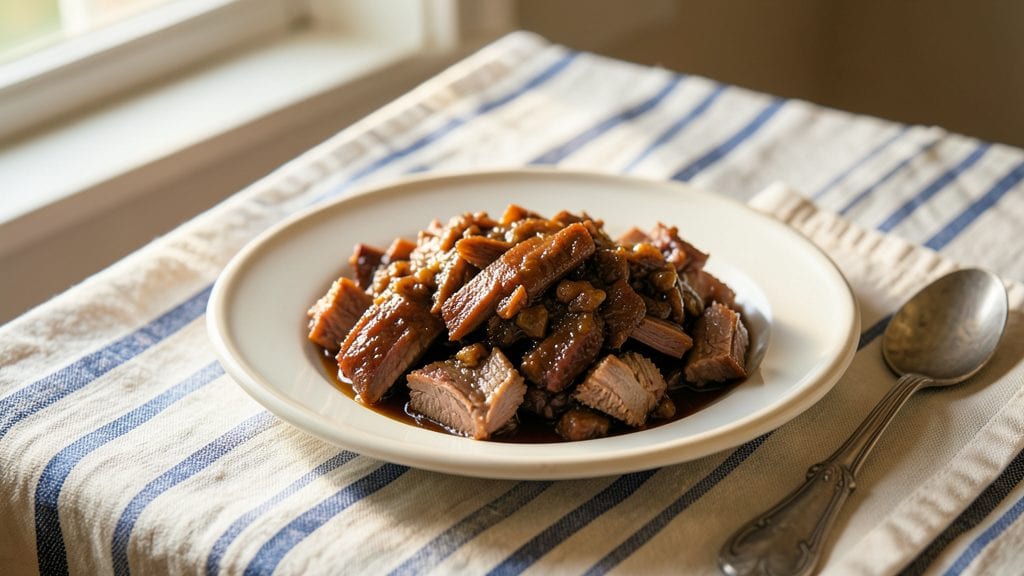
This pulled pork marinade recipe transforms tough pork shoulder into melt-in-your-mouth perfection through a smoky-sweet balance that penetrates every fiber. Growing up in small-town Georgia, I learned that the secret to legendary pulled pork isn't just time—it's the marinade that tenderizes while building layers of flavor.
The right blend of acids, spices, and oils creates that signature bark and fall-apart texture that makes every bite worth the wait.
The foundation of this marinade lies in a precise ratio of apple cider vinegar and brown sugar, which caramelizes beautifully during cooking while breaking down connective tissue.
I add a touch of molasses for depth and smoked paprika for that unmistakable BBQ aroma, all suspended in olive oil to carry the flavors deep into the meat. This isn't just a marinade—it's the flavor backbone that turns simple pork into something extraordinary.
What makes this marinade truly special is its ability to work whether you're smoking, slow-cooking, or braising your pork. The sugars and acids create a crust that seals in moisture while developing complex caramelized notes.
After just a few hours, your pork will be fork-tender with a surface that practically dissolves at the touch. This is the kind of marinade that turns weeknight dinners into showstopping meals.
Perfect for large gatherings or meal prep, this marinade keeps well in the fridge for up to 5 days, allowing flavors to deepen over time. Whether you're feeding a crowd or preparing for the week ahead, this recipe delivers consistent, restaurant-quality results every time.
Let's get started on the marinade that will make your pulled pork legendary.
Ingredients for pulled pork marinade
Simple ingredients that pack a smoky-sweet punch for legendary pulled pork.
| Ingredient | Amount | Notes |
|---|---|---|
| Apple Cider Vinegar 🍎 | ½ cup | Raw and unfiltered preferred |
| Light Brown Sugar 🍚 | ½ cup | Packed, not granulated |
| Molasses 🍯 | ¼ cup | Unsulphured for best flavor |
| Smoked Paprika 🌶️ | 2 tbsp | High-quality smoked variety |
| Extra-Virgin Olive Oil 🫒 | ½ cup | Fruity, not bitter |
| Garlic Cloves 🧄 | 4 cloves | Freshly minced, not jarred |
| Ground Black Pepper 🌶️ | 1 tsp | Freshly cracked for heat |
| Salt 🧂 | 1 ½ tsp | Kosher or sea salt |
| Ground Cumin 🌿 | 1 tsp | Toasted for depth |
| Onion Powder 🧅 | 1 tsp | Freshly ground preferred |
The apple cider vinegar is non-negotiable here—Bragg or Texas Pete are my go-tos, but any raw, unfiltered kind works. Brown sugar should be packed (not scooped)—that extra density helps it caramelize better. Whole Foods or Trader Joe's usually carry unsulphured molasses in the baking aisle, and it makes a world of difference. For smoked paprika, Penzeys or McCormick are solid choices, but check the label for 'smoked'—not all paprika is created equal. The olive oil? California-grown brands like Corto or Kirkland have that fruity brightness that cuts through the sweetness.
No apple cider vinegar? White vinegar or balsamic in a pinch, but the flavor won't be quite the same. Swap brown sugar for turbinado sugar at a 1:1 ratio, though it'll have a slightly different caramelization. Short on molasses? Maple syrup works in a bind, but you'll lose that deep, almost chocolatey note. Fresh garlic is a must—jarred garlic has zero punch. For the spices, dried cumin and onion powder are fine, but if you've got whole seeds, toast them in a dry pan for 30 seconds first. Diamond Crystal salt is my preferred brand—it dissolves more easily than table salt.
This marinade keeps for 5 days in the fridge in an airtight jar, and flavors actually deepen over time. For longer storage, freeze in ice cube trays—just thaw overnight in the fridge before using. I double the batch whenever I make it; one for immediate use, one to stash in the freezer. Label it clearly—this stuff is worth repeating. The pork? Use it within 24 hours of marinating for the best texture, but the marinade itself stays potent for months if stored properly.
Why You'll Love This Recipe
- Five-Ingredient Magic: I swear by this combo—just toss those pantry staples (vinegar, sugar, molasses, paprika, oil) into a bowl and stir. No fancy techniques, no measuring cups stressing you out. The molasses and vinegar do all the heavy lifting while you sip your coffee.
- Sweet-Smoky Obsession: That balance of apple cider tang, caramelized brown sugar, and smoky paprika? It’s the kind of flavor that makes people ask, “What’s in this?” Honestly, the molasses gives it this deep, almost sticky richness that clings to every bite—like a hug in sauce form.
- Weeknight Superhero: Slather it on pork shoulder, pop it in the oven, and walk away. Leftovers? Even better. I’ve turned this marinade into tacos, sandwiches, and even a breakfast hash—because good flavor shouldn’t be limited to one meal. (Yes, even on a Tuesday night.)
- Budget-Friendly Powerhouse: You’re using ingredients you already own, and they stretch farther than you’d think. A little goes a long way, and the smoky depth tricks people into thinking it’s a fancy rub. Between us, I’ve fed a crowd of six for under $15 with this—no one’s complaining.
Step-by-step instructions for pulled pork marinade
This marinade delivers deep flavor and tender meat—just mix and let it work its magic.
Combine Wet Ingredients in a Bowl
In a medium bowl, whisk together the 0.5 cup apple cider vinegar, 0.5 cup light brown sugar, and 0.25 cup molasses. The vinegar will help tenderize the meat while the sugar and molasses create that signature caramelized crust. Stir until the sugar and molasses dissolve completely—this ensures even distribution of flavor. I like to use a whisk for this step because it creates a smooth, lump-free mixture that penetrates the meat more effectively.
Here's the thing—don't rush this part. If you see any undissolved sugar crystals, give it another 30 seconds of whisking. The molasses adds a rich depth, but it can be thick, so thorough mixing is key. The mixture should look like a thick, syrupy liquid with a deep amber color. This is your flavor foundation, so take your time to get it right.
Add Dry Seasonings and Olive Oil
Next, add the 2 tbsp smoked paprika, 1.5 tsp salt, 1 tsp ground cumin, 1 tsp onion powder, and 1 tsp ground black pepper to the bowl. These spices will infuse the meat with smoky, warm, and slightly sweet notes that define great pulled pork. Give everything a good stir with a wooden spoon to break up any clumps of spices.
Now pour in the 0.5 cup extra-virgin olive oil while continuing to stir. The olive oil helps carry the flavors into the meat and prevents the marinade from drying out during cooking. You'll notice the mixture becomes slightly thinner but still cohesive. This is perfect—it should coat the back of a spoon without being too runny. If it looks too thick, add a splash of apple cider vinegar to loosen it up.
Incorporate Freshly Minced Garlic
Peel and finely mince the 4 cloves garlic cloves using a sharp knife or a garlic press. Freshly minced garlic makes a world of difference compared to jarred minced garlic—you'll taste the brightness and complexity it adds. Add the minced garlic to the bowl and stir gently to combine. You don't want to overmix here because you could break up the garlic into a paste, which can make the marinade taste bitter.
Give the marinade one final taste and adjust the seasoning if needed. You might find it needs a touch more salt or a hint of black pepper to balance the sweetness. This marinade is designed to be bold, so don't hold back. Once you're satisfied with the flavor, transfer it to an airtight container or a resealable plastic bag. The marinade is now ready to work its magic on your pork.
Marinate the Pork for Maximum Flavor
Place your pork shoulder in the marinade, making sure it's fully submerged. If you're using a large cut of meat, you may need to divide the marinade between two containers. Let the pork marinate in the refrigerator for at least 4 hours, but I recommend going for 8-12 hours or even overnight for the best results. This long marinating time allows the flavors to deeply penetrate the meat, breaking down the connective tissues and ensuring that fall-off-the-bone tenderness.
Here's a pro tip: If you're short on time, you can still achieve great results with a 2-hour marinade, but the flavor won't be as deep. The key is to keep the pork cold during marinating—never leave it out at room temperature. When you're ready to cook, remove the pork from the marinade and let it come to room temperature for about 30 minutes before cooking. This ensures even cooking and helps the marinade cling to the meat as it sears.
Pro Tips For Making Pulled Pork Marinade
- Whisk Before You Worry: DESCRIPTION:
- Use Real Vinegar: DESCRIPTION:
- Don’t Skip the Oil: DESCRIPTION:
- Marinate Longer Than You Think: DESCRIPTION:
Regional styles of pulled pork marinade
Georgia Pitmaster Style
Back in my Georgia roots, we used a simpler marinade with just apple cider vinegar, brown sugar, and a touch of black pepper—no frills, just pure flavor. The key was letting the pork sit in a 5-gallon bucket overnight in the cooler, which kept it cold and tender.
I still use this method when cooking for large crowds at The Smoky Pig. The vinegar cuts through the fat while the sugar creates that perfect bark. 🔥
For extra authenticity, I add 1 tbsp hot sauce (like Crystal) to the marinade just before applying it to the meat. This gives it that signature Georgia kick without overpowering the smoky-sweet balance. The result? Pork so tender it practically falls apart at the touch.
Carolina Vinegar-Based
Charleston-style pulled pork relies on a stronger vinegar presence—think 1 cup apple cider vinegar to ½ cup brown sugar ratio. Master Chef Chen taught me to use white vinegar in equal parts with apple cider for a sharper tang that cuts through the fat beautifully.
The marinade gets rubbed directly onto the pork before slow-smoking over hickory wood. 🌶️
I often add 1 tbsp Worcestershire sauce to this marinade for umami depth, which pairs perfectly with the vinegar's acidity. The Carolina approach is all about balance—sweet enough to caramelize but tangy enough to keep your mouth watering. This is the marinade I use for my competition entries.
Texas-Style Sweet Heat
Down in Texas, they crank up the heat with 1 tbsp cayenne pepper and 1 tbsp chipotle powder in their marinades. The sweetness comes from ½ cup molasses instead of just brown sugar, giving it that deep, almost chocolatey note.
I've seen Texas teams use orange juice as the acid component for a citrusy twist. 🌶️
For my own Texas-style adaptation, I blend 1 tbsp hot sauce (like Texas Pete) with the vinegar before adding the other ingredients. This creates a marinade that's bold enough to stand up to the intense heat of Texas BBQ. The pork develops a glossy, sticky bark that's irresistible.
Smoky Mountain Tradition
The Appalachian Mountains have their own take, using blackberry vinegar (a local specialty) instead of apple cider. They add 1 tbsp ground mustard to the marinade for a subtle tang that brightens the flavors.
I've seen this style at mountain cook-offs where they slow-cook the pork in cast iron Dutch ovens over open flames. ⚡
For a modern twist, I substitute ½ cup blackberry jam for some of the sugar in the marinade. This adds fruitiness that complements the smokiness perfectly. The result is pork with a complex flavor profile that's both sweet and slightly tart—a true mountain tradition with a gourmet upgrade.
Southern Soul Adaptation
This is my personal fusion of all the regional styles, designed for weeknight cooking.
I use ½ cup apple cider vinegar, ½ cup brown sugar, and ¼ cup molasses as the base, then add 1 tbsp smoked paprika, 1 tsp cayenne, and 1 tsp mustard powder for depth.
The magic happens when you let it sit on the pork for at least 12 hours before cooking. 💫
For extra tenderness, I make sure to pat the pork dry before applying the marinade—this helps it cling better and creates that perfect bark. This version works equally well for smoking, braising, or slow-cooking in a Dutch oven.
It's become my go-to for family gatherings because it delivers consistent, showstopping results every time.
Nutrition facts
Frequently asked questions
Can I use this marinade for other meats besides pork?
This marinade works beautifully on chicken thighs, beef brisket, or even lamb shoulder. The smoky-sweet balance complements rich, fatty cuts exceptionally well. For chicken, reduce the marinating time to 2-4 hours to avoid over-tenderizing. Always adjust cooking times based on the meat's size and density.
How do I store leftover marinade?
Store unused marinade in an airtight container in the fridge for up to 5 days or freeze in ice cube trays for up to 3 months. The flavors actually deepen over time! When reheating, gently warm in a saucepan over low heat—never microwave, as it can alter the texture and flavor balance.
What's the best way to remove excess marinade before cooking?
Pat the pork dry with paper towels after marinating to create that perfect crust during cooking. For extra crispiness, let the meat sit uncovered in the fridge for 10-15 minutes before searing. This step is crucial for developing that signature bark that holds up to shredding.
Can I make this marinade without molasses?
Yes! Substitute with ¼ cup maple syrup or 2 tbsp honey for similar depth. While molasses adds that unique caramelized note, these alternatives work in a pinch. For a deeper flavor, add 1 tsp coffee granules to mimic molasses' complexity.
Why does my pork turn out dry after using this marinade?
Overcooking is the most common cause. This marinade is designed for low-and-slow cooking—maintain temperatures between 225-250°F for pork shoulder. Use a meat thermometer and pull the pork at 203°F internal temperature. The marinade's sugars help retain moisture, but proper cooking methods are essential.