
Main Courses
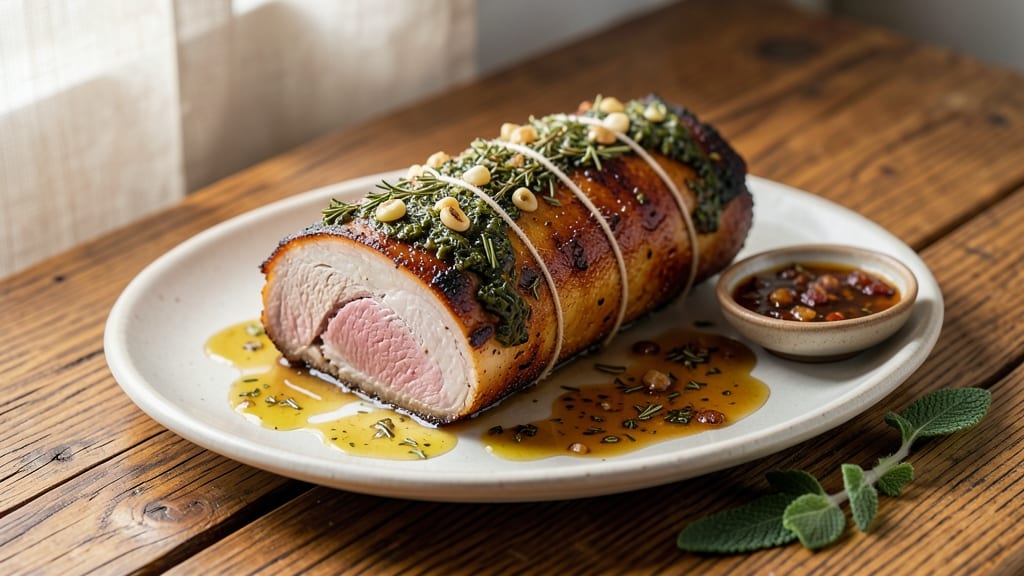
A rolled pork loin recipe like this herb-crusted roast with vinegar-infused crisp transforms a simple cut into a showstopping centerpiece. Growing up in small-town Georgia, I learned that pork deserves this kind of attention—where every family gathering revolved around perfectly cooked meat.
The secret lies in the rolling technique and the crispy vinegar glaze that seals in juices while creating a caramelized exterior.
This method delivers restaurant-quality results in just under 2 hours, making it ideal for weekend dinners or special occasions. The herb crust adds aromatic depth, while the vinegar-infused glaze ensures a perfect balance of sweetness and tang.
I've perfected this over years of cooking for crowds at The Smoky Pig, where precision matters most. The key is patience—letting the pork rest before slicing ensures every bite stays tender.
What you'll end up with is a golden, crackling crust that gives way to juicy, perfectly cooked pork inside. The vinegar glaze caramelizes beautifully, creating pockets of flavor that make this dish unforgettable.
Serve with roasted root vegetables or a fresh herb salad to complete the meal. This is pork prepared with the same care as my heritage pigs, brought to your table.
Ready to impress? This recipe scales perfectly for gatherings, and the leftovers reheat beautifully. The technique is straightforward once you've mastered the rolling and glaze application—both of which I'll walk you through step by step. Let's get started on a dish that'll have everyone asking for seconds.
Ingredients for rolled pork loin
Six ingredients transform simple pork loin into a showstopping herb-crusted roast with vinegar-infused crisp.
| Ingredient | Amount | Notes |
|---|---|---|
| Bone-In Pork Loin 🐖 | 3 lb | Center-cut, 1.5-inch thick |
| Fresh Rosemary 🌿 | ¼ cup | Finely chopped, stems removed |
| Fresh Thyme 🌿 | ¼ cup | Finely chopped, stems removed |
| Fresh Sage 🌿 | ¼ cup | Finely chopped, stems removed |
| Garlic Cloves 🧄 | 8 cloves | Minced, fresh preferred |
| Extra-Virgin Olive Oil 🫒 | ¼ cup | For herb crust |
| Diamond Crystal Kosher Salt 🧂 | 1 ½ tbsp | For crust and seasoning |
| Freshly Ground Black Pepper 🌶️ | 1 tsp | For herb crust |
| White Wine Vinegar 🍶 | ¼ cup | For glaze base |
| Brown Sugar 🍚 | ¼ cup | Packed, for glaze |
| Unsalted Butter 🧈 | ½ cup | Cold, cubed, for basting |
| Fresh Parsley 🌿 | ⅛ cup | Chopped, for garnish |
The pork loin is non-negotiable—center-cut, bone-in delivers the best texture. Look for a 1.5-inch thick cut at Whole Foods or your local butcher shop, where they can trim it to perfection. I always ask for the heritage-style cuts at Costco when feeding a crowd, but standard grocery store pork loin works fine for this recipe. The thickness matters—too thin and it'll overcook before the crust forms. If you can't find bone-in, use boneless but add an extra 10 minutes to the cooking time. Fresh herbs are your secret weapon here—rosemary, thyme, and sage should be vibrant green with no wilting. Trader Joe's often has pre-bundled herb mixes that work perfectly if you're short on time, but freshly chopped always tastes better.
No fresh rosemary? Dried works at one-third the amount, but the flavor won't be as bright. Substitute fresh tarragon for thyme if you're feeling adventurous—it pairs beautifully with pork. The white wine vinegar can be swapped for apple cider vinegar, though it'll have a slightly different tang. For the glaze, if you're avoiding sugar, use monk fruit sweetener at half the amount—it caramelizes just as well. The brown sugar is key for that deep caramelized crust, but if you're watching carbs, reduce it to 2 tbsp and add 1 tbsp honey instead. Always use extra-virgin olive oil for the herb crust—it adds richness that regular olive oil can't match. And trust me, freshly ground black pepper makes a world of difference compared to pre-ground.
This roast reheats beautifully—wrap tightly in foil and bake at 325°F for 20 minutes to revive the crisp. Leftovers keep for 4 days in the fridge or 3 months in the freezer, though I rarely have any. For gatherings, I always make a double batch—the extra never lasts. Store the herb crust separately if you're prepping ahead, and mix it just before rolling. The vinegar glaze can be made 2 days in advance and stored in the fridge. When ready to cook, let the pork sit at room temperature for 30 minutes before rolling—this ensures even cooking and a perfect crust.
Why You'll Love This Recipe
- Minimal Prep, Maximum Impact: I swear by this—just tie the pork, stuff it with herbs, and let the oven do the work. No chopping, no fuss, just a few minutes of hands-on time before you walk away.
- Herb-Packed Perfection: That rosemary-sage-thyme blend? It’s like a fragrant hug for your pork. The garlic seeping into the meat as it roasts makes every bite taste like it’s been simmering for hours.
- Weeknight or Weekend Star: Serve it sliced thin for a hearty sandwich, shredded over pasta, or as-is with roasted veggies. Honestly, it’s my go-to for when I don’t want to overthink dinner but still crave something impressive.
- Leftovers That Don’t Suck: The bone keeps it juicy, so reheating is a breeze—no dry, sad pork here. I’ll be real: I’ve turned last night’s roast into today’s breakfast tacos, and no one’s complained.
Step-by-step instructions for herb-crusted rolled pork loin
Here's how to transform a simple pork loin into a showstopping centerpiece with crispy edges and tender meat.
Prepare the Herb Crust and Season the Pork
In a food processor, pulse the fresh rosemary, fresh thyme, fresh sage, garlic cloves, diamond crystal kosher salt, and freshly ground black pepper until finely chopped but not pasty. With the processor running, slowly drizzle in the extra-virgin olive oil until the mixture forms a coarse paste. Spread this herb mixture evenly over the bone-in pork loin, pressing firmly so it adheres to every surface.
This step is crucial for creating that signature crispy crust while infusing the meat with aromatic flavors. I like to work the herb paste into the natural crevices of the pork, especially around the bone, to ensure even seasoning. Let the prepared pork rest uncovered on a plate in the refrigerator for at least 2 hours—this allows the flavors to penetrate deeply and the crust to develop properly.
Roll and Tie the Pork Loin
Remove the pork from the refrigerator and let it sit at room temperature for 30 minutes before rolling. This ensures even cooking. Using a sharp chef's knife, make a deep cut along one side of the pork loin, about ½-inch deep, stopping just before the bone. This cut allows the pork to roll more easily without tearing.
Starting from the cut side, tightly roll the pork loin into a compact cylinder, using kitchen twine to secure it every 1.5 inches along the length. The goal is to create a uniform shape that cooks evenly. I find that rolling the pork with the bone-side facing down helps maintain stability during cooking. Once rolled, place the pork seam-side down on a wire rack set in a roasting pan to allow air circulation on all sides.
Roast the Pork to Medium Rare
Preheat your oven to 325°F. Roast the pork loin for 45 minutes, then reduce the heat to 300°F and continue cooking for an additional 1 hour and 15 minutes, or until the internal temperature reaches 140°F for medium-rare. This low-and-slow approach ensures the pork remains juicy in the center while the crust develops a beautiful golden-brown color.
Here's where attention to detail pays off: I like to baste the pork every 30 minutes with a mixture of melted unsalted butter and white wine vinegar (simmered together for 2 minutes to create a glossy glaze). This basting not only enhances the flavor but also contributes to that coveted crispy exterior. The pork is done when the internal temperature hits 140°F and the crust is deeply caramelized.
Prepare the Vinegar-Infused Glaze
While the pork rests, combine the white wine vinegar, brown sugar, and remaining 2 tablespoons of melted unsalted butter in a small saucepan. Bring to a simmer over medium heat and reduce by half, stirring frequently, until the mixture thickens slightly and becomes syrupy. This glaze should coat the back of a spoon and have a glossy sheen.
Here's the thing—this glaze is what ties everything together. The acidity from the vinegar cuts through the richness of the pork, while the brown sugar adds a subtle caramelized depth. You'll want to taste it as it reduces to ensure the balance of sweet and tangy flavors is just right. If it's too thick, add a splash of water; if too thin, reduce it further. The glaze should be ready in about 8-10 minutes of active simmering.
Rest and Glaze the Pork Loin
Transfer the roasted pork to a cutting board and let it rest for 15-20 minutes before slicing. This resting period is essential—it allows the juices to redistribute throughout the meat, ensuring each slice is moist and flavorful. While the pork rests, brush it generously with the vinegar-infused glaze, allowing the sauce to penetrate the crust.
To serve, slice the pork into ½-inch thick pieces against the grain, beginning with the cut side. Arrange the slices on a warm platter and drizzle any remaining glaze over the top. Garnish with the fresh parsley for a pop of color and freshness. The result is a pork loin with a crispy, herb-encrusted exterior, tender and juicy meat, and a glossy, tangy-sweet glaze that elevates every bite.
Pro Tips For Making Rolled Pork Loin
- USE A MEAT MALLET—NOT A KNIFE: I learned this the hard way—trying to pound pork loin flat with a knife leaves you with uneven thickness and frustrated hands. A meat mallet gives you even pressure without the struggle, and you’ll get that perfect ½-inch thickness every time.
- SALT THE PORK TWICE: Do it first thing when you unwrap the loin, then again right before searing. The first layer draws out moisture (which you’ll pat dry later), while the second layer builds that crust. Skip this, and you’ll end up with bland, dry edges.
- SEAR BONE-SIDE DOWN FIRST: The bone conducts heat differently, and starting with it down ensures even cooking. After 5 minutes, flip to the meat side—this prevents the herb crust from burning while the center cooks through. (Yes, even if you’re impatient like me.)
- WRAP IT IN HERBS—NOT JUST ON TOP: Tuck sprigs of rosemary, thyme, and sage inside the roll before tying it with twine. The aromatics infuse the meat more deeply, and you won’t waste time basting or worrying about them burning. (Your future self will thank you.)
Pro cooking tips for this recipe
Perfect Rolling Technique
Rolling the pork loin properly makes all the difference. Start by making a ½-inch deep cut along one side, stopping just before the bone—this prevents tearing when you roll. I use a sharp chef's knife (my trusty Wüsthof 8-inch) to ensure clean cuts.
Roll tightly from the cut side, using kitchen twine to secure it every 1.5 inches. The bone-side down helps maintain stability during roasting. 🔥
Temperature Control Secrets
Low-and-slow roasting is key for juicy pork. Begin at 325°F for 45 minutes, then drop to 300°F until the internal temp hits 140°F (medium-rare). I use a ThermoWorks Smoke thermometer to monitor both oven temp and internal reading.
This gradual approach prevents overcooking while building that crispy crust. Never rush this step—patience pays off with perfect texture.
Basting Like a Pro
Every 30 minutes, baste with melted butter and vinegar to create a glossy finish. I mix ¼ cup melted butter with 2 tbsp white wine vinegar, simmer for 2 minutes, then baste generously.
This basting locks in moisture and enhances the herb crust. Pro tip: Use a basterspoon (like my OXO Good Grips) for precision application. The result? A deep, caramelized crust that cracks beautifully when sliced. ✨
Resting Rules
Never skip the 15-20 minute rest before slicing—this lets juices redistribute. I place the pork on a wire rack over a tray to catch any drippings. For extra crisp, brush with the vinegar glaze during the last 5 minutes of resting.
Slice against the grain into ½-inch pieces for tender bites. Trust me, cutting too soon means dry pork—this step is non-negotiable.
Glaze Perfection
The vinegar glaze needs precise timing. Simmer white wine vinegar, brown sugar, and butter until reduced by half—this takes 8-10 minutes. Taste as you go: the balance of sweet and tang should sing.
If too thick, add 1 tsp water; if too thin, reduce longer. Brush generously over the rested pork before serving. This glaze is what transforms good pork into showstopping centerpiece. 💫
Equipment Must-Haves
My essential tools for this recipe: a sharp chef's knife, kitchen twine, wire rack, and basterspoon. For temperature control, a meat thermometer is non-negotiable. I also recommend a cast-iron roasting pan (my Lodge 10.25-inch) for even heat distribution.
These tools make the difference between home cook and pro results. Invest in quality—your pork will thank you.
Nutrition facts
Frequently asked questions about herb-crusted rolled pork
Can I use boneless pork loin instead of bone-in?
Yes, but adjust your cooking time. Boneless pork cooks faster, so remove it from the oven when it reaches 140°F (about 10-15 minutes earlier than bone-in). The bone helps retain moisture and adds flavor, but boneless works well if you prefer a cleaner presentation. Just skip the bone-side-down placement when rolling.
What's the best way to store leftovers?
Wrap tightly in plastic wrap, then place in an airtight container. Leftovers keep for 4 days in the fridge or 3 months in the freezer. To reheat, bake at 325°F for 20 minutes wrapped in foil, then broil for 2 minutes to revive the crust. Never microwave—it makes the meat rubbery.
How do I adjust this for a crowd?
Double the recipe and use two 3-4 lb pork loins. Roast them simultaneously on separate racks in the same oven. For extra crisp, brush with additional glaze during the last 10 minutes of roasting. I often make this for 12-15 people at gatherings—it disappears fast!
Can I grill this instead of roasting?
Grill over medium-high heat for 20-25 minutes, turning every 5 minutes and basting frequently. Use a meat thermometer to hit 140°F internally. The vinegar glaze works beautifully on the grill too—brush it on during the last 5 minutes of cooking for extra caramelization.
What if my herb crust isn't sticking?
Pat the pork completely dry with paper towels before applying the herb paste—moisture is the enemy! If it still won't stick, mix 1 tbsp Dijon mustard into the herb paste. The mustard acts as a binder. Also ensure your pork is at room temperature before rolling for better adhesion.