
Main Courses
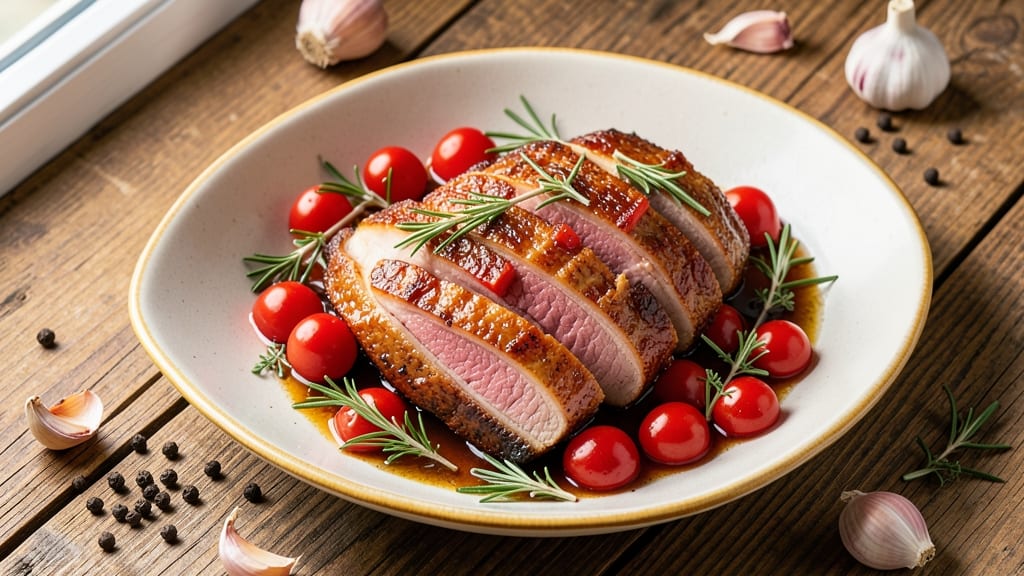
This slow-roasted pork belly recipe delivers the perfect balance of crispy crackling and silky pink meat that becomes the star of any dinner table. After years of perfecting the technique—from precise seasoning to controlled oven temperatures—I’ve developed a method that ensures every bite is a revelation.
The secret lies in patience and technique, not shortcuts.
What makes this recipe truly special is the transformation that happens in the oven. A simple salt cure and high-heat roasting create an irresistible contrast: shatteringly crisp skin that gives way to tender, melt-in-your-mouth pork.
The process requires about 2.5 hours of hands-off cooking, making it ideal for weekend meals or special occasions when you want to impress.
The result is a dish that’s both restaurant-worthy and home-cooked, with a rich, savory flavor that pairs beautifully with simple sides like roasted potatoes or a fresh green salad. The crackling alone is worth the effort—it’s the kind of texture that makes people reach for seconds without hesitation.
Whether you’re serving this as a centerpiece for a holiday feast or a weekend dinner, the technique is foolproof once you understand the key steps. Let’s break down how to achieve that perfect balance of crisp and tender every time.
Ingredients for slow-roasted pork belly
Twelve ingredients transform raw pork belly into restaurant-quality crackling and tender meat.
| Ingredient | Amount | Notes |
|---|---|---|
| Pork Belly (Skin-On) 🐷 | 2 lb | Thick-cut, skin intact for crackling |
| Diamond Crystal Kosher Salt 🧂 | ½ cup | Coarse texture for even curing |
| Freshly Ground Black Pepper 🌶️ | 1 tbsp | Coarse grind for texture contrast |
| Granulated Garlic 🧄 | 1 tbsp | For even seasoning distribution |
| Fresh Rosemary Sprigs 🌿 | 6 whole | Organic preferred for aroma |
| Fresh Thyme Sprigs 🌿 | 4 whole | Leaves only for infusion |
| Extra-Virgin Olive Oil 🫒 | 2 tbsp | Light drizzle for skin moisture |
| Brown Sugar 🍯 | 1 tbsp | Enhances caramelization |
| Unsalted Butter 🧈 | ¼ cup | Cold, cubed for basting |
| Apple Cider Vinegar 🍎 | 1 tbsp | Balances fat content |
| Heavy Cream 🥛 | ½ cup | Optional for finishing sauce |
| Honey 🍯 | 1 tbsp | Drizzled post-roast |
The pork belly is non-negotiable—thick-cut with intact skin ensures optimal crackling. Source from Whole Foods or high-end butchers where cuts are trimmed uniformly. Look for marbling-rich sections along the belly's edges. Costco offers pre-portioned slabs, but verify the skin thickness exceeds 1/4 inch. Freshness is critical: the meat should smell clean and firm to the touch, with no yellowing. If storing before curing, keep vacuum-sealed in the fridge for up to 5 days or frozen for 6 months.
Substitutions require precision. Diamond Crystal kosher salt is preferred for its coarse texture, but Morton coarse salt works equally well. Fresh herbs can be swapped for dried at a 1:3 ratio, though the aroma won't match. Apple cider vinegar may be replaced with white wine vinegar, but reduce to 3/4 tbsp to avoid acidity. For the finishing drizzle, maple syrup replaces honey 1:1, though it alters the flavor profile. The olive oil must be extra-virgin—standard varieties lack the fruity notes that enhance the crackling's complexity.
Prep efficiency is key. Cure the pork belly 24 hours ahead for even seasoning penetration. Store the cured slab uncovered on a wire rack in the fridge to prevent moisture buildup. The butter cubes until roasting begins. Post-roast, the crackling stays crisp for 3 days when stored in an airtight container at room temperature, though texture degrades after 24 hours. The rendered fat can be reheated for up to 1 week in the fridge or frozen for 3 months in ice cube trays.
Why You'll Love This Recipe
- Crispy-Creamy Magic: That first crackle of the skin? Heaven. The inside melts like butter, and the rosemary-infused crust is ridiculously good—salty, garlicky, and impossible to resist. (Yes, I’ve eaten it straight from the pan.)
- Leftovers That Shine: Slow-roasted pork belly turns into everything: fried rice, tacos, sandwiches, or just reheated slices with a drizzle of honey. Honestly, I’ve never had leftovers I didn’t look forward to.
- Weeknight Hero: Budget-friendly, feeds a crowd, and still feels special—no one guesses it’s a 20-minute prep. My go-to for game day, dinner parties, or when I’m too tired to cook but refuse to order takeout.
Step-by-step instructions for slow-roasted pork belly
This method delivers restaurant-quality crackling and tender meat every time.
Cure and Prepare the Pork Belly
Place the 2 lb pork belly (skin-on) in a large bowl and pat it completely dry with paper towels. This step is critical—any moisture prevents proper crackling. In a small bowl, combine the 0.5 cup diamond crystal kosher salt, 1 tbsp freshly ground black pepper, 1 tbsp granulated garlic, and 1 tbsp brown sugar. Rub this mixture all over the pork belly, pressing firmly into the skin and fat. The salt will draw out moisture and create that signature crispy exterior.
Wrap the pork belly tightly in plastic wrap and refrigerate for 24 hours. This curing process ensures even seasoning and helps develop the crackling. After 24 hours, remove the pork belly from the fridge and let it sit at room temperature for 1 hour before roasting. This resting period allows for even cooking and prevents the meat from drying out during the long roast.
Sear the Skin for Maximum Crispiness
Preheat your oven to 375°F. Place a rack in a roasting pan and position the pork belly skin-side down on the rack. This elevated position allows hot air to circulate underneath, ensuring even cooking and crispiness. Drizzle the skin generously with the 2 tbsp extra-virgin olive oil, focusing on the skin itself. The oil helps create a barrier that promotes even browning and crackling.
Place the pork belly in the preheated oven and roast for 1 hour. After this initial hour, increase the oven temperature to 425°F. This high heat is essential for developing that coveted crispy skin. Every 15 minutes, use tongs to carefully flip the pork belly over so the fat side cooks evenly. The skin should begin to turn golden brown and crispy within the first 30 minutes of the higher heat.
Baste and Cook to Perfection
Once the skin is golden brown and crispy, remove the pork belly from the oven and place it on a cutting board. Let it rest for 5 minutes before basting. In a small saucepan, melt the 0.25 cup unsalted butter over medium heat. Add the 6 whole fresh rosemary sprigs, 4 whole fresh thyme sprigs, and 1 tbsp apple cider vinegar. Simmer for 2 minutes, then remove from heat and let the mixture cool slightly. This aromatic butter will infuse the pork belly with incredible flavor.
Brush the melted butter mixture generously over the pork belly, focusing on the skin and any exposed fat. Return the pork belly to the oven and continue roasting at 425°F for an additional 45 minutes to 1 hour, or until the internal temperature reaches 195°F. The meat should be fork-tender and pull away from the bone easily. The skin should be deep golden brown and crispy, with a satisfying crackling sound when touched.
Rest and Serve with Finishing Touches
Remove the pork belly from the oven and let it rest on a wire rack for 15 minutes. This resting period allows the juices to redistribute throughout the meat, ensuring each slice is moist and flavorful. While the pork belly rests, heat the 0.5 cup heavy cream in a small saucepan over medium heat until it begins to simmer. Stir in the 1 tbsp honey and simmer for an additional 2 minutes. This simple sauce adds a glossy finish and balances the richness of the pork belly.
Slice the pork belly into ½-inch thick slices and serve immediately. Drizzle each slice with the honey cream sauce and garnish with fresh rosemary and thyme sprigs. The result is a perfect balance of crispy, crackling skin and silky, pink meat that melts in your mouth. Each bite delivers a harmonious blend of savory, sweet, and aromatic flavors that make this dish unforgettable.
Pro Tips For Making Slow-Roasted Pork Belly
- CRACK THE SKIN FIRST: I used to skip this step and ended up with soggy skin—now I score it in a crosshatch pattern with a sharp knife before salting. Press down firmly to open the channels, then let the salt work its magic while you prep the rest.
- USE MORE SALT THAN YOU THINK: Diamond Crystal is less salty than table salt, so don’t eyeball it. Aim for 1.5 tablespoons per pound, rubbed in generously—this isn’t the time to be shy. The skin needs salt to render properly, and the meat benefits from the cure.
- START HOT, THEN BACK OFF: Blast the oven to 425°F for the first 20 minutes to render fat aggressively and crisp the skin. After that, drop to 275°F—this two-stage approach prevents grease fires and keeps the meat tender. (Yes, even if you’re impatient like me.)
- REST UNDER FOIL: After roasting, tent the pork belly with foil for 10 minutes before slicing. This traps heat and keeps the meat juicy—skipping it means dry, stringy slices. Use a meat thermometer (195°F internal) to confirm doneness before resting.
Flavor customization for this recipe
Sweet & Savory Glaze
Transform your pork belly into a sticky-sweet sensation by brushing it with a honey-soy glaze during the final 30 minutes of roasting. Mix 3 tbsp honey, 2 tbsp soy sauce, 1 tbsp rice vinegar, and 1 tsp grated ginger, then apply generously to the skin.
The glaze caramelizes beautifully, creating a glossy finish that balances the pork’s richness. For extra drama, add ½ tsp smoked paprika to the glaze for a subtle smoky depth. 🍯
Spicy Asian Fusion
Infuse your pork belly with bold flavors by marinating it in a gochujang-garlic paste before curing. Blend 2 tbsp gochujang (Korean chili paste), 1 tbsp sesame oil, 1 tbsp rice vinegar, and 1 minced garlic clove, then rub it into the meat after salting.
Roast as directed, then finish with a drizzle of sriracha-honey sauce (mix 1 tbsp sriracha and 1 tbsp honey) for a fiery-sweet kick. Pair with steamed jasmine rice and quick-pickled cucumbers. 🌶️
Herb-Infused Butter Baste
Elevate the flavor profile by swapping the basic butter baste for a herb-compound butter. Mix ½ cup cold unsalted butter with 1 tbsp chopped fresh thyme, 1 tbsp chopped fresh rosemary, 1 minced garlic clove, and 1 tsp lemon zest.
Chill until firm, then slice into pats and place on the pork belly during the last 30 minutes of roasting. The butter melts into the skin, creating a fragrant, aromatic crust. 🌿
Smoky Chipotle Rub
For a smoky, slightly spicy twist, replace the basic seasoning with a chipotle-lime rub. Mix 2 tbsp brown sugar, 1 tbsp smoked paprika, 1 tsp ground cumin, 1 tsp chipotle powder, and 1 tsp lime zest, then apply to the pork belly before curing.
Roast as usual, then finish with a squeeze of fresh lime juice and a sprinkle of crumbled cotija cheese for a bright, tangy contrast. 🔥
Citrus-Zested Brightness
Cut through the richness with a zesty citrus finish. After roasting, drizzle the pork belly with a mix of 2 tbsp orange juice, 1 tbsp lemon juice, and 1 tsp honey.
Garnish with thin orange zest strips and fresh cilantro for a refreshing, palate-cleansing touch. This works especially well with lighter sides like a mango-avocado salad or grilled asparagus. 🍊
Umami Mushroom Duxelles
Add earthy depth by topping the pork belly with mushroom duxelles during the final 15 minutes of roasting. Finely chop 1 cup cremini mushrooms, sauté in 1 tbsp olive oil with 1 minced shallot and 1 tsp fresh thyme until dry, then spread the mixture over the pork belly.
The mushrooms infuse umami richness into the crackling, creating a luxurious texture contrast. 🍄
Nutrition facts
Frequently asked questions
Why do I need to cure the pork belly for 24 hours before roasting?
The 24-hour cure is essential for two reasons: it draws out excess moisture from the skin (critical for crispy crackling) and ensures even seasoning penetration. The salt breaks down proteins on the surface, creating the perfect foundation for that golden, shatteringly crisp exterior. Skipping this step often results in soggy skin or uneven flavor.
What's the best way to test if the pork belly is done?
Use a meat thermometer to check the internal temperature—it should reach 195°F in the thickest part. The meat will pull away from the bone easily with gentle pressure, and the skin should be deep golden brown with a satisfying crackling sound. If you don't have a thermometer, cut into the thickest part: it should be fork-tender with no pink center.
Can I make this recipe in a slow cooker instead of the oven?
While possible, the slow cooker won't give you that signature crispy crackling. For best results, stick to the oven method. If you're short on time, try broiling the pork belly for the final 10-15 minutes after slow-roasting at 275°F for 3-4 hours to develop some crispiness. The texture won't match oven-roasted, but it's still delicious.
How do I store leftovers to keep the crackling crisp?
Store slices in an airtight container at room temperature for up to 3 days, but the crackling loses crispness after 24 hours. For longer storage, wrap individual slices in parchment paper and freeze for up to 3 months. Reheat in a 375°F oven for 10 minutes to restore some crispness.
What are the best sides to pair with slow-roasted pork belly?
Classic pairings include creamy mashed potatoes, roasted root vegetables, or simple green salads with tangy vinaigrette. For a complete meal, serve with steamed jasmine rice and quick-pickled vegetables to cut through the richness. The rendered pork fat also makes an excellent pan sauce for noodles or dumplings.