
Main Courses
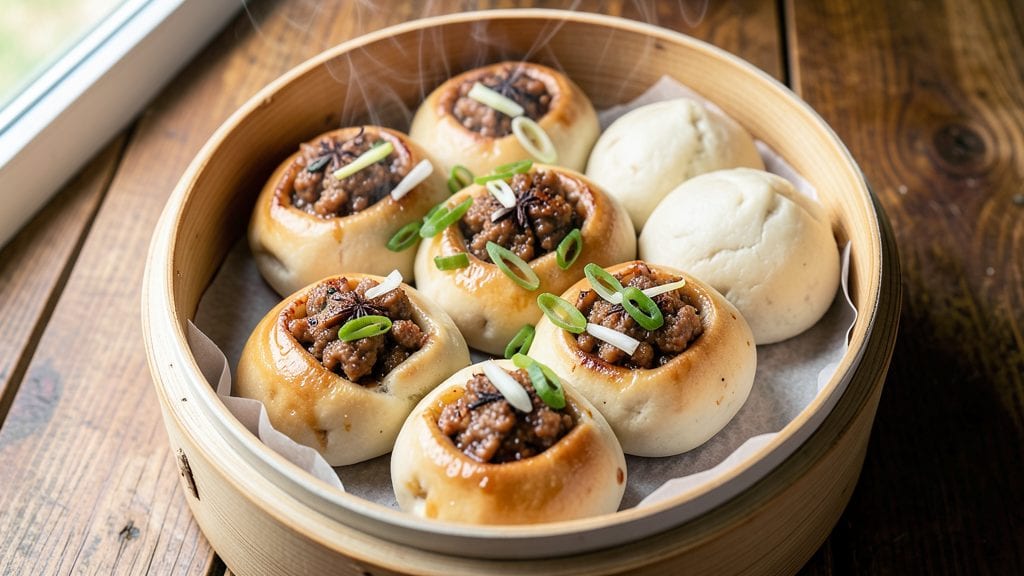
This steamed pork bao recipe delivers restaurant-quality dumplings with pillowy, melt-in-your-mouth dough and a flavorful pork filling that's impossible to resist. The secret lies in achieving the perfect balance between tender dough and seasoned pork, where every bite reveals a harmonious blend of textures and savory notes.
I've refined this recipe over countless batches to ensure foolproof results that impress even the most discerning palates.
The process begins with making the bao dough, which requires precise measurements and gentle handling to develop the signature fluffy texture. Meanwhile, the pork filling combines ground pork with aromatic seasonings like ginger, garlic, and scallions, creating a savory base that's both rich and aromatic.
Steaming the bao at the right temperature ensures they emerge perfectly puffed with golden-brown bottoms.
What you'll end up with is a plate of steamed pork bao that's visually stunning and utterly delicious—soft, airy dough enveloping tender pork filling infused with bright seasonings.
The contrast between the delicate dough and hearty filling makes each bite satisfying, while the subtle char from steaming adds depth of flavor. This recipe serves as both a comforting meal and an impressive dish for special occasions.
Perfect for family dinners, potlucks, or sharing with friends, these bao are best enjoyed fresh from the steamer. Pair them with a side of soy sauce, chili oil, or pickled vegetables for an authentic dining experience.
Let's get started on creating these irresistible dumplings that will become a staple in your meal rotation.
Ingredients for steamed pork bao
Twelve ingredients, twelve perfect bao—fluffy, golden, and packed with savory pork goodness.
| Ingredient | Amount | Notes |
|---|---|---|
| All-Purpose Flour 🌾 | 4 cups | Sifted for light texture |
| Instant Yeast 🍞 | ½ tsp | Active dry works too |
| Granulated Sugar 🍚 | ½ tsp | Enhances dough rise |
| Unsalted Butter 🧈 | ½ cup | Cold, cubed for dough |
| Whole Milk 🥛 | ¾ cup | Room temperature preferred |
| Ground Pork 🥩 | 1 ½ lb | 80% lean, finely chopped |
| Light Soy Sauce 🍶 | 2 tbsp | Kikkoman preferred |
| Dark Soy Sauce 🍶 | 1 tbsp | For rich color |
| Shaoxing Wine 🍷 | 1 ½ tbsp | Substitute dry sherry |
| Fresh Ginger 🧄 | 1 tbsp | Finely minced |
| Garlic Cloves 🧄 | 4 cloves | Minced for filling |
| Scallions 🧅 | ¼ cup | Thinly sliced |
| Sesame Oil 🫒 | 1 tsp | Toasted for aroma |
| Salt 🧂 | ½ tsp | Fine sea salt |
| White Pepper 🌶️ | ¼ tsp | Freshly ground |
The dough is where magic happens. King Arthur flour or Gold Medal gives the best texture, but any all-purpose works. Keep your butter cold—it's the secret to those signature fluffy clouds. For the pork filling, Trader Joe's or Costco often carry pre-chopped ground pork, but if you're buying whole, ask for the finest grind. The Shaoxing wine? Don't skip it—it's what makes this taste authentically Asian. If you can't find it, dry sherry does the trick (but it's not the same).
No sesame oil? Toasted peanut oil works in a pinch, though it'll taste different. Fresh ginger is ideal, but dried ginger at half the amount gets you close. The scallions can be swapped for green onions—same thing, really. For the soy sauces, Kikkoman light and Lee Kum Kee dark are my go-tos. If you only have regular soy sauce, use 1.5 tbsp light plus 0.5 tbsp dark. The pork filling can be prepped ahead and refrigerated for 2 days—just bring it to room temp before wrapping.
Dough keeps 2 days wrapped in plastic in the fridge, but it's best fresh. The pork filling stays good for 3 days in the fridge or 3 months frozen. I like to portion the dough into 12 equal balls ahead of time—saves time on steaming day. If you're making these for a crowd, double the dough and filling, but steam in batches. The bao reheat beautifully—just steam for 3-4 minutes to revive that pillowy texture.
Why You'll Love This Recipe
- No Yeast Nightmares: I’ve made bao dough that collapsed on me—this recipe fixes that. The instant yeast and sugar combo means you’re not waiting hours for proofing; it’s ready in under an hour, and the dough stays soft enough to handle without sticking to your fingers.
- Buttery Pillowy Magic: That whole milk and butter in the dough? It’s what turns bland into ridiculously good. The bao steams up fluffy and tender, with just enough richness to make every bite feel like a little comfort hug—no heavy fillings needed.
- Weeknight Crowd-Pleaser: Honestly, this is my go-to for lazy Sundays or when friends drop by unannounced. The steamed pork filling is simple (just salt, pepper, and a splash of soy), but it’s the bao that steals the show—everyone grabs seconds, and I don’t even have to stress about presentation.
- Leftovers That Don’t Suck: Most steamed bao recipes turn rubbery the next day, but not these. The milk and butter keep them soft for reheating, and I’ve frozen them successfully too—just a quick steam and they’re fresh again. Plus, the dough itself stays usable in the fridge for days, so you’re not scrambling to make it all at once.
Step-by-step instructions for steamed pork bao
Here's how to create pillowy bao with a rich, savory pork filling that melts in your mouth.
Prepare the Pork Filling
In a large skillet over medium heat, combine the 1.5 lb ground pork, 1 tbsp finely minced fresh ginger, and 4 cloves minced garlic. Cook for 5-6 minutes until the pork loses its raw color and begins to brown. This step develops deep flavor through the Maillard reaction.
Add the 2 tbsp light soy sauce, 1 tbsp dark soy sauce, and 1.5 tbsp shaoxing wine. Stir well and continue cooking for another 3-4 minutes until the liquid evaporates and the filling becomes fragrant. Remove from heat and let cool completely before using. The filling should be moist but not wet—if it's too dry, add 1 tsp sesame oil to keep it tender.
Make the Dough
In a large mixing bowl, combine the 4 cups all-purpose flour, 0.5 tsp instant yeast, and 0.5 tsp granulated sugar. Mix gently with a fork until just combined. Add the 0.5 cup cold cubed unsalted butter and work it into the flour using your fingers until the mixture resembles coarse crumbs.
Gradually pour in the 0.75 cup room temperature whole milk while mixing with a wooden spoon or silicone spatula. The dough will start to come together—this is when the magic begins. Once it forms a shaggy mass, turn it out onto a lightly floured surface and knead for 8-10 minutes until smooth and elastic. The dough should be slightly tacky but not sticky—if it sticks too much, add a little more flour.
First Rise
Shape the dough into a ball and place it in a lightly oiled bowl. Cover with a damp kitchen towel and let rise in a warm place for 1-1.5 hours, or until doubled in size. You'll know it's ready when you poke it gently and it springs back slowly. This first rise develops the gluten structure that gives bao their signature pillowy texture.
While the dough rises, prepare your steamer by filling the bottom with about 1 inch of water. Bring to a gentle simmer—you want steam, not boiling water, for perfect bao. The dough should be at room temperature when you work with it next, so let it sit out for 10 minutes before dividing.
Shape and Steam
Divide the risen dough into 12 equal pieces (about 3 ounces each). Roll each piece into a ball and flatten slightly into a disc. Place 1 heaping tablespoon of the cooled pork filling in the center of each disc. Gather the edges of the dough around the filling, pinching gently to seal while leaving a small opening at the top for steam to escape.
Place the bao in a steamer basket arranged in a single layer, leaving about 1 inch between each. Steam over medium-high heat for 12-15 minutes until the bao are puffed and the dough is translucent. Don't lift the lid during steaming—this releases steam and prevents proper rising. The bao should feel light as air when done, with a crisp bottom that gives way to tender interior.
Serve Warm
Remove the bao from the steamer and serve immediately while still hot. The contrast of the crisp bottom and soft top is what makes these bao so irresistible. For extra flavor, brush the tops with a little toasted sesame oil before serving. These bao are best enjoyed fresh—they deflate quickly as they cool, so eat them while they're at their peak of pillowy perfection.
Pro Tips For Making Steamed Pork Bao
- Proof in the Fridge: Let your bao dough rise until it’s just overproofed—think 1.5 to 2 times its original volume. I learned this the hard way: underproofed bao collapses like a sad soufflé when steamed, while overproofed dough (past the point of no return) gives that chewy, airy texture we all crave. Trust the stretch test: poke it gently—if it springs back slowly, it’s ready.
- Butter Up Properly: Cut that unsalted butter into tiny cubes (pea-sized) and fold them into the dough last, right before shaping. Any earlier, and the heat from your hands will turn it into greasy soup. Cold butter pockets melt during steaming, creating those golden, crackly layers—no one wants a bland, gummy bao.
- Steam with Precision: Use a bamboo steamer with a tight lid and preheat the water to a rolling boil before adding the bao. Cold water = soggy bottoms. I now keep a thermometer handy (200°F/93°C is ideal) to avoid the "half-steamed, half-boiled" disaster. Pro move: Line the steamer with parchment paper for easy cleanup—no one has time for a sticky mess.
- Shape Like a Pro: Roll the dough into balls slightly smaller than the recipe says—bao expand 30-50% during steaming. I use a scale for consistency (aim for 25-30g each) and dimple the top with your thumb to trap steam inside. Overstuffed bao bursts like a balloon; underfilled ones taste like sad dumplings.
Pro cooking tips for great steamed pork bao
Dough Temperature Control
The secret to fluffy bao lies in keeping your dough at the right temperature throughout the process. Start with cold butter in the dough mixture to create tiny pockets of steam during steaming.
As you knead, the dough should feel slightly tacky but not sticky—if it's too warm, place it in the fridge for 10-15 minutes to cool before shaping. I use a kitchen thermometer to check dough temperature, aiming for 75-78°F before the first rise.
This prevents overproofing and ensures even rising. 🌡️
After the first rise, let the dough sit at room temperature for 10 minutes before dividing. Cold dough is harder to work with and may not seal properly around the filling.
The ideal working temperature is 70-75°F—this balance helps create those signature pillowy clouds. If your kitchen is warm, chill the dough slightly before shaping to maintain consistency.
Steam Mastery
Steaming is where the magic happens, but timing and technique are everything. Use a bamboo steamer with a tight-fitting lid to trap steam effectively. Fill the bottom with 1 inch of water and bring to a gentle simmer—never boil vigorously, as this can make your bao soggy.
I like to use a 16-inch bamboo steamer from Amazon or Sur La Table for even heat distribution.
Arrange bao in a single layer with 1 inch between each to allow proper expansion. Steam over medium-high heat for 12-15 minutes—the exact time depends on your stove's heat output.
The bao are done when they're puffed, translucent, and have a crisp bottom. Avoid lifting the lid during steaming, as this releases steam and collapses the dough. 💨
Filling Consistency
The pork filling should be moist but not wet—think of it like a loose, flavorful stuffing. If your filling is too dry after cooking, add 1 tsp sesame oil to keep it tender.
I like to cool the filling completely before using it, as warm filling can make the dough sticky and difficult to seal. For extra flavor, add 1 tbsp finely chopped scallions and ½ tsp white pepper to the cooled filling before wrapping.
When wrapping the bao, use about 1 heaping tablespoon of filling per dumpling. Overfilling can cause the bao to burst during steaming, while underfilling makes them feel hollow.
Seal the edges tightly but leave a small opening at the top to allow steam to escape—this prevents bursting and ensures even puffing. The filling should be packed gently but not compressed, so it remains tender after steaming.
Resting and Serving
Freshly steamed bao are best served immediately, but if you need to hold them briefly, place them in a 200°F oven for 5-10 minutes to keep warm. The contrast of the crisp bottom and soft top is what makes these bao irresistible.
For extra flavor, brush the tops with a little toasted sesame oil or drizzle with chili oil before serving. 🌟
If you're making bao ahead, steam them just until they're fully puffed but not fully cooked, then store in an airtight container. Reheat in the steamer for 3-4 minutes to revive that pillowy texture.
The filling can also be prepped ahead and refrigerated for 2 days, making this a great make-ahead recipe for busy weeknights.
Nutrition facts
Frequently asked questions
Why do my bao turn out dense instead of fluffy?
The most common causes are overproofing or underproofing the dough, or using warm ingredients. Keep your dough at 75-78°F before rising and ensure you're using cold butter. Also, don't skip the 10-minute room temperature rest after first rise—this helps the dough relax before shaping.
Can I make bao dough ahead of time?
Yes! The dough keeps well in an airtight container in the fridge for 2 days or up to 3 months in the freezer. Let it come to room temperature before shaping, and add 5 extra minutes to the rise time if using cold dough. The filling can also be prepped 2 days ahead and stored separately.
What's the best way to reheat leftover bao?
Steam is your friend here! Place bao in a steamer basket and reheat over medium heat for 3-4 minutes until puffed again. They won't be quite as light as fresh ones, but this method preserves the best texture. Avoid microwaving—it makes them rubbery. For extra flavor, brush with sesame oil before reheating.
Can I substitute chicken or shrimp for the pork filling?
For chicken, use 1.5 lb ground chicken thigh (leaner breast dries out) and reduce soy sauce by 0.5 tbsp. For shrimp, use 1.5 lb peeled shrimp and cook just until pink (2-3 minutes) before adding seasonings. The cooking time will differ—shrimp bao should steam for 8-10 minutes instead of 12-15.
How do I fix bao that burst during steaming?
Bursting usually happens from overfilling or insufficient steam escape. For future batches, use 1 tbsp filling per bao and leave a ¼-inch opening at the top. If you have burst bao, try this trick: brush the broken edges with a little egg wash, then steam for 2-3 minutes to set the dough. They won't be perfect, but they'll still taste delicious!