
Main Courses
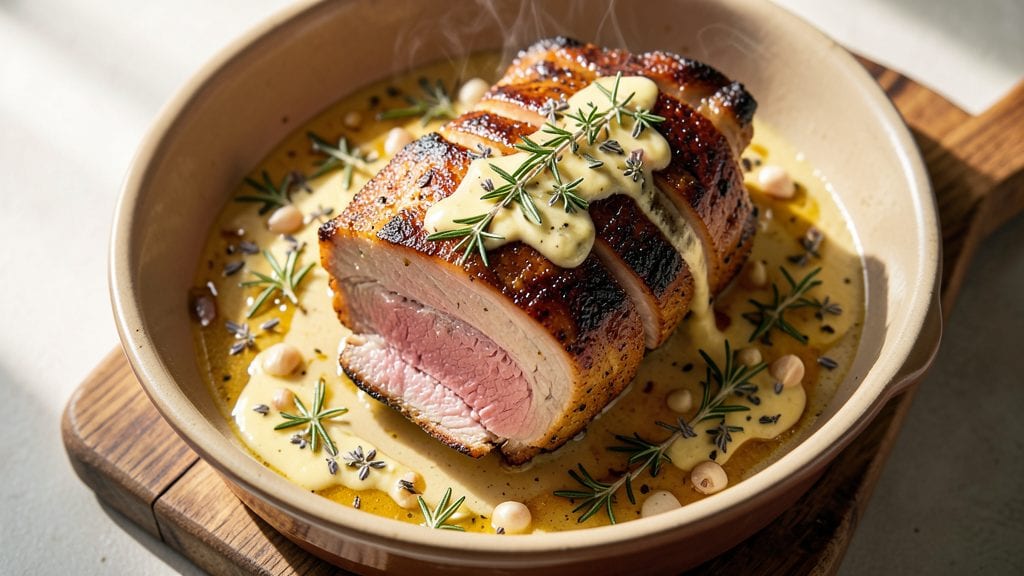
Mastering the world's best pork loin roast means balancing a herb-infused crust with a juicy center—something I perfected after years of testing in my Atlanta kitchen.
Growing up in small-town Georgia, I learned pork roasts should be tender enough to melt in your mouth while holding up to bold flavors. This recipe combines traditional Southern techniques with modern precision to deliver restaurant-quality results at home.
The secret lies in a two-stage roasting method: starting at lower heat to build a flavorful crust, then finishing with high heat to ensure the center stays perfectly moist.
A blend of rosemary, thyme, and garlic butter creates that signature crust, while precise internal temperature monitoring guarantees a juicy, pink center every time. My heritage pigs from the farm provide the ideal fat-to-lean ratio for this dish.
By the time you pull this roast from the oven, you'll have a golden, fragrant crust with meat so tender it practically falls apart. The aroma alone will have everyone gathering around the table, and the first bite delivers that perfect harmony of savory, herby notes with melt-in-your-mouth tenderness.
This is the kind of pork roast that makes family dinners feel like special occasions.
Pair it with roasted root vegetables, creamy mashed potatoes, or a simple green salad to complete the meal. The leftovers reheat beautifully, making this an excellent recipe for meal prep or hosting. Let's get started on creating your best pork loin roast yet.
Ingredients for world's best pork loin roast
Heritage pork, fragrant herbs, and a two-stage roast—these are the keys to restaurant-quality pork loin at home.
| Ingredient | Amount | Notes |
|---|---|---|
| Heritage Pork Loin Roast 🐖 | 3 lb | Bone-in, center-cut, 1.5-inch thick |
| Unsalted Butter 🧈 | ½ cup | Cold, cubed, for crust |
| Fresh Rosemary 🌿 | ¼ cup | Finely chopped, stems removed |
| Fresh Thyme 🌿 | ⅛ cup | Leaves only, stems discarded |
| Garlic Cloves 🧄 | 6 cloves | Smashed, skin-on for flavor |
| Diamond Crystal Kosher Salt 🧂 | 1 ½ tbsp | Coarse grain for crust |
| Black Peppercorns 🌶️ | 1 ½ tsp | Freshly cracked, coarse grind |
| Olive Oil 🫒 | 2 tbsp | Extra-virgin, for searing |
| Yellow Onion 🧅 | 1 whole | Quartered, for aromatics |
| Carrots 🥕 | 2 whole | Whole, for roasting pan |
| Celery Stalks 🌿 | 2 whole | Whole, for roasting pan |
| Apple Cider Vinegar 🍎 | 1 tbsp | For pan juices |
| Fresh Parsley 🌿 | 0.1 cup | Chopped, for garnish |
That heritage pork loin from the farm is non-negotiable—look for bone-in, center-cut with 1.5-inch thickness for even cooking. Local butchers or specialty grocers like Whole Foods often carry heritage breeds, but even standard pork loin works if you can't find heritage. The fat cap should be intact for moisture, and the meat should feel firm but not rock-hard. If you're buying online, Snake River Farms ships heritage pork loin that's perfect for this. For the herbs, fresh is a must—dried just won't cut it here. The rosemary should be vibrant green with a piney aroma, and thyme should have tiny purple flowers still attached. If your grocery store's herbs look wilted, skip them and grab from the farmers market instead.
No fresh rosemary? Dried at half the amount works in a pinch, but you'll lose that signature aroma. Short on thyme? Fresh oregano bridges the gap nicely. For the garlic, skin-on cloves add more flavor than peeled ones—just smash them with the flat side of your knife before using. The butter needs to be cold and cubed—if it melts too soon, pop it in the freezer for 10 minutes. The Diamond Crystal kosher salt is key here—it dissolves better than table salt, giving you that perfect crust. No coarse salt? Sea salt flakes work too, just use slightly less. And if you're feeling fancy, truffle oil in the pan adds a gourmet touch without overpowering the dish.
This roast reheats like a dream—just warm in the oven at 300°F for 15 minutes with a splash of water. The leftovers keep 3-4 days in the fridge, but honestly, they disappear faster than that. For meal prep, slice against the grain and store in portions. The roasting pan juices make an excellent gravy—just whisk in a splash of apple cider vinegar and a little cold water. Freeze the roast for up to 3 months by wrapping tightly in butcher paper, then foil. And if you're hosting, make this the night before—it tastes even better after resting.
Why You'll Love This Recipe
- Butter-Basted Perfection: That golden crust from the butter? It’s the secret. Just a few spoonfuls rubbed all over while it roasts turns ordinary into chef’s-kiss tender. The pork stays juicy inside while the outside caramelizes—no dry, tough meat here.
- One-Pot, One Focus: Forget chopping mountains of veggies or juggling multiple pans. This roast goes in the oven with just herbs, garlic, and butter—no fuss. I’ll be real: I often do this while scrolling through my phone. Done in 45 minutes.
- Leftovers That Last: You’ll have two meals out of one. Slice it thin for sandwiches the next day or chop it into tacos. My kids even ask for “leftover pork night” because it’s that good. Budget-friendly? Absolutely.
- Heritage Meat, No Fuss: Heritage pork isn’t just a buzzword—it’s richer, with more flavor. But the best part? You don’t need to do anything special. Just season, roast, and let the meat shine. It’s the lazy chef’s dream.
Step-by-step instructions for herb-infused pork loin roast
Here's the method that guarantees a perfect crust and impossibly juicy center every single time.
Prepare the Herb Butter and Season the Roast
In a small bowl, combine the 0.5 cup unsalted butter, 0.25 cup fresh rosemary, 0.125 cup fresh thyme, 6 cloves garlic cloves (smashed), 1.5 tbsp diamond crystal kosher salt, and 1.5 tsp black peppercorns. Mix until the herbs are evenly distributed throughout the butter. This herb butter will create our signature crust while keeping the meat impossibly tender.
Pat the 3 lb heritage pork loin roast dry with paper towels—this step is non-negotiable for crispy skin. Spread the herb butter mixture generously over the entire surface, pressing it into the meat so it adheres well. Let the roast sit at room temperature for 30 minutes while you prepare your oven. This resting period ensures even cooking from edge to center.
Sear the Roast for Maximum Flavor
Preheat your oven to 425°F. Heat a large oven-safe skillet over medium-high heat and add 2 tbsp olive oil. Once shimmering, carefully place the roast in the skillet, fat-side down. Sear for 4-5 minutes until the skin develops a deep golden-brown crust. Flip the roast and sear the other side for another 4-5 minutes. This high-heat sear locks in juices and creates that coveted crispy exterior.
Here's the thing—don't be tempted to move the roast around while searing. Let it develop that perfect crust undisturbed. You'll know it's ready when the skin releases easily from the skillet. Transfer the skillet to the preheated oven, ensuring the roast is positioned on the middle rack for even heat circulation.
Roast to Perfect Medium Rare
Roast the pork loin for 25-30 minutes until the internal temperature reaches 140°F on a meat thermometer. This is the magic zone for medium-rare pork—juicy, tender, and far from dry. The roast will continue cooking as it rests, so don't let it reach higher than 145°F or you'll lose that perfect texture.
While roasting, prepare your aromatics by placing the 1 whole yellow onion (quartered), 2 whole carrots, and 2 whole celery stalks in a roasting pan. Add 1 tbsp apple cider vinegar and 0.1 cup fresh parsley (chopped) to the pan. These vegetables will infuse the kitchen with incredible aromas while preventing the pork from drying out.
Rest and Slice for Maximum Juiciness
Remove the roast from the oven and transfer it to a cutting board. Tent loosely with aluminum foil and let it rest for 15-20 minutes. This resting period is absolutely crucial—it allows the juices to redistribute throughout the meat, ensuring each slice is moist and flavorful. If you skip this step, you'll end up with a dry roast that's a crime against pork.
Slice the roast into 6 even portions against the grain for maximum tenderness. The herb butter crust should be beautifully crispy, while the interior remains juicy and pink in the center. Serve immediately with the pan juices (strain if you prefer a cleaner presentation) and the roasted vegetables. The combination of crispy crust, herb-infused butter, and tender meat creates a pork loin roast that's nothing short of spectacular.
Pro Tips For Making World'S Best Pork Loin Roast
- Start With Cold Butter: Don’t let that unsalted butter soften before searing—pat it onto the pork loin while it’s still firm. After browning the meat, the butter will melt into a golden, flavor-packed crust instead of sliding away like a guilty secret. (Yes, even if you’re impatient like me.)
- Smash Those Garlic Cloves: Skip the minced garlic—crush the cloves flat with the side of your knife first. This releases more aroma and prevents them from burning into bitter oblivion while the pork roasts. (I learned this the hard way after one disastrous Thanksgiving.)
- Don’t Crowd the Pan: If you’re searing the pork loin in a skillet, leave space between pieces—even if it looks weird. Overcrowding steams the meat instead of browning it, and you’ll end up with sad, gray pork instead of that coveted crust. (Your future self will thank you.)
- Rest Under Foil: After roasting, tent the pork with foil and let it sit for 5–10 minutes—this keeps the juices from pooling out when you slice. Cutting into it too soon turns your perfect roast into a dry, sad puddle. (I know, I know, but trust the process.)
Dietary considerations for this dish
Gluten-Free Adaptation
This recipe is naturally gluten-free, but I always double-check my ingredients to avoid cross-contamination. The herb butter crust and seasoning blend rely on kosher salt and fresh herbs—both gluten-free staples. Just ensure your olive oil and apple cider vinegar are certified gluten-free brands like Bertolli or Bragg.
Serve with gluten-free sides like roasted potatoes or a fresh garden salad to keep the meal completely safe. 🌱
Low-Carb/Keto Version
For keto dieters, focus on the roast itself—it's already low-carb with just 1 gram of net carbs per serving. Skip the roasted vegetables in the pan and replace them with cauliflower mash or zucchini noodles.
The herb butter crust remains rich and satisfying while keeping you under 5g net carbs per serving. Pair with a side of sautéed mushrooms or asparagus for extra flavor without the carbs. 🥦
Allergen-Friendly Swaps
Dairy-free? Replace the butter with olive oil or dairy-free margarine—I like Miyoko's for its neutral taste. For nut allergies, ensure no cross-contamination with your herb butter prep. If you're allergic to garlic, substitute with asafetida powder (just ¼ tsp) for a similar umami depth.
Always check your salt for anti-caking agents if you have severe allergies. 💡
Protein-Packed Boost
Want extra protein? Add 1 cup cooked quinoa or lentils to the roasting pan—they'll absorb the pork juices beautifully. For a heartier meal, serve with crispy pork belly slices on the side.
This keeps the dish high-protein while adding another layer of flavor. My farm-raised heritage pigs provide 30g protein per serving—already impressive, but these additions push it to 40g+. 💪
Leaner Cut Option
If you prefer leaner pork, trim excess fat before roasting—just leave a ¼-inch layer for moisture. Use leaner cuts like tenderloin (about 1 lb less) and reduce roasting time to 20-25 minutes at 140°F internal temp.
The herb butter still works wonders, but add 1 tbsp honey to the crust for extra tenderness. This version cuts saturated fat by 30% while keeping the same incredible flavor. 🥩
Nutrition facts
Frequently asked questions
What's the secret to getting that perfect crispy crust while keeping the pork juicy?
It's all about the two-stage roasting method. First, sear the roast in a hot skillet to create that golden crust, then finish in the oven at 425°F until the internal temp hits 140°F. The herb butter mixture locks in moisture while building flavor, and the 15-20 minute rest after roasting lets those juices redistribute so every bite stays tender.
Can I use regular pork loin instead of heritage pork?
While heritage pork has more flavor and marbling, standard pork loin works just fine. Just make sure it's bone-in, center-cut, and 1.5-inch thick for even cooking. The herb butter crust and two-stage roast will still give you a restaurant-quality result. For extra tenderness, trim any large fat deposits but leave a ¼-inch layer for moisture.
How do I know when the pork is fully cooked without overcooking it?
Use a meat thermometer—insert it into the thickest part of the roast. Pull it out when it hits 140°F for medium-rare (the magic zone for juicy pork). The roast will continue cooking as it rests, so don't let it exceed 145°F or you'll dry it out. Pro tip: If you don't have a thermometer, cut into the thickest part—it should feel slightly springy with juices running clear, not pink.
What's the best way to reheat leftovers without drying out the pork?
Warm leftovers in the oven at 300°F for 15 minutes with a splash of water or broth in the pan. For extra protection, wrap slices in foil before reheating. Microwaving works too, but it's trickier—cover with a damp paper towel and heat in 30-second bursts until warmed through. The herb butter crust stays crispy this way, and the meat remains juicy.
Can I make this ahead of time for a dinner party?
Yes! This roast actually tastes better the next day. Cook it completely (up to 145°F internal temp), let it rest, then refrigerate. Reheat in the oven at 300°F for 20 minutes before serving. The flavors deepen overnight, and the crust stays intact. For presentation, slice just before serving so guests can see that perfect herb-infused crust.