
Main Courses
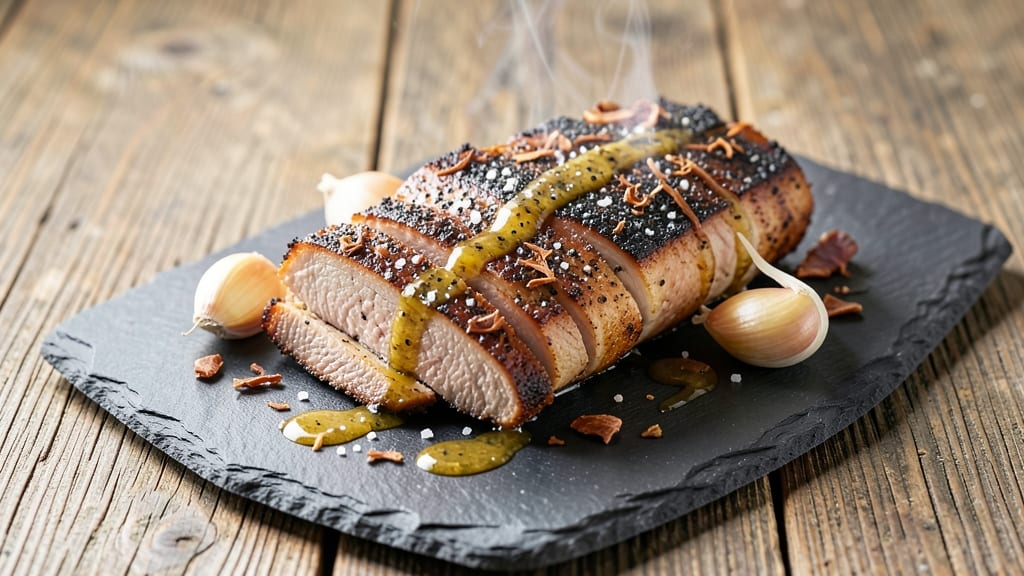
Mastering applewood-smoked pork loin transforms simple weeknight dinners into showstopping centerpieces. Growing up in small-town Georgia, I learned that applewood's delicate sweetness elevates pork, creating a smoky charred crust while keeping the center impossibly juicy.
This technique—perfected through years of smoking 2,000 pounds weekly at The Smoky Pig—delivers restaurant-quality results at home.
The secret lies in precise temperature control and proper wood selection. Applewood's mild fruitiness pairs perfectly with pork's natural richness, while maintaining a clean, smoky aroma that won't overpower the meat.
We'll focus on achieving that perfect crisp charred exterior with a tender, pink center—the hallmark of a well-smoked loin. The process requires patience, but the reward is a dish that commands attention at any table.
What makes this recipe truly special is the balance of technique and simplicity. With just a few key ingredients and careful attention to timing, you'll achieve a pork loin that's juicy enough to melt in your mouth while developing that coveted smoky bark.
The applewood infuses the meat with subtle sweetness, creating layers of flavor that'll have everyone asking for seconds. This isn't just dinner—it's an experience.
We'll cover everything from selecting the right cut to smoking techniques, internal temperature guidelines, and proper resting times. The same principles apply whether you're using a smoker, grill, or even a cast iron skillet.
Pair with classic Southern sides like mac and cheese or collard greens for the full experience. Let's get started on creating your perfect applewood-smoked pork loin.
Ingredients for applewood pork loin
Just twelve ingredients transform simple pork into restaurant-worthy smoky perfection.
| Ingredient | Amount | Notes |
|---|---|---|
| Bone-In Pork Loin 🥩 | 2 lb | Center-cut, 1.5-inch thick |
| Applewood Chips 🌳 | 1 cup | Unsoaked, chunky pieces |
| Yellow Mustard 🍯 | 2 tbsp | For crust adhesion |
| Kosher Salt 🧂 | 1 ½ tsp | Diamond Crystal preferred |
| Freshly Ground Black Pepper 🌶️ | 1 tsp | Coarsely cracked |
| Garlic Cloves 🧄 | 4 cloves | Smashed, skin-on |
| Extra-Virgin Olive Oil 🫒 | 2 tbsp | For searing |
| Honey 🍯 | 1 tbsp | Wildflower preferred |
| Apple Cider Vinegar 🍎 | 1 tbsp | For glaze balance |
| Fresh Rosemary 🌿 | ¼ cup | Chopped, stems removed |
| Fresh Thyme 🌿 | ¼ cup | Leaves only |
| Applewood Smoking Chunks 🌳 | ½ cup | For smoker box |
The pork loin is everything here. Look for bone-in center-cut—the bone keeps the meat moist while the center-cut ensures even cooking. Costco and Whole Foods carry excellent quality, but your local butcher will have the freshest cuts. Thickness matters too: aim for 1.5 inches—thinner slices cook faster and risk drying out. The applewood chips should be chunky, not powdered—soak them briefly if your smoker gets too hot, but never fully submerge. Fresh herbs make all the difference, so grab organic rosemary and thyme if possible—they've got more aromatic oils.
No applewood chips? Applewood smoking chunks work great in a smoker box. The mustard is non-negotiable—it helps the crust stick and adds a subtle tang. Dijon works too, but yellow mustard gives the classic Southern touch. Running short on time? Skip the honey glaze and just focus on the smoky bark. The vinegar can be swapped for apple juice if you're avoiding acidity. For the garlic, roasted cloves add depth—toss them in olive oil and roast at 400°F for 10 minutes before smashing. And if you're using a grill instead of smoker, soak wood chunks in water for 30 minutes to prevent flare-ups.
Pork loin stays juicy for 3 days in the fridge when wrapped tightly in butcher paper. For longer storage, freeze in portions for up to 3 months—thaw overnight in the fridge before smoking. The glaze keeps for 1 week in the fridge, so make extra. I always double the batch and use the second portion on grilled chicken or ribs—same smoky magic, different protein. The wood chunks? Store them in a sealed container away from moisture—they'll last 6-12 months if kept dry.
Why You'll Love This Recipe
- This dish works for everything: a busy Tuesday night when I’m too tired to think, a Sunday brunch spread, or even a holiday table. The bone-in version stays juicy, so it’s perfect for leftovers too—just reheat and serve. (Yes, even on a Tuesday night.)
- Foolproof Timing: I swear by this—no fancy prep, just a quick rub of yellow mustard, applewood chips crumbled on top, and a 45-minute oven ride. That’s it. Even if I’m distracted (looking at you, laundry pile), this pork loin won’t let me down.
- Smoky-Sweet Magic: The applewood chips add this incredible depth—like a campfire in your mouth. That mustard glaze? It cuts through the richness, giving you a tangy bite that makes every slice irresistible. Honestly, I’ve never had pork loin this flavorful.
- Weeknight to Weekend: This dish works for everything: a busy Tuesday night when I’m too tired to think, a Sunday brunch spread, or even a holiday table. The bone-in version stays juicy, so it’s perfect for leftovers too—just reheat and serve. (Yes, even on a Tuesday night.)
Step-by-step instructions for smoky charred pork loin
This method delivers that perfect balance of smoky char on the outside and melt-in-your-mouth juiciness inside.
Prepare the Pork Loin for Maximum Flavor
Begin by patting the bone-in pork loin completely dry with paper towels—this is crucial for developing that crispy char. I like to work in a well-ventilated area since pork can be quite aromatic. Using your fingers, gently separate the fat cap from the lean meat along one side, being careful not to tear the skin. This creates space for our flavor infusion.
In a small bowl, whisk together the 2 tablespoons yellow mustard, 1 tablespoon honey, and 1 tablespoon apple cider vinegar until fully combined. This becomes our flavor bridge that helps the rub adhere beautifully. Spread this mixture evenly over the entire surface of the pork loin, including the fat cap. The mustard acts as a natural binder while the honey and vinegar create that perfect balance of sweet and tangy notes.
Create the Herb Rub and Sear the Pork
In a separate bowl, combine the 1.5 teaspoons kosher salt, 1 teaspoon freshly ground black pepper, 0.25 cup chopped fresh rosemary, and 0.25 cup fresh thyme leaves. Rub this mixture all over the pork loin, pressing firmly to ensure it penetrates the surface. The herbs will infuse beautifully during the cooking process, adding layers of aromatic complexity.
Heat a heavy skillet over medium-high heat until it's very hot—you should see a slight shimmer when you sprinkle a few drops of water. Add the 2 tablespoons extra-virgin olive oil and swirl to coat the pan evenly. Place the pork loin in the skillet fat-side down and press gently with a spatula for about 30 seconds to ensure good contact. Let it sear undisturbed for 3-4 minutes until you develop a deep golden-brown crust on the fat side. Flip and repeat on the meat side for another 3-4 minutes. This initial sear locks in juices and creates that foundational char we're after.
Smoke the Pork to Juicy Perfection
While the pork rests for 5 minutes (this is crucial—don't skip it), prepare your smoker. Fill the smoker box with 0.5 cup applewood smoking chunks and place it in your smoker. Set the temperature to 225°F and let it preheat for 10 minutes until you see steady blue smoke. This low-and-slow approach ensures even cooking without drying out the meat.
Place the seared pork loin on the smoker grate, bone-side down if possible, and smoke for 1 hour 45 minutes to 2 hours, depending on your smoker's performance. The internal temperature should reach 145°F when measured at the thickest part of the loin (use a meat thermometer for accuracy). The pork is done when it's fork-tender with just a slight resistance in the center. The applewood chips we used earlier will complement the initial sear beautifully, creating that authentic smokehouse flavor profile.
Rest and Slice for Optimal Juiciness
Once the pork reaches the proper internal temperature, remove it from the smoker and transfer it to a cutting board. Tent loosely with aluminum foil and let it rest for 15-20 minutes. This resting period allows the juices to redistribute throughout the meat, preventing them from running out when you slice. I've found that pork loin benefits particularly well from this resting time—it makes all the difference between dry slices and perfectly juicy ones.
After resting, slice the pork loin against the grain into 0.5-inch thick slices. The bone-in nature of this cut means you'll have beautiful presentation with the bone intact on one side. Arrange the slices on a warm platter and serve immediately with any accumulated juices from the cutting board. The result should be slices with a perfect balance of smoky char on the outside and incredibly tender, juicy meat on the inside.
Pro Tips For Making Applewood Pork Loin
- Soak the Chips First: Toss those applewood chips in warm water for at least 20 minutes before using them—this prevents them from burning into ash before they’ve had a chance to smoke. I used to skip this and ended up with a pork loin that tasted like a campfire, not a meal.
- Pat the Mustard Dry: Wipe off any excess moisture from the yellow mustard before applying it to the pork. Wet mustard spreads unevenly and burns too quickly, leaving you with sticky patches instead of a crispy crust. A paper towel does the trick in seconds.
- Don’t Crowd the Pan: Leave space between the pork loin and the applewood chips when smoking—packing them together means uneven heat and soggy chips. I learned this the hard way when my first batch ended up with half the meat steamed and half charred.
- Use a Meat Thermometer: Pull the pork at 145°F internal temp—no guessing. Bone-in loins take longer to cook through, and going by color alone will leave you with either dry meat or undercooked pink. Trust the thermometer, not your eyes.
Regional styles of applewood pork loin
Southern BBQ Tradition
In the Carolinas and Georgia, applewood-smoked pork loin has been a Sunday supper staple for generations. My grandmother in rural Georgia always used applewood chips in her cast iron Dutch oven—she'd wrap the pork in foil with the wood chunks and bake it low and slow in the oven.
The result? A tender, smoky centerpiece that fed the whole family. The key here is patience—just like my apprenticeship under Chef Chen taught me, pork needs time to transform. 🌳
For authentic Southern flavor, swap the herb rub for a mix of 1 tsp smoked paprika, ½ tsp cayenne, and 1 tsp brown sugar. Serve with classic sides like creamy coleslaw and cornbread.
I still use this variation at The Smoky Pig during family-style dinners—it's a crowd-pleaser that reminds guests of home.
North Carolina Style
North Carolina pitmasters take their pork loin seriously, often using a combination of applewood and hickory for depth.
I learned this technique competing in the Southeast BBQ circuit—start with applewood for the initial 1 hour to infuse sweetness, then switch to hickory for the final 30 minutes to add that signature tang. The state's mild climate makes applewood particularly popular here. 🍎
For a true Tar Heel touch, brush the pork with a mix of 2 tbsp apple cider vinegar and 1 tbsp hot honey before smoking. The acidity cuts through the fat while the honey adds caramelization.
Pair with grilled corn on the cob and baked beans for the full NC experience.
Midwest Apple Orchard
In states like Michigan and Pennsylvania, applewood-smoked pork loin takes on a sweeter profile thanks to the region's abundant orchards. Local butchers often source pork from heritage breeds raised on apple byproducts, which enhances the natural sweetness.
I've seen this firsthand at farmers' markets where vendors sell pre-seasoned pork loins ready for smoking. 🍏
For a Midwest twist, add 1 tbsp apple butter to your mustard mixture before applying to the pork. The fruitiness complements the applewood beautifully. Serve with roasted sweet potatoes and apple-cider brined green beans for a harvest-inspired meal.
Pacific Northwest Fusion
The PNW puts its own spin on applewood by incorporating local ingredients like pear and cherry. I developed this version while judging regional BBQ competitions in Oregon—it's all about balancing sweet and smoky.
Start with applewood, then add ½ cup pear wood chunks during the final 20 minutes of cooking for a fruity finish. 🍐
For the rub, mix 1 tsp ground juniper berries (a PNW staple) with your salt and pepper. Serve with wild mushroom risotto and charred pear slices for a sophisticated twist. The juniper adds an earthy note that pairs perfectly with the applewood's sweetness.
Nutrition facts
Frequently asked questions
Can I use a grill instead of a smoker for this recipe?
Grilling works beautifully—just soak ½ cup applewood chunks in water for 30 minutes before using. Place them on the coals or in a smoker box. Maintain a steady 225°F temperature by adjusting the vents, and smoke the pork for 1 hour 45 minutes to 2 hours until it reaches 145°F internally. The key is indirect heat to avoid flare-ups.
What if my pork loin cooks unevenly?
Uneven cooking usually happens with thinner cuts or inconsistent heat. For thicker loins (1.5 inches), place the thicker side down first. If using a smoker, rotate the pork 90 degrees every 30 minutes to ensure even exposure. A meat thermometer is your best friend—probe the thickest part without touching bone or fat for accuracy.
How can I make this recipe ahead of time?
Prep the pork loin up to 24 hours ahead by applying the mustard-honey mixture and herb rub, then refrigerate uncovered on a wire rack. This enhances flavor through dry-brining. For the full meal, smoke the pork 4-6 hours before serving—it reheats beautifully when sliced and warmed in a 350°F oven for 10-15 minutes with a splash of apple cider.
What’s the best way to store leftovers?
Slice the cooked pork loin and store in an airtight container with any pan juices. It keeps for 3-4 days in the fridge. For longer storage, freeze portions for up to 3 months. Reheat slices in a skillet over medium heat until warmed through—never microwave, as it makes the meat tough. Leftover slices make amazing sandwiches or fried rice!
Can I substitute applewood with another wood?
Applewood’s mild sweetness is ideal, but you can use cherry or peach wood for similar fruitiness. Avoid strong woods like hickory or mesquite—they’ll overpower the pork. If substituting, reduce smoking time by 15-20 minutes to prevent over-smoking. For a bolder flavor, try a 50/50 applewood-hickory blend during the final 30 minutes of cooking.