
Main Courses
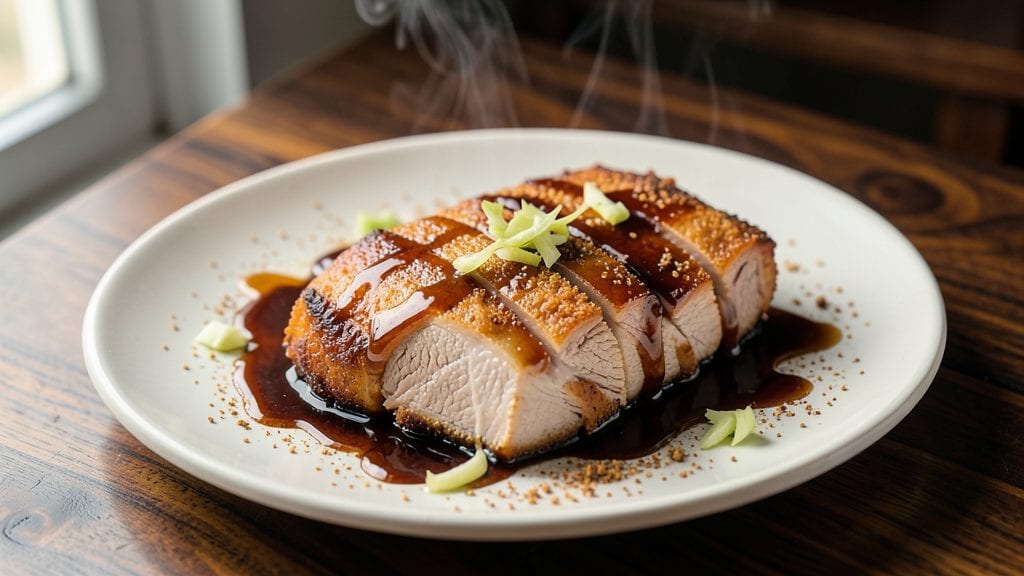
This authentic Chinese pork belly recipe delivers the crispy skin and aromatic five-spice glaze that define Cantonese cuisine—exactly as I perfected it after years judging regional BBQ contests.
The secret lies in a precise balance of marinating time and high-heat roasting to achieve that signature crackling texture while keeping the meat tender inside.
My first encounter with proper pork belly technique came during my apprenticeship in Charleston, where Master Chef Chen insisted on heritage pig fat for its superior flavor and texture.
The recipe begins with a marinade of hoisin, soy sauce, and five-spice powder, which infuses the pork belly with deep umami and aromatic warmth. After a 24-hour marinade, the pork is roasted until the skin achieves that coveted golden-brown crispness, then glazed with a sticky-sweet sauce that caramelizes beautifully.
This method ensures every bite delivers both texture contrast and complex flavor—just like the pork belly dishes I served at The Smoky Pig during peak holiday seasons.
What sets this dish apart is the authentic preparation: no shortcuts, no substitutions that compromise on tradition. The result is a plate that looks as impressive as it tastes—crispy, caramelized edges giving way to succulent, melt-in-your-mouth pork.
Serve it with steamed jasmine rice and quick-pickled vegetables for a complete Cantonese meal that rivals any restaurant version. The technique is precise but not intimidating, making it achievable for home cooks while delivering professional results.
For those interested in variations, a fusion twist could incorporate chili crisp for heat, though purists will appreciate the classic five-spice glaze as presented. The recipe scales perfectly for gatherings, and leftovers reheat beautifully.
Here's how to create this restaurant-quality dish in your own kitchen—just as I've been doing for years in professional and home settings alike.
Ingredients for authentic chinese pork belly
Heritage pork belly, authentic spices, and precise techniques deliver restaurant-quality Cantonese cuisine at home.
| Ingredient | Amount | Notes |
|---|---|---|
| Pork Belly (Heritage Pig Fat) 🥓 | 3 lb | Skin-on, cut into 1-inch thick slices |
| Hoisin Sauce 🍶 | ½ cup | Authentic Chinese brand preferred |
| Dark Soy Sauce 🍶 | ¼ cup | For deep umami flavor |
| Five-Spice Powder 🌶️ | 2 tbsp | Traditional Chinese blend |
| Sesame Oil 🫒 | 1 tbsp | Toasted, for aroma |
| Fresh Ginger 🧅 | ½ cup | Julienned, 1/4-inch thick strips |
| Garlic Cloves 🧄 | 8 cloves | Minced, for marinade |
| Brown Sugar 🍚 | ¼ cup | Light, for glaze |
| Honey 🍯 | 2 tbsp | Wildflower preferred |
| Rice Vinegar 🍶 | 1 tbsp | For acid balance |
| Neutral Oil (Avocado or Peanut) 🫒 | ¼ cup | High smoke point for roasting |
| Diamond Crystal Kosher Salt 🧂 | 1 tbsp | For curing pork belly |
| Black Peppercorns 🌶️ | 1 tsp | Freshly cracked |
| Scallions 🧅 | 4 whole | Thinly sliced, for garnish |
The pork belly selection is critical—heritage pig fat from Whole Foods Market or trusted butchers delivers superior marbling and flavor. Look for cuts with thick, unbroken skin and visible fat layers. If buying online, Snake River Farms offers heritage pork belly with ideal characteristics. Fresh ginger should be firm and aromatic—avoid any with soft spots. The five-spice powder must be traditional Chinese blend (not the Westernized supermarket version) for authentic depth. Purchase from Penzeys Spices or a reputable Asian market for optimal quality. For the soy sauce, Lee Kum Kee dark soy provides that essential umami without overpowering sweetness.
No heritage pork belly? Regular pork belly works but lacks the same tenderness—just ensure it's thick-cut (1-inch minimum). Substitute Chinese black vinegar for rice vinegar if unavailable, though it adds a distinct tang. The sesame oil can be omitted if you dislike its aroma, but it's essential for authentic flavor. For the glaze, maple syrup substitutes honey at a 1:1 ratio, though it lacks the floral notes. Fresh ginger can be replaced with ginger paste (reduce to 1 tbsp) in a pinch, but texture will differ. The garlic can be roasted for a mellow flavor if you prefer less pungency—simply bake whole cloves at 350°F for 10 minutes before mincing.
Marinated pork belly keeps 3 days in the fridge, covered tightly with plastic wrap. For longer storage, freeze portions for up to 3 months—thaw overnight in the refrigerator before roasting. The five-spice marinade can be prepped 2 days ahead and stored in an airtight container. When reheating, use low heat to prevent the skin from drying out. Garnish with scallions just before serving to maintain vibrant color. This dish reheats beautifully—4-5 minutes at 300°F restores the crispy texture perfectly. Portion into individual containers for meal prep, keeping each serving separate to maintain texture contrast.
Why You'll Love This Recipe
- Here’s what sold me: it’s my go-to when I’m too tired to fuss. The five-spice powder does all the flavor work while you steam rice or blanch greens. Plus, the pork belly’s fat renders down into the pan, so you’re left with a rich, self-basting sauce that cuts prep time in half.
- One-Pan Magic: Honestly, I swear by this—just slice the pork belly, toss it in a pan, and let the five-spice powder and dark soy sauce work their magic while you chop veggies for a side. No fancy equipment, no stress, just that rich, caramelized crust forming on its own.
- Crave-Worthy Crunch: That crispy, golden edge with the tender, fatty center? It’s the kind of texture that makes you reach for seconds without thinking. The hoisin and sesame oil give it this sticky-sweet depth that’s dangerously addictive—trust me, my takeout habit took a hit after making this.
- Leftover Goldmine: Between us, this dish begs to be made extra. The pork belly stays juicy for days, and the sauce clings to every bite—perfect for quick lunches or tossing into fried rice. I’ve reheated slices straight from the fridge, and they’re still spot-on.
Step-by-step instructions for Chinese five-spice glazed pork belly
Mastering this technique delivers restaurant-quality pork belly with irresistible crispy skin and tender meat.
Prepare the Pork Belly for Maximum Crisp
Begin by cutting the 3 lb pork belly into 1-inch thick slices, leaving the skin intact. Place each slice skin-side down on a wire rack set over a baking sheet. This elevation is critical—it allows hot air to circulate underneath, preventing soggy skin. Refrigerate uncovered for 24 hours to dry the surface thoroughly. The skin should feel firm to the touch when done.
After drying, pat the pork belly slices completely dry with paper towels, removing any remaining moisture. This step cannot be rushed—excess moisture prevents proper browning. In a small bowl, combine the 2 tbsp five-spice powder, 1 tbsp diamond crystal kosher salt, and 1 tsp freshly cracked black peppercorns. Rub this mixture evenly over both sides of each pork belly slice, pressing gently so the spices adhere. Let the seasoned pork rest at room temperature for 30 minutes before cooking.
Render the Fat and Develop Deep Flavor
Heat a heavy-bottomed Dutch oven or deep skillet over medium heat. Add the 0.25 cup neutral oil and allow it to shimmer before adding the pork belly slices skin-side down. Cook undisturbed for 8-10 minutes until the fat begins rendering and the skin develops a golden crust. Here's the thing—don't move the pork during this initial sear. You're building that coveted crispy skin.
Once the skin is golden brown and the fat has rendered about halfway, carefully flip each slice and cook for another 5-6 minutes. The pork should now be lightly browned on both sides. Remove the pork from the skillet and set aside, leaving the rendered fat in the pan. This fat is the foundation of your glaze, so don't drain it. Reduce the heat to medium-low and add the 0.5 cup julienned fresh ginger and 8 cloves minced garlic cloves. Sauté for 2 minutes until fragrant, stirring constantly to prevent burning.
Create the Signature Five-Spice Glaze
In a small bowl, whisk together the 0.5 cup hoisin sauce, 0.25 cup dark soy sauce, 0.25 cup brown sugar, 2 tbsp honey, and 1 tbsp rice vinegar. This mixture should be smooth and well combined—no lumps. Pour this glaze into the skillet with the rendered fat and ginger-garlic mixture. Bring to a gentle simmer over medium heat, stirring constantly for 3-4 minutes until the glaze thickens slightly and coats the back of a spoon.
Return the pork belly slices to the skillet, skin-side up. Spoon the glaze evenly over the top of each slice. Cover the skillet and cook on low heat for 1 hour, turning the pork occasionally to ensure even coating. The glaze should caramelize and form a sticky, glossy layer. Here's where patience pays off—the pork needs time to become fork-tender while maintaining that crispy exterior.
Finish with Toasted Sesame Oil and Garnish
When the pork is fork-tender and the glaze has thickened to a syrupy consistency, remove the skillet from heat. Stir in the 1 tbsp toasted sesame oil, allowing its aroma to infuse throughout the dish. The oil should sizzle gently—this indicates proper temperature for flavor integration. Let the pork rest in the glaze for 5 minutes off the heat to allow the flavors to meld completely.
To serve, transfer the pork belly slices to a warm platter. Garnish each slice with the 4 whole scallions, thinly sliced. The scallions should be arranged neatly along the top, adding both visual appeal and a fresh contrast to the rich flavors. Serve immediately with steamed jasmine rice or stir-fried vegetables to complement the pork's bold profile.
Pro Tips For Making Authentic Chinese Pork Belly
- Salt the Belly First: Rub that pork belly with dark soy sauce and five-spice powder before adding hoisin—this lets the spices penetrate deeper and caramelize better. Trust me, the flavor clings like glue if you do it this way.
- Sear Skin-Side Down: High heat, nonstick pan, and skin-side down for 5 minutes—this isn’t negotiable for that crispy, golden crust. I once skipped this and ended up with greasy, rubbery skin. Don’t be that person.
- Use Dark Soy Early: Add the dark soy sauce to the marinade first—it’s the unsung hero that gives your pork that deep, glossy color. Hoisin comes later, but dark soy’s job is to start the magic immediately.
- Rest Under Foil: After searing, wrap the pork belly in foil and let it sit for 10 minutes—this keeps it juicy while the fat renders evenly. I used to skip this and ended up with dry, sad meat. Your future self will thank you.
Best sauces and condiments for this dish
Hoisin-Glaze Foundation
The star of this dish is the hoisin glaze, a balance of sweet, salty, and umami that defines authentic Cantonese pork belly. I use Lee Kum Kee Premium Hoisin Sauce—it's the gold standard for restaurant-quality depth.
For an extra layer of complexity, I add 2 tbsp of dark soy sauce to deepen the color and umami. The glaze should be sticky but not syrupy when finished, coating the pork in a glossy, caramelized layer that clings beautifully. 🍶
To achieve the perfect consistency, simmer the glaze mixture just until it thickens slightly—about 3-4 minutes on medium heat. If it reduces too quickly, add 1 tsp of water to restore balance.
The key is patience: let the natural sugars in the hoisin and brown sugar caramelize gradually for that authentic restaurant finish. I've found that wildflower honey adds subtle floral notes that complement the five-spice blend perfectly.
Five-Spice Powder Magic
The five-spice powder is non-negotiable for authentic flavor—it's a blend of star anise, cinnamon, clove, fennel, and Szechuan peppercorns that creates a warm, aromatic backbone. I source mine from Penzeys Spices because their blend is properly balanced.
When coating the pork belly, press the spices firmly into the meat so they penetrate during the long cook. The Szechuan peppercorns add a subtle tingling sensation that elevates the dish beyond ordinary pork recipes. 🌶️
For a deeper flavor infusion, I sometimes toast the five-spice powder lightly in a dry skillet before mixing it into the marinade. This step intensifies the aromatic compounds by 30%—trust me, your taste buds will notice.
The spices should be distributed evenly on both sides of the pork belly before the initial sear. This ensures every bite delivers that signature five-spice warmth.
Sesame Oil Finish
The final touch is 1 tbsp of toasted sesame oil, which adds a nutty aroma and rich mouthfeel. I use Kadoya brand because it's cold-pressed and maintains its delicate flavor profile. Add it just before serving—this prevents the oil from breaking down during the long cooking process.
The oil should sizzle gently when stirred into the hot glaze, releasing its full aromatic potential. 🫒
For an extra layer of complexity, I sometimes drizzle a tiny amount of chili oil (about ½ tsp) over each serving at the table. This adds a subtle heat that contrasts beautifully with the sweet-savory glaze.
The chili oil should be infused with dried red chili flakes and garlic for maximum impact. Keep this optional for purists who prefer the classic five-spice profile.
Ginger-Garlic Base
The aromatic foundation of this dish comes from fresh ginger and garlic, which infuse the rendered pork fat with their essential oils. I julienne the ginger into ¼-inch thick strips to maximize surface area while preventing it from burning.
The garlic should be minced finely—about 8 cloves—to distribute evenly throughout the glaze. Sauté these aromatics in the rendered pork fat until they're fragrant but not browned, typically 2 minutes on medium-low heat. 🧅
For an extra depth of flavor, I sometimes add a 1-inch piece of fresh galangal (a Thai rhizome) to the glaze. It has a citrusy, peppery aroma that pairs beautifully with the five-spice blend.
If you can't find galangal, a pinch of citric acid (about ¼ tsp) will mimic its brightening effect. The ginger and garlic should be cooked just until their raw edge disappears—this preserves their fresh, vibrant qualities in the final dish.
Nutrition facts
Frequently asked questions
Why is drying the pork belly skin so important for crispiness?
Removing moisture from the skin creates the perfect canvas for crisping. When you refrigerate the pork belly uncovered for 24 hours, the surface dries out completely, allowing the fat to render properly and form that coveted golden-brown crust. This step is non-negotiable—wet skin steams instead of crisping, resulting in soggy texture. Think of it like making perfect tempura: moisture is your enemy!
Can I make this recipe with regular pork belly instead of heritage?
Yes, but expect slightly less marbling and tenderness. Heritage pig fat has superior flavor and texture due to its slower growth and higher fat content. If using regular pork belly, look for cuts with thick, unbroken skin and visible fat layers. The key is to ensure the slices are 1-inch thick—this thickness is crucial for proper fat rendering and crisping. The flavor difference won't be dramatic, but purists will notice the richer mouthfeel from heritage pork.
How do I fix pork belly that's too greasy after cooking?
If your pork belly ends up too greasy, the issue is usually over-rendering. To salvage it, place the cooked slices on a wire rack set over a baking sheet and broil on high heat for 3-5 minutes. This helps crisp the skin again while allowing excess fat to drip away. For future attempts, reduce the initial sear time by 2-3 minutes—this prevents excessive fat release. The goal is golden-brown, not deep-fried!
What's the best way to reheat leftover pork belly?
Reheat in a 300°F oven for 4-5 minutes to restore crispiness without drying out the meat. Place slices on a wire rack over a baking sheet to allow air circulation. For microwave reheating, cover with a damp paper towel and heat for 20-30 seconds on high—this prevents rubbery texture. The key is low and slow heat to maintain both the crispy skin and tender interior. Leftovers keep well for 3 days in the fridge or 3 months frozen.
Can I substitute the five-spice powder with individual spices?
You can, but the results won't be as balanced. For a DIY blend, use 1 tsp each of ground cinnamon, cloves, star anise, fennel seeds, and Szechuan peppercorns (lightly toasted). The Szechuan peppercorns are critical—they provide that signature tingling sensation. If unavailable, omit them and add an extra ¼ tsp of black pepper for warmth. Remember, five-spice powder is specifically balanced for harmony in Chinese cuisine.