
Main Courses
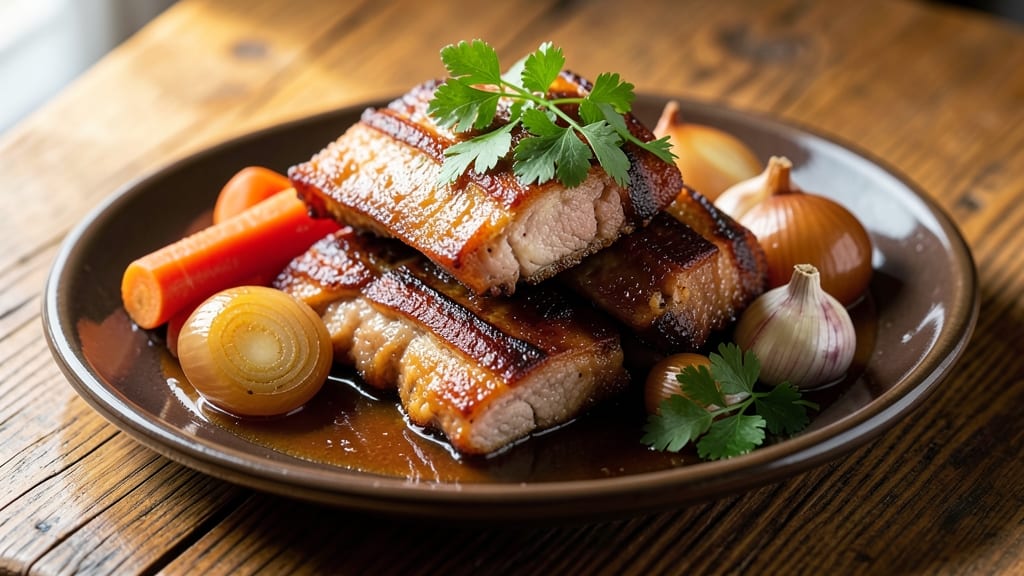
Boiled pork spare ribs deliver melt-in-your-mouth tenderness that transforms tough cuts into silky perfection—just like my grandmother used to make back in Georgia. This slow-simmered method preserves natural juices while building deep, savory flavors through precise temperature control and time.
The vinegar kiss at the end creates that signature crunch without overpowering the meat's richness.
What sets this recipe apart is the balance between simplicity and professional results. You'll need just a few pantry staples—vinegar, salt, and aromatics—but the technique is where the magic happens.
We're talking 3 hours of gentle simmering at 180°F, which breaks down collagen while keeping the meat moist. No fancy equipment required, just a large pot and patience.
The reward is ribs that practically fall apart at the touch, with a glossy sheen and just enough vinegar crunch to cut through the richness. The aroma alone will have your whole house gathering around the table, and every bite delivers that perfect harmony of tender meat and bright acidity.
This is comfort food at its finest—worth the wait.
Serve with classic sides like buttery cornbread or tangy coleslaw to complete the meal. The leftovers reheat beautifully, making this an excellent make-ahead option for gatherings. Let's get started on these restaurant-quality ribs that taste like home.
Ingredients for boiled pork spare ribs
Pantry staples meet Southern tradition—just four pounds of ribs and a few simple ingredients transform into melt-in-your-mouth perfection.
| Ingredient | Amount | Notes |
|---|---|---|
| Pork Spare Ribs 🥩 | 4 lb | Bone-in, meaty cuts preferred |
| White Vinegar 💧 | 1 cup | Distilled white preferred |
| Diamond Crystal Kosher Salt 🧂 | 2 tbsp | Coarse grain preferred |
| Carrots 🥕 | 4 whole | Medium size, peeled and halved |
| Yellow Onion 🧅 | 1 whole | Medium size, quartered |
| Garlic Cloves 🧄 | 6 cloves | Peeled, smashed |
| Fresh Bay Leaves 🍃 | 2 whole | Dried works in a pinch |
| Black Peppercorns 🌶️ | 1 tsp | Crushed lightly |
| Fresh Thyme Sprigs 🌿 | 2 sprigs | Or 1 tsp dried thyme |
| Water 💧 | 6 cups | Filtered preferred |
| Extra-Virgin Olive Oil 🫒 | 2 tbsp | For finishing |
The ribs are the star, so don't skimp on quality. Look for cuts with good meat-to-bone ratio—Costco or Whole Foods often carry the best selections. If you're buying a whole packer, trim excess fat to prevent greasy broth. The vinegar should be distilled white—apple cider vinegar adds unwanted sweetness. For salt, Diamond Crystal kosher dissolves better than table salt, creating cleaner flavor. Carrots and onions add sweetness to balance the acidity, so choose fresh, firm produce—no mealy vegetables here. The garlic? Fresh is non-negotiable—jarred minced lacks the depth.
No white vinegar? Apple cider vinegar works in a pinch, but reduce to 3/4 cup to avoid sweetness. Running short on fresh thyme? Dried works at half the amount, but toast it first for better flavor. The bay leaves can be skipped entirely if you're out, but they add that subtle earthy note that makes this taste like Grandma's. For a quicker version, use bottled beef broth instead of water—just add an extra cup to compensate. The olive oil at the end? Use only extra-virgin—it adds a fruity finish that cheap oil won't match. And trust me, the extra minute to crush those peppercorns instead of using pre-ground makes a difference.
This recipe rewards patience—simmering at 180°F for 3 hours transforms tough meat into silky perfection. The ribs keep beautifully for 3 days in the fridge, wrapped tightly in foil. For longer storage, freeze for up to 3 months—they reheat just as tender. I always make a double batch because the leftovers reheat even better the second day. The broth? Strain and reduce it for a quick pan sauce—just add a splash of vinegar and a pat of butter at the end. That's where the real magic happens.
Why You'll Love This Recipe
- No-Fuss Simmer: The vinegar and salt do all the work—just toss everything in one pot and walk away. I swear, the ribs practically cook themselves while you handle the rest of dinner.
- Tender Magic: That crispy exterior with fall-off-the-bone tenderness? The vinegar and kosher salt break down the collagen, turning tough ribs into pure satisfaction. Honestly, it’s the kind of texture that makes you close your eyes.
- Pot Luck Ready: Perfect for game day, family dinners, or when you’re too tired to plan. The carrots and onion add sweetness without extra effort, and the leftovers? Even better the next day.
- Budget Hero: Pork spare ribs are cheaper than you’d think, and this method stretches them across multiple meals. Between us, I’ve fed six people for under $15 with this—no complaints.
Step-by-step instructions for slow-simmered pork spare ribs
Here's how to transform tough pork spare ribs into tender, vinegar-kissed perfection through gentle simmering.
Prepare the Ribs and Aromatics
Begin by thoroughly rinsing the 4 lb pork spare ribs under cold water and patting them completely dry with paper towels. This drying step is crucial—it prevents the ribs from steaming in their own juices during cooking. Next, place the ribs in a large Dutch oven and add the 1 cup white vinegar, which will tenderize the meat as it simmers.
While the ribs begin their transformation, peel and halve the 4 whole carrots, then quarter the 1 whole yellow onion. Peel and smash the 6 cloves garlic with the side of a chef's knife—this releases their oils and intensifies their flavor. Add these vegetables to the Dutch oven along with the 2 whole fresh bay leaves, 1 tsp lightly crushed black peppercorns, and 2 sprigs fresh thyme. The vegetables will infuse the broth with sweetness while the spices build complex layers of flavor.
Simmer Until Fork-Tender
Pour in the 6 cups water, ensuring all ingredients are submerged. Bring the mixture to a gentle boil over medium-high heat, then immediately reduce to a low simmer. You're aiming for tiny bubbles that break occasionally at the surface—this indicates the perfect simmering temperature. Cover the Dutch oven with a tight-fitting lid and let the ribs cook undisturbed for 2 hours.
After 2 hours, check for doneness by inserting a meat thermometer into the thickest part of a rib. The internal temperature should read 195-200°F, and the meat should pull away from the bone with minimal resistance. If the ribs aren't quite tender enough, continue simmering for another 30-minute to 1-hour increments, adding small amounts of hot water if needed to maintain liquid level. The vinegar will create a subtle tang while keeping the meat moist and flavorful.
Finish with Olive Oil and Rest
Once the ribs reach the proper tenderness, carefully remove them from the pot and transfer to a serving platter. Skim any excess fat from the cooking liquid, then stir in the 2 tbsp extra-virgin olive oil. This final step creates a glossy finish and enhances the ribs' natural flavors. Ladle the aromatic broth over the ribs, coating them evenly with the vinegar-infused liquid.
Let the ribs rest for 10 minutes before serving. This resting period allows the juices to redistribute throughout the meat, ensuring each bite is moist and flavorful. The vinegar marinade will have transformed the ribs into tender, silky meat with a delicate crunch on the surface. Serve immediately with the simmering liquid poured over the top for an extra burst of flavor.
Pro Tips For Making Boiled Pork Spare Ribs
- Trim the Silver Skin: That thin membrane on the ribs? It’s the thing that keeps them from falling apart. Use a butter knife to slide it off before boiling—I learned this the hard way when my ribs fell apart like overcooked pasta. Takes 30 seconds and saves you from mushy disappointment.
- Start with a Vinegar Bath: Toss the ribs in white vinegar for 10 minutes before boiling—yes, even if the recipe doesn’t say so. It tenderizes the collagen faster and cuts through any funky pork flavor. I was skeptical until I tried it; now I never skip it.
- Boil Hard, Then Simmer Gently: Crank the heat to high for the first 10 minutes to blanch the ribs, then drop to a low simmer. This guarantees the meat cooks through without turning to mush. I used to simmer gently the whole time, and the ribs always came out chewy.
- Salt the Water Like the Sea: Diamond Crystal kosher salt is less dense, so use 1½ cups for a 6-quart pot—more than you’d think. The salt penetrates the meat and carrots better, and the broth tastes like it belongs in a restaurant. I skip this, and the dish feels flat.
Pro cooking tips for this recipe
Temperature Control
This isn't just about boiling—it's about gentle simmering at 180°F to break down collagen without drying the meat. I use a Meater One thermometer probe to monitor both the broth and ribs simultaneously.
The broth should never boil hard, or you'll end up with tough, stringy meat. If your pot lacks a thermometer, look for tiny, infrequent bubbles at the surface—this is your perfect simmer. 🌡️
Vinegar Magic
The 1 cup white vinegar does more than just tenderize—it creates that signature crunch while balancing the meat's richness. I prefer distilled white vinegar because it's neutral, but if you're using apple cider, reduce to ¾ cup to avoid sweetness.
Add it with the ribs at the start, not later, because the acidity needs time to work its magic. Trust me, this is where the real transformation happens.
Fat Management
Skimming fat every 30 minutes keeps the broth clear and prevents greasy ribs. I use a fat separator spoon (like the OXO Good Grips one) to skim while maintaining the broth's heat.
For extra-clean results, chill the broth in the fridge overnight—the fat solidifies on top, making it easy to remove. Never drain the broth completely, though—those flavorful juices are essential for moist ribs.
Equipment Upgrades
My All-Clad Dutch oven is my go-to for even heat distribution, but any heavy pot with a lid will work. If your pot is too small, cook in batches—overcrowding steams the ribs instead of simmering them.
For large gatherings, I double the recipe and use a Le Creuset 8-quart pot. The key is maintaining that gentle simmer regardless of pot size.
Doneness Test
The ribs are done when they reach 195-200°F internal temperature and the meat pulls away from the bone with just a slight resistance. I probe the thickest part of the flat bone—this is where connective tissue lingers longest.
If they're not quite there after 2 hours, add ½ cup hot water and continue simmering. The vinegar will keep them moist while they finish cooking.
Resting Technique
Never skip the 10-minute rest—this is where the juices redistribute. I transfer the ribs to a warm platter, tent loosely with foil, and let them sit while I finish the broth.
The vinegar-infused liquid will soak into the meat, creating that perfect balance of tenderness and crunch. Serve immediately, with extra broth ladled over the top for maximum flavor impact. 💫
Nutrition facts
Frequently asked questions
Why do boiled pork spare ribs need vinegar?
The 1 cup white vinegar serves two key purposes: it tenderizes the meat by breaking down connective tissue during the 3-hour simmer, and it creates that signature crunchy surface when the acid reacts with the meat's proteins. Without it, the ribs would be tender but lack that signature texture. The vinegar also balances the richness of the pork.
Can I use a slow cooker instead of a pot?
Set your slow cooker to low (180°F) for 6-8 hours or high (200°F) for 4-5 hours. Just add all ingredients as directed, including the vinegar. The ribs will become just as tender, though the broth may be less flavorful since slow cookers don't concentrate aromatics as effectively.
What's the best way to store leftover boiled ribs?
Wrap the ribs tightly in foil and refrigerate for up to 3 days or freeze for 3 months. To reheat, simmer in a little broth or water for 10-15 minutes until warmed through. The texture remains tender, though the vinegar crunch will soften slightly. For extra flavor, add a splash of vinegar when reheating.
How do I know when the ribs are fully cooked?
Use a meat thermometer to check the thickest part of the flat bone—it should read 195-200°F. The meat should also pull away from the bone with just slight resistance. If they're not done after 2 hours, add ½ cup hot water and continue simmering. The vinegar helps maintain moisture during extended cooking.
Can I make this recipe with bone-in or boneless ribs?
This recipe is designed for bone-in ribs—the bones add depth of flavor to the broth. Boneless ribs will cook faster (1.5-2 hours) but may lack the same rich taste. If using boneless, reduce simmering time by 30 minutes and omit the extra cooking time check. The vinegar still works, but the texture will be more uniform.