
Main Courses
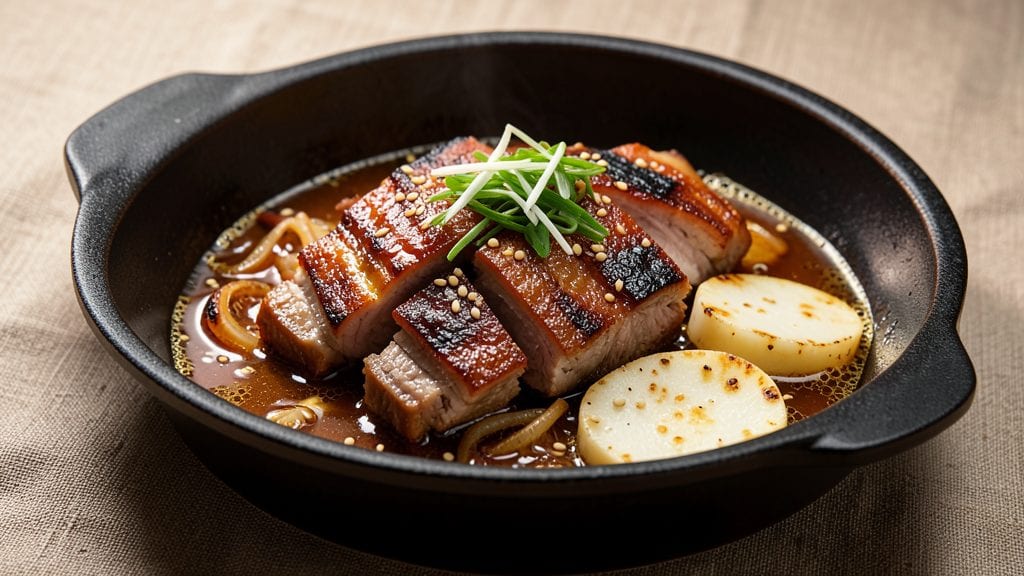
Braised pork belly with taro transforms humble ingredients into a dish that feels both rustic and refined—silky pork melting in its own savory broth, paired with earthy taro that soaks up every flavor. 🔥 This technique, honed during my years at The Smoky Pig, turns tough cuts into tender perfection through slow, patient braising.
The taro adds a subtle sweetness that balances the pork’s richness, creating harmony in every bite.
What makes this dish exceptional is the marriage of traditional braising methods with the starchy depth of taro, a root often overlooked but perfect for absorbing flavors.
I’ve adapted techniques from my Charleston days, where slow-cooked pork was a staple, to ensure the pork belly remains juicy and the taro develops a creamy texture without falling apart. The result is a dish that’s hearty enough for a weekend meal but elegant enough for a special occasion.
By the time you pull this dish from the oven, you’ll have pork belly so tender it practically falls apart at the touch of a fork, paired with taro that’s been caramelized just enough to bring out its natural sweetness.
The braising liquid reduces into a glossy, savory sauce that coats every bite, making this a dish you’ll want to serve with crusty bread or steamed rice to soak up every last drop.
This recipe works beautifully as a centerpiece for gatherings or a comforting meal after a long day. The taro adds a unique texture that contrasts perfectly with the pork’s richness, while the braising process ensures minimal active time for maximum reward.
Let’s get started with a method that’s as rewarding as it is delicious.
Ingredients for braised pork belly with taro
Pork belly cubes and taro root create a dish that feels both rustic and refined.
| Ingredient | Amount | Notes |
|---|---|---|
| Pork Belly 🐷 | 3 lb | Skin-on, rind cut into 1-inch cubes |
| Taro Root 🥔 | 2 lb | Peeled, cut into 1-inch cubes |
| Dry White Wine 🍷 | 1 cup | Any dry variety (Chardonnay preferred) |
| Beef Bone Broth 🍲 | 4 cups | Low-sodium preferred |
| Soy Sauce 🧂 | ½ cup | Low-sodium for balance |
| Brown Sugar 🍚 | 0.38 cup | Lightly packed |
| Garlic Cloves 🧄 | 8 cloves | Minced, fresh preferred |
| Fresh Ginger 🌿 | ¼ cup | Thinly sliced |
| Star Anise 🌟 | 4 piece | Whole, removed before serving |
| Cinnamon Stick 🌶️ | 2 piece | Whole, removed before serving |
| Salt 🧂 | 1 ½ tsp | Fine sea salt preferred |
| Black Peppercorns 🌶️ | 1 tbsp | Whole, crushed lightly |
| Vegetable Oil 🫒 | ¼ cup | For searing pork |
| Rice Vinegar 🍶 | 1 tbsp | Brightens flavors |
The pork belly is your star—look for pieces with good marbling at Whole Foods or your local butcher. I always grab pre-cubed pork belly from Costco when I can, but fresh is better. The taro? Japanese or Hawaiian varieties are sweeter and creamier—Trader Joe's often carries them. Peel it yourself (the skin is tough), and cut evenly for consistent cooking. The wine and broth? Any dry white works, but Chardonnay adds a nice richness. Skip the pre-made broth—homemade or high-quality store-bought makes all the difference.
No dry white wine? Extra beef broth with a splash of rice vinegar gets you close. Short on taro? Sweet potatoes or regular potatoes work, but they won’t have that same creamy texture. Want more depth? Add a bay leaf or dried shiitake mushrooms to the broth. The brown sugar can be coconut sugar for a caramel-like sweetness. And if you’re out of star anise, cinnamon sticks alone still add warmth—just remove them earlier.
This dish tastes even better the next day as flavors meld. Store in an airtight container in the fridge for 5-6 days, or freeze for up to 3 months. I always portion mine into containers so I can grab a serving for lunch. The broth reduces beautifully—skim the fat if you’re sensitive to that, but it adds richness. Serve with steamed jasmine rice to soak up every last drop, and trust me, the leftovers make amazing fried rice.
Why You'll Love This Recipe
- One-Pot Magic: I swear by this recipe when I’m too tired to dirty multiple pans. The pork belly and taro go in together, the wine and broth do the rest—just let it simmer while you chop veggies for the side. Minimal chopping, zero fuss, and that rich aroma fills the kitchen like a hug.
- Rich Umami Bomb: That combo of soy sauce, bone broth, and pork belly? It’s like a flavor explosion in your mouth. The taro adds a subtle earthy sweetness that balances the deep, savory braise—honestly, I’ve never tasted pork belly this addictive.
- Leftovers That Beg for Seconds: This dish tastes even better the next day, which is perfect because I always make a double batch. The pork gets more tender, the taro soaks up all the delicious juices, and I’ll be reheating portions for lunch all week—no sad leftovers here.
- Budget-Friendly Luxury: Pork belly can feel fancy, but this recipe stretches it into a whole meal. The taro and bone broth bulk it up, so you’re not just feeding one person—plus, the wine adds depth without breaking the bank. My wallet and taste buds thank me every time.
Step-by-step instructions for braised pork belly with taro
Here's how to transform rich pork belly into tender perfection paired with silky taro.
🔥 Step 1: Sear the Pork Belly for Maximum Flavor
Heat the 0.25 cup vegetable oil in a heavy Dutch oven over medium-high heat until shimmering. Pat the 3 lb pork belly (skin-side down) completely dry with paper towels—this ensures maximum crispiness. Place the pork belly in the pot and sear for 8-10 minutes until the skin is deep golden brown and crispy.
Flip the pork belly and sear the fat side for another 6-8 minutes until golden. Remove and set aside. Here's the thing—don't rush this step. The longer you sear, the deeper the flavor. If it starts smoking too much, reduce heat slightly but keep it sizzling.
🍳 Step 2: Build the Aromatic Base
In the same Dutch oven, add the 8 cloves minced garlic cloves and 0.25 cup thinly sliced fresh ginger to the rendered pork fat. Sauté for 1-2 minutes until fragrant—you'll smell that bright, zesty aroma. Be careful not to let them burn; they cook fast.
Add the 4 piece star anise and 2 piece cinnamon stick, stirring for 30 seconds to toast the spices. Pour in the 1 cup dry white wine and scrape up all those delicious browned bits from the bottom. Let it simmer for 2-3 minutes until reduced by half—this builds the sauce foundation.
🥘 Step 3: Braise with Taro and Seasonings
Return the pork belly to the pot, fat-side up. Add the 2 lb peeled, cubed taro root, 4 cups beef bone broth, 0.5 cup soy sauce, 0.375 cup brown sugar, 1.5 tsp salt, and 1 tbsp crushed black peppercorns. Stir gently to combine—you want the pork belly mostly submerged in liquid.
Bring to a gentle simmer, then reduce heat to low. Cover and braise for 3 hours until the pork belly is fork-tender. Here's the magic: the taro root will absorb all those rich flavors while staying silky. If the liquid reduces too much, add a splash of water to keep everything moist.
⏰ Step 4: Finish with Brightness and Rest
After braising, remove the pork belly and taro root to a serving platter. Strain the braising liquid through a fine-mesh sieve to remove spices, then return it to the pot. Add the 1 tbsp rice vinegar and simmer for 2-3 minutes to brighten the flavors.
Let the pork belly rest for 15 minutes before slicing—this ensures clean cuts. The taro should be tender but still hold its shape. Serve the pork belly slices with the taro cubes and ladle the flavorful braising liquid over the top. Each bite delivers crispy pork, silky taro, and layers of savory-sweet broth.
Pro Tips For Making Braised Pork Belly With Taro
- Brown the Belly First: High heat for 8–10 minutes until deep golden—this isn’t optional. I used to skip it to save time, but the flavor difference is night and day. The crust locks in moisture and carries the soy-wine reduction better.
- Peel and Cube Taro: Skip the knife—use a mandoline for even 1-inch cubes. Raw taro releases starch like crazy, and uneven pieces turn mushy. Soak the cubes in cold water for 10 minutes first, then drain well.
- Deglaze with Wine: Let the pork sear completely, then pour in the dry white wine immediately while the pan is still smoking. Scrape every bit of fond off the bottom—this is where the depth of flavor hides. Don’t rush it.
- Simmer, Don’t Boil: Once everything’s in the pot, keep the broth at a gentle simmer (tiny bubbles, occasional skimming). Boiling turns the pork belly rubbery and clouds the broth. My first batch was a disaster until I learned to watch the heat.
Serving suggestions for leftovers
Crispy Rice Pairing
Nothing complements this dish like Japanese-style crispy rice, known as okonomiyaki rice. I use short-grain Japanese rice cooked to a sticky consistency, then lightly fried in a pan with a touch of butter until golden.
The contrast between the crispy rice and silky pork belly is pure magic. For extra flair, sprinkle with furikake seasoning before serving. 💛
Steamed Jasmine Rice
For a classic approach, serve with steamed jasmine rice—its floral aroma and tender grains soak up the rich braising liquid beautifully. I like to cook mine in a rice cooker with a 1:1.25 rice-to-water ratio and let it rest for 10 minutes after cooking.
The rice should be fluffy but still hold its shape, providing the perfect neutral base for the bold flavors.
Garnish Like a Pro
Elevate your plating with fresh cilantro or Thai basil scattered over the top for a bright, herbaceous note. I also add crispy fried shallots for texture—just pan-fry 2 tbsp sliced shallots in 2 tbsp neutral oil until golden and crisp.
A drizzle of chili crisp adds heat, while a sprinkle of toasted sesame seeds brings nutty depth. Trust me, these finishing touches make all the difference.
Bread for Soaking
Offer crusty sourdough or baguette slices on the side for guests to mop up the delicious braising liquid. I like to lightly toast the bread and rub it with a garlic clove before serving.
The crusty texture contrasts perfectly with the tender pork and taro, making every bite even more satisfying. 🥖
Pickled Vegetable Contrast
A small side of quick-pickled cucumbers or carrots adds a tangy, refreshing contrast to the richness of the pork. I use a simple mix of rice vinegar, sugar, and salt with thinly sliced veggies left to sit for 30 minutes.
The acidity cuts through the fat, balancing the dish beautifully. This is especially great for those who prefer a lighter accompaniment.
Dipping Sauce Essentials
No braised pork dish is complete without a dipping sauce! I recommend a mix of 1 tbsp soy sauce, 1 tbsp rice vinegar, 1 tsp honey, and a pinch of red pepper flakes. Thin with a splash of water if needed.
For extra richness, stir in 1 tsp sesame oil. Serve in small bowls so everyone can dip their pork belly slices—it’s the best way to experience all the flavors. ✨
Nutrition facts
Frequently asked questions
Why does the recipe call for skin-on pork belly?
The skin adds incredible texture and flavor when properly rendered. When seared to a crispy golden brown, it creates a satisfying contrast to the tender meat inside. If you prefer skinless, simply remove it after searing. Just be aware you'll lose some of that delicious crunch.
Can I substitute regular potatoes for taro?
While it'll work, taro's unique texture and slight sweetness are key to this dish. For the best results, use Japanese or Hawaiian taro which is creamier. If substituting, try sweet potatoes - they'll hold up better than regular potatoes during braising. The flavor profile will be different but still delicious.
How do I know when the pork belly is fully tender?
The pork belly should be fork-tender with no resistance when pierced. For a 3 lb cut, this typically takes 3 hours of braising. You'll also notice the meat pulling away from the bone slightly. If you're unsure, cut into a small piece - it should shred easily with minimal force.
What's the best way to reheat leftovers?
Leftovers reheat beautifully! Place in a 350°F oven for 20-25 minutes until warmed through. For a quicker method, use the stovetop with low heat and a splash of water or broth to prevent drying. The braising liquid helps keep everything moist. Never microwave - it makes the pork belly rubbery.
Can I make this dish in a slow cooker?
Yes, but with adjustments. Sear the pork belly first in a skillet, then transfer everything to your slow cooker. Cook on low for 6-7 hours or high for 4-5 hours. The taro may absorb more liquid, so you might need to add a splash of water. The flavors will develop differently but still be delicious.