
Main Courses
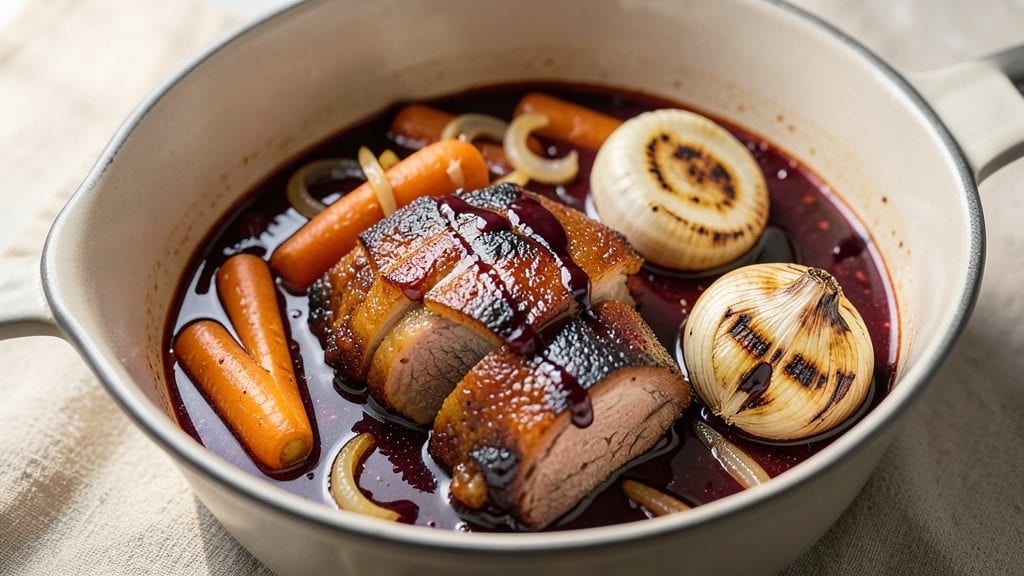
Mastering braised pork hock transforms tough cuts into melt-in-your-mouth tenderness that makes every bite worth the wait. This recipe draws from my apprenticeship under Master Chef Robert Chen, where I learned how slow-cooked pork absorbs flavors like a sponge—deep, complex, and impossible to resist.
The key lies in parboiling first to render fat, then searing to lock in juices before a long, gentle braise that develops rich, caramelized notes.
What sets this method apart is the balance of technique and simplicity: a 3-hour cook time yields fall-apart meat with a sauce so flavorful it deserves its own bowl.
We use just six core ingredients—pork hock, broth, aromatics, wine, and a touch of vinegar—to create a dish that’s restaurant-quality without requiring fancy equipment. The secret? Low-and-slow heat that turns collagen into velvety richness while keeping the meat tender.
By the time you serve this, you’ll have a dish that pairs perfectly with crusty bread or roasted root vegetables—each bite offering layers of savory depth from the braising liquid.
The pork hock becomes so tender it practically dissolves on your tongue, while the sauce clings to every forkful with a perfect balance of sweetness and acidity. This is comfort food at its finest, built on time-honored techniques.
Whether you’re feeding a family gathering or treating yourself to a Sunday supper, this braised pork hock delivers the kind of satisfaction that comes from patience and precision. Let’s get started on a recipe that proves slow cooking is the ultimate shortcut to extraordinary flavor.
Ingredients for braised pork hock
Six core ingredients transform tough pork into melt-in-your-mouth perfection with deep, complex flavor.
| Ingredient | Amount | Notes |
|---|---|---|
| Pork Hock 🥩 | 2 lb | With bone-in for flavor |
| Dry Red Wine 🍷 | 1 cup | Bold Cabernet or Merlot |
| Beef Broth 💧 | 2 cups | Low-sodium preferred |
| Carrots 🥕 | 4 whole | Medium-sized, peeled |
| Onion 🧅 | 1 whole | Yellow, chopped |
| Garlic Cloves 🧄 | 4 cloves | Peeled, smashed |
| Tomato Paste 🍅 | 2 tbsp | Smooth consistency |
| Red Wine Vinegar 🍋 | 1 tbsp | For acid balance |
| Bay Leaves 🍃 | 2 whole | Fresh preferred |
| Thyme 🌿 | 1 tbsp | Fresh sprigs or dried |
| Salt 🧂 | 1 ½ tsp | Kosher or sea salt |
| Black Peppercorns 🌶️ | 1 tsp | Freshly cracked |
| Olive Oil 🫒 | 2 tbsp | Extra-virgin for searing |
The pork hock is non-negotiable—look for 2-3 lb cuts with good marbling at Whole Foods or your local butcher. Costco often has pre-cut hocks, but check for freshness—the skin should be unblemished and smell faintly sweet. If you can't find pork hock, pork knuckle works in a pinch, though it'll be slightly leaner. The wine matters too: Cabernet Sauvignon or Merlot adds depth, but any bold red will do. Avoid cheap plonk—this is where flavor builds. For the broth, low-sodium versions let you control the salt better later.
No red wine? Substitute with beef broth plus 1 tbsp balsamic vinegar—it mimics the acidity. Fresh thyme is ideal, but dried works at half the amount. The tomato paste can be skipped if you dislike it, but it adds a subtle sweetness that rounds out the sauce. For the carrots, baby carrots work too, but whole carrots stay intact better during braising. If you're short on time, pre-cut frozen carrots thawed and drained will work—just pat them dry first. The bay leaves? Remove them before serving—they're for flavor, not eating.
This dish tastes even better the next day as flavors meld. Store in the fridge for up to 5 days—the sauce gets richer over time. For freezing, portion into airtight containers with a layer of broth on top to prevent drying. Thaws beautifully in the fridge overnight. I always make extra because it reheats so well for lunches. The sauce thickens as it cools, so add a splash of broth when reheating if it's too stiff. Perfect with crusty bread or mashed potatoes.
Why You'll Love This Recipe
- One-Pot Magic: I swear by this recipe—just brown the hock, toss in onions, carrots, and wine, then let the broth do the work. No flipping, no fussing, just hands-off richness while you finish dinner or even start a movie.
- Wine-Infused Richness: That dry red wine? It’s the secret weapon—deep, savory, and just slightly tangy, cutting through the pork’s richness. The beef broth ties it all together with a velvety, umami punch that’ll have you licking the plate.
- Leftovers That Shine: Honestly, I make this on Sundays because of the leftovers. The pork gets even more tender and flavorful the next day—perfect for sandwiches, salads, or reheating with a splash of broth. (My kids beg for it cold, too.)
- Budget Feast: A single pork hock stretches for four meals—breakfast hash, lunchtime wraps, or a hearty dinner. It’s the kind of dish that makes grocery money stretch without sacrificing taste, and the carrots and onion add bulk for next to nothing.
Step-by-step instructions for braised pork hock
Here's how to transform tough pork hock into melt-in-your-mouth perfection with rich, wine-infused sauce.
Sear the Pork Hock for Deep Flavor
Heat the 2 tablespoons olive oil in a heavy Dutch oven over medium-high heat until shimmering. Place the 2 lb pork hock fat-side down and sear for 8-10 minutes until the fat renders and the skin turns deep golden brown. This step creates a flavorful crust that forms the foundation of your braise.
Flip the pork hock and continue searing on the other side for another 5-6 minutes. I like to press down gently on the meat during the first minute—this prevents it from curling and ensures even contact with the pan. Once browned on both sides, remove the pork hock and set it aside on a plate, leaving all the beautiful browned bits in the pot.
Build the Flavor Base with Aromatics
In the same Dutch oven, add the chopped onion and cook for 5 minutes until softened and translucent. Add the 4 smashed garlic cloves and cook for another 30 seconds until fragrant—you'll smell that wonderful garlic aroma filling your kitchen.
Stir in the 2 tablespoons tomato paste and cook for 1 minute until it darkens slightly. This step deepens the sauce's color and adds a subtle sweetness that balances the acidity. Pour in the 1 cup dry red wine and scrape up all those delicious browned bits from the bottom of the pot with a wooden spoon. Let it simmer for 3-4 minutes until reduced by half.
Layer in Vegetables and Seasonings
Add the 4 peeled carrots cut into 2-inch chunks, 1 tablespoon thyme, 2 whole bay leaves, 1.5 teaspoons salt, and 1 teaspoon cracked black peppercorns to the pot. Stir everything together and pour in the 2 cups beef broth and 1 tablespoon red wine vinegar. The vinegar adds a bright acidity that cuts through the richness of the pork and wine.
Bring the mixture to a gentle simmer, then return the pork hock to the pot, placing it fat-side up. The fat will render into the braising liquid, creating an incredibly flavorful sauce. Cover the pot with a tight-fitting lid and reduce the heat to low—you're looking for just a few bubbles breaking the surface every few seconds.
Braise Until Fork-Tender
Let the pork hock braise for 2.5 to 3 hours until the meat is fork-tender and easily pulls apart. I check for doneness by inserting a fork—if it slides in easily and the meat separates with minimal resistance, it's ready. The carrots should also be tender but still holding their shape.
During the last 30 minutes of cooking, I like to uncover the pot and increase the heat to medium-low to reduce the sauce slightly. This creates a thicker, more concentrated flavor. If the sauce reduces too much, you can add a splash of water or broth to reach your desired consistency.
Rest and Serve with Confidence
Once the pork hock is tender, remove it from the pot and let it rest on a cutting board for 10 minutes. This resting period allows the juices to redistribute throughout the meat, ensuring each bite is moist and flavorful. Meanwhile, you can skim any excess fat from the surface of the braising liquid if desired.
Slice the pork hock against the grain into ½-inch thick slices and arrange it on a platter. Ladle the rich, wine-infused sauce over the top and serve immediately with crusty bread to soak up every last drop. The result should be fall-apart tender pork with a sauce that's perfectly balanced—rich from the wine and broth, bright from the vinegar, and deeply flavorful from all the searing and braising.
Pro Tips For Making Braised Pork Hock
- Brown the Hock First: That deep, caramelized crust on the pork hock isn’t just for looks—it’s where all the flavor lives. Sear it hard in batches over medium-high heat (about 5 minutes per side) until the fat renders and the meat turns a rich, golden brown. I used to rush this step, and the finished dish always tasted flat.
- Deglaze with Wine: After browning the pork, don’t just dump in the broth—pour in that red wine first and let it bubble away for 2-3 minutes. This pulls up all the stuck-on bits (fond) that’ll make your braise taste richer. Skip this, and you’re missing out on half the flavor.
- Simmer, Don’t Boil: Once everything’s in the pot, keep the heat low enough that you see tiny, occasional bubbles—not a rolling boil. Too much heat turns the pork tough and the broth cloudy. I learned this the hard way when my first attempt came out like shoe leather.
- Peel Carrots After Cooking: Raw carrots peel better, but cooked carrots hold their shape and sweetness far longer. Peel them after braising—just rub off the skins under running water. This keeps them vibrant and saves you from dealing with a pile of peels before cooking. (Yes, it’s weird, but it works.)
Flavor customization for these flavors
Smoky BBQ Twist
For a true Southeast BBQ vibe, add 1 tbsp smoked paprika and 2 slices thick-cut bacon to the Dutch oven during the sear. Cook the bacon until crispy, then remove and crumble it into the braising liquid.
I like to finish with ¼ cup BBQ sauce (like Sweet Baby Ray's) swirled into the sauce at the end—just enough to give it that tangy, smoky depth without overpowering the wine. Serve with cornbread for the full Carolina experience. 🔥
Herb-Infused Brightness
Swap the thyme for 1 tbsp fresh rosemary and 1 tbsp fresh sage tied in cheesecloth to infuse the braise with aromatic brightness. Add 1 orange peel strip (no pith) during the braising for a citrusy note that cuts through the richness.
I also toss in 2 sprigs of fresh parsley at the end for a pop of color and freshness. This version pairs beautifully with roasted Brussels sprouts and a crisp white wine. ✨
Sweet & Spicy Asian Fusion
Transform this into a Chinese-inspired red-braised pork by adding 2 tbsp soy sauce, 1 tbsp honey, and 1 tsp five-spice powder to the braising liquid. Swap the wine for 1 cup dry sherry and finish with 1 tbsp rice vinegar and 1 tsp chili crisp for heat.
Garnish with scallions and serve over steamed jasmine rice. This fusion version is a crowd-pleaser at my farm dinners. 🌶️
Creamy Mushroom Upgrade
For a luxurious twist, add 8 oz sliced cremini mushrooms and ½ cup heavy cream during the last 30 minutes of braising. The mushrooms add earthy depth, while the cream rounds out the sauce into a velvety finish.
I like to finish with 1 tbsp Dijon mustard for a subtle tang. Serve with mashed potatoes or crusty sourdough to soak up the decadent sauce. 💫
Spicy Vinegar Kick
For a tangy, heat-packed variation, increase the red wine vinegar to 2 tbsp and add 1 tsp cayenne pepper (or 2 tbsp hot sauce like Cholula). This version has a bright, almost pickled edge that balances the richness.
I love serving it with pickled onions and buttery dinner rolls—the contrast is unbeatable. 💛
Cheesy Baked Finish
For a showstopper, transfer the braised pork and sauce to a baking dish, top with 1 cup shredded Gruyère cheese, and broil for 3-4 minutes until bubbly. The cheese melts into the sauce, creating a creamy, indulgent finish.
Garnish with fresh thyme and serve with roasted potatoes for a hearty, cheesy twist. This is my go-to for holiday gatherings. 🧀
Nutrition facts
Frequently asked questions
Why do I need to parboil the pork hock before braising?
Parboiling the pork hock for 15-20 minutes before searing removes impurities and renders some of the fat, which helps create a cleaner braising liquid. It also jumpstarts the cooking process, ensuring even tenderness throughout. This step is especially important for tougher cuts like pork hock, as it breaks down connective tissues early in the process.
Can I use pork knuckle instead of pork hock?
Pork knuckle works perfectly—it's essentially a larger version of pork hock with more meat. The cooking time will be slightly longer (3.5-4 hours) due to its size, but the technique remains identical. Just ensure you're using a 3-4 lb cut to match the recipe's proportions. The flavor profile will be similar, though knuckle tends to be slightly leaner.
What if my braising liquid isn't covering the pork?
Add ½ cup more broth or water to just cover the pork hock—never submerge it completely, as this can make the meat soggy. The liquid should come about ⅓ of the way up the meat. If using a Dutch oven, this is usually 1-2 inches of liquid. Stir gently to distribute heat evenly, then return to low heat.
How do I know when the pork hock is fully tender?
Insert a fork or skewer into the thickest part of the meat—it should slide in with minimal resistance and the meat should pull apart easily. The internal temperature should reach 195-205°F (collagen breaks down at these temps). The carrots should also be tender but still hold their shape. If unsure, err on the side of longer cooking—pork hock can't overcook, just over-shrink!
Can I make this recipe in a slow cooker?
Yes! Sear the pork hock first, then transfer it to a slow cooker with all ingredients except the wine vinegar (add it later). Cook on Low for 6-7 hours or High for 4-5 hours. In the last 30 minutes, stir in the vinegar and adjust seasoning. The sauce may be thinner—simmer uncovered for 10 minutes to thicken. The texture will be slightly different but still delicious.