
Main Courses
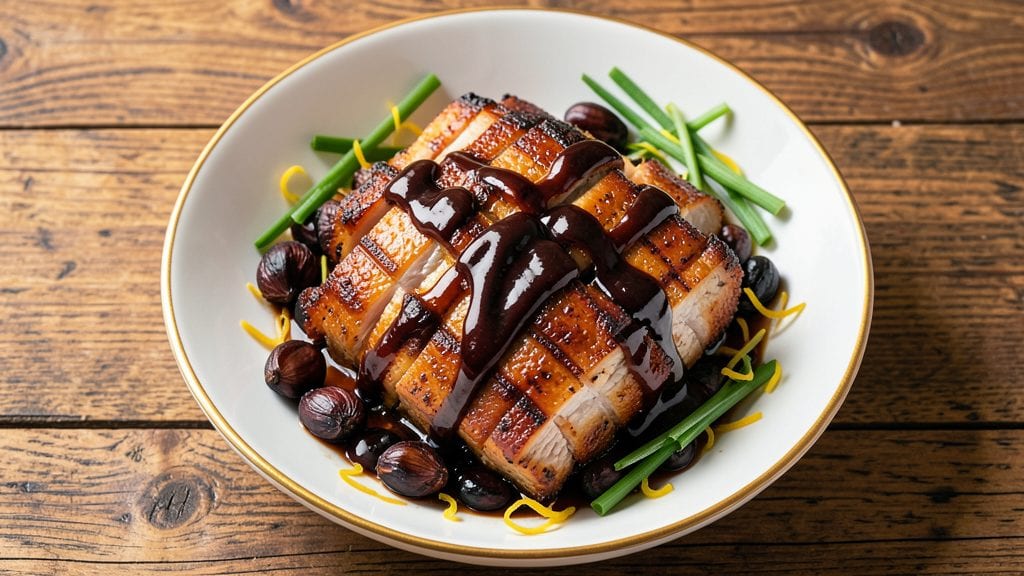
This Chinese BBQ pork belly recipe delivers the perfect balance of charred crisp edges and melty fat magic that makes every bite unforgettable.
Growing up in small-town Georgia, I learned pork transforms into something extraordinary with the right technique—now I’m sharing the method I perfected after years of testing in my Atlanta kitchen.
The key lies in slow-braising the belly until tender, then finishing with a high-heat sear to create that signature caramelized crust.
The process starts with a simple marinade of soy sauce, five-spice powder, and a touch of honey to tenderize the meat while building deep flavor.
What sets this recipe apart is the two-stage cooking method: first braising the pork belly until fork-tender, then crisping it under the broiler for that coveted char. This approach ensures every slice delivers both texture contrast and rich, smoky depth—no shortcuts, just restaurant-quality results.
By the time you serve this dish, your table will be surrounded by the aroma of caramelized pork belly and the sight of golden, crackling edges that practically shatter at the touch.
The fat renders beautifully, creating a sauce that pools around each bite, while the meat stays juicy and flavorful. This isn’t just a recipe—it’s a showstopper that elevates any meal from ordinary to extraordinary.
Pair it with steamed jasmine rice and quick-pickled vegetables for the full experience, or serve it as the centerpiece of a dim sum spread. The beauty of this dish is its versatility—equally at home for a weeknight dinner or a special occasion.
Let’s get cooking and bring that authentic Chinese BBQ flavor to your table.
Ingredients for chinese bbq pork belly
Pork belly, five-spice powder, and honey—three ingredients that transform into restaurant-quality magic.
| Ingredient | Amount | Notes |
|---|---|---|
| Pork Belly 🥓 | 3 lb | Skin-on, cut into 1-inch thick slabs |
| Soy Sauce 🍶 | ½ cup | Kikkoman preferred for authentic flavor |
| Five-Spice Powder 🌶️ | 2 tbsp | Toasted for deeper aroma |
| Honey 🍯 | 2 tbsp | Wildflower for floral notes |
| Garlic Cloves 🧄 | 6 cloves | Minced, fresh preferred |
| Ginger Root 🌿 | 1 tbsp | Freshly grated, not powdered |
| Brown Sugar 🍯 | ¼ cup | Light or dark, packed |
| Sesame Oil 🫒 | 1 tbsp | Toasted, for finishing |
| Neutral Oil 🫒 | 2 tbsp | Avocado or vegetable oil |
| Jasmine Rice 🍚 | 2 cups | Uncooked, long-grain |
| Water 💧 | 3 cups | Filtered preferred |
| Diamond Crystal Kosher Salt 🧂 | 1 ½ tsp | For seasoning and brining |
| Black Peppercorns 🌶️ | ½ tsp | Freshly cracked |
| Green Onions 🧅 | 4 whole | Thinly sliced, for garnish |
The pork belly is non-negotiable here. Look for thick-cut slabs with good marbling—the fat is what creates that signature caramelized crust. Most grocery stores carry it pre-sliced, but if you find a whole piece at Whole Foods or your local butcher, ask for it cut into 1-inch thick slabs. The skin should be intact and unbroken for that perfect crisp. I’ve used Costco’s pre-sliced pork belly for convenience—it’s consistent and saves time. Just make sure it’s not too thin, or you’ll end up with tough meat instead of tender slices. For the five-spice powder, Penzeys or the bulk bins at Asian markets have the best quality—freshly toasted makes all the difference.
No five-spice powder? Mix 1 tsp cinnamon, 1 tsp fennel seeds, 0.5 tsp cloves, 0.5 tsp star anise, and 0.5 tsp black pepper—it’s a close substitute. The honey can be swapped for maple syrup, but it’ll have a slightly different depth of flavor. For the garlic and ginger, fresh is a must—powdered just won’t cut it. If you’re short on time, Trader Joe’s sells pre-minced garlic in tubes, which works in a pinch. The brown sugar adds caramelization, so don’t skip it—light or dark both work, but packed tightly for accurate measurement. The sesame oil is for finishing, so grab the toasted variety at any Asian grocery store for that nutty aroma.
This dish reheats beautifully—350°F for 15-20 minutes until the pork is warm through and the edges are crispy again. Store leftovers in an airtight container with the rendered fat preserved on top—it keeps for 4-5 days in the fridge. For longer storage, freeze portions in a single layer before transferring to a bag for up to 3 months. The rice? Cook it fresh for the best texture, but you can reheat it in a steamer basket over boiling water if needed. The green onions add a pop of color and freshness—slice them just before serving so they stay vibrant.
Why You'll Love This Recipe
- Here’s what sold me: I roast a whole slab of pork belly, and suddenly I’ve got meals for days. Slice it for noodles, shred it into dumplings, or toss it on rice—it’s still delicious, even the next morning. My wallet and my stomach both thank me.
- One-Pan Magic: I toss everything—pork belly, soy sauce, honey, garlic—on a sheet pan and forget about it. No constant stirring, no fussing with multiple pans. The five-spice powder caramelizes right on the meat while it roasts, turning what could be a chore into a hands-off, aromatic dream.
- Sweet-Savory Cheat Code: Honestly, the honey and soy sauce create this perfect balance—rich, sticky, and just a little funky. That crispy outside with the tender, juicy belly inside? It’s the kind of dish that makes you lick your plate, no matter what you’re serving it with.
- Leftover Reinvention: Here’s what sold me: I roast a whole slab of pork belly, and suddenly I’ve got meals for days. Slice it for noodles, shred it into dumplings, or toss it on rice—it’s still delicious, even the next morning. My wallet and my stomach both thank me.
Step-by-step instructions for Chinese BBQ pork belly
Here's how to transform tough pork belly into melt-in-your-mouth perfection with crackling skin.
Cure and Marinate the Pork Belly
In a large bowl, combine the 3 lb pork belly with the 0.5 cup soy sauce, 2 tbsp honey, 0.25 cup brown sugar, 1.5 tsp diamond crystal kosher salt, and 0.5 tsp black peppercorns. Use your hands to work the marinade into every crevice of the meat, ensuring the skin gets coated too. This isn't just seasoning—it's a cure that breaks down collagen for tender meat and creates that signature sticky glaze.
Cover the bowl with plastic wrap and refrigerate for at least 12 hours, but I recommend 24 hours for maximum flavor penetration. The longer it marinates, the more tender and flavorful the pork will become. Real talk: if you're short on time, don't rush this step—it makes all the difference in the final texture.
Parboil for Tenderization
Remove the pork belly from the refrigerator and let it sit at room temperature for 30 minutes before cooking. This ensures even cooking. In a large pot, bring 4 cups of water (double the original amount) to a rolling boil. Gently lower the pork belly into the water, skin-side up, and return to a boil.
Once boiling vigorously, reduce heat to maintain a gentle simmer and cook for 45 minutes. You're not trying to fully cook the meat here—just break down some of that connective tissue. The pork should be slightly firm to the touch but not fully tender. Drain the pork belly and let it rest on a rack for 10 minutes to allow excess moisture to evaporate before proceeding.
Build the Five-Spice Glaze
While the pork belly rests, create the aromatic glaze by combining the 2 tbsp five-spice powder, 6 cloves minced garlic, and 1 tbsp freshly grated ginger root in a small bowl. Toast this mixture in a dry skillet over medium heat for 1-2 minutes until fragrant—you should smell those warm spices wafting through your kitchen. This step is crucial for developing the complex flavor profile that defines authentic Chinese BBQ pork.
In a separate small bowl, mix the toasted spice blend with 1 tbsp sesame oil to create a paste. This will be your finishing glaze, adding depth and aroma to the final product. Keep this mixture at room temperature until ready to use—it's the secret weapon that elevates this dish from good to spectacular.
Roast for Crispy Perfection
Preheat your oven to 325°F. Place the rested pork belly on a wire rack set over a baking sheet lined with parchment paper. The rack is key here—it allows air to circulate underneath, creating that coveted crackling skin. Rub the pork belly with the five-spice glaze mixture, pressing it into the meat and skin. This isn't just decoration; it's flavor infusion.
Roast for 1 hour, then increase the oven temperature to 425°F. Continue roasting for another 30-45 minutes until the skin is deep golden brown and crackling. Here's the thing—don't be tempted to open the oven door during this final phase. Every time you peek, you lose heat and steam, which can make the skin soggy instead of crisp. Trust the thermometer and your visual cues.
Rest and Serve with Jasmine Rice
Once the pork belly reaches an internal temperature of 195-203°F (use a meat thermometer to check the thickest part), remove it from the oven and let it rest for 15 minutes. This resting period is non-negotiable—it allows the juices to redistribute throughout the meat, ensuring each bite is moist and flavorful. During this time, prepare the 2 cups jasmine rice according to package instructions using 3 cups water—it should be fluffy and ready to serve.
Slice the pork belly into ½-inch thick pieces, being careful to preserve that beautiful crackling skin. Arrange the slices on a platter, drizzle with any accumulated pan juices, and garnish with the 4 whole thinly sliced green onions. Serve immediately with the jasmine rice, watching as the crisp edges give way to tender, melt-in-your-mouth pork with every bite.
Pro Tips For Making Chinese Bbq Pork Belly
- Render Slow, Not Fast: Pork belly needs patience—low and slow is the only way to get that crispy, caramelized exterior without turning the inside into grease. I used to rush it, and the meat always ended up chewy. Now I keep the heat at 275°F (135°C) for at least 2 hours, flipping once, until the fat renders out like liquid gold.
- Toast the Five-Spice: Dry-toast the five-spice powder in a pan for 30 seconds before mixing it into the sauce—it deepens the flavor in a way that just sprinkling it won’t. I learned this the hard way after making a batch that tasted flat. A quick toast adds warmth and complexity that cuts through the sweetness of the honey.
- Skip the Honey Too Early: Add honey in the last 10 minutes of cooking—any earlier, and the sugar burns before the pork belly caramelizes properly. I was skeptical until I tried it: the glaze turns glossy and sticky, not bitter. If you’re impatient, reduce it first to prevent a sticky mess.
- Score Deep, Not Shallow: Cut the pork belly in a diamond pattern, about ¼-inch deep—this lets the marinade (soy, garlic, spices) penetrate without falling apart when you flip it. Shallow cuts just make it look pretty; deep cuts make it taste better. Use a sharp knife, or you’ll tear the meat instead.
Creative variations of chinese bbq pork belly
Cantonese Char Siu
This Hong Kong-style variation replaces the marinade with a sweet, sticky glaze made from ½ cup hoisin sauce, ¼ cup honey, 2 tbsp soy sauce, 1 tbsp Shaoxing wine, and 1 tbsp grated ginger.
After parboiling, brush this mixture generously over the pork belly and roast at 375°F for 1 hour, basting every 15 minutes until the glaze caramelizes into a glossy shell. The result? A sticky, sweet-savory exterior that contrasts beautifully with the tender meat. 🍯
Fo Shou Pork Belly
For a more traditional Cantonese approach, use 1 tbsp fermented black beans (cut into small pieces) and 1 tsp red fermented bean curd in your marinade alongside the five-spice.
After roasting, slice the pork belly into ½-inch thick pieces and quickly pan-fry them in 1 tbsp neutral oil over high heat for 30 seconds per side to reactivate the crisp. Serve with steamed bok choy and congee for an authentic dim sum experience.
Spicy Sichuan Style
Add 1 tbsp Sichuan peppercorns (toasted and ground) and 1 tsp chili bean paste to your marinade for a fiery kick. After roasting, finish with a quick sear in a cast iron skillet with 1 tbsp rendered pork fat> and a splash of dry sherry.
Garnish with thinly sliced scallions and crushed peanuts for texture. The numbing heat from the Sichuan peppercorns makes this version unforgettable. 🌶️
Honey-Glazed BBQ
Swap the five-spice glaze for a 1:1 ratio of honey to soy sauce mixed with 1 tbsp rice vinegar and 1 tsp grated ginger.> Roast the pork belly as directed, then finish under a broiler for 2-3 minutes to create a deep amber glaze.
This version is sweeter and more approachable for those new to Chinese BBQ. Serve with pickled daikon and cucumber for balance.
Smoked Pork Belly
For a fusion twist, smoke the pork belly after parboiling using hickory or applewood chips in your oven or smoker at 225°F for 2 hours. Then finish with a high-heat broil to crisp the skin.
The smoky depth pairs beautifully with the five-spice glaze. I’ve used my Traeger Pellet Grill for this—just add wood chips to the smoke tube for that authentic char. 🔥
Dim Sum Bites
Cut the cooked pork belly into 1-inch cubes and skewer them with mandarin orange slices and baby bok choy leaves for a vibrant, handheld dim sum version. Brush the skewers with a mix of 1 tbsp hoisin sauce and 1 tsp sesame oil before serving.
This makes for an impressive appetizer that’s perfect for gatherings. The contrast of textures and flavors is pure magic. ✨
Nutrition facts
Frequently asked questions
Can I substitute regular pork shoulder for pork belly?
The fat content is key for that signature crispy skin and melt-in-your-mouth texture. Pork shoulder lacks the marbling needed for proper caramelization. If you must substitute, use pork butt (shoulder blade) cut into thick slices, but expect less crisp and more moisture. For best results, stick with pork belly—its fat renders beautifully during cooking, creating that irresistible contrast between crisp edges and tender meat.
How do I fix soggy skin after cooking?
Soggy skin usually happens when steam builds up under the pork. To prevent this, always use a wire rack over a baking sheet (never directly on the pan). If your skin is already soft, try this: Place the cooked pork belly on a rack in a 400°F oven for 5-10 minutes to reactivate the crisp. For extra insurance, pat the skin dry with paper towels before roasting and avoid opening the oven door during the final crisping phase.
Is it safe to eat pork belly skin?
The skin is the most flavorful part—it’s crispy, aromatic, and packed with rendered fat that creates a delicious sauce. Just ensure it’s cooked to an internal temperature of 195-203°F (the fat should be translucent and firm). If you’re concerned, you can remove the skin before serving, but you’d be missing out on the best part of the dish!
Can I make this recipe in an air fryer?
An air fryer can work for the final crisping step, but it’s tricky for the full process. After parboiling and roasting at 325°F until tender, transfer the pork belly to the air fryer at 400°F for 8-10 minutes to crisp the skin. Monitor closely—air fryers vary in heat distribution. For best results, finish under a broiler instead, as it provides more even heat and better caramelization.
What’s the best way to reheat leftovers?
Reheat in a 350°F oven for 15-20 minutes until the pork is warm through and the edges are crispy again. Place the slices on a wire rack set over a baking sheet to prevent sogginess. For extra crisp, broil for 1-2 minutes at the end. Store leftovers in an airtight container with the rendered fat preserved on top—it keeps for 4-5 days in the fridge.