
Main Courses
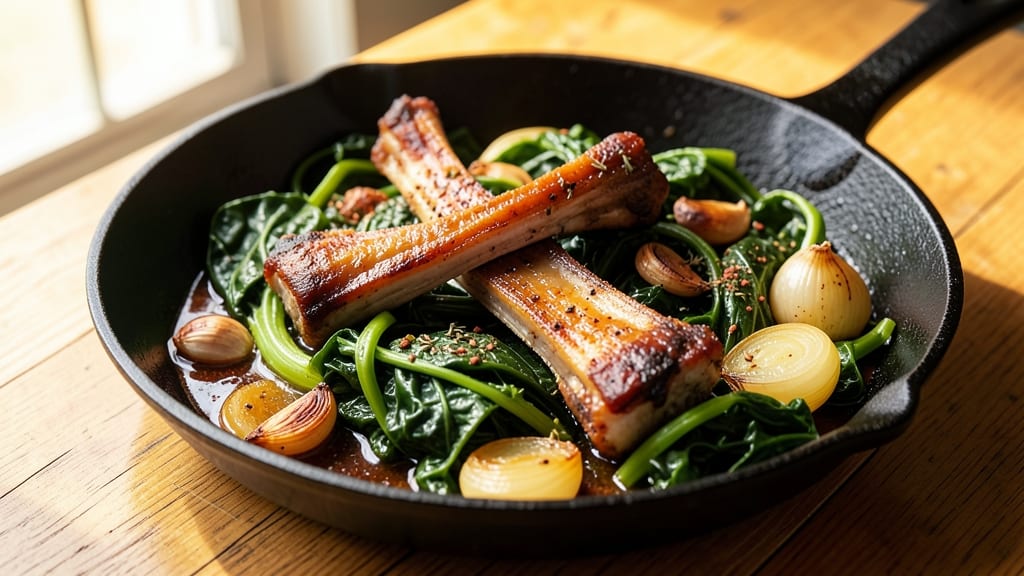
This collard greens with pork neck bones recipe captures the soul of Southern cooking in one smoky, flavor-packed dish. Growing up in small-town Georgia, I learned that slow-cooked pork bones and tender greens create a harmony that feels like coming home.
The secret lies in letting the pork neck bones simmer for hours, extracting rich, gelatinous broth that transforms tough greens into melt-in-your-mouth perfection.
The process begins with a deep, aromatic base of onions, garlic, and smoked paprika, which infuses the pork bones as they render their collagen into the pot. This isn't just a side dish—it's a labor of love that rewards patience with layers of umami and smoky depth.
My heritage Gloucestershire Old Spots pigs provide the perfect pork for this recipe, though any well-marbled neck bones will work beautifully.
By the time you're done, you'll have collard greens that are tender yet still hold their shape, swimming in a velvety broth that clings to every bite. The pork bones become so tender they practically fall apart, adding richness that turns this into a complete meal.
Serve it with warm cornbread to soak up every last drop of that precious broth—this is comfort food at its finest.
This recipe takes about 3 hours of active cooking time, but the majority of that is hands-off simmering. The result is a dish that tastes even better the next day, making it perfect for meal prep or Sunday dinners with family.
Let's get started on creating this Southern classic in your own kitchen.
Ingredients for collard greens with pork neck bones
Pork neck bones and collard greens transform into a soulful Southern masterpiece with these simple, flavor-packed ingredients.
| Ingredient | Amount | Notes |
|---|---|---|
| Pork Neck Bones 🍖 | 2 lb | Well-marbled, cut into 2-inch pieces |
| Collard Greens 🌿 | 1 ½ lb | Tough stems removed, chopped |
| Yellow Onions 🧅 | 1 whole | Large, chopped into 1/2-inch pieces |
| Garlic Cloves 🧄 | 6 cloves | Fresh, smashed |
| Smoked Paprika 🌶️ | 2 tbsp | High-quality for smoky depth |
| Dried Thyme 🌿 | 1 tbsp | Or 1 tbsp fresh thyme leaves |
| Bay Leaves 🌿 | 2 whole | Fresh preferred |
| Apple Cider Vinegar 🍎 | ¼ cup | For brightness |
| Salt 🧂 | 1 ½ tsp | Kosher or sea salt |
| Black Pepper 🌶️ | ½ tsp | Freshly ground |
| Extra-Virgin Olive Oil 🫒 | 2 tbsp | For initial searing |
| Water 💧 | 4 cups | For initial simmer |
| Low-Sodium Chicken Broth 🍲 | 2 cups | For added depth |
The pork neck bones are the heart of this dish—look for well-marbled bones at your local butcher shop or grocery store meat counter. Gloucestershire Old Spots pigs are ideal if available, but any good-quality pork will work. The collard greens should be fresh and vibrant, not wilted. I always grab the dark green, thick-stemmed varieties from the produce section—they hold up best during slow cooking. For smoked paprika, Penzeys or McCormick brands deliver that authentic Southern smokiness you can't get from generic store brands. The apple cider vinegar adds a nice tang, so grab a good-quality, organic bottle if you can—it makes a difference in the final broth.
No smoked paprika? Substitute a mix of regular paprika and a pinch of liquid smoke, but trust me on this—it's worth tracking down the real stuff. Fresh thyme is ideal, but dried works at one-third the amount. If you're short on time, baby collard greens work perfectly—they're pre-washed and ready to use. The apple cider vinegar can be swapped for white vinegar in a pinch, though it won't have the same depth. For extra richness, add a splash of red wine or beef broth alongside the chicken broth. And if you don't have a large pot, a slow cooker works beautifully—just add everything at the start and cook on low for 6-8 hours.
This dish tastes even better the next day—plan ahead. Store leftovers in the fridge for up to 5 days, or freeze portions for 3 months. I always make a double batch because it reheats so well for lunches. The broth thickens as it cools, so add a splash of water when reheating. For serving, warm up some cornbread to soak up that precious broth—it's the perfect pairing. The bones will be so tender they'll practically fall apart, so you can even pick through them for extra flavor.
Why You'll Love This Recipe
- One-Pot Magic: I swear by this recipe because it’s literally one pot—no chopping boards, no extra dishes. Just toss in the pork neck bones, onions, and greens, let the simmer do the work, and boom. That rich, smoky broth? It’s all in there, no straining or fussing.
- Smoky Soul Food: Between us, the smoked paprika and slow-cooked pork neck bones turn this into something special. The greens get tender but still hold their bite, while the meat practically falls off the bone—messy fingers included. It’s the kind of flavor that sticks with you.
- Leftovers for Days: Honestly, I almost always make double. The collards keep their texture when reheated, and the pork stays juicy. Pack it up for lunches or freeze portions—it’s my go-to when I don’t want to cook for a week.
- Budget-Friendly Feast: Pork neck bones and collards are cheap, but they feel like a splurge. This recipe stretches one bone into multiple meals, and the onions and garlic bulk it up without breaking the bank. Plus, it’s the kind of dish that makes even the simplest dinner feel like a celebration.
Step-by-step instructions for collard greens with pork neck bones
Let's transform humble pork neck bones into rich, flavorful broth while turning collard greens into tender, smoky perfection.
Sear the Pork Neck Bones for Maximum Flavor
Heat a large Dutch oven over medium-high heat. Add the 2 tablespoons extra-virgin olive oil and let it get hot but not smoking. Place the 2 pounds pork neck bones in the pot, working in batches if needed, and sear until deeply golden brown on all sides—about 5 minutes per side. This step develops incredible flavor through the Maillard reaction.
As you sear, you'll notice the bones release their natural juices and fat. Don't rush this process—golden brown bones mean maximum flavor extraction. Once all bones are browned, remove them from the pot and set aside on a plate, leaving all the rendered fat in the Dutch oven.
Build the Smoky Base with Aromatics
In the same Dutch oven, add the chopped yellow onion and cook for 5 minutes until softened and beginning to caramelize. This adds sweetness that balances the smoky flavors. Add the smashed garlic cloves and cook for another 30 seconds until fragrant—you'll smell that wonderful garlic aroma throughout the kitchen.
Sprinkle in the 2 tablespoons smoked paprika, 1 tablespoon dried thyme, 1.5 teaspoons salt, and 0.5 teaspoon black pepper. Stir everything together and cook for 1 minute until the spices are toasted and aromatic. This creates the flavor foundation for your dish.
Simmer the Bones and Prepare the Broth
Return the pork neck bones to the Dutch oven. Pour in the 4 cups water and 2 cups low-sodium chicken broth, then add the 2 whole bay leaves. Bring everything to a boil over high heat, then immediately reduce to a simmer. The liquid should bubble gently but not vigorously.
Cover the pot and let it simmer for 1 hour. This initial simmer extracts collagen from the bones, creating a rich broth while partially cooking the meat. You'll notice the broth gradually turns cloudy as it develops body and depth of flavor.
Braise the Collard Greens in the Rich Broth
After the initial hour, add the chopped collard greens to the pot. Stir to submerge them in the broth, then add the 0.25 cup apple cider vinegar. The vinegar brightens the dish and helps tenderize the greens. Return to a simmer and cook uncovered for 45-60 minutes, stirring occasionally.
You'll know the greens are done when they're tender enough to pierce easily with a fork but still hold their shape. The broth should be reduced by about one-third, creating a concentrated flavor. If the broth reduces too quickly, add 1-2 cups of water to maintain the proper consistency.
Finish and Serve with Perfect Texture
Remove the bay leaves and adjust seasoning if needed. The dish should be rich but not overly salty—taste and add more salt if necessary. The collard greens should be tender with just a slight bite, and the pork neck bones should easily pull away from the bone when cool enough to handle.
Serve immediately with cornbread or crusty bread to soak up that delicious broth. Each bite delivers tender greens, rich pork flavors, and a perfect balance of smoky, savory, and slightly tangy notes. This dish tastes even better the next day as the flavors deepen!
Pro Tips For Making Collard Greens With Pork Neck Bones
- BLANCH COLLARDS FIRST: Skip the raw greens—give those collards a quick 30-second blanch in boiling water before adding them to the pot. This softens them faster and keeps them from turning mushy later. (Yes, even if you’re impatient like me, resist the urge to skip this.)
- BROWN THE BONES: Don’t just simmer the pork neck bones—sear them first in a hot pot until they’re deep golden brown. That crust packs more flavor than you’d expect, and it’s the foundation for the whole dish. (I learned this the hard way after making a bland batch.)
- STIR THE POT: Collards sink and stick to the bottom. Every 10 minutes, give the pot a good stir with a wooden spoon to keep everything cooking evenly. (I know, it’s tedious, but it’s the only way to avoid a half-cooked pile at the bottom.)
- USE THE RIND: Save the onion skins and garlic peels from prepping your veggies—toss them in the pot with the bones while they simmer. They’ll infuse the broth with extra depth without extra effort. (Sounds weird, but it works.)
Serving suggestions for this recipe
Cornbread Pairing
Nothing complements these smoky collard greens like a warm, buttery cornbread. I use a classic Southern-style cornbread with 1 cup cornmeal, 1 cup all-purpose flour, 1 tablespoon baking powder, ½ teaspoon salt, 1 cup buttermilk, 1 egg, and 2 tablespoons melted butter.
Bake at 375°F for 20-25 minutes until golden. The slightly sweet, crumbly texture soaks up every drop of that rich pork broth. 🌽
Crusty Bread Serving
For a heartier option, serve with crusty Italian bread or sourdough. The dense, chewy texture contrasts beautifully with the tender greens. Tear pieces into the pot at the table so guests can scoop up greens and broth together.
I like Ciabatta rolls from my local bakery—they hold up well to the moist dish. A sprinkle of flaky sea salt on top adds an extra layer of flavor.
Protein Additions
This dish is already a complete meal, but you can elevate it further. Add shredded rotisserie chicken for extra protein or crispy bacon for smoky depth. I sometimes serve it with slow-cooked pulled pork on the side—double the flavor!
For a vegetarian option, top with crumbled feta cheese or toasted walnuts for crunch and nuttiness.
Broth as a Sauce
Save the leftover broth and use it as a sauce for other dishes. Strain it through a fine-mesh sieve to remove any remaining bits, then store in the fridge for up to 5 days.
Use it to deglaze pans, make gravy, or drizzle over mashed potatoes or grilled meats. The smoky, savory depth makes it incredibly versatile. 🍲
Side Dish Harmony
Balance the richness with a light, fresh side like cucumber salad or shredded cabbage with apple cider vinaigrette. The crisp, cool textures cut through the hearty greens. I also love roasted sweet potatoes with a pinch of cayenne—their natural sweetness complements the smoky flavors.
For a complete spread, add pickled vegetables like okra or jalapeños for tangy contrast.
Meal Prep Serving
When serving leftovers, reheat gently in a stovetop pot over low heat with a splash of water to restore moisture. Serve in individual bowls with a small cornbread muffin on the side. For a family-style presentation, transfer to a large serving dish and let everyone scoop their portions.
The bones will be so tender you can even pick through them for extra flavor—just watch for hot broth! 💫
Nutrition facts
Frequently asked questions
Why do the pork neck bones need to be seared first?
Searing the bones creates a flavorful crust through the Maillard reaction, which deepens the overall taste. This step also renders fat that infuses the broth with richness. Skipping it results in a less flavorful final dish—don't rush this critical step!
Can I use baby collard greens instead of full-sized ones?
Baby collard greens cook faster—reduce the simmering time to 30-40 minutes instead of 45-60 minutes. They're pre-washed and ready to use, saving you chopping time. Just ensure they're fully submerged in the broth for even cooking.
What if my collard greens turn mushy?
Overcooking causes mushiness. Remove greens when they're tender but still hold their shape—about 2 minutes before they look done. For extra structure, add them to the pot 15 minutes before serving. The broth should coat them but not overpower their texture.
How can I make this dish vegetarian?
Replace pork neck bones with mushroom stems or chickpea broth for umami depth. Add 1 teaspoon soy sauce or 1 tablespoon miso paste to mimic the pork's savory notes. The greens will still absorb rich flavors—just adjust seasoning to taste.
Can I make this in a slow cooker?
Yes! Brown the bones first, then combine everything in the slow cooker. Cook on low for 6-8 hours or high for 3-4 hours. The slow cooker's gentle heat helps tenderize the greens and bones evenly. Just stir occasionally to prevent sticking.