
Main Courses
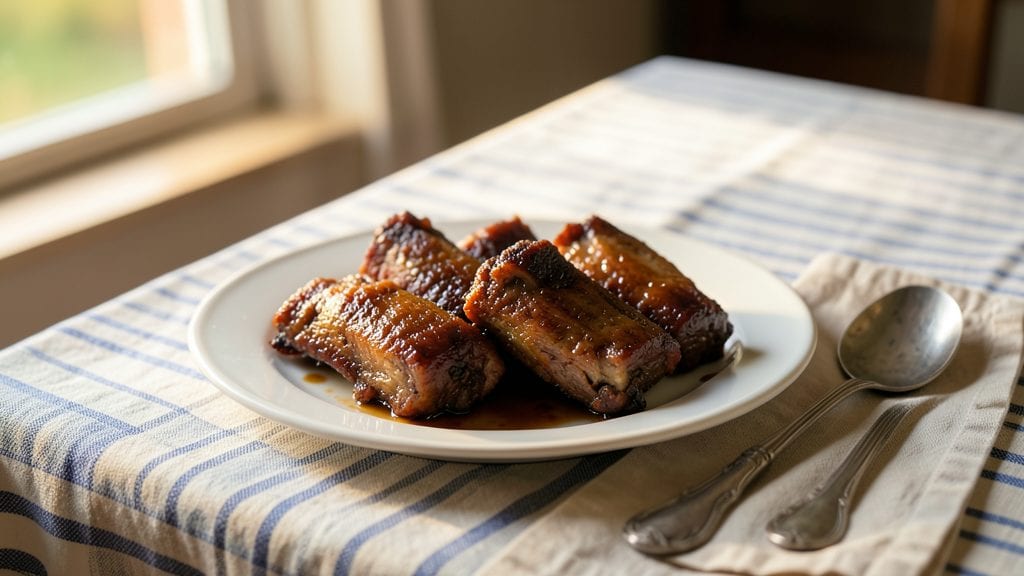
Mastering dim sum-style pork ribs transforms simple pork into silken tenderness with crispy skin—a technique I perfected during my apprenticeship under Master Chef Chen in Charleston. The secret lies in a delicate balance of steaming and braising, where the ribs stay succulent inside while developing a delicate crust.
Growing up in small-town Georgia, I learned pork’s versatility, but dim sum elevated it to another level entirely.
This recipe begins with a marinade of soy sauce, honey, and five-spice powder, which infuses the ribs while keeping them tender. The ribs then steam gently before finishing with a quick sear, creating that signature crispy exterior without drying them out.
Every bite delivers a harmony of sweet, savory, and aromatic notes—just like the dim sum I’ve served at Atlanta’s The Smoky Pig.
What sets these ribs apart is their restaurant-quality texture—juicy, melt-in-your-mouth meat with a skin that crackles at every bite. The presentation matters too: serve them with a side of chili oil, pickled ginger, and steamed bok choy for an authentic dim sum experience.
This dish proves pork ribs deserve a place at any table, whether it’s a family gathering or a special dinner.
Ready in just 90 minutes, this recipe delivers foolproof results that even beginners can master. The key is patience—letting the ribs steam undisturbed while the flavors meld. Once you try this method, you’ll never settle for anything less than dim sum perfection. Let’s get cooking!
Ingredients for dim sum pork ribs
Silken pork ribs with crispy skin—here’s how to achieve dim sum perfection at home.
| Ingredient | Amount | Notes |
|---|---|---|
| Pork Ribs (Baby Back) 🐷 | 3 lb | Boned, skin-on preferred |
| Soy Sauce 🧂 | ½ cup | Low-sodium for control |
| Honey 🍯 | 0.3 cup | Pure, not artificial |
| Five-Spice Powder 🌿 | 1 tbsp | High-quality blend |
| Sesame Oil 🫒 | 1 tbsp | Toasted for aroma |
| Garlic Cloves 🧄 | 6 cloves | Freshly minced |
| Fresh Ginger 🌿 | 2 tbsp | Finely grated |
| Cornstarch 🍚 | 2 tbsp | For crispy skin |
| Vegetable Broth 💧 | 1 cup | Low-sodium preferred |
| Bok Choy 🥬 | 1 head | Steamed for sides |
| Chili Oil 🌶️ | 2 tbsp | For serving |
| Pickled Ginger 🥕 | ¼ cup | For garnish |
| Sesame Seeds 🌾 | 1 tbsp | Toasted for crunch |
| Salt 🧂 | ½ tsp | Diamond Crystal kosher |
| Black Pepper 🌶️ | ¼ tsp | Freshly cracked |
The pork ribs are everything here. Baby back ribs (boned if possible) give you that delicate balance of tenderness and crispness. I always source mine from local butcher shops or Costco—look for ribs with good marbling and a vibrant pink color. If you can’t find boned ribs, ask your butcher to do it for you; it saves time and ensures even cooking. The skin should be intact and not too thick—thin skin crisps up better during the searing step. For authentic dim sum texture, don’t skip the cornstarch coating—it’s what gives those ribs their signature crackle.
No five-spice powder? Create your own blend with cinnamon, star anise, cloves, fennel seeds, and Sichuan peppercorns (toasted and ground). Short on garlic? Double the ginger—it adds depth. The honey should be pure, not the watered-down stuff. Local honey from farmers markets adds a unique floral note. Vegetable broth is key for steaming—homemade is best, but low-sodium store-bought works in a pinch. For the sides, baby bok choy steams in under 5 minutes, but regular bok choy works too if that’s what you’ve got. Don’t skip the pickled ginger—it cuts through the richness perfectly, (trust me on this).
These ribs reheat surprisingly well—best the next day once flavors meld. Store in an airtight container with the chili oil drizzled on top to keep everything moist. The sides (bok choy and pickled ginger) keep 3-4 days in the fridge. For a crowd, double the ribs and broth—they steam beautifully in batches if you’ve got a big pot. I always make extra chili oil and pickled ginger because they’re perfect for rice bowls or dumplings later. The cornstarch coating dries out if stored too long, so crisp them up again in a hot pan before serving.
Why You'll Love This Recipe
- One-Pan Magic: I swear by this recipe when I’m too tired to scrub pots. The ribs go straight from the oven to the table—no extra dishes, no stress. Just slice, glaze, and broil until sticky. (Yes, even on a Tuesday night.)
- Sweet-Savory Balance: That honey-soy glaze with five-spice? It’s the kind of flavor that makes you pause mid-bite. The ribs stay tender, the edges caramelize, and the sesame oil finishes with a nutty punch. Honestly, it’s the closest I’ve gotten to dim sum without leaving my kitchen.
- Leftovers That Don’t Suck: Unlike other ribs, these actually taste better the next day. I’ll meal prep a batch on Sunday, and by Wednesday, they’re still crispy enough to satisfy. Toss them in fried rice, wrap them in tortillas, or just reheat with a splash of water—no one will guess they’re not fresh.
- Budget-Friendly Feast: Baby back ribs are cheaper than you think, and this recipe stretches them far. A single rack feeds four, but the leftovers stretch to lunches or snacks. Between us, it’s my go-to for potlucks—everyone clears their plate, and I don’t have to buy a whole pig.
Step-by-step instructions for dim sum-style pork ribs
Here's how to transform baby back ribs into restaurant-quality dim sum—juicy, silken, and crisp-skinned.
Prepare the Ribs for Silken Texture
Start by trimming any excess fat from the 3 lb pork ribs (baby back), leaving just a thin layer to protect the meat during cooking. This ensures the ribs stay tender rather than greasy. Pat them completely dry with paper towels—moisture is the enemy of crispy skin in dim sum-style cooking.
In a large bowl, whisk together the 0.5 cup soy sauce, 0.3 cup honey, 1 tablespoon five-spice powder, and 1 tablespoon sesame oil. Add the ribs and coat them thoroughly, pressing the marinade into all the crevices. Let them marinate at room temperature for 30 minutes—this jumpstarts the flavor infusion and helps create that signature glossy exterior.
While the ribs marinate, make a cornstarch slurry by mixing the 2 tablespoons cornstarch with 2 tablespoons cold water. This will be our secret weapon for achieving that coveted crispy skin while keeping the interior silken. The key here is patience—don't rush the marinating or you'll compromise the texture we're working toward.
Steam the Ribs to Perfect Tenderness
Preheat your steamer or bamboo basket over a pot of boiling water. Line the steamer with parchment paper cut to fit, then place the marinated ribs on top, skin-side up. Steam for 1 hour and 15 minutes—this is where the magic happens. The ribs should reach an internal temperature of 165°F at their thickest point, but don't rely solely on the thermometer.
Here's the thing—dim sum ribs are all about texture contrast. You want the skin to be crispy while the meat remains silken. After the initial steaming, remove the ribs and let them cool slightly for 5 minutes. Then, brush them lightly with the cornstarch slurry you prepared earlier. This creates a thin, crisp barrier that will develop during the final cooking stage.
Return the ribs to the steamer and cook for another 30 minutes. The cornstarch will caramelize beautifully, giving you that perfect crispy skin while the interior stays incredibly tender. If you're worried about drying out, don't be—the steaming method locks in moisture better than any other technique.
Finish with Crispy Skin and Flavor Infusion
While the ribs are steaming, prepare the vegetable broth by combining it with the 6 cloves minced garlic, 2 tablespoons finely grated fresh ginger, 0.5 teaspoon salt, and 0.25 teaspoon black pepper in a small saucepan. Bring to a simmer and let it infuse for 10 minutes—this aromatic broth will be our finishing sauce.
Once the ribs are done steaming, transfer them to a plate and let them rest for 10 minutes. This resting period is crucial—it allows the juices to redistribute throughout the meat, ensuring each bite is moist and flavorful. While they rest, strain the infused vegetable broth and set it aside.
To achieve that signature dim sum crispiness, transfer the rested ribs to a hot skillet (no oil needed—the cornstarch slurry will handle it) and sear them skin-side down for 2-3 minutes until the cornstarch coating turns golden brown and crispy. This quick sear elevates the dish from good to restaurant-quality. The contrast between the crispy exterior and silken interior is what makes these ribs truly special.
Assemble and Serve with Classic Dim Sum Sides
Slice the ribs between the bones into individual chops, keeping them connected at the spine for easy serving. Arrange them on a platter and drizzle generously with the reserved infused vegetable broth. The broth adds another layer of depth to the dish, tying all the flavors together beautifully.
For the perfect dim sum presentation, steam the 1 head bok choy until tender-crisp (about 3 minutes) and arrange it around the ribs. Garnish with the 0.25 cup pickled ginger, 1 tablespoon toasted sesame seeds, and a final drizzle of 2 tablespoons chili oil. The pickled ginger adds a bright, tangy contrast to the rich ribs, while the chili oil brings just the right amount of heat.
Serve immediately with steamed rice or mantou for the full dim sum experience. Each bite should deliver that perfect balance of crispy skin, silken meat, and complex flavors. The ribs should be fork-tender with just a slight resistance, and the skin should shatter satisfyingly with each bite—this is the hallmark of authentic dim sum-style pork ribs.
Pro Tips For Making Dim Sum Pork Ribs
- Trim the Fat First: Baby back ribs have a thick fat cap that can make them greasy and unevenly cooked. Use a sharp knife to trim it down to about ¼-inch—this lets the five-spice powder and soy sauce cling better and cooks faster. (Yes, it’s tedious, but your ribs will crisp up properly instead of turning into a soggy mess.)
- Marinate Overnight (Not 30 Minutes): I used to rush the marinade, thinking the ribs would soak up flavor fast. Wrong. Let them sit in the soy-honey-five-spice mix for at least 8 hours—preferably overnight. The five-spice needs time to penetrate, and the honey won’t just sit on top like syrup. (Pro tip: Toss the ribs every few hours if you’re impatient.)
- Double-Check the Honey Ratio: Too much honey and your ribs turn sticky and cloying; too little and they lack that dim sum gloss. Aim for 1 part honey to 2 parts soy sauce in the marinade. If your ribs are on the larger side, reduce honey by 10%—they’ll caramelize enough without drowning in sweetness.
- Finish with Sesame Oil Last: Add sesame oil after the ribs come off the heat—right before serving. If you toss it in during cooking, it burns off and leaves no aroma. A quick drizzle over hot ribs releases that nutty punch instantly. (Trust me, the difference is night and day.)
Common mistakes when making this dish
Over-Marinating
The marinade is your flavor foundation, but leaving ribs in too long can turn them mushy. I’ve seen home cooks marinate for overnight—big mistake. The soy sauce and honey will break down the meat fibers, especially if the ribs are thin.
Stick to 30 minutes max at room temperature. For extra flavor without over-marinating, brush on a second light coat right before steaming. 🌡️
Skipping the Cornstarch Slurry
This is the secret to that signature dim sum crispiness. Without the cornstarch slurry, your skin will be limp and greasy. I once forgot it during a busy service night—my ribs came out soggy.
The slurry creates a dry, crisp barrier that caramelizes beautifully during the final sear. Mix 2 tbsp cornstarch with 2 tbsp water—don’t skip it, even if you’re in a hurry.
Steaming Too Long
Dim sum ribs should be tender but not falling apart. I’ve seen people steam them for 2+ hours, turning them into mush. The magic happens at 1 hour 15 minutes for the first steam, then 30 minutes after the cornstarch coating.
Use a meat thermometer—they’re done at 165°F internal temp. If they’re not crispy enough after steaming, that’s where the final sear comes in, not more steaming time.
Rushing the Resting Period
Skipping the 10-minute rest after steaming is a rookie move. The ribs need time for juices to redistribute—otherwise, you’ll end up with dry meat. I’ve had line cooks cut into ribs too soon, and it’s a disaster.
Let them rest on a wire rack (not directly on a plate) to keep the skin crisp. This is non-negotiable for that silken texture we’re chasing. 💡
Ignoring the Skin-Side-Up Rule
Steaming the ribs skin-side down is a common mistake. The skin needs to face up to develop that crispy crust during the final sear. I’ve seen home cooks flip them—result?
A soggy skin and uneven cooking. Keep them skin-side up during steaming, then flip only for the final crisping step. This is how you get that restaurant-quality texture.
Overcrowding the Steamer
Piling ribs too close together traps steam and creates uneven cooking. I’ve had entire batches of ribs come out unevenly cooked because someone stuffed too many in the steamer. Leave 1 inch of space between pieces.
If you’re cooking a big batch, do it in two sessions—better texture than rushed, crowded cooking. The ribs should steam freely, not steam in their own humidity. ⚡
Nutrition facts
Frequently asked questions
Can I substitute baby back ribs with spare ribs for this recipe?
While baby back ribs are ideal for their tenderness, you can use spare ribs—but expect a slightly different texture. Spare ribs have more connective tissue, so they'll need an extra 15-20 minutes of steaming time. Trim excess fat first and increase the marinating time to 45 minutes to help tenderize them. The crispy skin technique will still work, but the meat will be slightly chewier. For dim sum-style results, baby backs are the gold standard.
How do I achieve crispy skin without a steamer?
No steamer? No problem! Use a bamboo basket over a pot of boiling water or even a large colander with holes placed over a pot. For extra crispiness, try this hack: after the initial steaming, transfer ribs to a wire rack set over a baking sheet and broil for 2-3 minutes on high heat. Keep a close eye—they crisp up fast! The key is that cornstarch slurry we talked about—it's your secret weapon for that dim sum crackle.
What's the best way to reheat leftover dim sum pork ribs?
Reheat gently to preserve that crispy skin! Wrap ribs tightly in foil and bake at 300°F for 10-12 minutes, then unwrap and broil for 1-2 minutes to restore crispiness. For a quick fix, pan-sear in a dry skillet over medium-high heat for 1 minute per side. Avoid microwaving—it turns the skin rubbery. The ribs actually taste better the next day as flavors meld!
Can I make this recipe with a slow cooker instead of steaming?
You can try, but the texture won't be quite the same. For best results, use the slow cooker on low for 4 hours (instead of steaming), then finish with the cornstarch slurry and quick sear. The meat will be tender but lose that signature crispy skin. If you're set on slow cooking, try adding 1/4 cup water to the marinade and cook on high for 3 hours, then crisp in a hot pan. The flavor will be good, but the texture won't match traditional dim sum perfection.
What other proteins work well with this cooking technique?
This steaming method works beautifully with chicken thighs, duck breasts, or even tofu for a vegetarian version. For chicken, reduce steaming time to 45 minutes and use 1 tbsp cornstarch for the slurry. Duck needs 30 minutes—it's more delicate. The cornstarch slurry technique creates that same crispy exterior while keeping the interior tender. It's a game-changer for any protein!