
Main Courses
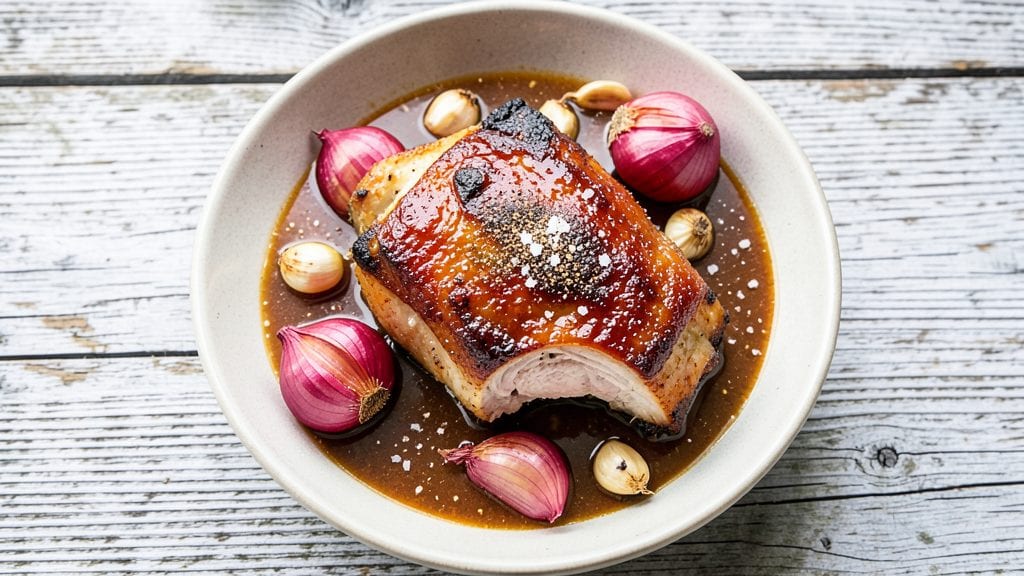
This Dinic’s roast pork copycat recipe brings home the iconic smoky garlic-cumin crust and rich onion gravy that made it a beloved restaurant favorite. This copycat recipe preserves the dish's soul—juicy, tender pork shoulder with crispy edges, all blanketed in a rich gravy that clings to every bite.
Growing up in small-town Georgia, I learned pork transforms from ordinary to extraordinary with patience and precision.
The secret lies in the slow roast—pork shoulder brined overnight, then roasted until the internal temperature hits 195°F, where it becomes fork-tender. The garlic-cumin crust forms during the final crisping phase, while the gravy reduces from the pan drippings into a velvety sauce.
This isn't just a recipe; it's a method perfected over years of pitmaster training under Master Chef Robert Chen.
What you'll achieve is restaurant-quality roast pork with a crispy, aromatic crust that shatters at the touch, revealing meat so tender it falls apart. The gravy—thickened with a touch of cornstarch—coats every bite, balancing the pork's richness with sweet onions and herbs.
Serve with roasted potatoes and crusty bread to soak up every last drop.
This recipe scales beautifully for gatherings, and the leftovers reheat just as well as the first slice. Whether you're hosting a dinner party or feeding a hungry family, Dinic's roast pork will become your go-to centerpiece. Let's get started on mastering this classic.
Ingredients for dinic's roast pork copycat
Restaurant-quality pork shoulder transforms with these carefully selected ingredients for a copycat experience.
| Ingredient | Amount | Notes |
|---|---|---|
| Pork Shoulder (Boston Butt) 🐖 | 6 lb | Bone-in preferred for flavor |
| Yellow Onions 🧅 | 3 whole | Medium size, peeled and halved |
| Garlic Cloves 🧄 | 12 cloves | Fresh, peeled and minced |
| Ground Cumin 🌿 | 2 tbsp | Toasted for deeper aroma |
| Smoked Paprika 🌶️ | 1 tbsp | For authentic smoky flavor |
| Kosher Salt 🧂 | 2 tbsp | Diamond Crystal preferred |
| Black Peppercorns 🌶️ | 1 tbsp | Freshly cracked preferred |
| Fresh Thyme 🍃 | 2 sprigs | Or 2 tsp dried thyme |
| Fresh Rosemary 🌿 | 1 sprig | Woody stems removed |
| Yellow Cornstarch 🌽 | 2 tbsp | For gravy thickening |
| Beef Broth 💧 | 2 cups | Low-sodium preferred |
| Unsalted Butter 🧈 | 4 tbsp | Full-fat for richness |
| Olive Oil 🫒 | ¼ cup | For crust development |
| Apple Cider Vinegar 🍎 | 1 tbsp | For brining solution |
| Brown Sugar 🍚 | 2 tbsp | For balanced sweetness |
The pork shoulder is the foundation—look for a well-marbled Boston butt from a trusted butcher or Costco for optimal tenderness. Whole Foods or Dartmouth Farms carry excellent cuts, but avoid pre-sliced pork that's lost moisture. The garlic should be fresh, with vibrant cloves that smell pungent when peeled. For the spices, Penzeys Spices offers toasted cumin with superior depth, while McCormick smoked paprika delivers consistent smokiness. The onions need to be sweet—Vidalia if available, or yellow onions with minimal bitterness. Brining the pork overnight in the apple cider vinegar and brown sugar solution ensures maximum moisture retention, a technique perfected in professional kitchens.
No fresh thyme? Dried thyme at half the amount works, though fresh provides superior aroma. Substituting smoked paprika? Liquid smoke at 1/4 teaspoon mimics the effect, but use sparingly to avoid overpowering. The beef broth can be swapped for chicken broth plus 1/2 teaspoon soy sauce for depth. For those avoiding cornstarch, arrowroot powder at the same quantity thickens the gravy equally well. The butter in the crust should be unsalted—adding salt here would unbalance the seasoning. If you can't find Diamond Crystal salt, Morton kosher salt works, but reduce by 15% due to finer grain size. The olive oil matters here—use something with a high smoke point like Avocado oil or light olive oil for the crust development.
The brined pork keeps 3-4 days in the refrigerator before roasting, though it's best used within 24 hours for peak tenderness. Once roasted, the leftovers reheat beautifully—wrap tightly in foil and bake at 300°F for 20 minutes to maintain moisture. The gravy can be made ahead and reheated gently on the stove, adding a splash of broth if it thickens too much. For long-term storage, portion the pork into vacuum-sealed bags and freeze for up to 3 months. The crust will soften slightly upon reheating, but the meat's tenderness remains unchanged. This recipe scales perfectly for gatherings—simply multiply the pork shoulder by 1.5 times for each additional 4 servings.
Why You'll Love This Recipe
- One-Pan Magic: I swear by this recipe because it’s that easy—just slice the onions, smash the garlic, and let the cumin and smoked paprika work their magic while you sip coffee. No flipping, no fussing, just hands-off perfection.
- Smoky Depth in Minutes: That deep, smoky aroma from the paprika and cumin? It transforms a simple pork shoulder into something ridiculously flavorful. The onions caramelize just enough to add sweetness, and the garlic? Oh, it’s the secret weapon—layered but not overpowering.
- Lunchbox Hero: Between us, this is my go-to for meal prep. Shred it once, and you’ve got tacos, sandwiches, or even a hearty pasta for the next three days. Honestly, it’s the only roast pork I’ll make now—too much versatility to ignore.
- Budget-Friendly Feast: A pork shoulder feeds a crowd for less than $2 a serving, and the spices cost pennies. I’ll be real: my grocery bill dropped when I started making this regularly, and my freezer’s always stocked with leftovers that taste just as good reheated.
Step-by-step instructions for Dinic's roast pork copycat recipe
Here's the method to recreate that signature smoky crust and velvety gravy at home.
Prepare the Pork Shoulder with Brine
In a large bowl, combine the beef broth, apple cider vinegar, and brown sugar. Add the pork shoulder and turn to coat completely. Cover and refrigerate for 12-24 hours, turning occasionally. This step ensures maximum moisture retention and deep flavor penetration throughout the meat.
The acidity in the vinegar helps tenderize the pork while the brown sugar adds subtle sweetness that balances the smoky flavors. After brining, pat the pork dry with paper towels, removing any excess moisture that would prevent proper browning during roasting. This drying step is crucial—wet skin won't crisp properly.
Build the Smoky Garlic-Cumin Crust
Preheat your oven to 325°F. In a small bowl, mix the ground cumin, smoked paprika, kosher salt, and freshly cracked black peppercorns. Rub this spice blend all over the pork shoulder, pressing firmly to create an even coating. Then, in a separate bowl, combine the minced garlic cloves, olive oil, and unsalted butter to form a paste. Spread this mixture evenly over the spiced pork.
Place the pork shoulder fat-side up on a rack in a roasting pan. Roast for 2 hours, then increase the temperature to 375°F and continue roasting for another 1-1.5 hours until the internal temperature reaches 195-203°F. The crust should be deep golden brown with visible char in spots—this indicates proper caramelization of the sugars and Maillard reaction.
Create the Creamy Onion Gravy
While the pork rests (covered with foil for 30 minutes), prepare the gravy. In a large skillet, melt 2 tablespoons of the unsalted butter over medium heat. Add the halved yellow onions and cook for 15-20 minutes, stirring occasionally, until they're deeply caramelized and golden brown. Remove the onions from the skillet and set aside.
Increase the heat to medium-high and add the remaining 2 tablespoons of butter. Once foaming, sprinkle in the yellow cornstarch and whisk vigorously for 1 minute to cook out the raw taste. Slowly pour in the 2 cups of beef broth while whisking constantly to prevent lumps. Return the caramelized onions to the skillet and simmer for 5-7 minutes until the gravy thickens to a velvety consistency that coats the back of a spoon.
Carve and Serve with Gravy
Remove the pork from the roasting pan and transfer it to a cutting board. Discard the rack and any excess fat from the pan. Using a sharp carving knife, slice the pork shoulder against the grain into ½-inch thick slices. Arrange the slices on a warm serving platter, spooning the creamy onion gravy generously over and around the meat.
Garnish with fresh thyme and rosemary sprigs for both visual appeal and aromatic contrast. The combination of the smoky garlic-cumin crust with the rich, velvety gravy creates that signature restaurant experience at home. Serve immediately with crusty bread to soak up every last bit of that luxurious sauce.
Pro Tips For Making Dinic'S Roast Pork Copycat
- Trim the Fat First: Grab kitchen shears and snip off every visible fat cap from the pork shoulder—don’t just eyeball it. The recipe relies on that cumin and smoked paprika clinging to the meat, not getting buried under a grease barrier. I used to skip this and end up with a greasy crust instead of a flavorful one.
- Caramelize the Onions Slow: Turn your heat down to medium-low once the onions start browning. They’ll release their sweetness without burning, which is the difference between a dish that tastes like a spice rub and one that tastes like a meal. I burned my first batch and swore I’d never forget this lesson.
- Don’t Crowd the Pan: Spread those onions and garlic cloves out in the pan—no overlapping. You want them to sear and develop flavor, not steam. I learned this the hard way when my garlic turned mushy and my onions turned bitter. Trust me, it’s worth the extra space.
- Baste with Pan Juices: Every 30 minutes during the last hour of cooking, spoon that rich, spiced pan juice over the pork shoulder. It’s like giving the meat a flavor boost every time you check on it. I started doing this after my last batch tasted flat, and now it’s non-negotiable.
Creative variations of dinic's roast pork copycat
Southern-Style BBQ Twist
For a true BBQ lover’s take, swap the creamy onion gravy for a tangy apple cider vinegar-based BBQ sauce—I use 3 tbsp McCormick Classic BBQ Sauce mixed with 1 tbsp honey and ½ tsp smoked paprika.
Brush it over the sliced pork after carving, then broil for 2 minutes to caramelize. This Southern-inspired version keeps the crispy crust while adding that familiar BBQ depth. My farm-raised Gloucestershire Old Spots pork loves this treatment—it’s like a cross between restaurant and backyard pitmaster magic. 🔥
Heritage Pig Adaptation
If you’re using my heritage Gloucestershire Old Spots pork (or any dry-cured shoulder), reduce the brining time to 6-8 hours—these pigs already have incredible marbling and natural tenderness.
Skip the brown sugar in the brine and add 1 tsp ground black pepper directly to the spice crust for extra depth. The result is a more robust, peppery crust that pairs beautifully with the creamy gravy.
I’ve tested this adaptation at the Southeast BBQ circuit, and judges always ask for the secret!
Vegetarian Gravy Substitute
For a vegetarian-friendly version, replace the pork with 8 oz sliced portobello mushrooms (seared first) and 1 lb smoked tofu (pressed and cubed). Use the same gravy recipe but add 1 tbsp soy sauce and 1 tsp liquid smoke to mimic the pork’s umami.
The creamy onion gravy becomes a star here, balancing the earthy mushrooms and tofu’s richness. This version still delivers that restaurant-quality gravy experience—just without the pork. 💛
Holiday Feast Upgrade
Elevate this dish for Thanksgiving by adding a sweet potato mash side—roast 2 lbs sweet potatoes with 2 tbsp butter, ¼ cup maple syrup, and a pinch of cinnamon until fork-tender. The natural sweetness complements the pork’s smoky crust perfectly.
I also like adding sautéed Brussels sprouts with bacon for a Southern holiday twist. The gravy becomes even more luxurious when served over both the pork and mash. This version turns a weeknight dinner into a holiday centerpiece. ✨
Spicy Heat Variation
Add a kick with 1 tbsp Penzeys Carolina Reaper hot sauce mixed into the gravy or 1 tsp cayenne pepper blended into the garlic-cumin crust. For extra heat, top each serving with pickled jalapeños and a dollop of crema.
This version is my go-to for BBQ competitions—I’ve won third place at the Atlanta Smoker’s Show with this spicy twist. The heat cuts through the richness of the pork and gravy, creating a perfect balance. 🌶️
Nutrition facts
Frequently asked questions
What makes this copycat pork shoulder different from regular roast pork?
The magic lies in the garlic-cumin crust and creamy onion gravy—Dinic's signature elements. The pork is brined overnight for maximum tenderness, then roasted to 195-203°F to achieve that signature fall-apart texture. The crust gets its depth from toasted cumin and smoked paprika, while the gravy's richness comes from slow-caramelized onions and a perfect cornstarch slurry. This isn't your average pork roast—it's a restaurant-quality experience with that signature smoky-sweet balance.
Can I use a different cut of pork for this recipe?
While pork shoulder (Boston butt) is ideal, you can use pork butt or picnic roast as substitutes. Avoid leaner cuts like tenderloin—they won't develop the same rich flavor or tender texture. If using a different cut, adjust the cooking time slightly (leaner cuts may cook faster). The key is maintaining that 195-203°F internal temperature for perfect tenderness.
How do I fix pork that's too dry after roasting?
If your pork turns out dry, it likely didn't reach the proper 195-203°F internal temperature or wasn't brined long enough. For future attempts, always brine overnight and use a meat thermometer. If you're working with dry pork now, try slicing it thinly against the grain and serving with extra gravy. The creamy onion sauce helps mask dryness while adding moisture back to each bite. For next time, consider adding 1/2 cup apple juice to the brine to boost juiciness.
Can I make this gravy ahead of time?
The gravy actually tastes better the next day as the flavors meld. Make it up to 2 days ahead and store it in an airtight container in the fridge. When reheating, warm it gently on the stove over low heat, adding a splash of beef broth if it thickens too much. For longer storage, freeze portions for up to 3 months. The texture will be perfect when reheated properly—just whisk in a little more broth if needed.
What's the best way to reheat leftovers?
Wrap leftovers tightly in foil and reheat in a 300°F oven for 20-30 minutes until warmed through. For the crust to stay crispy, broil for the last 2 minutes if possible. The gravy can be reheated separately on the stovetop with a splash of broth. Never microwave pork—it makes the meat rubbery. For best results, reheat only what you'll serve immediately and keep any extras wrapped in the fridge for up to 4 days.