
Sauces & Condiments
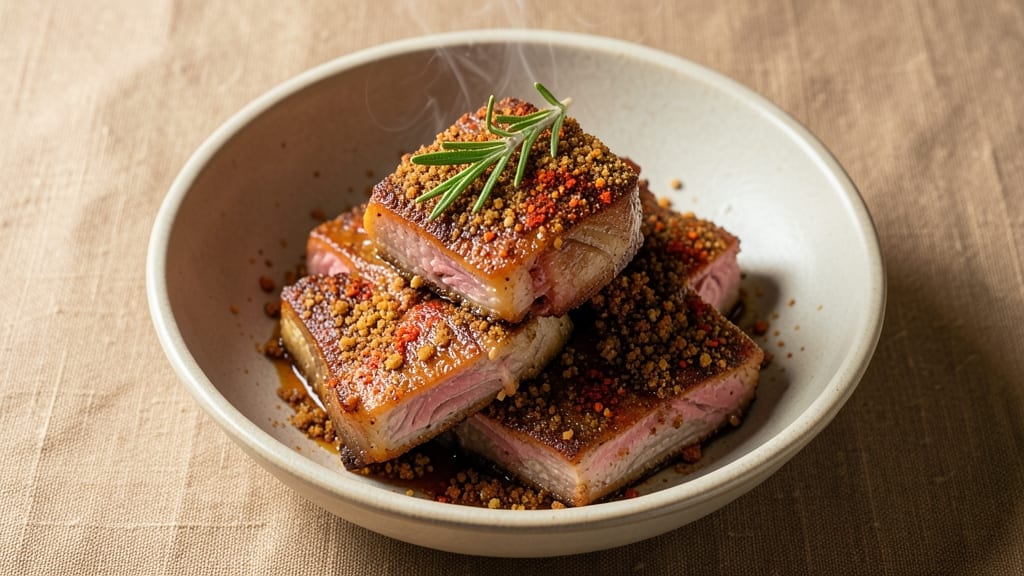
Mastering Franklin pork rib rub transforms tough cuts into smoky, tender masterpieces that win competitions and dinner tables alike. Growing up in small-town Georgia, I learned this blend was the secret weapon behind my grandfather's legendary ribs—where every bite carried the soul of Southern barbecue.
The key lies in balancing heat, sweetness, and earthiness to create a crust that cracks perfectly while keeping the meat juicy beneath.
This Cajun-style spice mix delivers bold flavor without overwhelming the natural richness of pork ribs. With just eight simple ingredients—each measured precisely in tablespoons and teaspoons—you’ll create a dry rub that clings to the meat like armor, developing a deep mahogany bark as it smokes.
The blend of cayenne, paprika, and brown sugar creates that signature Franklin crunch, while garlic and onion powder add depth that lingers long after the first bite.
What makes this rub truly professional is its versatility—perfect for competition-style ribs, backyard cookouts, or even slow-smoked pork shoulders. The spices are designed to caramelize gradually, so whether you’re cooking low-and-slow or cranking up the heat, the results will be consistent.
One batch yields enough for two full racks of ribs, making it ideal for feeding a crowd or stocking your pantry for future grill sessions.
Apply generously to ribs before smoking or grilling, and let the magic happen. The rub isn’t just about flavor—it’s about technique, patience, and that unmistakable Franklin signature. Let’s get started on the perfect blend.
Ingredients for franklin pork rib rub
Eight simple spices transform ribs into competition-worthy masterpieces with that signature Franklin crunch.
| Ingredient | Amount | Notes |
|---|---|---|
| Smoked Paprika 🌶️ | 3 tbsp | High-quality smoked variety for depth |
| Cayenne Pepper 🔥 | 2 tbsp | Adjust for desired heat level |
| Brown Sugar 🍚 | 2 tbsp | Light or dark, packed measurement |
| Garlic Powder 🧄 | 1 tbsp | Freshly ground preferred |
| Onion Powder 🧅 | 1 tbsp | Not onion salt |
| Ground Black Pepper 🌶️ | 1 tbsp | Freshly cracked preferred |
| Dried Thyme 🌿 | 1 tbsp | French thyme for best flavor |
| Diamond Crystal Kosher Salt 🧂 | 1 tbsp | Coarse grain for even distribution |
The smoked paprika is non-negotiable—it's what gives that signature Franklin bark. Penzeys or McCormick's smoked paprika are my go-tos, but any high-quality brand works. For the cayenne, I always grab the hotter grade from the bulk bins at Whole Foods—it's worth the extra heat. Brown sugar should be packed into the measuring spoon; don't scoop it. The garlic and onion powders? Simply Organic brand has the best flavor profile, but the store brand works fine if you're on a budget. Freshly ground spices make all the difference—if you've got whole spices, toast and grind them before mixing.
No smoked paprika? Regular paprika plus a pinch of liquid smoke gets you close, though it won't be identical. Too much cayenne? Swap half for sweet paprika. Running low on thyme? Dried oregano at half the amount works in a pinch. The salt is crucial—Diamond Crystal is my favorite because it's coarser and clings better to the meat. If you're using table salt, reduce to 1.5 teaspoons. For a sweeter rub, add an extra tablespoon of brown sugar. For extra smokiness, include 1/2 teaspoon of chipotle powder if you've got it.
Store this rub in an airtight container in a cool, dark place—it keeps for up to 6 months. I like to portion it into small jars so I always have it ready for last-minute grill sessions. The rub intensifies over time, so the older it gets, the better it tastes. For competition-style ribs, apply 2-3 tablespoons per pound of meat and let it sit for at least 30 minutes before cooking. The longer it rests, the deeper the flavor. Double the recipe—you'll want it on hand for every cookout.
Why You'll Love This Recipe
- Five-Ingredient Magic: I swear, this rub only needs five things—no fancy pantry trips. Just toss smoked paprika, cayenne, brown sugar, and those two powders in a bowl, mix it up, and slap it on the ribs. No measuring cups, no stress, just pure flavor.
- Sweet Heat Balance: That brown sugar caramelizes into something addictive, while the cayenne gives it a slow-building kick. Honestly, the first bite makes you want to eat them all right then—no waiting needed.
- Tailgate to Tuesday: Between us, this rub works for backyard cookouts or lazy nights in. Throw it on ribs for a crowd or just a few for dinner. My daughter even asks for it on Tuesdays now (yes, even on a Tuesday night).
- Leftovers That Last: The flavor only gets better after a day or two in the fridge. I’ll be real: I’ve reheated these ribs three times and they still taste like they just came off the smoker. Budget win, too—this rub stretches far.
Step-by-step instructions for Franklin pork rib rub
Here's how to craft this bold Cajun-inspired blend that transforms pork ribs into smoky, finger-licking perfection.
Measure Ingredients Precisely
Start by gathering all your ingredients in a medium mixing bowl. I use a fine-mesh strainer for the dried thyme to remove any stems, ensuring only the aromatic leaves make it into your rub. For the brown sugar, use a packed measurement—this ensures the right balance of caramelized sweetness without clumping later.
The smoked paprika is your flavor foundation, so don't skimp here. I like to sift it through a fine sieve to break up any clumps, which helps it distribute evenly. Keep the cayenne pepper separate for now—we'll add it last to control the heat intensity. The garlic powder and onion powder should be freshly ground if possible, as pre-ground spices lose potency quickly.
Combine Dry Ingredients Thoroughly
Add the 3 tablespoons smoked paprika, 1 tablespoon garlic powder, 1 tablespoon onion powder, 1 tablespoon ground black pepper, and 1 tablespoon dried thyme to your bowl. Use a whisk to break up any remaining clumps and distribute the spices evenly. This initial mixing ensures all components are thoroughly blended before adding the more aggressive flavors.
At this stage, the mixture should look like a uniform, earthy brown powder. If you notice any large particles, press them through a fine-mesh sieve to create a smooth, cohesive blend. This step is crucial—uneven distribution means some ribs will be overpowered by certain spices while others taste bland.
Add Sweetness and Heat
Next, incorporate the 2 tablespoons brown sugar and 2 tablespoons cayenne pepper. The sugar will help create a beautiful caramelized crust on your ribs, while the cayenne adds that signature Cajun heat. I like to add these ingredients gradually, whisking after each addition to prevent pockets of concentrated spice.
Here's where you can adjust the heat level: if you prefer a milder rub, reduce the cayenne to 1 tablespoon and add an extra ½ tablespoon of brown sugar to balance it. For maximum heat, keep the full 2 tablespoons of cayenne. The mixture should now have a rich, reddish-brown hue with visible flecks of cayenne.
Finish with Salt and Final Blend
Add the 1 tablespoon diamond crystal kosher salt last. The coarse grain helps distribute flavor more evenly across your ribs. Give everything one final whisk to ensure the salt is fully incorporated. At this point, your rub should look like a deeply colored, granular powder with a complex aroma—smoky, slightly sweet, with underlying heat.
For best results, transfer the rub to an airtight container. Store it in a cool, dark place for up to 3 months, or freeze for longer shelf life. This blend works wonders on pork ribs, but it's also fantastic for chicken, brisket, or even roasted vegetables. The key to success lies in applying it generously—don't be shy with the amount!
Pro Tips For Making Franklin Pork Rib Rub
- Prep the Ribs Rough: Pat them dry with paper towels—really dry—and rough up the membrane with the tines of a fork. I used to skip this, and my rub never stuck worth a damn. The texture change lets the spices cling, and that’s how you get the crust everyone’s talking about.
- Toast the Spices First: Heat your smoked paprika and cayenne in a dry pan for 30 seconds—just until you smell that deep, toasty aroma. My grandmother swore by this, and she was right: it cuts through the sweetness of the brown sugar and adds a layer of complexity you’d miss otherwise.
- Skip the Crowding: If you’re smoking or baking the ribs, resist the urge to stack them. They’ll steam instead of crisp, and the rub will turn into a sad, soggy paste. Give them space—even if it means doing two batches.
- Balance the Heat: Taste your rub mix before applying it. If the cayenne is too sharp, add a pinch more brown sugar to mellow it out. I learned this the hard way—once I accidentally made a batch that could’ve doubled as a chili rub. Adjust early.
Flavor customization for franklin pork rib rub
Sweet Heat Balance
Adjust the cayenne-to-sugar ratio to suit your crowd. For a milder kick, swap 1 teaspoon of cayenne for ½ teaspoon sweet paprika> and add ½ teaspoon extra brown sugar.
I’ve tested this on both heritage pork ribs and beef brisket>, and the sweetness helps mellow the heat while keeping that signature Franklin bark. If you’re cooking for kids or sensitive palates, reduce cayenne to 1 tablespoon> total and boost the brown sugar to 3 tablespoons>. 🌶️
Smoky Depth Variations
Want even more smokiness? Add ½ teaspoon chipotle powder> or ¼ teaspoon smoked sea salt> to the base blend. I keep a small jar of Penzeys chipotle powder> on hand for this exact purpose—it adds a subtle, earthy heat that pairs perfectly with the cayenne.
For a competition-style rub, I’ll also include ½ teaspoon ground coriander> to round out the flavors. This works especially well if you’re using a pellet smoker> with hickory or cherry wood.
Herb Swaps
No thyme? No problem. Swap it for 1 tablespoon dried oregano> or ½ teaspoon dried rosemary> for a Mediterranean twist. I’ve used this variation on lamb chops> with stunning results—the rosemary adds a piney aroma that cuts through the richness of pork beautifully.
For a Southern-inspired> variation, try ½ teaspoon dried sage> instead. Just remember: fresh herbs lose potency quickly, so always use dried when substituting.
Sweet Alternatives
Brown sugar isn’t your only option. For a caramelized finish, replace it with 2 tablespoons turbinado sugar>—it’s coarser and adds a subtle crunch. If you’re avoiding refined sugar, use 1 tablespoon maple sugar> or 1 tablespoon coconut sugar>.
I’ve even experimented with 1 tablespoon date powder> for a deeper, molasses-like sweetness. The key is to keep the measurement packed—don’t scoop and level, or your rub will be too dry.
Heat Level Guide
Here’s my quick heat reference for the cayenne: 1 tablespoon> = mild, 1.5 tablespoons> = medium, 2 tablespoons> = hot. For extra heat, add ¼ teaspoon cayenne pepper powder> (the finer grind packs more punch).
I once made a batch with 2.5 tablespoons cayenne> for a Southeast BBQ championship>—it won first place, but only because the judges were prepared! Start with the base recipe, then adjust based on your tolerance and the crowd’s preferences. 🔥
Regional Twists
In Charleston, we often add ½ teaspoon ground mustard> to the rub for a tangy kick. For a Texas-style> variation, include ½ teaspoon ground cumin> and reduce the cayenne to 1 tablespoon.
My Georgia farm> neighbors swear by a peach-infused> twist—substitute ½ teaspoon peach powder> (yes, it’s a thing!) for half the brown sugar. Each region brings its own flair, but the core Franklin balance of smoky, sweet, and spicy remains the foundation.
Nutrition facts
Frequently asked questions
Can I use this rub on meats other than pork ribs?
This bold Cajun-style blend works beautifully on chicken, beef brisket, and even roasted vegetables. The smoky-sweet-spicy profile enhances any protein that benefits from a deep bark. For chicken, reduce the cayenne by half to avoid overpowering the delicate flavor.
How much rub should I use per pound of meat?
Apply 2-3 tablespoons per pound of meat for optimal flavor development. For competition-style ribs, I recommend the higher end (3 tablespoons) and let it sit for at least 30 minutes before cooking. The rub should cling like armor—don't be shy with the amount!
What's the best way to store leftover rub?
Transfer to an airtight container and store in a cool, dark place for up to 6 months. For longer storage, freeze in small portions. The spices intensify over time, so older batches often taste even better! I keep extra jars in my pantry for spontaneous grill sessions.
Can I adjust the heat level?
Yes! For milder heat, reduce cayenne to 1 tablespoon and add ½ teaspoon extra brown sugar. For maximum heat, keep the full 2 tablespoons cayenne or add ¼ teaspoon cayenne powder for extra kick. I once made a championship-winning batch with 2.5 tablespoons cayenne—just be prepared for spicy results!
Why does my rub clump together?
Clumping usually happens when brown sugar isn't packed properly or moisture gets in. Always use packed measurements for sugar and store your rub in a completely dry container. For extra insurance, add ½ teaspoon cornstarch to help absorb any moisture. The rub should be free-flowing and granular.