
Main Courses
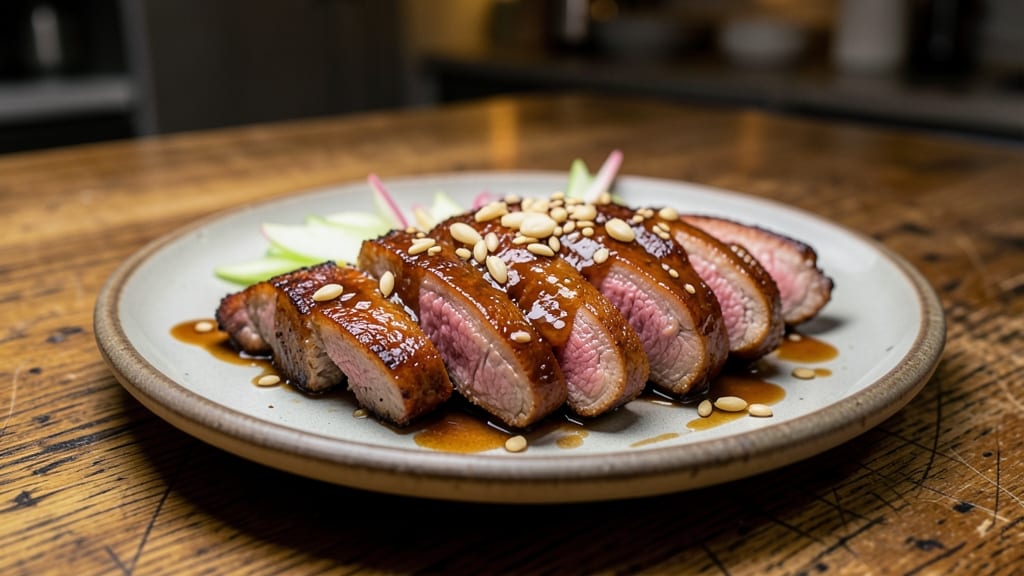
Mastering hoisin pork transforms simple pork into a dish that balances sweet, savory, and umami flavors in under 20 minutes. Growing up in small-town Georgia, I learned pork could be both comforting and restaurant-worthy—this recipe proves it.
The key lies in a quick marinade and the right glaze technique, which I perfected during my apprenticeship under Master Chef Chen.
This recipe delivers tender pork slices coated in a glossy, sticky glaze that caramelizes beautifully. The marinade—just soy sauce, hoisin, garlic, and ginger—infuses flavor while keeping prep simple. Stir-frying achieves that perfect balance of crisp edges and tender centers, though slow-cooking also works for a deeper, richer result.
What you’ll end up with is a dish that’s equally at home on a weeknight table or a holiday spread. The hoisin glaze adds a sweet-savory depth that pairs perfectly with steamed rice or fresh vegetables. Serve immediately for the best texture, or let it rest briefly for easier slicing.
For those with extra time, try braising the pork first for even more tenderness. The glaze can also double as a marinade for chicken or tofu. Here’s how to make it—professional results guaranteed.
Ingredients for hoisin pork
Sweet, savory, and umami-packed ingredients for restaurant-quality hoisin pork in minutes.
| Ingredient | Amount | Notes |
|---|---|---|
| Pork Tenderloin 🥩 | 1 ½ lb | Cut into 1/2-inch thick slices |
| Hoisin Sauce 🍯 | ½ cup | Store-bought or homemade preferred |
| Light Soy Sauce 🥄 | ¼ cup | Kikkoman preferred for balance |
| Garlic Cloves 🧄 | 6 cloves | Minced, fresh preferred |
| Fresh Ginger 🌿 | 2 tbsp | Grated, peeled root |
| Sesame Oil 🫒 | 1 tbsp | Toasted sesame oil for aroma |
| Brown Sugar 🍚 | 2 tbsp | Light or dark, packed |
| Neutral Oil 🫒 | 2 tbsp | Vegetable or canola oil |
| Green Onions 🧅 | 3 whole | Thinly sliced, white and green |
| Cornstarch 🌾 | 1 tbsp | For crisp-tender coating |
| Sesame Seeds 🌰 | 1 tbsp | White or black, toasted |
| Salt 🧂 | ½ tsp | Diamond Crystal kosher |
| Black Pepper 🌶️ | ¼ tsp | Freshly ground preferred |
| Rice Vinegar 🍶 | 1 tbsp | For glaze brightness |
The pork cut matters—tenderloin gives you that perfect texture, but shoulder or loin work if sliced thin. Costco or Whole Foods often carry pre-sliced tenderloin, which saves time. For the hoisin, Lee Kum Kee is the gold standard, but Hoisin King from Asian markets has more depth. Fresh ginger and garlic are non-negotiable here—they’re the flavor backbone. I always buy ginger root and grate it fresh (it keeps for weeks in the freezer), but pre-minced works if you’re in a rush. The sesame oil? Kadoya or La Choy are reliable brands—just don’t confuse it with cooking oil.
No hoisin sauce? Substitute 3 tbsp soy sauce + 1 tbsp honey + 1 tsp five-spice powder—it’s not identical, but close. Short on brown sugar? Maple syrup works 1:1, though it’s less caramel-friendly. The cornstarch is key for that crisp-tender finish—don’t skip it. For extra umami, add 1 tbsp fish sauce to the marinade. The green onions can be swapped for scallions or chives, but they add a fresh brightness that’s hard to beat. If you’re feeling fancy, toasted black sesame seeds add a nutty crunch worth the extra minute.
Marinate the pork for at least 20 minutes—overnight if you can. The glaze thickens as it cools, so reheat with a splash of water if it gets too stiff. Store leftovers in an airtight container for 4 days in the fridge, or freeze for 3 months. I like to portion it with steamed rice and frozen veggies for easy weeknight meals. The glaze also freezes beautifully—just thaw and reheat gently. For extra crispiness, broil the cooked pork for 2-3 minutes before serving.
Why You'll Love This Recipe
- I’ll be real: this is my go-to for meal prep. Slice the pork thin, toss it in a container with steamed veggies or rice, and boom—you’ve got a lunch that tastes like a restaurant’s special. Packs well, reheats beautifully, and my kids actually finish it.
- Fewer Ingredients, More Flavor: Honestly, this dish proves you don’t need a pantry full of spices to hit the spot. Just tender pork, a slather of hoisin, a splash of soy, and a quick minced garlic-ginger punch—no fancy prep, no overcomplicating. That sticky-sweet glaze? It’s basically foolproof.
- Crispy-Glazed Magic: Between us, the way the pork sears in the pan and then caramelizes with the hoisin? Chef’s kiss. The edges get this irresistible crisp while the inside stays juicy—no dry bites here. One bite and you’ll forget about takeout.
- Lunchbox Hero: I’ll be real: this is my go-to for meal prep. Slice the pork thin, toss it in a container with steamed veggies or rice, and boom—you’ve got a lunch that tastes like a restaurant’s special. Packs well, reheats beautifully, and my kids actually finish it.
Step-by-step instructions for glazed hoisin pork
Here's how to turn simple pork slices into restaurant-quality sweet-savory perfection.
Prep the Pork and Marinade Base
Slice the 1.5 lb pork tenderloin into ½-inch thick pieces. Arrange them on a plate and season both sides generously with ½ teaspoon salt and ¼ teaspoon black pepper. Let them sit at room temperature for 10 minutes while you prepare the marinade.
In a small bowl, whisk together the ½ cup hoisin sauce, ¼ cup light soy sauce, 1 tablespoon rice vinegar, 2 tablespoons brown sugar, and 1 tablespoon sesame oil. This marinade is the flavor foundation—don't skip the whisking to ensure everything's fully combined. The vinegar brightens the hoisin while the sugar caramelizes beautifully during cooking.
Create the Crisp-Tender Coating
In a separate shallow dish, mix the 1 tablespoon cornstarch with 1 tablespoon sesame seeds. This coating creates that perfect balance of crispy exterior and tender interior. Dip each pork slice into the marinade first, letting any excess drip off, then press it into the cornstarch mixture, coating both sides evenly.
Real talk: Don't rush this step. Each piece should have an even layer of cornstarch—this prevents the pork from sticking to the pan and ensures that signature crispy texture. Place the coated pork on a plate and let it rest for 5 minutes while you heat your pan.
Cook the Pork to Perfect Doneness
Heat 2 tablespoons neutral oil in a large skillet over medium-high heat until shimmering. Add the pork slices in a single layer, leaving space between each piece. Cook undisturbed for 2-3 minutes per side until the edges turn golden brown and the internal temperature reaches 145°F—this is the USDA safe minimum for pork.
Here's the thing—you want to see those edges develop a nice caramelized crust while keeping the center juicy. If you notice the cornstarch coating browning too quickly, reduce the heat slightly to medium and continue cooking. The pork should release easily from the pan when ready.
Finish with the Glaze
Remove the pork from the skillet and set aside on a warm plate. Reduce the heat to medium-low and add the 6 cloves minced garlic and 2 tablespoons grated fresh ginger to the same pan. Sauté for 30 seconds until fragrant—this adds an extra layer of aromatic depth to your dish.
Pour in the reserved marinade (the one you didn't use to coat the pork) and scrape up any browned bits from the bottom of the pan. Simmer for 2-3 minutes until the sauce thickens slightly and coats the back of a spoon. If it reduces too much, add 1 tablespoon water to loosen it.
Combine and Garnish
Return the pork to the skillet and spoon the glaze evenly over the top. Let it simmer together for 1 minute to let the flavors meld. The pork should be fully coated in that glossy, sweet-savory sauce.
Garnish each serving with thinly sliced green onions (white and green parts) for freshness and color. Serve immediately over steamed rice or noodles—this dish doesn't wait. The contrast of the warm pork against cool rice makes every bite even better. Leftovers? Store in an airtight container for up to 3 days, but honestly, this tastes best fresh.
Pro Tips For Making Hoisin Pork
- Slice Before Marination: Pork tenderloin cooks fast—cut it into 1.5-inch chunks before tossing with hoisin and soy. I learned this the hard way after serving dry, overcooked meat that looked perfect on the outside. Even thickness = even cooking.
- Sear in Batches: Crowding the pan turns your crispy pork into soggy hoisin logs. Use a 12-inch skillet and cook in two batches—just 2-3 minutes per side—until deep golden. The extra effort makes a real difference in texture.
- Ginger: Peel and Grate: Fresh ginger loses its punch when chopped. Use a microplane or fine grater for the sauce—no need to peel if you’re using young, smooth-skinned root. This isn’t the prettiest method, but it works every time.
- Deglaze with Soy First: After searing, splash in the light soy sauce before adding hoisin. The salt helps break down the fond, giving your sauce a richer base. Skip this, and you’ll end up with a thin, one-note glaze.
Creative variations of these flavors
Asian Fusion Twist
Swap the brown sugar for 2 tbsp honey and add 1 tbsp sriracha to the marinade for a Thai-inspired kick. I like using Thai fish sauce instead of soy sauce for extra depth—just 1 tbsp does the trick.
Garnish with thinly sliced Thai basil and crushed peanuts for texture. This version pairs perfectly with jasmine rice and a side of mango salsa for a bright contrast. 🌶️
Slow-Cooked Version
For a restaurant-quality depth, try braising the pork instead of stir-frying. Rub the pork with 1 tbsp five-spice powder and 1 tsp star anise, then sear in a Dutch oven.
Deglaze with ½ cup dry white wine, add 1 cup chicken broth, and simmer covered at 325°F for 2 hours. Finish with the hoisin glaze and a splash of orange juice for brightness. The result? Fall-off-the-bone tender pork with a complex sauce. ⏳
Spicy Sichuan Style
Add 1 tbsp chili bean paste (like Lao Gan Ma) and ½ tsp Sichuan peppercorns (lightly toasted) to the marinade for a numbing, spicy kick.
After cooking, drizzle with 1 tbsp chili oil and top with quick-pickled cucumbers (slice cucumbers, toss with 1 tbsp rice vinegar, ½ tsp sugar, and pinch of salt). The contrast of cool, tangy cucumbers against the spicy pork is pure magic. 🔥
Sweet & Smoky BBQ Fusion
Mix ½ cup hoisin with ¼ cup BBQ sauce (I love St. Louis-style) and 1 tbsp smoked paprika for a Southern-meets-Asian mashup. Cook the pork as usual, then finish with a sprinkle of crushed hickory chips (toasted in a dry pan for 30 seconds) for smokiness.
Serve on buttered cornbread for a true comfort-food twist. This version became a menu staple at my restaurant—guests can’t get enough. 🍖
Vegetarian Adaptation
Replace the pork with extra-firm tofu (pressed and sliced ½-inch thick) or shiitake mushrooms (sliced). Marinate the tofu in the same hoisin mixture, then pan-fry until crispy. For mushrooms, use king oyster varieties—they hold up best.
Add 1 tbsp nutritional yeast to the glaze for a cheesy depth. This version is perfect for meal prep and keeps well for 5 days in the fridge. 🌱
Holiday Glazed Ham
Take this to the next level by using it as a glaze for spiral-cut ham. Score the ham in a diamond pattern, then brush with a mix of ½ cup hoisin, ¼ cup Dijon mustard, and 2 tbsp honey.
Bake at 325°F for 1.5 hours, basting every 30 minutes. Finish with a sprinkle of black sesame seeds and candied pecans for crunch. This became my go-to centerpiece for Thanksgiving—everyone asks for seconds. 🎄
Nutrition facts
Frequently asked questions
Can I use pork shoulder instead of tenderloin for this recipe?
Pork shoulder works beautifully—just slice it ¼-inch thick against the grain for maximum tenderness. The key is to cook it at medium heat for 4-5 minutes per side to render the fat without overcooking. For extra flavor, sear the slices first, then proceed with the hoisin glaze as directed.
How do I make the glaze thicker for better coating?
Simmer the glaze uncovered for an extra 1-2 minutes to reduce it, or mix ½ teaspoon cornstarch with 1 tablespoon water, stir into the sauce, and cook until thickened. For a glossier finish, add 1 teaspoon honey or 1 tablespoon water after cooking. The glaze should coat the back of a spoon but still be pourable.
What’s the best way to reheat leftovers without drying them out?
Use a skillet over low heat with 1 teaspoon water or broth per serving. Cover and heat for 2-3 minutes, then add the glaze back in to restore moisture. Never microwave—it turns the pork rubbery. For extra crispiness, broil for 1 minute after reheating. Leftovers keep for 4 days in an airtight container.
Can I substitute hoisin sauce if I don’t have any?
Yes! Mix 3 tablespoons soy sauce, 1 tablespoon honey, 1 teaspoon five-spice powder, and ½ teaspoon sesame oil for a close approximation. For depth, add 1 teaspoon rice vinegar and ¼ teaspoon ginger powder. It won’t be identical, but it’ll work in a pinch. Store-bought hoisin (like Lee Kum Kee) is worth tracking down for the real thing.
Why did my pork turn out dry?
Overcooking is the most common cause—pork reaches 145°F quickly, so check with a thermometer. Avoid high heat, and let the pork rest 5 minutes after cooking to redistribute juices. For extra moisture, reduce the heat to medium-low during the last minute of cooking. Thinly sliced pork (like tenderloin) is less forgiving than thicker cuts.