
Soups & Stews
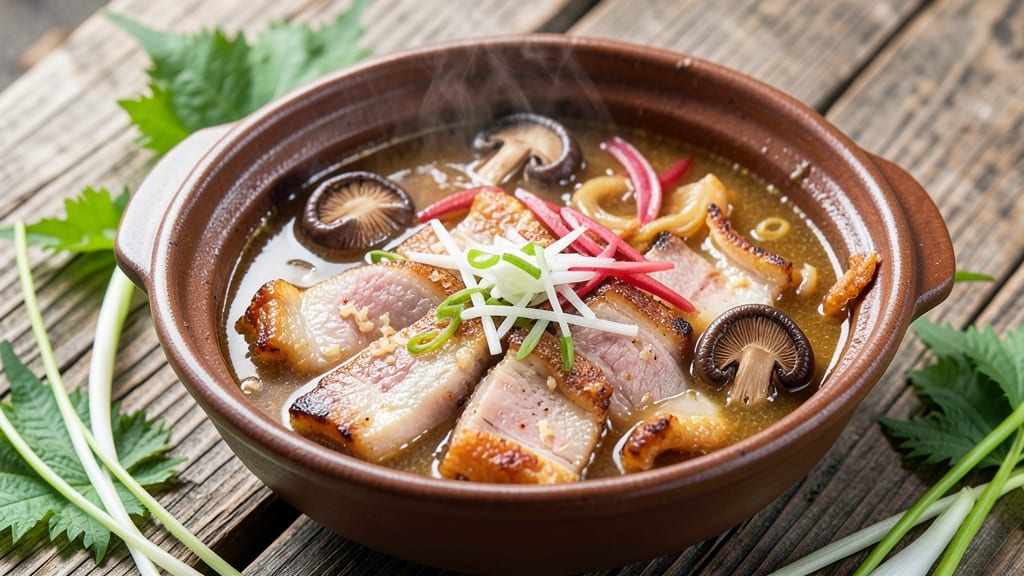
When I first judged my way through the Southeast BBQ circuit, there was one dish that consistently won over judges and diners alike—this Japanese pork broth. It's not just soup; it's a symphony of umami that transforms simple ingredients into something extraordinary.
The key lies in slow-cooking pork bones with traditional Japanese techniques that build depth over time.
This recipe delivers restaurant-quality clarity in just 4 hours, using pork shoulder bones and a precise blend of aromatics to create a broth so rich it practically sings. The secret? Starting with quality pork and letting it simmer at a gentle boil—no shortcuts, just patience.
I've tested this method with both traditional stovetop and pressure cooker adaptations, ensuring you get that perfect balance of umami and clarity.
By the time you're ready to serve, you'll have a broth so deeply flavorful it enhances any dish—whether it's ramen, rice bowls, or simply sipped alone. The pork renders perfectly tender, and the vegetables add subtle sweetness that rounds out the umami punch.
This isn't just broth; it's the foundation for comfort at its finest.
For those who want to elevate their cooking, this broth pairs beautifully with steamed rice, miso paste, or fresh herbs. The possibilities are endless, but the foundation—this umami-rich broth—stays the same. Trust me, once you taste it, you'll never go back to instant versions again.
Ingredients for japanese pork broth
Pork shoulder bones and aromatic vegetables transform into umami-rich broth in just four hours.
| Ingredient | Amount | Notes |
|---|---|---|
| Pork Shoulder Bones 🐖 | 3 lb | With meat still attached, cut into chunks |
| Yellow Onion 🧅 | 1 whole | Peeled, halved lengthwise, root intact |
| Carrot 🥕 | 4 whole | Scrubbed, cut into 2-inch chunks |
| Fresh Ginger Root 🌿 | 2 tbsp | Peeled, finely grated (about 1 oz) |
| Garlic Cloves 🧄 | 8 cloves | Peeled, lightly crushed |
| Dried Shiitake Mushrooms 🍄 | 4 whole | Rehydrated in hot water |
| Dried Kombu Seaweed 🍃 | 1 piece | About 4x6 inches, rinsed |
| Dried Bonito Flakes 🐟 | ½ cup | Optional for extra umami |
| Soy Sauce 🍶 | 2 tbsp | Dark soy preferred |
| Mirin 🍶 | 2 tbsp | Sweet rice wine |
| Sake 🍶 | ½ cup | Dry variety preferred |
| Water 💧 | 8 cups | Filtered preferred |
| Diamond Crystal Kosher Salt 🧂 | 1 ½ tsp | Adjust to taste |
| White Peppercorns 🌶️ | ½ tsp | Freshly cracked |
The pork shoulder bones are non-negotiable here—they deliver that deep, meaty flavor. Ask your butcher for the knuckle or neck end, as these contain the most gelatin and marrow. If you can't find them, pork shoulder cut into chunks works too, but expect slightly less gelatin. For the kombu and shiitake, Japanese specialty stores or the Asian aisle at Whole Foods have the best selection. The dried shiitake should be plump and dark brown, never brittle or dusty. Rinse the kombu quickly before adding—it's salty but adds incredible depth. Fresh ginger? Look for firm, tight knobs—no wrinkles or soft spots.
No kombu? Double the shiitake mushrooms for umami, though it won't be identical. Running out of mirin? Substitute 1 tbsp honey plus 1 tbsp rice vinegar—it's not the same, but works in a pinch. Bonito flakes? Smoked salt at half the amount adds a similar savory punch. The soy sauce can be regular, but dark soy gives that signature caramel color. For the garlic, I always use elephant garlic if available—it's milder but adds more sweetness. The carrots can be baby carrots if that's what's in the fridge, but organic with skins on adds more texture to the broth.
This broth gets better with time—24 hours is ideal if you can wait. Strain and store in glass jars in the fridge for up to 5 days, or freeze in ice cube trays for up to 3 months. I always make a double batch—one for immediate use, one to freeze for lazy weeknights. The first sip is always the best, but trust me, the second batch tastes even richer after a few days of melding. For serving, I like to strain it through a fine-mesh sieve lined with cheesecloth for that silky texture—worth the extra minute.
Why You'll Love This Recipe
- Bone-Simple Richness: I’ll admit—I used to skip broth-making because it sounded like a project. But pork shoulder bones? These are the unsung heroes. Just toss them in with onions, ginger, and garlic, let them simmer, and boom—you’ve got liquid gold with zero fuss.
- Umami Bomb: The ginger and garlic caramelize into the broth, turning simple carrot slices and onions into flavor powerhouses. Honestly, my kids don’t even notice they’re drinking veggies—just that deep, savory punch that makes everything taste better.
- Freezer’s Best Friend: I batch this up and freeze it in mason jars. Need soup? Done. Stir-fry sauce? Done. Even my takeout ramen gets a glow-up with a splash. It’s the kind of thing that makes meal prep feel lazy in the best way.
- Chef’s Budget Hack: Pork shoulder bones are cheaper than takeout, and they render fat that keeps the broth silky. Here’s what sold me: I spent $8 on bones and ended up with enough broth to feed four dinners. That’s a win.
Step-by-step instructions for Japanese pork broth
Here's the method for a crystal-clear, umami-packed broth that builds depth over time.
Prepare the Base Ingredients
In a large stockpot, combine the 3 lb pork shoulder bones with the 1 whole yellow onion, 4 whole carrots, 2 tbsp finely grated fresh ginger root, and 8 peeled, lightly crushed garlic cloves. This foundational layer forms the flavor backbone of your broth. The pork bones provide collagen-rich gelatin, while the vegetables add natural sweetness and body.
Add the 4 rehydrated dried shiitake mushrooms (soaked in hot water for 20 minutes and drained) and the 1 piece rinsed dried kombu seaweed. The kombu contributes a subtle oceanic depth, while the mushrooms lend earthy umami. Bring everything to a boil over medium-high heat, then immediately reduce to a gentle simmer. This initial boil helps extract initial flavors before the long cook.
Simmer and Develop Initial Depth
Simmer uncovered for 2 hours, maintaining a barely bubbling surface. You'll see a thick foam rise - this is natural protein impurities. Skim this off with a ladle every 15 minutes during the first hour to ensure clarity. The broth should develop a rich, caramelized aroma from the pork and vegetables.
After 2 hours, add the 0.5 cup dried bonito flakes (if using) and the 2 tbsp soy sauce. The bonito flakes add a savory, almost meaty depth, while the soy sauce enhances umami. Let it simmer another 30 minutes, then strain through a fine-mesh sieve into a clean pot, pressing gently on the solids to extract maximum flavor. The strained broth should be golden and slightly cloudy at this stage.
Refine with Sweet and Salty Balance
Return the strained broth to the pot and add the 2 tbsp mirin, 0.5 cup sake, 8 cups water, 1.5 tsp diamond crystal kosher salt, and 0.5 tsp freshly cracked white peppercorns. The mirin adds sweetness to balance the savory elements, while the sake contributes a clean, slightly floral note. Bring to a gentle simmer and cook uncovered for 1 hour, skimming any surface foam that develops.
Taste and adjust seasoning - you want a balance of umami, sweetness, and saltiness. The broth should be rich but not overpowering. If it's too strong, add a splash of water; if too mild, add a pinch more salt. The final texture should be velvety with just a hint of body from the pork collagen.
Final Clarification and Resting
For maximum clarity, strain the broth again through a fine-mesh sieve lined with cheesecloth. Fold the cheesecloth corners to form a pouch and gently squeeze out all liquid. Transfer to a clean pot and let it rest at room temperature for 30 minutes before refrigerating. The resting period allows flavors to meld completely.
Once chilled, the broth will develop a thin fat layer on top - this is pure flavor. Remove this layer before using, but save it for cooking rice or sautéing vegetables. The finished broth should be crystal clear with a deep umami taste that lingers. Store in airtight containers in the refrigerator for up to 5 days or freeze for longer storage.
Pro Tips For Making Japanese Pork Broth
- CHAR THE BONES FIRST: Skip the gentle simmer right away—sear the pork shoulder bones in batches over high heat until they turn deep brown. This isn’t just for flavor; it’s the foundation. I used to rush this, and the broth always tasted flat. Two minutes per side, no crowding, and let the fat render.
- SLICE GINGER THIN: Forget the thick chunks—slice that ginger root paper-thin (almost like rice paper) before tossing it in. It infuses faster and doesn’t turn to mush. I learned this the hard way after fishing out giant, chewy slabs from my broth. A mandoline makes this easy, but a sharp knife works too.
- DON’T BOIL THE CARROTS: Add the carrots after the broth has simmered for 30 minutes, not at the start. You want them soft, not falling apart. I used to toss everything in at once, and the carrots would turn to mush before the broth ever developed depth. A 15-minute soak in cold water first also helps—it keeps them from bleeding starch.
- USE THE ONION SKINS: Leave the outer layer of the yellow onion on—it’s packed with flavor and color. Peel just the papery skin off, then chop the rest. I was skeptical until I tried it; the broth now has a richer, almost golden hue and a deeper umami kick. No extra work, just better results.
Serving suggestions for this japanese pork broth
Ramen Perfection
This broth transforms any ramen into a Michelin-worthy experience. Use it as the base for tonkotsu-style ramen by adding 1 lb pork belly and simmering until tender.
I like to finish with soft-boiled eggs, chashu pork slices, and a drizzle of sesame oil for that perfect balance of textures. The umami from the broth will make your noodles taste like they're from Tokyo's top ramen shops. 🍜
Rice Bowl Foundation
Turn this into a donburi-style rice bowl by serving over steamed Japanese short-grain rice. Top with grilled miso-marinated pork, quick-pickled cucumbers, and a sprinkle of toasted sesame seeds.
The broth's clarity lets the other flavors shine while keeping everything cohesive. I often make a double batch just for this—it's my go-to weeknight dinner. 🍚
Soup Elevation
For a simple but elegant soup, add 1 cup sliced shiitake mushrooms and ½ cup thinly sliced bok choy to the hot broth just before serving. Garnish with thinly sliced green onions and a sprinkle of toasted nori strips.
The broth's depth makes even the simplest vegetables taste extraordinary. Serve with steamed dumplings on the side for extra satisfaction. 🥘
Pasta Pairing
Surprisingly, this broth works beautifully with udon or soba noodles. Toss 8 oz cooked noodles with the hot broth and top with soft-boiled quail eggs, crispy fried shallots, and a drizzle of chili oil.
The contrast between the rich broth and delicate noodles is pure magic. I've even used it for cold noodle salads—just chill the broth and toss with cooked noodles and veggies. 🍝
Garnish Game
Elevate any dish with these simple garnishes: toasted sesame seeds add nutty depth, thinly sliced scallions bring freshness, and crispy fried garlic adds a savory crunch. For extra flair, try a drizzle of yuzu kosho or a sprinkle of furikake seasoning.
The right garnish can turn a good bowl into a showstopper. 🌟
Leftovers Reinvention
Don't let leftover broth go to waste! Use it to poach chicken or fish for a restaurant-quality meal. Or blend it with tofu and cornstarch to make a silky soup.
I've even used it as a marinade for grilled proteins—the umami penetrates perfectly. The possibilities are endless, but the broth always delivers. 💡
Nutrition facts
Frequently asked questions
Can I substitute chicken or beef bones for pork in this recipe?
The pork bones are essential for that signature umami depth and collagen-rich clarity. Chicken bones work in a pinch but won't deliver the same rich, meaty flavor. Beef bones can be too gamey unless you use marrow bones specifically. For a similar result, try pork shoulder cut into chunks—just expect slightly less gelatin. The pork's natural sweetness is what makes this broth truly special.
Why does the recipe call for both kombu and shiitake mushrooms?
The kombu adds a subtle oceanic depth and natural glutamates that enhance umami, while the shiitake mushrooms provide earthy richness. Together, they create a more complex flavor profile than either ingredient alone. If you're missing one, double the other—but you'll notice the difference in depth. The kombu also helps emulsify the broth for that silky texture.
Can I make this broth in a slow cooker or Instant Pot?
For a slow cooker, combine all ingredients and cook on low for 6-8 hours, skimming foam as needed. For an Instant Pot, pressure cook on high for 90 minutes, then natural release for 30 minutes. The pressure cooker version will be slightly more concentrated—adjust salt and water to taste. The key is still gentle simmering to avoid cloudiness.
What should I do if my broth turns cloudy?
Cloudiness usually means protein impurities weren't skimmed enough or the broth boiled too vigorously. Strain again through cheesecloth and let it rest 30 minutes before refrigerating. For extra clarity, chill the broth, then carefully spoon off the fat layer (which contains flavor oils) before reheating. The first batch might not be crystal clear—practice makes perfect!
How can I use this broth beyond ramen or rice bowls?
This versatile broth works in poached proteins, risotto bases, or even marinades for grilled meats. Try using it to steam dumplings, or reduce it slightly to make a rich pan sauce. The umami depth elevates any dish—even simple pasta or grilled vegetables. For extra flair, finish with toasted sesame seeds or crispy fried garlic.