
Main Courses
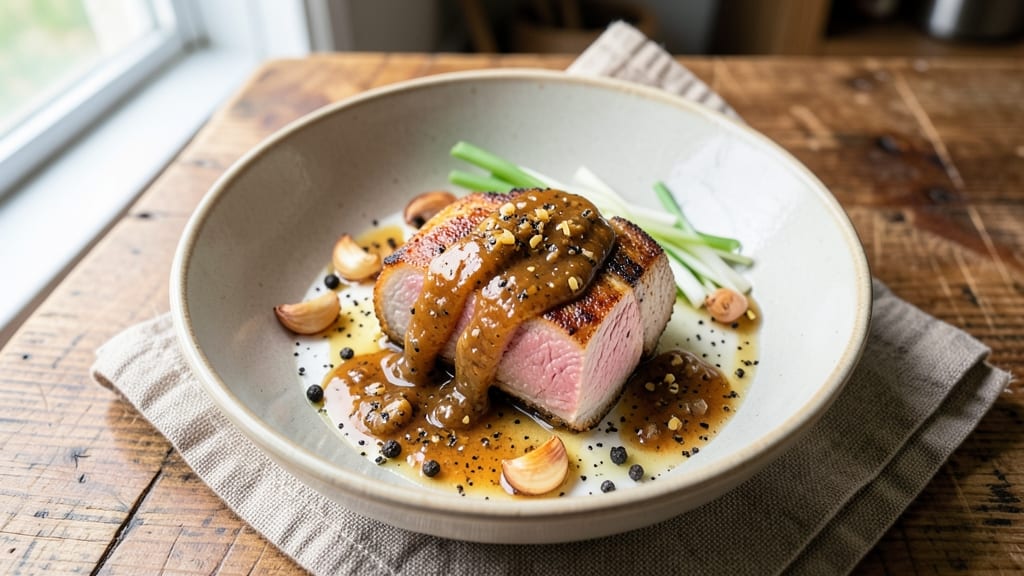
This lutong pinoy pork chop recipe reveals how to turn ordinary pork into a fragrant, vinegar-braised delight that embodies the heart of Filipino home cooking.
This recipe, perfected through years of braising heritage Gloucestershire Old Spots pork, delivers melt-in-your-mouth texture with layers of savory-sweet complexity that will have you reaching for seconds.
The secret lies in the slow braise, where vinegar tenderizes while garlic, ginger, and black pepper build depth—just like my abuela used to make back in Georgia, where pork was the heart of every family gathering.
The magic happens in the slow braising process, where pork chops simmer in a rich sauce of soy sauce, vinegar, and aromatics until fork-tender. Unlike quick searing methods, this technique ensures the meat remains juicy while absorbing all the flavors.
What makes this recipe special is how it balances traditional Filipino techniques with approachable home cooking—no special equipment needed, just patience and a cast iron skillet from my collection.
By the time you serve this dish, you’ll have restaurant-quality pork chops with a glossy, caramelized surface and a sauce so flavorful it clings to every bite. The aroma alone—garlicky, tangy, and slightly sweet—will fill your kitchen and have everyone at the table asking for the recipe.
Serve it over steamed rice with atchara or garlic fried rice for the full Filipino experience.
This method works equally well for bone-in or boneless cuts, making it versatile for weeknight dinners or special occasions. The leftovers reheat beautifully, so you can double the batch and enjoy it for days. Let’s get cooking—your taste buds will thank you.
Ingredients for lutong pinoy pork chop
Pork chops, vinegar, and aromatics—simple ingredients that transform into restaurant-quality Filipino comfort.
| Ingredient | Amount | Notes |
|---|---|---|
| Gloucestershire Old Spots Pork Chops 🥩 | 1 ½ lb | Bone-in or boneless, 1/2-inch thick |
| White Vinegar 🍶 | ½ cup | Distilled preferred for tang |
| Soy Sauce 🍶 | ½ cup | Light or dark, not low-sodium |
| Garlic Cloves 🧄 | 8 cloves | Minced, not pre-minced jar |
| Fresh Ginger 🌿 | 2 tbsp | Grated, not powdered |
| Black Peppercorns 🌶️ | 1 tsp | Freshly cracked, not ground |
| Bay Leaves 🌿 | 2 whole | Dried, standard size |
| Sugar 🍚 | 1 tbsp | White granulated |
| Onion 🧅 | 1 whole | Yellow, sliced thick |
| Olive Oil 🫒 | 2 tbsp | Extra-virgin for searing |
| Salt 🧂 | 1 ½ tsp | Kosher or sea salt |
| Water 💧 | ½ cup | Room temperature |
| Cornstarch 🌾 | 1 tbsp | For thickening sauce |
| Steamed White Rice 🍚 | 2 cups | Cooked, for serving |
The pork is the star, so Gloucestershire Old Spots if you can find it—its marbling stays juicy during the long braise. Most grocery stores carry boneless pork chops, but I prefer bone-in for extra flavor. Trader Joe's or Filipino markets often have the best cuts. Look for chops that are firm to the touch but still vibrant in color. If you're using bone-in, pat them dry before searing—this helps the crust form. The vinegar should be distilled white (like Heinz), not apple cider or balsamic—it needs that sharp tang for the sauce. For garlic, I always grab extra because half gets tossed in the pot and half gets minced for the sauce.
No white vinegar? Rice vinegar or apple cider vinegar work in a pinch, but you'll need to add a pinch of sugar to balance the sweetness. Pre-minced garlic? Fresh is non-negotiable here—it adds depth the jarred stuff can't match. Running low on bay leaves? Dried thyme at half the amount gives a similar earthy note. The soy sauce can be swapped for coconut aminos if you're avoiding soy, but the color will be lighter. For the sugar, brown sugar or honey works too—just reduce to 1 teaspoon since it's more concentrated. The cornstarch is key for thickening the sauce, but if you're out, arrowroot powder works too.
This sauce gets better the next day—honestly, I double the recipe so I have leftovers. Store it in the fridge for up to 5 days, or freeze portions for 3 months. The pork reheats beautifully—just warm it gently in the sauce. For serving, I always keep a bowl of steamed jasmine rice ready. The sauce clings to the rice perfectly, and you can even drizzle extra over the top. If you're feeling fancy, serve with atchara (Filipino pickled papaya)—the tang cuts through the richness.
Why You'll Love This Recipe
- No-Fuss Marinade: I swear by this 15-minute soak of vinegar, soy, and garlic—no fancy tools, just a bowl and a fork. The ginger’s bright kick cuts through the richness, and the pork chops practically baste themselves in the pan.
- Crispy Edge Magic: That caramelized crust? It’s all in the quick sear—vinegar’s tang tightens the skin while the soy builds depth. Honestly, the first bite makes me want to skip dessert.
- Weeknight to Party: Same marinade works for weeknight dinners or a last-minute potluck. Serve with rice and steamed veggies for a no-stress meal, or pile it on skewers for a crowd. My in-laws asked for seconds at a BBQ, and they’re hard to impress.
- Budget-Friendly Leftovers: Pork chops stretch into lunches—slice the extras into sandwiches or stir-fry with rice. The marinade’s cheap ingredients mean I can feed four for under $10, and the flavor stays bold even reheated.
Step-by-step instructions for lutong pinoy pork chop
Here's how to transform simple ingredients into tender, tangy pork chops with rich sauce.
Prepare the Pork Chops and Aromatics
Pat the 1.5 lb Gloucestershire Old Spots Pork Chops completely dry with paper towels—this helps the seasoning stick and creates a better sear. Place them in a bowl and season generously with 1.5 tsp salt on both sides. Let them sit at room temperature for 15 minutes while you prep the aromatics.
Peel and slice the 1 whole Onion into ¼-inch thick rounds. Mince the 8 cloves Garlic Cloves finely—you'll want them almost paste-like for even distribution. Grate the 2 tbsp Fresh Ginger using a microplane or fine grater. Crack the 1 tsp Black Peppercorns with a mortar and pestle or use a spice grinder for freshness. Tear the 2 whole Bay Leaves in half to release their flavor.
Sear the Pork Chops Perfectly
Heat a large skillet over medium-high heat until hot. Add 2 tbsp Olive Oil and let it shimmer for 30 seconds. Working in batches if needed, add the pork chops and sear for 3-4 minutes per side until they develop a deep golden-brown crust. Don't move them around too much—let them develop that beautiful crust.
Once browned, remove the pork chops from the skillet and set them aside on a plate. You want them to rest while you build the sauce, but don't let them cool completely. The residual heat will help them finish cooking gently in the braising liquid.
Build the Tangy Braising Liquid
In the same skillet (no need to clean it—the browned bits add flavor), add the sliced onion and cook for 2 minutes until softened. Add the minced garlic cloves and grated fresh ginger, cooking for another 30 seconds until fragrant. Pour in the 0.5 cup White Vinegar and 0.5 cup Soy Sauce, scraping up any browned bits from the bottom of the pan.
Add the 1 tbsp Sugar, 1.5 tsp Salt, and 2 whole Bay Leaves to the skillet. Stir everything together, then pour in the 0.5 cup Water. Bring the mixture to a gentle simmer, then return the pork chops to the skillet, spooning the braising liquid over them. Cover and reduce heat to low.
Slow-Braise to Tender Perfection
Let the pork chops simmer gently for 45-50 minutes. You're looking for the meat to become fork-tender and easily pull apart. The sauce should reduce slightly, coating the pork chops in a glossy, tangy glaze. Check occasionally and add a splash of water if the liquid evaporates too much.
About 10 minutes before the pork is done, remove the pork chops from the skillet and set them aside. In a small bowl, mix the 1 tbsp Cornstarch with 2 tablespoons of the braising liquid until dissolved. Pour this mixture back into the skillet and stir constantly over medium heat until the sauce thickens to a glossy consistency. Return the pork chops to the skillet and coat them in the thickened sauce.
Serve Over Steamed White Rice
Transfer the pork chops to a serving platter and spoon the rich sauce over them. Serve immediately over 2 cups Steamed White Rice, garnished with extra black peppercorns if desired. The pork should be fork-tender with a beautiful caramelized glaze, and the sauce should be perfectly balanced—tangy from the vinegar, salty from the soy sauce, and sweet from the sugar.
Each bite should deliver melt-in-your-mouth tenderness with layers of flavor. The rice soaks up the remaining sauce, making every mouthful delicious. This dish comes together beautifully for a family dinner or special occasion—just be sure to serve it while the pork is still warm and the sauce is glossy.
Pro Tips For Making Lutong Pinoy Pork Chop
- SEAR FIRST, MARINATE LATER: Start by searing the pork chops in a hot pan for 2-3 minutes per side before adding any sauce. The crust locks in flavor, and the vinegar-soy marinade will stick better afterward—no more soggy, flavorless meat. (Yes, even if you’re impatient like me.)
- GRATE THE GINGER: Skip the minced ginger—grate it fresh and finely. The surface area matters: grated ginger releases its heat and aroma faster into the vinegar-soy mix, making the lutong’s tangy kick more consistent. (I learned this the hard way after tasting bland sauce.)
- DON’T OVERCROWD THE PAN: Cook the pork chops in batches if needed—even if it means an extra minute. Overcrowding steams them instead of searing, and you’ll end up with uneven doneness or a greasy mess. A hot, empty pan is your friend here.
- DEGLAZE WITH THE SAUCE: After searing, pour in the vinegar-soy-garlic mixture immediately while the pan is still hot. The browned bits (fond) dissolve into the sauce, adding depth that a cold pour won’t match. (Does it look weird? Yes. Does it work? Every single time.)
Essential equipment for perfect results
Cast Iron Skillet
This is my go-to tool for lutong-style cooking—Lodge 10.25-inch cast iron is my favorite because it retains heat like a dream and develops a natural nonstick crust over time. The deep sides help prevent spills when deglazing, and it handles the high heat needed for searing pork chops beautifully.
If you don’t have cast iron, a heavy stainless steel skillet like All-Clad works too, but monitor heat more carefully. 🔥
Mortar and Pestle
For that authentic Filipino texture, I never use pre-ground spices. A marble mortar and pestle is perfect for crushing black peppercorns and garlic cloves to release their oils. I love the KitchenAid 8-inch marble mortar—it’s durable and gives me that satisfying crunch.
If you’re short on time, a microplane works for ginger, but nothing beats the freshness of minced garlic from a mortar.
Measuring Spoons
Precision matters in Filipino cooking, especially with vinegar and soy sauce ratios. I keep a set of stainless steel measuring spoons (like OXO Good Grips) within arm’s reach while cooking. For the 1 tbsp cornstarch slurry, accuracy is key—too little and the sauce won’t thicken properly.
A digital kitchen scale is a game-changer for spices like sugar and salt, but if you’re measuring by volume, use spoons with clear markings to avoid guesswork.
Tongs for Handling
Long-handled tongs (I use OXO Good Grips) are essential for flipping pork chops without piercing them. They also help lift chops out of the skillet without losing that precious sauce.
Avoid forks—they tear the meat. For braising, I like silicon-coated tongs because they’re gentle on both the meat and my hands, especially when dealing with hot vinegar-based liquids.
Instant-Read Thermometer
While this recipe relies on visual cues, an instant-read thermometer (like ThermoWorks Thermapen) gives me confidence. The pork chops should reach 145°F internal temperature before serving. I check the thickest part of the chop—if it’s slightly pink, it’s perfect.
For extra peace of mind, I also monitor the sauce temperature to ensure it’s simmering gently at 180-190°F during braising.
Storage Containers
Leftovers are inevitable, so I store the pork chops in glass Pyrex containers with tight-sealing lids. The glass keeps flavors fresh, and the containers stack neatly in my fridge. For freezing, I use quart-sized Ziploc freezer bags—they’re space-efficient and prevent freezer burn.
Label everything with the date, because this dish tastes even better the next day when the flavors meld. ❄️
Nutrition facts
Frequently asked questions
Can I use bone-in pork chops for this recipe?
Bone-in chops work beautifully—they stay juicier during braising and add extra flavor. Just increase cooking time by 5-10 minutes to account for the bone. If using bone-in, trim excess fat but leave a thin layer for moisture. The bone also helps stabilize the chops in the skillet during searing.
What can I substitute for white vinegar?
For tangy depth, try rice vinegar or apple cider vinegar (use the same amount). If unavailable, mix 1 tbsp lemon juice + 1 tsp sugar per ½ cup vinegar to mimic the balance. Avoid balsamic—it's too sweet. The vinegar's acidity tenderizes the meat and brightens the sauce.
Why does my sauce turn out too thin?
This usually happens from one of three issues: not enough simmer time, underestimating cornstarch, or adding too much liquid. For thickening, mix 1 tbsp cornstarch + 2 tbsp cold water and stir vigorously into the hot sauce until it glistens. Let it bubble for 1-2 minutes—it should coat the back of a spoon. If still thin, repeat with another ½ tbsp cornstarch.
Can I make this in a slow cooker?
Yes! Sear the chops first in a skillet, then transfer them to the slow cooker with all sauce ingredients. Cook on Low for 4-5 hours or High for 2-3 hours. The texture will be slightly more tender, but the sauce may need extra thickening at the end. For best results, use the cornstarch slurry method after cooking. The slow cooker's gentle heat works perfectly for the braising process.
What sides pair best with these pork chops?
Classic Filipino pairings include steamed jasmine rice, garlic fried rice, or atchara (pickled papaya) for tangy contrast. For a heartier meal, serve with sautéed string beans or Filipino-style coleslaw. The vinegar-braised sauce also complements creamy mashed potatoes or roasted sweet potatoes. Don't forget a crisp green salad to cut through the richness!