
Main Courses
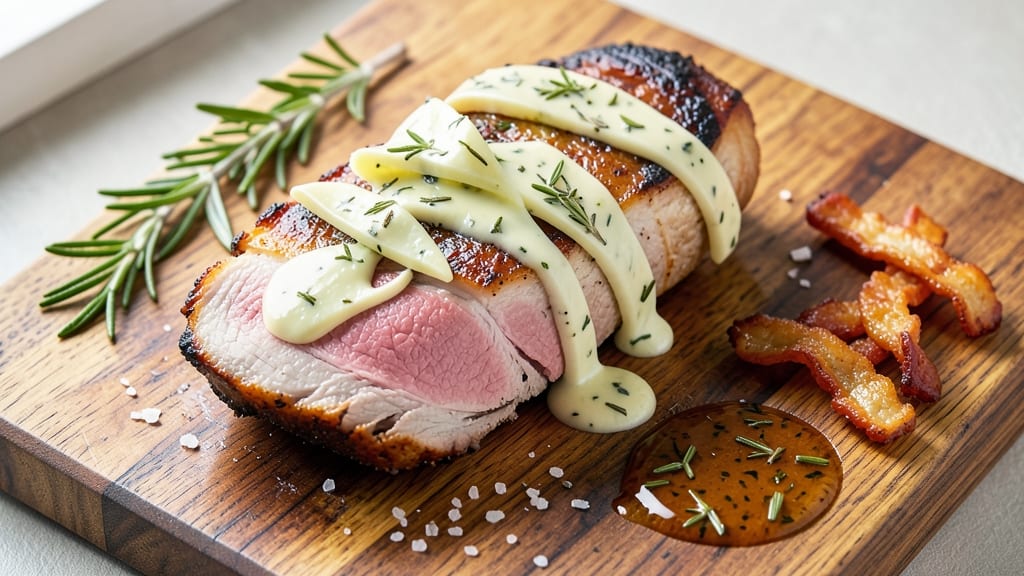
Paula Deen's pork loin recipe delivers that perfect Southern balance of tender meat, crisp edges, and rich herb butter flavor we all crave. Growing up in Georgia, I learned pork should be juicy inside with a golden crust—this method delivers exactly that.
The secret lies in a vinegar-kissed crust that locks in moisture while creating that signature crisp, paired with her signature herb butter that melts into every bite.
This recipe transforms a simple pork loin into a showstopper with minimal effort. You'll start with a dry brine that ensures maximum tenderness, then roast the loin until it reaches 145°F—just enough to keep it juicy while developing that perfect crust.
The herb butter, infused with fresh rosemary and thyme, becomes the star, basting the meat as it cooks and adding layers of aromatic flavor.
What you'll end up with is a restaurant-quality roast that's moist, flavorful, and impressive enough for company. The vinegar-kissed crust adds a subtle tang that cuts through the richness, while the herb butter creates a velvety finish.
This is the kind of pork dish that makes every meal feel special—whether it's a Sunday dinner or a weeknight treat.
Serve with roasted potatoes and a simple green salad for a complete Southern meal. The leftovers reheat beautifully, making this a perfect recipe for meal prep or entertaining. Let's get started on creating your own Paula Deen-style masterpiece.
Ingredients for paula deen pork loin
Southern flavors start here—just 12 ingredients for Paula Deen's legendary herb butter roast.
| Ingredient | Amount | Notes |
|---|---|---|
| Pork Loin 🐖 | 1 ½ lb | Bone-in, center-cut preferred |
| Unsalted Butter 🧈 | ½ cup | Cold, cubed for herb butter |
| Fresh Rosemary 🌿 | ¼ cup | Chopped, stems removed |
| Fresh Thyme 🌿 | ⅛ cup | Leaves only, finely chopped |
| White Wine Vinegar 🍶 | 2 tbsp | For vinegar-kissed crust |
| Kosher Salt 🧂 | 2 tbsp | Plus extra for brining |
| Black Peppercorns 🌶️ | 1 tsp | Freshly cracked |
| Garlic Cloves 🧄 | 4 cloves | Minced for herb butter |
| Olive Oil 🫒 | 2 tbsp | For roasting pan |
| Honey 🍯 | 1 tbsp | Optional for glaze |
| Dijon Mustard 🍯 | 1 tsp | For herb butter richness |
| Fresh Parsley 🌿 | 0.1 cup | Chopped, for garnish |
The pork loin makes all the difference. Bone-in, center-cut stays juicier than boneless—look for even thickness so it cooks uniformly. Costco or Whole Foods carry the best cuts, but your local butcher will have fresh options too. If the loin is still wrapped in plastic, pat it dry first—this helps the crust form better. The vinegar-kissed crust is non-negotiable for that signature crisp, so grab white wine vinegar (apple cider works in a pinch). Fresh herbs are worth the splurge here—Trader Joe's sells pre-chopped rosemary and thyme if you're short on time, but fresh always tastes better.
No fresh rosemary? Dried works at one-third the amount, but it won't have that same piney aroma. Short on butter? Substitute ghee for a richer flavor, though it'll be less creamy. The Dijon mustard adds depth—if you don't have it, yellow mustard at half the amount works. For the vinegar crust, don't skimp on the salt—this is what creates that magical crisp. The honey glaze is optional but adds a beautiful finish (and makes it look restaurant-worthy). If you're serving company, add it in the last 5 minutes of cooking. Want extra crisp? Brush the pork with olive oil before applying the vinegar mix—it helps the crust set faster.
This roast reheats like a dream—just warm it in the oven with a splash of broth or water. Keeps 3-4 days in the fridge, 3 months frozen. For make-ahead magic, prep the herb butter and vinegar mix the night before and store separately in the fridge. The pork itself can be brined up to 24 hours ahead—just pat it dry before roasting. Leftovers? Slice thin and serve on sandwiches or toss with roasted potatoes for a hearty breakfast. Trust me, you'll want to make this twice in one week.
Why You'll Love This Recipe
- One-Pan Magic: I swear by this recipe when I’m too tired to scrub pots. The pork sizzles in its own juices while the butter and herbs baste it—no flipping, no fuss, just golden perfection on a single sheet.
- Herb-Butter Bliss: That rosemary-thyme butter? It’s the star. The vinegar cuts through the richness, and when you slice into tender pork with a crispy crust, it’s like biting into a restaurant dish—except you made it.
- Weeknight to Weekend: Make it for Tuesday dinner, then reheat the leftovers for a picnic or potluck. The flavors only get better the next day, and it’s way more impressive than takeout.
- Budget-Friendly Luxury: Pork loin stretches further than you’d think, and a little butter goes a long way. Honestly, this feels like a splurge, but the grocery bill won’t lie—it’s a steal for a dish this good.
Step-by-step instructions for Paula Deen's Southern-style herb butter roast
Here's how to create Paula Deen's legendary pork loin with that perfect herb butter crust and vinegar-kissed crisp.
Create the Herb Butter Compound
In a food processor, combine the 0.5 cup unsalted butter with the 0.25 cup chopped fresh rosemary, 0.125 cup chopped fresh thyme, 4 minced garlic cloves, 1 tsp dijon mustard, and 1 tbsp honey. Pulse until the mixture becomes a smooth, vibrant green paste with visible herb flecks. This herb butter is the secret to that rich, aromatic crust Paula Deen makes famous.
Transfer the herb butter to a small bowl and cover with plastic wrap, pressing it directly against the surface to prevent a skin from forming. Refrigerate while you prepare the pork. The cold butter will help create that beautiful crust when it melts during roasting. This step takes about 10 minutes of active time but is absolutely worth the effort for that restaurant-quality flavor.
Prepare the Pork for Roasting
Remove the 1.5 lb pork loin from the refrigerator and let it sit at room temperature for 30 minutes. This ensures even cooking throughout. Pat the pork dry completely with paper towels—moisture is the enemy of crispy skin. In a small bowl, mix 2 tbsp kosher salt and 1 tsp freshly cracked black peppercorns. Rub this mixture all over the pork, including inside the cavity if your cut has one.
Place the pork in a roasting pan and brush it lightly with 2 tbsp olive oil. This helps the herb butter adhere and creates a better sear. Now comes the Paula Deen touch: brush the pork with 2 tbsp white wine vinegar. This creates that signature vinegar-kissed crust that adds a subtle tangy brightness to the rich herb butter flavors. The vinegar will cook off during roasting, leaving behind that beautiful crispy exterior.
Roast to Golden Perfection
Preheat your oven to 425°F with the rack positioned in the middle. Spread the chilled herb butter evenly over the pork, pressing it gently into the surface so it sticks. Place the roasting pan in the preheated oven and roast for 20 minutes. This initial high-heat phase is crucial for developing that beautiful crust.
After 20 minutes, reduce the oven temperature to 325°F. Continue roasting for an additional 30-35 minutes, or until the internal temperature reaches 145°F when measured with a meat thermometer. The pork is done when it's juicy and tender, with a crispy golden-brown crust that's irresistible. For best results, don't cut into the pork immediately—it needs time to rest.
Rest and Garnish Like a Pro
Transfer the pork to a cutting board and tent loosely with aluminum foil. Let it rest for 15 minutes before slicing. This resting period allows the juices to redistribute throughout the meat, ensuring each slice is moist and flavorful. While the pork rests, heat a small skillet over medium heat and add any accumulated pan juices. Simmer for 2-3 minutes to create a quick pan sauce if desired.
Slice the pork loin into ½-inch thick medallions against the grain. Garnish each serving with 0.1 cup chopped fresh parsley for a pop of color and freshness. Serve immediately with the pan sauce drizzled over the top and your favorite sides. The combination of the herb butter crust, vinegar-kissed crisp, and tender meat makes this Southern-style pork loin truly unforgettable.
Pro Tips For Making Paula Deen Pork Loin
- Sear First, Then Simmer: Paula Deen’s pork loin shines when it gets that deep caramelized crust first—don’t skip the initial sear in butter. After browning on high heat for 3-4 minutes per side, lower the heat and add the wine vinegar immediately to deglaze. That’s where the magic flavor happens, not just in the slow cook.
- Trim the Fat, Keep the Crust: Pork loin can be lean, and that’s fine—but if yours has a fat cap, trim it close but leave a thin layer. That fat renders into the pan, basting the meat as it cooks, and it’s what makes the finished dish look (and taste) restaurant-worthy. I learned this after serving dry slices to my in-laws.
- Don’t Overcrowd the Pan: Paula Deen’s recipe relies on butter basting, and if you pile the pork loin in, the butter just pools instead of coating. Work in batches if needed—even if it means two rounds in the pan. The difference in moisture and flavor is night and day, and you’ll wonder why you ever rushed it.
- Vinegar Last, Not First: Adding white wine vinegar too early turns your pan into a soupy mess. Wait until the pork’s seared and the butter’s foaming, then pour it in and scrape up those browned bits. That’s the umami bomb that balances the richness—skip this step, and you’re left with bland butter-flavored pork.
Common mistakes when making perfect results
Overcooking the Pork
I’ve seen this happen more times than I can count—pork loin that’s dry and tough instead of juicy and tender. The key is stopping at 145°F internal temperature—any higher, and you’ll push it into the 160°F range, where it starts to dry out.
I use a ThermoWorks Smoke thermometer because it’s accurate and fast, so I never guess. If you don’t have one, test with a meat thermometer inserted into the thickest part of the loin. 🌡️
Pro tip: Remove the pork from the oven when it hits 140°F—it’ll carry over to 145°F while resting. I learned this the hard way during my first BBQ competition in Atlanta, where overcooked pork cost me a ribbon. Trust the thermometer, not the clock.
Skipping the Resting Time
This is a rookie mistake that ruins an otherwise perfect roast. Cutting into the pork immediately after removing it from the oven sends all those precious juices pooling out onto your cutting board instead of staying inside the meat.
I’ve seen home cooks slice into pork that’s still sizzling hot, and it’s a crime against flavor. Always let it rest for at least 15 minutes—I usually rest mine for 20 minutes to be safe. 💡
While you’re waiting, use that time to make a quick pan sauce with the drippings. Just deglaze the roasting pan with a splash of water or broth and simmer for 2-3 minutes. It’s an easy way to elevate your dish without extra effort.
Using Wet Herbs
Fresh herbs are non-negotiable for this recipe, but using them straight from the fridge—especially if they’re damp—can make your herb butter watery and weak. Always pat your rosemary and thyme dry with a paper towel before chopping.
I keep a small bowl of paper towels handy while I prep, and I wipe down the stems before adding them to the food processor. Wet herbs also cause the butter to separate, ruining the texture of that beautiful crust. 🌿
If you’re short on time, buy pre-chopped herbs from Trader Joe’s or Whole Foods, but make sure they’re dry. A quick spin in a salad spinner works too—just give them a good shake afterward to remove excess moisture.
Not Brining the Pork
The dry brine—salting the pork ahead of time—is what makes this recipe shine. Skipping it means your pork will be bland and lack that deep, developed flavor. I like to brine my pork for at least 4 hours, but up to 24 hours ahead of time works even better.
The salt penetrates the meat, breaking down proteins and keeping it juicy. 🧂
For this recipe, I use 2 tbsp kosher salt rubbed all over the pork. If you’re in a hurry, a quick 30-minute dry brine before roasting still helps, but the longer you brine, the better the results. I’ve even brined pork overnight in the fridge for competitions—it’s a game-changer.
Uneven Cooking
Pork loin can cook unevenly if the thickness varies or if you don’t let it come to room temperature before roasting. Always choose a center-cut, bone-in loin for even cooking—it’s worth the extra cost.
Before seasoning, let the pork sit at room temperature for 30 minutes. This ensures it cooks uniformly and develops that perfect crust. 🐖
If your pork loin has uneven thickness, trim it to an even size before seasoning. I use a sharp boning knife for this, and I always trim any excess fat—it can render unevenly and create steam pockets, leading to soggy spots in the crust.
Nutrition facts
Frequently asked questions
What makes Paula Deen's herb butter so special?
The magic lies in the blend of fresh rosemary, thyme, garlic, Dijon mustard, and honey melted into cold butter. The cold butter creates a beautiful crust when it melts during roasting, while the herbs infuse deep aromatic flavors. Paula Deen's version is richer than basic herb butter because of the mustard and honey, which add complexity and balance the vinegar-kissed crust.
Can I use boneless pork loin instead of bone-in?
Yes, but bone-in pork stays juicier and more flavorful. If using boneless, trim any excess fat and consider adding a small piece of bacon wrapped around it for extra moisture and flavor. Bone-in cuts also help the herb butter adhere better during roasting. For best results, choose a center-cut loin with even thickness.
How do I adjust the recipe for a larger crowd?
For every additional 1 lb of pork loin, double all ingredients proportionally. Use a larger roasting pan and increase oven time by 10-15 minutes, checking with a meat thermometer. Scale up the herb butter by 0.25 cup per pound, and the vinegar by 1 tbsp. The key is maintaining the same ratio of seasonings to meat for consistent flavor.
What's the best way to reheat leftovers?
Slice the pork into ½-inch medallions and reheat in a skillet over medium-low heat with a splash of broth or water for 3-5 minutes. Never microwave—it makes the meat rubbery. For whole leftovers, wrap tightly in foil and bake at 300°F for 20-25 minutes until warmed through. The herb butter will melt beautifully, keeping the pork tender.
Can I make this recipe ahead of time?
Prep the herb butter and vinegar mix up to 2 days ahead and store separately in the fridge. The pork can be dry-brined for up to 24 hours ahead of roasting. For a complete make-ahead meal, cook the pork and refrigerate it (covered) for up to 3 days. Reheat according to the leftovers method above. The flavors actually improve overnight!