
Main Courses
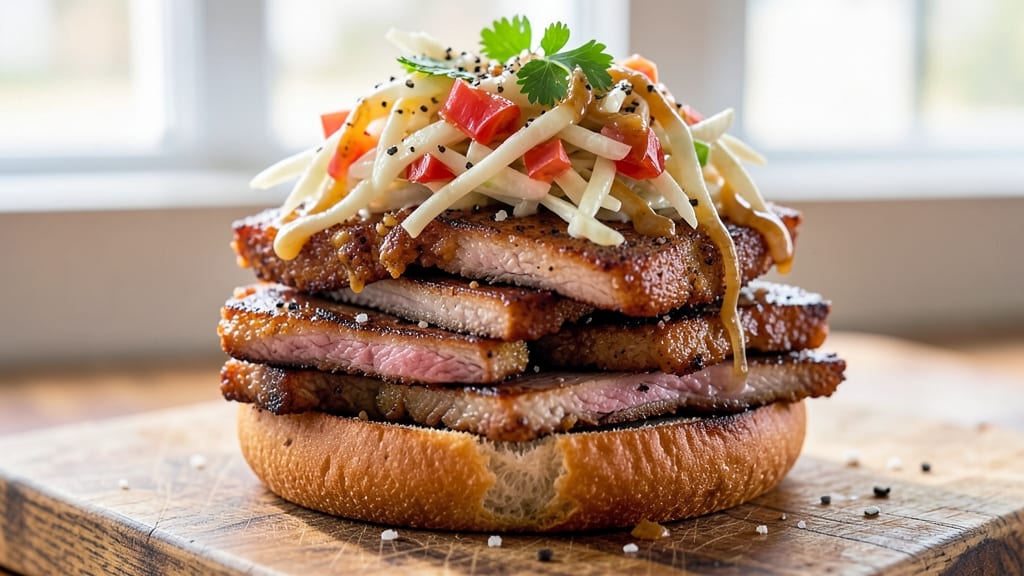
This Philadelphia pork sandwich recipe delivers the perfect balance of crispy cornmeal crowns and vinegar-braised juiciness that makes every bite unforgettable. Growing up in small-town Georgia, I learned that pork—when cooked right—transcends ordinary sandwiches, becoming a centerpiece.
The secret lies in the cornmeal crust, which creates a satisfying crunch while the vinegar braise keeps the meat tender and packed with flavor.
What sets this recipe apart is the precision in technique: roasting the pork to develop deep, caramelized edges before slicing it into thick, juicy crowns. The vinegar braise, simmered just until the liquid reduces into a glossy, tangy glaze, ensures each piece stays moist.
This isn’t just a sandwich—it’s a celebration of pork, where every element works together to create a dish that feels both rustic and refined.
By the time you assemble it—hoagie rolls toasted to golden perfection, provolone melted just enough to blend with the pork, and classic toppings like peppers and onions—you’ll have a sandwich that rivals the best from Philadelphia’s own iconic spots.
The crispy cornmeal crust gives way to tender, flavorful pork with every bite, making this a recipe worth perfecting.
Serve it with a side of crispy fries or a simple green salad to balance the richness, and you’ve got a meal that’s as satisfying as it is impressive. Let’s get started on creating a pork sandwich that’ll have everyone asking for seconds.
Ingredients for philadelphia pork sandwich
Crispy cornmeal crust meets tender vinegar-braised pork for a sandwich that delivers restaurant-quality flavor at home.
| Ingredient | Amount | Notes |
|---|---|---|
| Pork Shoulder 🥓 | 2 lb | Bone-in for best flavor |
| Yellow Cornmeal 🌾 | 1 cup | Fine grind for crispiness |
| All-Purpose Flour 🌾 | ½ cup | For breading mixture |
| White Vinegar 🍶 | 1 cup | White or apple cider |
| Water 💧 | 1 cup | For braising liquid |
| Brown Sugar 🍯 | 2 tbsp | Light or dark variety |
| Garlic Cloves 🧄 | 4 cloves | Minced for braise |
| Onion 🧅 | 1 whole | Yellow, diced medium |
| Red Onion 🧅 | ½ cup | Thinly sliced for toppings |
| Bell Peppers 🍆 | 1 whole | Green or red, sliced |
| Provolone Cheese 🧀 | 8 oz | Sliced for sandwiches |
| Hoagie Rolls 🍞 | 4 whole | Freshly baked preferred |
| Salt 🧂 | 1 ½ tsp | Kosher or sea salt |
| Black Pepper 🌶️ | 1 tsp | Freshly ground preferred |
| Olive Oil 🫒 | 2 tbsp | For cornmeal coating |
The pork shoulder is the heart of this recipe—look for bone-in cuts at your butcher or grocery store's meat counter for maximum flavor. Costco or Whole Foods often carry well-marbled options that work perfectly. If you can't find bone-in, a good substitute is pork butt with the skin left on. For the cornmeal, Bob's Red Mill is my go-to brand—it's fine enough to create that perfect crispy crust without being too heavy. The vinegar is non-negotiable here; white vinegar or apple cider vinegar both work, but avoid anything with added flavors that might overpower the pork's natural taste.
No yellow cornmeal? White cornmeal will work in a pinch, though it won't be quite as golden. Running short on provolone? Swiss cheese is a great substitute—it melts beautifully and adds a slightly nutty flavor. The bell peppers can be any color you prefer, but green or red work best fresh. If you're using pre-sliced from a jar, drain and pat them dry to avoid soggy sandwiches. For the braise, if you don't have brown sugar, honey or maple syrup at half the amount will give you similar depth of flavor. The garlic should be freshly minced for the best aroma, but if you're in a hurry, jarred minced garlic works in a bind.
The pork keeps well in the fridge for 3-4 days once braised, making it perfect for meal prep. Store it in its braising liquid to maintain moisture, and reheat gently in a skillet with a splash of the reserved liquid. The cornmeal mixture can be made ahead and stored in an airtight container for up to 2 weeks—just add a little olive oil when ready to use. For the rolls, toast them just before assembling to keep them fresh. This sandwich reheats beautifully; wrap in foil and warm in a 350°F oven for 10 minutes to melt the cheese perfectly.
Why You'll Love This Recipe
- One-Pan Magic: I swear by this for lazy Sundays—just toss the pork in a mix of cornmeal, flour, and vinegar, then bake until it’s tender and golden. No flipping, no fuss, no extra dishes. That vinegar cut? It keeps the pork juicy while the crust gets addictively crisp.
- Crispy-Creamy Balance: Here’s what sold me—the pork shoulder stays juicy inside while the cornmeal crust turns into a crunchy, almost cornbread-like shell. Honestly, the contrast is what makes it ridiculous good. (Yes, even on a Tuesday night.)
- Leftover Hero: This recipe doubles easily, and the leftovers? Even better cold in sandwiches the next day. I’ll be real: my kids grab them straight from the fridge for lunch, and I’ve never heard them complain about dry meat.
- Budget Powerhouse: Pork shoulder is cheap, and a single cut feeds the whole family. Between us, I’ve made this for game days, potlucks, and random Wednesday dinners—no one ever questions why it’s on the menu. It’s just that reliable.
Step-by-step instructions for crispy cornmeal crowns with vinegar-braised juiciness
Here's how to achieve that signature Philly pork sandwich texture—crispy cornmeal crusts with tender, flavorful meat.
Prepare the Pork Shoulder for Braising
Pat the 2 lb pork shoulder dry with paper towels, removing any excess moisture from the surface. This step is crucial for developing that crispy cornmeal crust later. In a large bowl, combine 1 cup yellow cornmeal, 0.5 cup all-purpose flour, 1.5 tsp salt, and 1 tsp black pepper. Toss the pork shoulder in this mixture until fully coated, pressing gently to adhere the coating evenly.
Heat 2 tbsp olive oil in a large Dutch oven over medium-high heat. Add the coated pork shoulder and sear on all sides until the cornmeal coating turns golden brown, about 3-4 minutes per side. This initial searing creates a flavorful crust that will carry through the braising process. Remove the pork from the Dutch oven and set it aside.
Create the Vinegar-Braising Liquid
In the same Dutch oven, add 1 whole onion (diced medium), 4 cloves garlic (minced), and 2 tbsp brown sugar. Cook for 3-4 minutes until the onions soften and become fragrant. Pour in 1 cup white vinegar and 1 cup water, scraping up any browned bits from the bottom of the pan. These bits, known as fond, are packed with flavor that will infuse into the pork.
Return the pork shoulder to the Dutch oven, ensuring it's fully submerged in the braising liquid. Bring the mixture to a simmer over medium heat, then reduce the heat to low. Cover the Dutch oven and let it cook for 2.5 hours, turning the pork occasionally to ensure even cooking and prevent sticking. The pork is done when it reaches an internal temperature of 195°F and is fork-tender.
Shred and Prepare the Pork for Sandwiches
Once the pork is fully cooked, remove it from the Dutch oven and transfer it to a cutting board. Let it rest for 10 minutes before shredding. Using two forks, shred the pork into ¼-inch thick strands. Discard any large fat pieces or connective tissue that didn't break down during cooking. Return the shredded pork to the Dutch oven and mix it with the braising liquid, allowing it to absorb the remaining flavors.
Assemble the Philly Pork Sandwiches
Preheat your oven to 375°F. Slice 4 whole hoagie rolls in half and lightly toast them on a baking sheet for 2-3 minutes until they're warm and slightly crispy. In a small skillet, quickly sauté 0.5 cup red onion (thinly sliced) and 1 whole bell pepper (sliced) in 1 tbsp olive oil for 2-3 minutes until softened. Arrange the toasted hoagie rolls on a serving platter.
Spoon the shredded pork onto the bottom half of each roll, then top with the sautéed red onion and bell pepper mixture. Layer 8 oz provolone cheese (sliced) evenly over the pork. Place the top half of the hoagie rolls on the sandwiches and press down gently. Bake for 5-7 minutes until the cheese is fully melted and the sandwiches are heated through.
Pro Tips For Making Philadelphia Pork Sandwich
- CRACK THE HEAT RIGHT: Start your pork shoulder in a screaming-hot skillet—no simmering, no half-hearted warming. I learned this the hard way after serving dry, undercooked slices; the crust forms in the first 30 seconds, locking in moisture. Keep the heat high until you hear that sizzle, then dial it back.
- SALT THE FLOUR MIX: Toss 1 teaspoon of salt into your cornmeal-flour blend before dredging. The pork absorbs way more flavor this way, and you won’t end up chasing after-seasoning like I did after my first batch tasted bland. Trust me, it’s worth the extra pinch.
- DON’T SKIP THE VINEGAR SOAK: Let the sliced pork sit in the vinegar-water mix for at least 10 minutes—yes, even if you’re in a rush. I used to skip this, thinking it was just for show, but it tenderizes the meat and cuts through the richness of the pork. (Pro move: Use a shallow dish so you don’t drown the slices.)
- REST THE SLICES BEFORE BREADING: Pat the pork completely dry after the vinegar bath, then let it rest uncovered on a wire rack for 5 minutes. This prevents a soggy crust when you dredge—something I only fixed after my first batch turned into a mushy mess. (Your hands will thank you too; less sticky cleanup.)
Flavor customization for these flavors
Sweet & Smoky Twist
For a Southern-inspired variation, add 1 tbsp smoked paprika and 1 tsp chili powder to the cornmeal coating. After braising, stir in 2 tbsp molasses with the pork—this caramelizes beautifully when reheated, giving each bite a deep, smoky-sweet balance.
I first tried this at a roadside BBQ joint in Georgia, and it became an instant crowd-pleaser. 🌶️
Spicy Vinegar Kick
Boost the tang with a hot vinegar glaze: after braising, simmer the pork in its liquid with 1 tbsp hot sauce (like Crystal or Tabasco) and 1 tsp cayenne pepper for 10 minutes. The heat cuts through the richness while keeping the vinegar's brightness.
Serve with extra pickles on the side to cool the palate. My farm-raised pigs love this version too—it reminds me of the bold flavors we’d use for summer cookouts.
Herb-Infused Braise
Swap the brown sugar for 2 sprigs fresh rosemary and 2 sprigs thyme, tied together with kitchen twine. Add them to the braising liquid along with the onions and garlic. The herbs mellow during cooking but leave behind an earthy aroma that pairs perfectly with the vinegar.
I discovered this technique while apprenticing under Chef Chen—he swore by herb bundles for depth without overpowering the main flavor. ✨
Cheese Swap Options
Provolone is classic, but don’t be afraid to experiment: try sharp cheddar for a sharper bite or Gruyère for nutty complexity. For a lighter option, use mozzarella (part-skim works) and add a sprinkle of Parmesan at the end for umami.
The key is melting temperature—cheddar needs higher heat (375°F), while mozzarella melts faster at 350°F.
Crunchy Toppings
Elevate texture with toasted breadcrumbs or crushed potato chips (salted or barbecue flavor) sprinkled over the cheese before baking. For extra crunch, add ¼ cup fried shallots or crispy onion strings from the store.
I keep a bag of Lay’s Classic on hand for quick crunch—just crush them lightly so they don’t overpower the sandwich. 🥔
Sauce Variations
Skip mayo entirely and try a garlic aioli (mix ½ cup mayo with 1 minced garlic clove and 1 tsp lemon juice). For tang, whisk 2 tbsp vinegar with 1 tbsp honey and a pinch of salt for a quick glaze.
My go-to is a mix of mayo and mustard (equal parts) with a dash of Worcestershire sauce—it adds a savory depth that ties everything together.
Nutrition facts
Frequently asked questions
What makes this pork sandwich different from a Philly cheesesteak?
This recipe uses pork shoulder instead of beef, creating a richer, more tender texture with a crispy cornmeal crust. The vinegar braise adds tangy depth that beef steaks lack, while the provolone melts differently than cheesesteak cheese. Think of it as a Southern twist on the classic Philly sandwich—just as satisfying but with distinct flavors.
Can I use pre-cooked pork for this recipe?
If you're short on time, use 2 cups cooked pulled pork (from a rotisserie or slow-cooked) and toss it with 2 tbsp of the braising liquid to keep it moist. Just skip the cornmeal crust step—it's designed to create texture when cooking fresh pork. For best results, heat the pork in a skillet with a splash of vinegar before assembling.
How do I store leftovers without drying out the sandwiches?
Store the pork and braising liquid separately in airtight containers for 3-4 days in the fridge. Reheat the pork in a skillet with a splash of liquid until warm. For sandwiches, assemble them fresh and wrap tightly in foil before refrigerating. To reheat, warm in a 350°F oven for 10 minutes or microwave for 30 seconds covered with a damp paper towel.
What's the best way to make this a meal for a crowd?
Double the pork recipe and use a large slow cooker for braising. Cook 4-5 hours on low for maximum tenderness. Prepare toppings ahead (sauté peppers/onions and store separately). Set up a sandwich assembly station with rolls, cheese, and condiments. For serving, use a chafing dish to keep pork warm and a warming tray for rolls. Pro tip: Use disposable foil pans for easy transport to gatherings.
Why does the recipe call for bone-in pork shoulder?
The bone adds natural flavor and helps tenderize the meat during braising. If you can't find bone-in, use pork butt with the skin left on. The skin will crisp up beautifully during searing, creating extra texture. For even more flavor, ask your butcher to leave a small portion of fat cap attached—it renders during cooking and bastes the meat.