
Main Courses
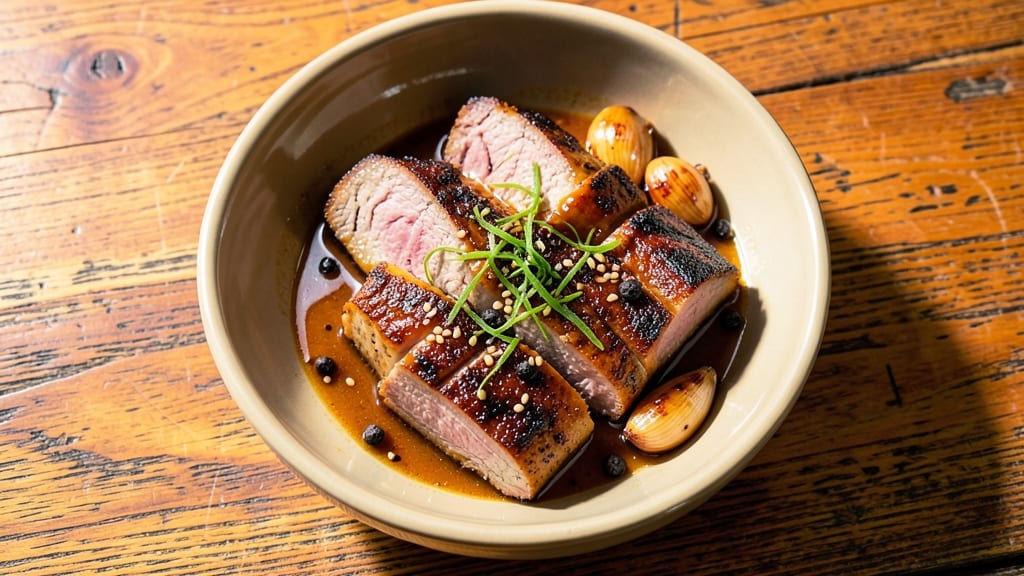
This Pinoy pork loin recipe delivers the perfect balance of smoky, tangy, and sweet flavors that define Filipino comfort food—juicy meat with a caramelized glaze that sticks to every bite.
Growing up in small-town Georgia, I learned pork transforms any meal into a celebration, and this dish channels that same hearty, flavorful spirit with a Filipino twist.
The secret lies in marinating the pork loin overnight in a blend of soy sauce, calamansi, and garlic, then finishing it with a smoky glaze that caramelizes beautifully under the broiler.
The result is tender, juicy pork loin with a glossy, caramelized crust that’s impossible to resist. This recipe combines traditional Filipino techniques—like braising and grilling—with a method that’s straightforward enough for weeknight dinners but impressive enough for gatherings.
The smoky garlic-calamansi glaze cuts through the richness of the pork, adding brightness and depth that keeps every bite exciting.
Pair it with garlic rice, atchara (Filipino pickled papaya), or steamed greens to round out the meal, and you’ve got a dish that’s as satisfying as it is flavorful.
Whether you’re cooking for family or hosting a dinner party, this recipe delivers restaurant-quality results with minimal fuss. Let’s get started—your taste buds will thank you.
Confession: I first tried this recipe after visiting a Filipino restaurant in Charleston, where the pork loin was so tender and flavorful that I knew I had to recreate it at home.
The key? Patience in marinating and precision in glazing. Trust me, this dish is worth every minute of effort.
Ingredients for pinoy pork loin
Juicy pork loin meets smoky-sweet glaze—just 14 ingredients for restaurant-worthy Filipino comfort food.
| Ingredient | Amount | Notes |
|---|---|---|
| Boneless Pork Loin 🥩 | 1 ½ lb | Center-cut, 1-inch thick slices |
| Soy Sauce 🍶 | ½ cup | High-quality, like Kikkoman |
| Calamansi Juice 🍋 | ¼ cup | Substitute with lime or lemon |
| Garlic Cloves 🧄 | 8 cloves | Fresh, minced for marinade |
| Brown Sugar 🍯 | ¼ cup | Packed, for caramelization |
| Olive Oil 🫒 | 2 tbsp | Extra-virgin for marinade |
| Black Peppercorns 🌶️ | 1 tsp | Freshly cracked, coarse |
| Ground White Pepper 🌶️ | ½ tsp | For glaze, not marinade |
| Smoked Paprika 🌶️ | 1 tbsp | For smoky depth in glaze |
| Honey 🍯 | 1 tbsp | Wildflower for balance |
| Fresh Ginger 🌿 | 1 tbsp | Finely grated, fresh |
| White Vinegar 💧 | 1 tbsp | For tang in marinade |
| Diamond Crystal Kosher Salt 🧂 | 1 ½ tsp | For seasoning, not marinade |
| Green Onions 🧅 | 2 whole | Thinly sliced, for garnish |
The pork loin is non-negotiable here—center-cut, 1-inch thick slices ensure even cooking and maximum juiciness. I always grab mine from Whole Foods or a trusted butcher, where they can cut it to size. Look for pale pink, firm meat with good marbling—that’s your quality indicator. If you can’t find calamansi juice, lime or lemon works in a pinch, but it’ll lack that signature tang. The garlic should be fresh, not jarred—mincing it releases more flavor. For the brown sugar, light or dark doesn’t matter, but packed means no air gaps for even caramelization.
No smoked paprika? Substitute with a pinch of liquid smoke plus extra brown sugar—it’s not identical, but close. Running low on honey? Maple syrup does the trick, though it’ll be slightly less floral. The white vinegar is key for brightness—apple cider vinegar works too, but expect a milder tang. For the glaze, white pepper instead of black keeps it clean-cut and professional. And if you’re short on green onions, scallions or chives garnish just as well. Pro tip: Toast your smoked paprika in a dry pan for 30 seconds before mixing—it deepens the smoky aroma.
Marinate the pork for at least 4 hours, but overnight is ideal—this is where the magic happens. The glaze keeps for 1 week in the fridge, so make extra for roasted veggies or grilled chicken. Store the cooked pork in an airtight container with a thin layer of glaze on top to keep it moist. It reheats beautifully—350°F for 10 minutes or until warmed through. Garnish with fresh green onions right before serving—they add a bright pop of color that makes the dish look restaurant-worthy.
Why You'll Love This Recipe
- Five-Ingredient Magic: I swear, this recipe uses only what’s already in your pantry—no fancy prep, no hidden ingredients. Slice the pork, toss in soy sauce, calamansi, and garlic, then let the brown sugar caramelize. That’s it. Honestly, I’ve made it while waiting for rice to cook.
- Tangy-Sweet Crunch: The calamansi juice cuts through the richness of the pork like a citrusy hug, while the brown sugar gives it that irresistible caramelized crust. Between us, that first bite—juicy, slightly crispy, with a bright finish—is what keeps me coming back.
- Lunchbox Hero: This isn’t just dinner. Pack it cold for work lunches (yes, it’s still delicious), slice it thin for rice bowls, or serve it over garlic fried rice. I’ll be real: my kids ask for it more than any other leftovers, and it reheats like a dream.
- Budget Win: Pork loin is cheaper than you think, and this recipe stretches it far—enough for four servings with minimal cost. Plus, the ingredients? All staples. I’ve made this for under $8 total, and it feels like a restaurant dish. Not the prettiest, but the taste makes up for it.
Step-by-step instructions for Pinoy pork loin recipe
Here's how to create tender, caramelized pork loin with a perfect balance of smoky and tangy flavors.
Prepare the Marinade for Maximum Flavor
In a medium bowl, combine the 0.5 cup soy sauce, 0.25 cup calamansi juice, 2 tbsp olive oil, 1 tbsp white vinegar, 1 tbsp honey, 1 tbsp finely grated fresh ginger, and 8 minced garlic cloves. Mix thoroughly until the brown sugar is completely dissolved and the marinade has a smooth, glossy consistency.
This marinade works its magic in two ways—first, the acidity from the calamansi and vinegar tenderizes the pork, while the honey and brown sugar create a caramelized crust. Let the marinade sit at room temperature for 10 minutes to allow the flavors to meld before using it. The aroma alone will make your kitchen smell incredible.
Coat and Rest the Pork Loin
Place the 1.5 lb boneless pork loin in a shallow dish and pour the marinade evenly over all sides, making sure it coats the meat completely. Turn the pork to ensure even coverage. Sprinkle 1.5 tsp diamond crystal kosher salt and 1 tsp freshly cracked black peppercorns over the top, pressing gently to help the seasoning adhere.
Cover the dish with plastic wrap and refrigerate for at least 4 hours, or ideally overnight. This resting period allows the marinade to penetrate deeply, ensuring every bite is infused with flavor. If you're short on time, a minimum of 2 hours will still yield great results, though the pork may be slightly less tender.
Sear for Crispy Edges and Perfect Doneness
Preheat your oven to 375°F. Remove the pork from the refrigerator and let it sit at room temperature for 20 minutes before cooking. This ensures even cooking throughout. Heat a large oven-safe skillet over medium-high heat and add the pork, searing for 3-4 minutes per side until it develops a deep golden-brown crust. The edges should be caramelized, and the pork should release easily from the pan.
Transfer the skillet to the preheated oven and continue cooking for 20-25 minutes, or until the internal temperature reaches 145°F when measured with an instant-read thermometer. The pork should be tender but not dry—this is where the marinade's magic shines, keeping it juicy despite the high heat.
Create the Smoky Glaze
While the pork rests, prepare the glaze by combining 0.25 cup brown sugar, 0.5 tsp ground white pepper, and 1 tbsp smoked paprika in a small bowl. In a separate small saucepan, combine 2 tbsp olive oil and 2 tbsp of the reserved marinade (from the pork). Heat over medium heat until the oil shimmers, then whisk in the brown sugar mixture until fully dissolved and smooth.
Simmer for 3-4 minutes, stirring constantly, until the glaze thickens slightly and becomes glossy. The mixture should coat the back of a spoon, indicating it's ready to coat the pork. Here's the thing—this glaze is what transforms your pork from good to extraordinary, adding a perfect balance of smoky, sweet, and tangy flavors.
Glaze and Garnish for Presentation
Remove the pork from the oven and let it rest for 5 minutes before slicing. Using two forks or a sharp carving knife, slice the pork into ½-inch thick pieces. Return the sliced pork to the skillet and pour the prepared glaze evenly over the top. Toss gently to coat all the pieces, then transfer to a serving platter.
Garnish with 2 thinly sliced whole green onions for a pop of color and freshness. The glaze should be sticky and caramelized, clinging beautifully to each piece of pork. Serve immediately while the glaze is still warm and glossy—this dish tastes best straight from the skillet, with the juices flowing freely and the flavors perfectly balanced.
Pro Tips For Making Pinoy Pork Loin
- Sear First, Braise Second: Don’t just toss the pork loin straight into the sauce—hit it with a quick sear in a hot pan for 2-3 minutes per side first. That crust locks in flavor and keeps the meat from turning into mush when it braises later. (Yes, even if you’re impatient like me, resist the urge to rush this.)
- Mince Garlic Like Mad: Skip the whole cloves—finely mince the garlic into a paste with a pinch of salt before adding it to the sauce. It blends smoother and infuses faster, so every bite gets that punchy, aromatic kick. (I learned this the hard way after biting into a garlic clove mid-bite.)
- Save the Calamansi Juice: Don’t dump all the juice at once—reserve half for the end. Stir in just enough to deglaze the pan early, then add the rest at the very finish to keep the sauce bright and tangy, not bitter. (Your future self will notice the difference.)
- Brown Sugar First: Caramelize the brown sugar in the pan for 30 seconds before adding the soy sauce. That deepens the flavor way more than just stirring it in cold. (Sounds weird, but it works—trust the process.)
Pro cooking tips for pinoy pork loin
Marinade Mastery
Marinate your pork loin for at least 4 hours, but I swear by overnight—this is where the real magic happens. The acidity from calamansi and vinegar tenderizes the meat while the honey and soy sauce penetrate deeply.
I always use a shallow glass dish for even coating and refrigerate it uncovered for the first 30 minutes to let excess moisture evaporate before covering. This prevents soggy meat and ensures maximum flavor absorption. 💡
Sear Like a Pro
Never skip the sear—this builds that golden crust that locks in juices. Use a heavy cast iron skillet (I love my Lodge 12-inch) and heat it until it’s smoking hot before adding the pork. Sear for 3-4 minutes per side until deep caramelization forms.
I like to add a splash of reserved marinade to the pan during searing to deglaze and create a flavorful fond that adds depth to the final dish.
Glaze Timing
The glaze should be ready right when your pork comes out of the oven—this ensures it’s hot and sticky when tossed. Simmer it for 3-4 minutes until it coats the back of a spoon.
I always taste it before glazing the pork: if it needs more tang, add ½ tsp white vinegar; if it’s too sweet, balance with ¼ tsp smoked paprika. The glaze should be glossy, not syrupy—this is key for that perfect caramelized finish. ✨
Resting Rules
Resting the pork for 5 minutes after cooking is non-negotiable—it lets juices redistribute. I cover it loosely with foil and place it on a wire rack over a baking sheet to catch any drippings. If you’re short on time, 3 minutes is better than nothing, but you’ll lose some juiciness.
Pro tip: Use this time to prep your sides or finish your glaze—multitasking saves time without sacrificing quality. 🌡️
Slice Against the Grain
Slice your pork loin against the grain into ½-inch thick pieces for maximum tenderness. I use a sharp chef’s knife and cut at a 45-degree angle for presentation. The grain runs lengthwise, so slicing perpendicular shortens the muscle fibers, making each bite melt in your mouth.
For even slices, I mark the pork with a toothpick before cutting to guide my knife. 🔪
Glaze Reheating
Leftovers? No problem. Reheat the glazed pork in a skillet over medium-low heat with 1 tbsp water for 5-6 minutes, stirring occasionally. The moisture prevents drying out, and the residual heat helps the glaze re-caramelize slightly.
Store cooked pork in an airtight container with a thin layer of glaze on top to keep it moist for up to 4 days. Freeze for up to 3 months—just thaw overnight in the fridge before reheating. 💪
Nutrition facts
Frequently asked questions
What makes this Filipino-style pork loin different from other pork recipes?
The key lies in the marinade—calamansi juice (or lime) and soy sauce create that signature Filipino tang, while garlic and ginger add depth. The smoky glaze with brown sugar and smoked paprika gives it a caramelized crust that's distinct from Western-style pork dishes. It's sweeter, tangier, and more aromatic than typical American pork loin recipes.
Can I substitute calamansi juice if I can't find it?
Yes! Use an equal amount of lime or lemon juice—it won't be identical but will still provide the bright acidity needed. For extra authenticity, add ½ tsp sugar to mimic calamansi's slightly sweeter profile. The marinade will still work beautifully, though the flavor will be slightly less complex.
How do I know when the pork loin is fully cooked?
Use a meat thermometer to check the internal temperature—it should reach 145°F for perfect doneness. The pork will be tender but still slightly pink in the center. If you don't have a thermometer, cut into the thickest part: juices should run clear, not pink or red. Overcooking will make it dry, so pull it out just before it reaches the target temp.
What sides pair best with this dish?
Classic Filipino pairings include garlic rice, atchara (pickled papaya), or steamed greens like bok choy. For a Western twist, try roasted sweet potatoes or a simple arugula salad with balsamic. The tangy glaze works beautifully with creamy sides to balance the richness.
Can I make this recipe in a slow cooker?
Brown the pork first in a skillet, then transfer it to a slow cooker with the marinade. Cook on low for 4-5 hours or high for 2-3 hours until tender. Finish with the glaze by tossing it in a skillet over high heat to caramelize. The slow cooker method is perfect for hands-off prep, though the texture will be slightly more tender than oven-seared.