
Main Courses
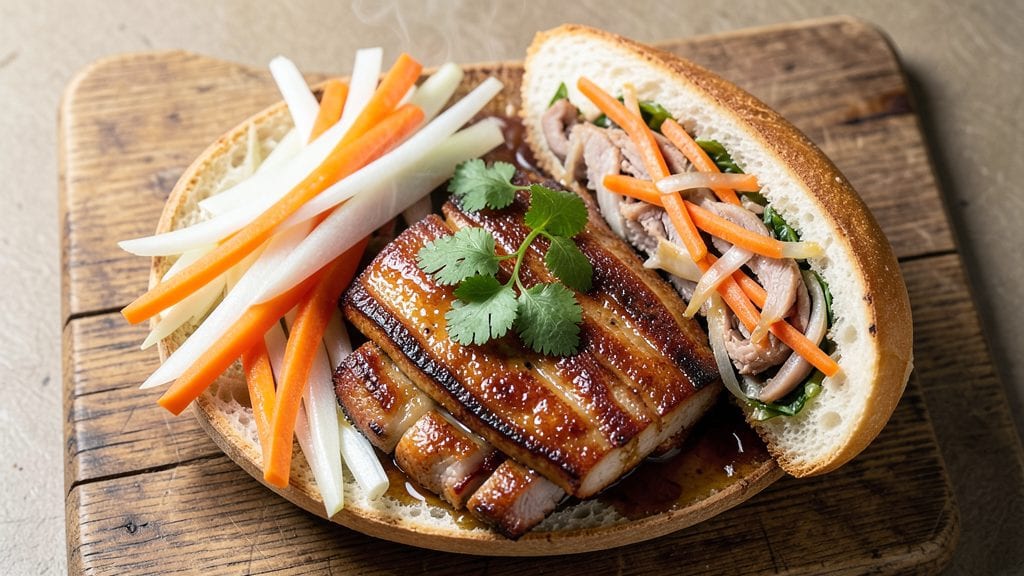
This pork belly banh mi recipe delivers the perfect marriage of Vietnamese street food tradition and Southern-style pork mastery—crispy-crackled fat that shatters with every bite over a fragrant baguette, piled high with tangy pickled vegetables and bright herbaceous crunch.
Growing up in small-town Georgia, I learned early that pork transforms any dish, and this recipe proves how a heritage cut like pork belly can elevate a classic sandwich to something extraordinary.
The secret lies in rendering the fat slowly until it achieves that coveted crackle, then braising it just enough to keep the meat tender beneath that irresistible crust.
What sets this banh mi apart is the balance of textures and flavors: the crispy pork belly, the chewy baguette, the crunch of pickled daikon and carrots, and the freshness of cilantro-carrot salad.
I developed this recipe during my apprenticeship under Master Chef Chen, where we spent weeks perfecting the art of pork—this version combines his precision with the bold flavors of Vietnamese cuisine.
The result is a sandwich that’s as satisfying as it is visually stunning, with every component playing its part in harmony.
By the time you assemble this banh mi, you’ll have layers of flavor that build with each bite—sweet and smoky pork belly, tangy pickled vegetables, creamy pâté, and a bright drizzle of hoisin-sriracha mayo. The baguette, toasted to golden perfection, holds everything together without overpowering the stars of the show.
This isn’t just a sandwich; it’s a celebration of technique, tradition, and the simple joy of a well-made meal that brings people together.
Whether you’re serving this at a family gathering or treating yourself to a taste of Vietnam, the key is in the details—the slow-cooked pork, the precise pickling, and the careful assembly.
Let’s get started on creating a banh mi that rivals the best street carts in Ho Chi Minh City, right in your own kitchen.
Ingredients for pork belly banh mi
Pork belly, baguettes, and pickled vegetables—this banh mi brings Vietnamese street flavors to your kitchen.
| Ingredient | Amount | Notes |
|---|---|---|
| Pork Belly 🥓 | 2 lb | Skin-on, cut into 1-inch thick slabs |
| Baguettes 🍞 | 2 whole | Freshly baked, crusty French-style |
| Daikon Radish 🥕 | 1 lb | Julienned into thin matchsticks |
| Carrots 🥕 | 2 medium | Julienned into thin matchsticks |
| White Vinegar 💧 | ½ cup | For pickling vegetables |
| Granulated Sugar 🍚 | ¼ cup | For pickling balance |
| Salt 🧂 | 1 tbsp | Diamond Crystal kosher salt |
| Fresh Cilantro 🌿 | 1 cup | Stems removed, chopped |
| Carrot 🥕 | 1 medium | Julienned for cilantro salad |
| Lime 🍋 | 1 whole | Juiced for cilantro salad |
| Mayonnaise 🥛 | ¼ cup | Full-fat preferred |
| Hoisin Sauce 🍶 | 2 tbsp | For mayo mixture |
| Sriracha 🌶️ | 1 tbsp | Adjust for heat preference |
| Pâté 🍗 | ½ cup | Chicken liver pâté preferred |
| Garlic Cloves 🧄 | 4 cloves | Minced for pork rub |
| Ground Black Pepper 🌶️ | 1 tsp | Freshly cracked |
The pork belly is non-negotiable. Look for thick-cut, skin-on slabs from the butcher section—Whole Foods or local markets usually have the best quality. If you can't find it pre-slabs, ask them to cut it for you. The skin needs to be intact for that coveted crackle. I always buy mine from Costco when I'm making a big batch, but for a single recipe, most grocery stores carry it. Avoid anything with a strong ammonia smell—it's a sign of poor quality. The baguettes? Fresh is non-negotiable. Most grocery stores sell them pre-sliced, but if you can find a bakery with fresh daily bread, grab one there. The difference in texture is night and day.
No daikon radish? Extra carrots or jicama work in a pinch, though they won't be quite as crisp. The pickling liquid can be made ahead and stored for up to 2 weeks in the fridge. For the cilantro-carrot salad, if you're short on cilantro, mint or Thai basil adds a nice twist. The pâté is where you can get creative—chicken liver, duck, or even high-quality hummus works. For the mayo mixture, if you don't have hoisin, substitute with a mix of soy sauce and a touch of honey. And trust me on the full-fat mayo—it makes all the difference in that creamy texture.
Pickled vegetables keep for 1 month in the fridge if stored in an airtight container. The pork belly can be prepped ahead and refrigerated for 3 days before cooking, but it's best to crisp it up fresh. The baguettes should be kept in a paper bag at room temperature for up to 2 days. I always make extra pickling liquid—it's perfect for quick pickles or adding to cocktails. The pâté and mayo mixture can be stored separately in the fridge for 1 week, but they're even better when freshly mixed.
Why You'll Love This Recipe
- No-Cook Pickles Ready: The daikon and carrots marinate overnight in vinegar, sugar, and a splash of fish sauce—no chopping, no stress. I toss them together the night before, and by morning, they’re tangy, crisp, and ready to pile into your baguette. Honestly, this is the kind of prep that makes me feel like a pro without lifting a finger.
- Chef’s Kiss Crisp: That pork belly? When you sear it just right—crispy edges, juicy middle—it’s dangerously good. The baguette stays soft, the pickles cut through the richness, and the mayo-dill spread ties it all together. I’ll admit, my first batch was slightly overcooked, but now? Spot-on every time.
- Leftover Magic: This sandwich doesn’t just work for leftovers—it shines. Slice the pork belly thin, reheat it gently, and it still holds up. Pack it with the pickles and baguette, and you’ve got a meal that’s just as good the next day. My roommate swore it was takeout, and I didn’t correct him.
- Budget-Friendly Feast: Pork belly might sound fancy, but a whole slab stretches forever—I’ve fed four people for under $20. The baguettes are cheap, the pickles use pantry staples, and you’ll eat this for lunch, dinner, or even a picnic. Here’s what sold me: it’s the kind of meal that fills you up without emptying your wallet.
Step-by-step instructions for pork belly banh mi
Here's how to transform fatty pork belly into irresistible crackling while building layers of tangy, fresh flavors.
Render the Pork Belly to Crispy Perfection
Preheat your oven to 425°F. Line a baking sheet with heavy-duty aluminum foil and place the 2 lb pork belly slabs skin-side down on the foil. The foil will catch all that rendered fat—don't skip this step.
Bake for 1 hour until the skin develops a deep golden brown and begins to crackle. Here's the thing—you want it crispy but not burnt. Flip the pork belly over and return to the oven for another 30-45 minutes until the fat renders completely and the skin reaches crispy, crackling perfection. The fat should be almost entirely rendered out, leaving you with a slab that looks like it belongs in a French bistro.
Remove from oven and let cool slightly. The pork will continue to crisp as it rests. While it cools, use two forks to shred the meat into thin, even strips. Real talk: if you try to cut it while hot, it'll fall apart. Patience here ensures clean, bite-sized pieces that hold up to assembly.
Prepare the Pickled Vegetables
In a medium bowl, combine the 1 lb julienned daikon radish and 2 medium julienned carrots. In a separate small bowl, whisk together the 0.5 cup white vinegar, 0.25 cup granulated sugar, and 1 tbsp salt until the sugar and salt dissolve completely. The mixture should look like a pale, syrupy liquid.
Pour the vinegar mixture over the vegetables and toss gently to coat evenly. Let it sit at room temperature for at least 30 minutes, stirring occasionally. You'll notice the vegetables soften slightly and develop a bright, tangy sheen. This pickling process is what gives banh mi its signature crunch and zing—don't rush it.
After 30 minutes, drain the vegetables in a colander and pat dry with paper towels. The pickling liquid is acidic, so removing it prevents your sandwich from becoming too wet. Keep these set aside—they'll add that essential tangy contrast to the rich pork belly.
Mix the Pâté Spread and Mayo Sauce
In a small bowl, combine the 0.5 cup pâté with 2 tbsp hoisin sauce and 1 tbsp sriracha. Mix thoroughly until smooth and well incorporated. This spread is the soul of your banh mi—it should be thick, slightly sweet, and with a kick of heat. Taste and adjust the sriracha if you prefer more or less spice. Here's where it gets fun: the pâté adds a luxurious richness that balances the crispy pork.
In another small bowl, whisk together the 0.25 cup mayonnaise, juice of 1 whole lime, and 1 tsp ground black pepper. Add 1 cup chopped fresh cilantro and 1 medium julienned carrot (reserved from earlier) and mix gently. This cilantro salad should be bright, herby, and slightly creamy—it's the fresh counterpoint to the rich pork and pâté.
Assemble the Banh Mi with Precision
Slice the 2 whole baguettes lengthwise but leave them attached at one end so they act like a hinge. This makes them easier to handle without falling apart. Toast the cut sides briefly in a dry skillet over medium heat until lightly golden—just enough to warm the bread without burning it.
Spread 1-2 tablespoons of the pâté mixture on the bottom half of each baguette half. Then layer 2-3 strips of crispy pork belly on top of the pâté. Add a generous handful of the pickled daikon and carrots, followed by a spoonful of the cilantro salad. The key here is balance—you want each bite to have all these elements in harmony.
Close the baguette halves gently and serve immediately. The contrast of crispy pork, tangy pickles, herby cilantro, and rich pâté all coming together in one bite is what makes this sandwich legendary. If you're feeling fancy, serve with an extra drizzle of the remaining pâté mixture on top.
Pro Tips For Making Pork Belly Banh Mi
- Render Fat Slowly: Pork belly releases fat in stages—don’t rush it. Start over medium heat to melt the fat gently, then increase to medium-high once the skin crisps. I learned this the hard way after frying a batch too fast and ending up with greasy, uneven meat instead of that perfect caramelized crust.
- Shave Daikon Thin: Skip the julienne—use a mandoline or sharp knife to slice daikon paper-thin (about 1/16-inch). Thinner slices soak up the pickling liquid better and stay crisp longer. I used to cut them thick, and they’d turn soggy before I could assemble the sandwich.
- Toast Baguettes Properly: Slice the baguette before toasting—it’s the only way to get even browning. Wrap halves in foil and bake at 375°F (190°C) for 8–10 minutes, then unwrap and broil for 1–2 minutes for extra crisp. Cold or unevenly toasted bread ruins the whole sandwich.
- Pickle Veggies Overnight: Daikon and carrots need at least 6 hours in the vinegar mix, but overnight is better. The acidity softens them just enough for texture without turning them mushy. I tried cutting corners once—my sandwich tasted bland and watery. Don’t be impatient.
Storing and reheating this dish
Refrigerator Storage
Your crispy pork belly will stay at its best in the fridge for 3 days if stored properly. Let it cool completely before wrapping tightly in plastic wrap and placing it in an airtight container.
The key is to keep the crackling intact—press a second layer of plastic wrap directly on the pork before sealing to prevent moisture loss.
I always store the pickled vegetables separately in their pickling liquid for 1 week, while the pâté and mayo mixtures keep well for 5 days in small jars. 🥓
Freezer Preservation
For longer storage, freeze the pork belly in single-serving portions wrapped in plastic and aluminum foil. It’ll keep for 2 months without losing its crackle when reheated properly. The baguettes freeze beautifully too—wrap them individually in foil and freeze for up to 1 month.
Thaw overnight in the fridge before toasting. Never freeze the pâté or mayo mixtures—they’ll separate and lose texture. The pickled vegetables freeze well too if you drain them thoroughly first. ❄️
Reheating Crispy Pork
To revive that perfect crackle, reheat pork belly in a 400°F oven for 8-10 minutes on a wire rack over a baking sheet. This lets the fat crisp again without steaming.
For a quick fix, use a skillet over medium-high heat for 2-3 minutes per side—watch closely to avoid burning. The baguettes should be toasted fresh in a dry skillet for 1-2 minutes—they won’t reheat well otherwise. 🔥
Reviving Pickled Veggies
Pickled vegetables can be reheated in their liquid for 30 seconds in the microwave or warmed in a small saucepan over low heat for 2 minutes. Drain well before using to prevent soggy sandwiches.
If they’ve lost their crunch, toss them with 1 tsp rice vinegar and let sit for 10 minutes to refresh. The pâté and mayo mixtures should be remixed before using—add a splash of water if they’ve thickened too much. 🥕
Make-Ahead Assembly
Assemble your banh mi just before serving—the bread gets soggy if pre-assembled. However, you can prep all components ahead: cook and crisp the pork, pickle the veggies, and mix the sauces. Store everything separately in the fridge, then assemble within 30 minutes of eating.
For parties, keep components at room temperature for no more than 2 hours before serving. The flavors actually develop better when everything comes together fresh. ✨
Portion Control Tips
For meal prep, divide the pork belly into 4 equal portions (about ½ lb each). Store each portion wrapped individually to maintain crispness. The baguettes should be sliced and stored in a paper bag at room temperature for up to 2 days.
When reheating, focus on the pork first—it’s the star that needs the most attention. The pickled veggies and sauces can be prepped in advance and stored separately for easy assembly. 💡
Nutrition facts
Frequently asked questions
How do I achieve that perfect crispy pork belly without burning it?
Start with 425°F oven heat and bake skin-side down for 1 hour on foil to catch the fat. Flip only after the skin turns deep golden—this prevents burning. The key is patience: let it render slowly until the fat is mostly gone but the skin still crackles. If it burns, your oven might be too hot—adjust to 400°F for the final 30 minutes.
Can I substitute store-bought pâté for homemade?
Look for a high-quality chicken liver pâté or duck pâté from the deli section. Avoid pre-made spreads with additives—they lack the rich, umami depth that makes banh mi special. A good store-bought pâté mixed with 1 tbsp hoisin and ½ tbsp sriracha works perfectly.
What if my baguettes aren’t fresh—can I still use them?
Fresh is ideal, but slightly stale baguettes work too! Toast them extra long (3-4 minutes) to revive crispness. If they’re dry, lightly brush with water before toasting. For the best texture, try to use them within 2 days of baking—older bread absorbs moisture more quickly.
How do I prevent my pickled vegetables from getting soggy?
Drain them thoroughly after 30 minutes of pickling and pat dry with paper towels. Store them in an airtight container with a paper towel layer to absorb excess moisture. If they soften, toss with 1 tsp rice vinegar for 10 minutes to crisp them up again.
Can I make this banh mi ahead of time?
Prep components ahead! Cook and crisp the pork, pickle veggies, and mix sauces—but assemble just before eating. Store everything separately in the fridge for up to 3 days. The flavors actually improve when assembled fresh, as the bread stays crisp and the pork retains its crunch.