
Main Courses
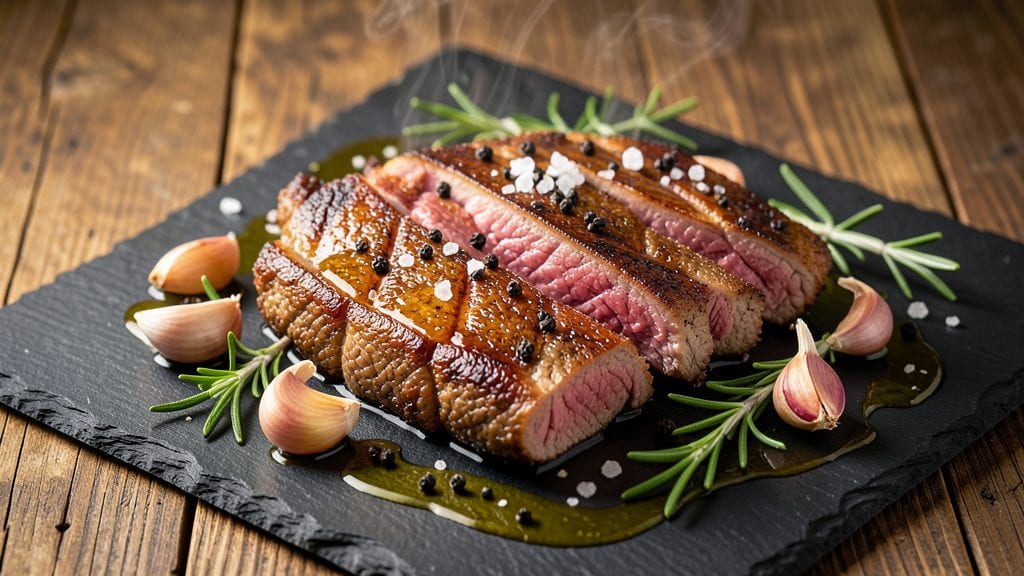
The secret to perfect pork belly steaks lies in achieving that perfect balance of crispy-crackling edges and juicy pink centers—something I’ve spent years perfecting. This recipe transforms what many consider a tough cut into a restaurant-quality dish with minimal effort.
The key is precise timing and technique, ensuring every bite delivers both texture and tenderness.
Starting with properly trimmed and scored pork belly steaks, we focus on searing them to develop that coveted crust before finishing in the oven. This method guarantees a sear so crispy it almost sounds like it’s sizzling when sliced, while the interior remains moist and flavorful.
The internal temperature of 145°F ensures safety without sacrificing that coveted medium-rare finish.
What you’ll end up with is a dish that’s both visually stunning and deeply satisfying—golden-brown outside, tender and juicy inside. The crispy exterior gives way to succulent meat that practically melts in your mouth, making every cut a revelation. This isn’t just dinner; it’s an experience.
Pair these steaks with a simple pan sauce or roasted vegetables to elevate the meal further. The bold flavors of the pork belly shine when balanced with complementary sides, creating a complete, well-rounded dish. Let’s get started on achieving that perfect bite.
Ingredients for pork belly steaks
Eight essential ingredients transform tough pork belly into restaurant-quality steaks with crispy-crackling edges and juicy pink centers.
| Ingredient | Amount | Notes |
|---|---|---|
| Pork Belly Steaks 🥓 | 1 ½ lb | Thick-cut, scored on fat cap |
| Kosher Salt 🧂 | 1 ½ tbsp | Diamond Crystal preferred |
| Black Peppercorns 🌶️ | 1 ½ tsp | Freshly cracked, coarse grind |
| Extra-Virgin Olive Oil 🫒 | 2 tbsp | High smoke point, fruity |
| Fresh Rosemary 🌿 | ¼ cup | Finely chopped, stems removed |
| Garlic Cloves 🧄 | 4 cloves | Minced, fresh preferred |
| Brown Sugar 🍯 | 1 tbsp | Light or dark, packed |
| Cornstarch 🌾 | 1 tbsp | For crispy coating |
| Butter 🧈 | ½ cup | Unsalted, cold for basting |
| Apple Cider Vinegar 🍏 | 1 tbsp | For pan sauce |
| Heavy Cream 🥛 | ¼ cup | Full-fat for richness |
| Fresh Thyme 🌿 | ¼ cup | Leaves only, chopped |
| Honey 🍯 | 1 tsp | For glaze, optional |
Pork belly is the star, so pick thick-cut steaks with a fat cap at least 1/4-inch thick. Costco and Whole Foods carry the best cuts—look for vibrant pink color and good marbling. Score the fat cap in a crosshatch pattern (about 1/4-inch deep) for maximum crispiness. If you can't find thick-cut, ask the butcher to slice a whole belly into 1-inch steaks. Freshness matters: use within 3 days of purchase for best texture. I always buy extra and freeze half for future cravings—it keeps for 6 months in vacuum-sealed bags.
No fresh rosemary? Dried works at half the amount, but fresh is worth it here. Subbing brown sugar? Maple syrup at 1:1 ratio adds depth. For the pan sauce, if you're short on apple cider vinegar, white wine or lemon juice works too. Heavy cream can be swapped for half-and-half for a lighter version, but full-fat gives that luxurious finish. The cornstarch is non-negotiable for crispiness—don't skip it. And if you're feeling fancy, add a splash of soy sauce to the pan sauce for umami punch.
Prep ahead to save time: score the steaks and season them up to 12 hours ahead—they'll keep in the fridge uncovered on a wire rack. The day of cooking, let them sit at room temp for 1 hour before searing. Leftovers reheat beautifully: wrap in foil and bake at 300°F for 10 minutes. The crispy bits are edible gold—save them for garnish or mix into the pan sauce. Store steaks in an airtight container for 3 days, or freeze for 3 months. Trust me, they taste even better the next day.
Why You'll Love This Recipe
- Five-Ingredient Magic: I swear by this recipe because it’s that simple—just salt, pepper, oil, rosemary, and pork belly. No fancy marinades, no last-minute shopping runs. Honestly, the hardest part is waiting for the steaks to sear.
- Crispy-Creamy Obsession: That first bite—crispy edges giving way to tender, fatty richness? It’s the kind of texture combo that makes you close your eyes. The rosemary adds a piney brightness that cuts through the pork’s decadence.
- Weeknight to Weekend: Between us, these steaks work everywhere. Toss them on the grill for a summer BBQ, pan-sear them for a lazy Tuesday, or even serve them cold in sandwiches the next day. My kids beg for them at school lunches—yes, really.
- Leftovers? Even Better: The best part? The flavor deepens overnight. Reheat slices in a skillet with a splash of olive oil, and suddenly you’ve got gourmet breakfast or a quick lunch. I’ve turned a single pan of steaks into three meals without breaking a sweat.
Step-by-step instructions for pork belly steaks
Here's the method that guarantees crispy-crackling edges and juicy pink centers every time.
Prepare the Pork Belly Steaks for Maximum Crisp
Begin by scoring the fat cap of the 1.5 lb pork belly steaks in a diamond pattern using a sharp knife, cutting down to about ¼-inch deep. This creates channels for the fat to render out and develop that incredible crackling crust. Pat the steaks dry with paper towels—this step is non-negotiable for crispy skin. The drier the surface, the better the browning.
In a small bowl, mix together the 1.5 tbsp kosher salt, 1.5 tsp freshly cracked black peppercorns, 0.25 cup finely chopped fresh rosemary, and 1 tbsp brown sugar. This dry rub will create the perfect balance of salty, sweet, and herby flavors while helping to form that coveted crust. Rub the mixture all over the steaks, pressing it firmly into the meat and fat cap. Let them sit at room temperature for 30 minutes while you prepare the cooking station.
Create the Crispy Cornstarch Coating
In a shallow dish, combine the 1 tbsp cornstarch with the 2 tbsp extra-virgin olive oil. This mixture will create an ultra-crispy barrier that locks in juices while forming that perfect crackling exterior. Working with one steak at a time, press each steak into the cornstarch mixture, coating all sides thoroughly. You'll see the cornstarch cling to the meat—this is what will give you that restaurant-quality texture.
Place the coated steaks on a wire rack set over a baking sheet. This setup allows hot air to circulate underneath, ensuring even cooking and maximum crispiness. Let them rest for 5 minutes while you preheat your oven to 425°F. The cornstarch needs time to fully adhere before hitting the hot oven.
Roast to Perfect Doneness
Carefully transfer the steaks to the preheated oven and roast for 20-25 minutes, until the internal temperature reaches 140°F and the edges are deep golden brown with crackling. I use an instant-read thermometer to check the temperature—this ensures juicy centers while the exterior gets crispy. The steaks should still have a slight resistance when you press them gently with tongs.
Here's the thing—don't walk away during this step. The steaks can go from perfect to overdone in minutes. When you see the edges develop that beautiful crackling crust and the fat begins to render dramatically, that's your signal to move to the next step. Remove the steaks from the oven and let them rest on a cutting board for 10 minutes. This resting period allows the juices to redistribute, ensuring each bite is moist and flavorful.
Prepare the Rich Pan Sauce
While the steaks rest, place the baking sheet with the rendered fat and juices over medium heat. Add the 0.5 cup cold butter and let it melt, stirring occasionally to combine with the rendered pork fat. When the mixture begins to foam, add the 4 minced garlic cloves and cook for 30 seconds until fragrant—don't let them brown or they'll turn bitter.
Pour in the 1 tbsp apple cider vinegar and scrape up any browned bits from the bottom of the pan with a wooden spoon. These flavorful bits contain all the concentrated pork essence. Add the 0.25 cup heavy cream and 0.25 cup chopped fresh thyme, then simmer for 2-3 minutes until the sauce thickens slightly. Taste and adjust seasoning with additional salt if needed. The sauce should be rich, slightly tangy, and perfectly balanced.
Glaze and Serve with Style
Return the steaks to the baking sheet and spoon the pan sauce evenly over the top. Brush with the 1 tsp honey and return to the oven for 2-3 minutes to caramelize the glaze. Watch closely—the honey burns quickly, so you want just enough time for it to form a glossy, sticky coating without turning dark.
Slice the steaks against the grain into ½-inch thick slices and serve immediately with the rich pan sauce drizzled generously on top. Each bite should deliver that perfect combination of crispy, crackling edges and tender, juicy pink centers. The sauce adds another layer of flavor that ties everything together beautifully. Enjoy your incredible pork belly steaks while they're still warm!
Pro Tips For Making Pork Belly Steaks
- CRISP THE SKIN FIRST: Pork belly steaks are fatty, not lean—so hit them with a dry, screaming-hot pan for 3-4 minutes skin-side down before flipping. I used to flip too soon, and the meat ended up greasy instead of golden. Let that skin render until it’s deep amber, then add the rosemary and olive oil to baste.
- SALT THE BELLY 24 HOURS EARLY: Skip the last-minute salting—this isn’t chicken. Generously coat the steaks in kosher salt (about 1.5 teaspoons per pound) and refrigerate uncovered for a full day. The salt breaks down the collagen, making the meat tender, and the surface dries just enough for that perfect crust. (Yes, it’ll look weirdly sticky at first—that’s normal.)
- DON’T OVERCROWD THE PAN: Pork belly steaks need space to sizzle, not steam. Cook them in batches if your pan is small—even if it means an extra minute of waiting. I learned this after a batch turned out soggy because I crammed them in. A single layer in enough oil (about 2 tablespoons) guarantees that crust.
- USE ROSEMARY SPARINGLY: Fresh rosemary is potent—way more than dried. Tear off 2-3 sprigs, bruise them with your fingers, then let them sit in the hot oil for 30 seconds before adding the steaks. This infuses flavor without overpowering the pork’s richness. (I once burned a batch because I dumped in a whole sprig—don’t be like me.)
Wine and beer pairings for this pork belly steaks
Bold Red Wine Pairings
The rich, fatty depth of pork belly steaks calls for a wine that can stand up to its intensity while complementing its savory notes. I reach for a bold Cabernet Sauvignon from Napa Valley—like Ramey Cabernet—with its dark fruit flavors and firm tannins that cut through the fat.
The oak aging adds a layer of vanilla and spice that harmonizes beautifully with the pork's natural richness. 🍷
Fruity Rosé for Balance
If you prefer something lighter but still elegant, a dry Provence rosé is my go-to. Look for Whispering Angel or Château d'Esclans—their crisp acidity and red berry notes cleanse the palate between bites.
The subtle floral aromas also pair wonderfully with the rosemary and honey glaze. This wine keeps the dish from feeling too heavy while still enhancing its flavors.
Craft Beer Complements
A smoky Belgian dark ale like Allagash Dark or a barrel-aged stout such as Guinness Foreign Extra adds a bold, complex contrast. The roasted malt notes in these beers mirror the caramelized edges of the pork, while the slight bitterness balances the sweetness of the brown sugar rub.
For a fruity twist, try a Belgian lambic with its wild yeast tang—it’s an unexpected but fantastic match. 🍺
Off-Dry Riesling for Sweet-Heat
If you love the honey glaze on your steaks, an off-dry Riesling from Germany or Alsace—like Dr. Loosen Blue Slate—is perfect. The wine’s slight sweetness mirrors the honey, while its bright acidity cuts through the richness.
The stone fruit notes also echo the caramelized edges, making every bite feel intentional. It’s a pairing that feels both luxurious and effortless. 🍇
Spiced Red Wine Fusion
For adventurous palates, a Port-style ruby wine or a Spanish Rioja Reserva with aged oak adds layers of spice and complexity. The dark cherry and plum flavors in Graham’s 10-Year-Old or Muga Reserva complement the pork’s natural umami, while the wine’s natural sweetness balances the savory notes.
It’s a pairing that turns a simple meal into a full sensory experience. 🔥
Nutrition facts
Frequently asked questions
Why does pork belly need scoring before cooking?
Scoring the fat cap creates channels that allow the fat to render out more evenly, creating that coveted crispy crackling while keeping the meat juicy. Without scoring, the fat might pool and create uneven browning. This technique also helps the cornstarch coating adhere better for maximum crispiness.
How do I know when the pork belly steaks are done?
Use an instant-read thermometer to check the internal temperature—145°F for medium-rare is ideal. The edges should be deep golden brown with crackling, while the center remains pink and juicy. Avoid overcooking, as pork belly can dry out quickly once removed from heat.
Can I make pork belly steaks ahead of time?
Yes! Score and season the steaks up to 12 hours ahead and store them uncovered in the fridge. Let them sit at room temperature for 1 hour before cooking. The cornstarch coating should be applied just before roasting for best results. Resting before cooking ensures even cooking.
What’s the best way to slice pork belly steaks?
Slice against the grain into ½-inch thick pieces for maximum tenderness. This shortens the muscle fibers, making each bite easier to chew. Use a sharp knife and slice through the fat and meat together for the best texture.
Why is resting the steaks important?
Resting for 10 minutes after roasting lets the juices redistribute, preventing them from spilling out when sliced. This ensures every bite is moist and flavorful, not just the surface. Skip this step, and you’ll lose all that delicious juiciness!