
Sauces & Condiments
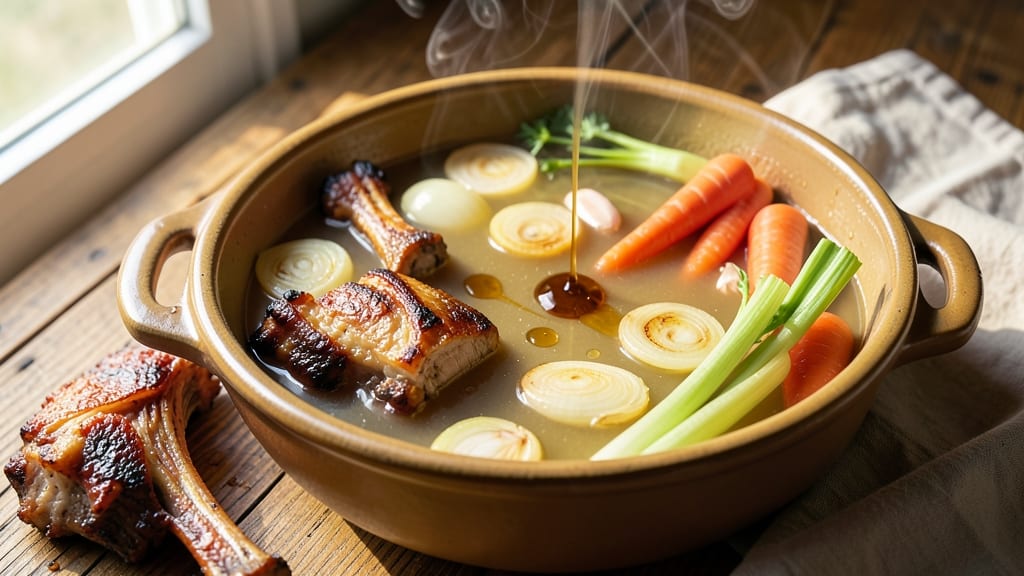
Mastering a pork bouillon recipe transforms simple meals into restaurant-quality dishes with deep, smoky umami flavor. Growing up in Georgia, I learned that homemade bouillon elevates everything from soups to braises—this version delivers rich, concentrated flavor in just 45 minutes using pork bones, vegetables, and aromatic spices.
The key lies in proper simmering and straining techniques that extract maximum depth without bitterness.
This bouillon recipe builds complexity through layered flavors: caramelized pork bones provide richness, while celery, carrots, and onions create the classic "holy trinity" base. A splash of apple cider vinegar brightens the broth, and a bay leaf adds subtle earthiness.
Unlike store-bought versions, homemade bouillon develops a velvety texture and robust flavor that freezes perfectly for future use. The process is straightforward but requires patience—every step contributes to that professional-quality result.
By the time you strain and reduce this bouillon, you'll have a golden, aromatic liquid that forms the foundation for countless dishes. Use it to enrich soups, braise meats, or deglaze pans for sauces. The concentrated flavor means you'll need just a splash to transform ordinary recipes into something extraordinary.
Whether you're preparing a hearty stew or a delicate sauce, this bouillon delivers the depth that separates home cooking from professional results.
Store your bouillon in airtight containers in the refrigerator for up to 5 days or freeze for up to 3 months. The versatility of this recipe makes it a kitchen essential—once you experience the difference between homemade and store-bought, you'll never go back.
Let's create this flavorful foundation that will elevate your cooking for weeks to come.
Ingredients for pork bouillon
Pork bones, aromatic vegetables, and a splash of vinegar create restaurant-quality bouillon in under an hour.
| Ingredient | Amount | Notes |
|---|---|---|
| Pork Bones 🍖 | 2 lb | Raw, cut into 2-inch pieces |
| Yellow Onion 🧅 | 1 whole | Peeled, roughly chopped |
| Carrots 🥕 | 3 medium | Peeled, roughly chopped |
| Celery Stalks 🌿 | 3 whole | Trimmed, roughly chopped |
| Garlic Cloves 🧄 | 6 cloves | Peeled, smashed |
| Apple Cider Vinegar 🍎 | ¼ cup | For brightness |
| Bay Leaves 🍃 | 2 whole | Fresh preferred |
| Black Peppercorns 🌶️ | 1 tsp | Crushed |
| Salt 🧂 | 1 ½ tsp | Kosher preferred |
| Fresh Thyme 🌿 | ½ ounce | Or 1 tsp dried |
| Water 💧 | 8 cups | Filtered preferred |
The pork bones are the heart of this bouillon. Look for marrow-filled bones from the butcher section—they yield the richest flavor. I always ask for knuckle or neck bones at Whole Foods or Costco, but any pork bones work in a pinch. Don't rinse them first—just pat dry. The vegetables form the classic 'holy trinity' base: onions, carrots, and celery. Fresh, organic produce from the farmers market adds depth, but store-bought works too. The apple cider vinegar brightens the broth—Bragg is my go-to, but any good-quality brand will do.
No fresh thyme? Dried thyme at one-third the amount works perfectly. Short on bay leaves? Two sprigs of fresh rosemary can substitute, but reduce to half. The water should be cold to start—hot water extracts less flavor. For extra depth, add a splash of Worcestershire sauce or a pinch of smoked paprika. If you're making a large batch, double the bones and water but keep the vegetables proportional. The carrots can be baby carrots if that's what's on hand—they'll just cook faster.
This bouillon develops better overnight, but it's ready in 45 minutes. Strain through a fine-mesh sieve or cheesecloth for the clearest result. Store in glass jars in the fridge for 5 days or freeze for 3 months. I always make a double batch—one for immediate use and one to freeze. The concentrated flavor means you only need 1/4 cup per quart of liquid in recipes. Perfect for soups, braises, or even as a base for gravies.
Why You'll Love This Recipe
- No Chopping Chaos: I swear by this recipe because the veggies—onion, carrots, celery—just need rough chopping. No dicing, no fuss. Toss them in whole or in big chunks, and the broth still turns out rich and golden. Honestly, my knife stays cleaner than my kitchen floor.
- Umami Bomb: That first sip? Pure flavor payoff. The pork bones melt down into deep, savory goodness while the garlic and onions caramelize just enough to add a sweet, smoky edge. Between us, this is the kind of broth that makes store-bought stock taste like a sad afterthought.
- Meal Prep MVP: Freeze it in ice cube trays for quick flavor boosts later—think soups, rice dishes, or even dumpling wrappers. I keep a stash in my freezer because nothing beats having this ready when I need it. (Yes, even on a Tuesday night when takeout feels like a chore.)
- Budget Magic: Pork bones are cheap, and this recipe stretches them into gallons of flavor. I make a big batch, freeze half, and suddenly my grocery bill feels like it’s working for me. Plus, the leftovers? They last weeks in the fridge, always ready to upgrade whatever I’m cooking.
Step-by-step instructions for pork bouillon
Here's how to build rich, aromatic pork bouillon that forms the foundation for countless dishes.
Prepare the Bones and Aromatics
Pat the 2 lb pork bones dry with paper towels to remove any surface moisture. This step is crucial—wet bones won't brown properly and can make your bouillon cloudy. Place them in a large stockpot and set aside.
In a food processor, pulse the 1 whole yellow onion, 3 medium carrots, 3 whole celery stalks, and 6 cloves garlic cloves until you achieve a coarse chop—about the size of large grains of rice. This texture ensures maximum surface area for flavor extraction without turning to mush. Transfer the mixture to the stockpot with the bones.
Roast for Deep Flavor
Preheat your oven to 425°F. Spread the pork bones and chopped aromatics on a rimmed baking sheet in a single layer. Roast for 25-30 minutes, stirring once halfway through, until the bones turn golden brown and the vegetables begin to caramelize. This step develops the meaty, smoky depth that separates good bouillon from great bouillon.
While roasting, crush the 1 tsp black peppercorns lightly with a mortar and pestle or the bottom of a heavy pan. This releases their essential oils, adding subtle heat and complexity to your bouillon. Keep them separate for now—they'll join the pot later.
Simmer the Bouillon
Return the roasted bones and vegetables to the stockpot. Add the 8 cups water, 0.25 cup apple cider vinegar, 2 whole bay leaves, 1.5 tsp salt, and 0.5 ounce fresh thyme. The vinegar brightens the bouillon while helping to extract collagen from the bones. Bring to a boil over high heat, then immediately reduce to a gentle simmer.
Skimming is essential here. Use a fine-mesh skimmer to remove any foam or impurities that rise to the surface during the first 10 minutes of simmering. This ensures your final bouillon is crystal clear. Once the skimming is complete, stir in the crushed black peppercorns and let the bouillon simmer uncovered for 40-45 minutes. You'll know it's ready when the bones are tender enough to easily pull apart with tongs.
Strain and Finish
Line a fine-mesh strainer with cheesecloth or a coffee filter for extra clarity, then strain the bouillon into a clean bowl or pitcher. Press gently on the solids to extract every last drop of flavor, but avoid squeezing too hard—you don't want to reintroduce sediment. Discard the bones and vegetables.
Taste the bouillon and adjust the seasoning if needed. It should be rich and umami-forward with a bright, slightly tangy finish from the vinegar. If it tastes flat, simmer it uncovered for an additional 5-10 minutes to concentrate the flavors. Let it cool to room temperature before refrigerating or transferring to airtight containers. This bouillon keeps for up to 5 days in the fridge or 3 months in the freezer.
Pro Tips For Making Pork Bouillon
- BLANCH BONES FIRST: I learned this the hard way—skipping the quick blanch in hot water before browning means your broth will taste raw. Just submerge bones in boiling water for 2 minutes, then drain and pat dry. This removes impurities and helps them brown better, which builds deeper flavor.
- CHAR THE VEGETABLES: Don’t just chop and toss the onion, carrots, and celery. Sear them in oil until the edges are dark brown—about 8-10 minutes. This caramelization adds a richness that simmering alone can’t match. (Yes, even if you’re impatient like me.)
- SKIP THE CROWDED POT: Packing too many bones and veggies into your pot means uneven cooking and a murky broth. Use a ratio of 1 pound bones to 4 cups water, and don’t overload. A slightly larger pot or two batches is worth clearer, brighter bouillon.
- SAVE THE GARLIC WATER: After mincing the garlic, don’t just toss the cloves—chop them fine and add the liquid from the bowl to the pot. That starchy water holds flavor, and you’ll notice a smoother, more aromatic broth. (Your future self will thank you.)
Pro cooking tips for perfect results
Roasting for Depth
Never skip the roasting step—this is where the magic happens. I roast my pork bones and aromatics at 425°F for 25-30 minutes until they're deep golden brown. The Maillard reaction creates complex flavors that infuse the bouillon with smoky, caramelized notes.
I use a Vitamix baking sheet because it's sturdy enough to handle the weight of bones without warping. 🔥
Skimming Technique
Skimming is non-negotiable for a clear bouillon. Use a fine-mesh skimmer to remove foam during the first 10 minutes of simmering—this eliminates impurities that would otherwise make your broth cloudy.
I dip the skimmer just below the surface and scoop out any bubbles or scum that forms. This step might feel tedious, but it's worth it for that restaurant-quality clarity.
Vinegar Brightness
The ¼ cup apple cider vinegar isn't just for acidity—it helps break down collagen in the bones for a richer bouillon. I always use Bragg organic vinegar because it has a clean, mild flavor that won't overpower the pork.
Add it with the water at the start of simmering, not after. This ensures even distribution throughout the cooking process.
Simmer Control
Maintain a gentle simmer—never a rolling boil—after the initial skimming. A strong boil can make the bouillon bitter. I use a digital thermometer to keep the temperature between 185-195°F.
If you don't have one, look for small bubbles breaking the surface occasionally. This controlled simmer extracts maximum flavor without breaking down the proteins too much.
Straining Secrets
For the clearest bouillon, line your strainer with cheesecloth or a coffee filter. I use a fine-mesh chinois strainer from Utopia Kitchen—it's worth the investment. Press the solids gently but firmly to extract all the flavor without reintroducing sediment.
The result should be a golden, crystal-clear liquid that's ready to elevate any dish. ✨
Flavor Concentration
If your bouillon tastes flat after straining, don't despair—simmer it uncovered for an additional 5-10 minutes to concentrate the flavors. This works especially well if you're making a large batch.
I often reduce mine by about 20% for extra depth. The concentrated flavor means you'll only need ¼ cup per quart of liquid in recipes, making it incredibly versatile. 💡
Nutrition facts
Frequently asked questions
Can I use pork shoulder instead of pork bones?
Yes, but the flavor will be different. Pork shoulder works for a meaty, rich broth, but it won't have the same depth as bones. For best results, use 1 lb pork shoulder cut into chunks and add 1 lb pork bones to maintain that authentic bouillon character. The bones provide collagen and marrow for that unmistakable umami richness.
How do I store leftover bouillon?
Store in airtight glass containers in the fridge for up to 5 days or freeze for 3 months. For freezing, portion into ice cube trays—this makes it easy to grab just what you need for recipes. When reheating, warm gently on the stove or microwave until steaming hot. Never refreeze thawed bouillon to maintain quality.
What are the best ways to use pork bouillon?
This bouillon is incredibly versatile! Use it as a base for pork ramen, braised short ribs, or creamy soups. Add 1/4 cup per quart of liquid to enrich sauces, deglaze pans for gravies, or even make a quick pork broth risotto. The concentrated flavor means you only need a splash to transform ordinary dishes into something extraordinary.
Why did my bouillon turn cloudy?
Cloudiness usually means you didn't skim properly or simmered too vigorously. For crystal-clear bouillon, skim foam during the first 10 minutes of simmering and maintain a gentle simmer (185-195°F). If it's already made, strain through a coffee filter for extra clarity. Using cold water also helps prevent cloudiness by extracting collagen more gently.
Can I make this bouillon in a slow cooker?
Roast the bones and aromatics first, then transfer everything to a 6-quart slow cooker with 8 cups water. Cook on low for 6-8 hours instead of simmering. The slow cooker method is hands-off but may yield slightly less concentrated flavor. For best results, finish with a quick 5-minute reduction on the stove to intensify the taste.