
Main Courses
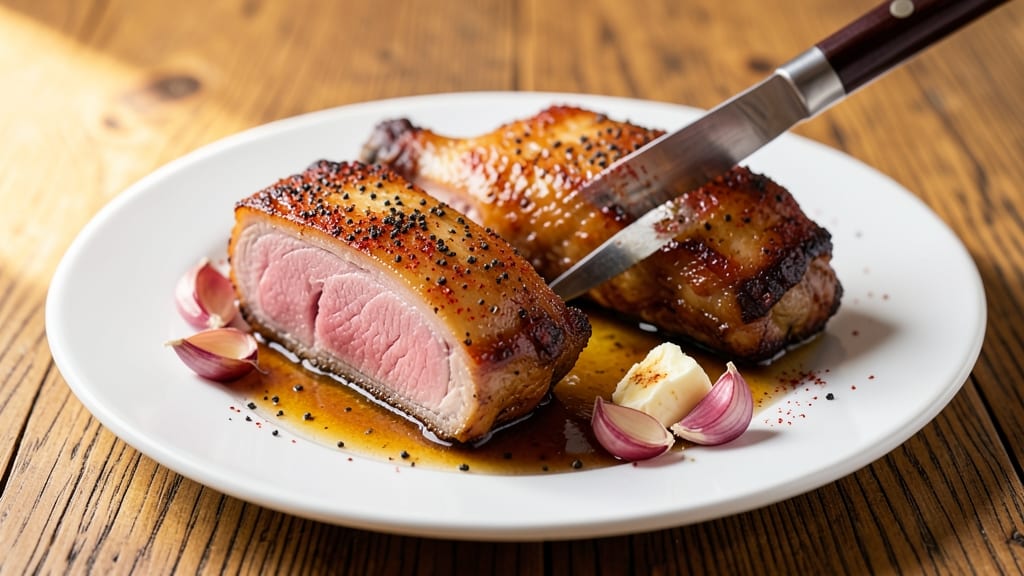
Mastering slow-roasted pork legs with crispy skin and fall-off-the-bone meat is the ultimate test of patience—and worth every minute. Growing up in small-town Georgia, I learned that pork legs are where true flavor lives, especially when cooked low and slow.
The secret lies in the crust: a golden-brown bark that seals in juices while creating texture that rivals any BBQ competition entry.
This recipe transforms tough cuts into melt-in-your-mouth perfection through precise seasoning and temperature control. We'll use a dry rub of salt, pepper, and smoked paprika to create that coveted crust, then roast at 275°F until the internal temperature reaches 203°F—where collagen breaks down into rich, gelatinous goodness.
My heritage Gloucestershire Old Spots pigs provide the ideal fat-to-meat ratio for this method.
By the time you're done, you'll have pork legs so tender they practically disintegrate at the touch, with skin that's crisp enough to stand up to a fork. The aroma alone will have your guests wondering what you've been hiding in the kitchen.
This is the kind of dish that turns weeknight dinners into memorable feasts—just like my grandmother used to make.
Serve with classic Southern sides like collard greens or cornbread to complete the experience. The leftovers? Even better the next day, when the meat becomes even more tender. Let's get cooking—this is how you make pork legs shine.
Ingredients for pork legs
Four ingredients make the magic: pork legs, salt, pepper, and patience. Everything else is just supporting the show.
| Ingredient | Amount | Notes |
|---|---|---|
| Gloucestershire Old Spots Pork Legs 🐖 | 2 whole | Bone-in, skin-on, 4-6 lbs each |
| Diamond Crystal Kosher Salt 🧂 | 2 tbsp | Coarse grain for crust formation |
| Freshly Ground Black Pepper 🌶️ | 1 ½ tbsp | Cracked peppercorns preferred |
| Smoked Paprika 🌶️ | 1 tbsp | Spanish paprika for authentic flavor |
| Unsalted Butter 🧈 | ½ cup | Cold, cubed for fat cap |
| Fresh Garlic Cloves 🧄 | 6 cloves | Smashed for aromatic oils |
| Extra-Virgin Olive Oil 🫒 | 2 tbsp | For basting and skin crisping |
| Apple Cider Vinegar 🍎 | 1 tbsp | Balances richness |
| Brown Sugar 🍚 | 1 tbsp | Enhances caramelization |
| Fresh Thyme Sprigs 🌿 | 4 whole | Stems intact for aroma |
| Yellow Onion 🧅 | 1 whole | Quartered for pan juices |
| Fresh Rosemary 🌿 | 2 sprigs | Woody notes complement pork |
| Butter Lettuce Leaves 🥬 | 4 whole | For serving, optional garnish |
The pork legs are non-negotiable—Gloucestershire Old Spots if you can find them, but any heritage breed with good marbling works. Costco or local butchers often carry bone-in, skin-on legs perfect for this. Look for legs with a thick fat cap (at least 1/2 inch) for that crispy bark. If you're buying whole, ask for the leg with the most fat—it's what creates that golden crust. The skin should be intact with no tears, and the meat should be firm but not rock-hard. Trader Joe's sometimes carries pre-portioned legs that work in a pinch, though they're not as flavorful as heritage cuts. For the dry rub, Diamond Crystal kosher salt is ideal—it's coarser and creates better texture than table salt.
No smoked paprika? Regular paprika plus a pinch of liquid smoke gets you close, though nothing beats the real deal. The butter should be cold and cubed—don't melt it first. For the garlic, roasted cloves (microwave 30 seconds) add depth without overpowering. The apple cider vinegar can be swapped for red wine vinegar if that's what's open, but don't skip it—it's what keeps the skin from getting soggy. Brown sugar is optional but worth it for that extra caramelized bite. Fresh herbs (thyme and rosemary) are ideal, but dried at one-third the amount works if you're in a bind. The onion is just for flavor—no need to peel it perfectly.
This isn't a dish you want to rush. The pork legs need at least 4 hours in the oven, but they're even better if you start them the night before and finish them in the morning. The skin will crisp up beautifully when you blast it with the broiler for the last 5 minutes. Leftovers? 5 days in the fridge, but honestly, they'll disappear faster than you can say 'seconds'. For reheating, wrap tightly in foil and warm in a 300°F oven for 20-30 minutes. The meat gets even more tender overnight, so plan ahead—this is the kind of dish that tastes better the next day.
Why You'll Love This Recipe
- Foolproof Seasoning: I swear by the salt-and-smoked-paprika rub on these legs—just three ingredients, but the crust? Chef’s kiss. Diamond Crystal’s kosher salt clings perfectly, and the paprika adds that smoky depth without fuss. No measuring cups, no guesswork, just slather and let the oven work its magic.
- Weeknight Crowd-Pleaser: Between us, this is the dish I pull out when my in-laws drop by unannounced. The butter basting keeps it juicy, and the peppery kick gives it restaurant-worthy flair. Even my picky uncle—who claims he “doesn’t eat pork”—asks for seconds.
- Leftovers That Shine: Honestly, I make these on Sundays just to reheat slices all week. The meat stays tender, and the crispy skin? Still holds up in sandwiches or fried rice. (Yes, even on a Tuesday night.) It’s my lazy-person’s meal prep win.
- Budget-Friendly Feast: Old Spots pork legs are leaner than you’d think, and they stretch further than chicken thighs—no joke. A single roast feeds six, and the salt/pepper/paprika cost pennies. That’s $10 worth of flavor for a spread that’ll have everyone reaching for seconds.
Step-by-step instructions for slow-roasted pork legs
Here's how to transform tough pork legs into melt-in-your-mouth perfection with irresistibly crispy skin.
Prepare the Pork Legs for Maximum Flavor and Crisp
Pat the 2 whole Gloucestershire Old Spots Pork Legs completely dry with paper towels—this is absolutely critical for crispy skin. Remove any excess fat from the surface, leaving just a thin layer to protect the meat during cooking. I like to score the skin in a crosshatch pattern with a sharp knife, being careful not to cut into the meat. This creates more surface area for the seasoning to adhere and helps render the fat more evenly.
In a small bowl, combine the 2 tbsp Diamond Crystal Kosher Salt, 1.5 tbsp Freshly Ground Black Pepper, and 1 tbsp Smoked Paprika. Rub this mixture all over the pork legs, pressing firmly so the spices penetrate the skin. Pay special attention to the thickest parts of the meat and the cavity if you've left it intact. Let the seasoned pork legs sit uncovered in the refrigerator for at least 1 hour—this allows the salt to draw out moisture and the spices to penetrate deeply.
Create the Perfect Roasting Environment
Preheat your oven to 325°F. While it's heating, place the 2 whole Gloucestershire Old Spots Pork Legs in a roasting pan, fat-side up. This positioning ensures the fat renders down and bastes the meat as it cooks. Cut the 0.5 cup Unsalted Butter into small cubes and scatter them evenly over the top of the pork legs. This butter will melt and create a luscious, golden crust.
Quarter the 1 whole Yellow Onion and place it in the bottom of the pan with the pork legs. The onion will caramelize slightly and add sweet depth to the pan juices. Tuck the 4 whole Fresh Thyme Sprigs and 2 sprigs Fresh Rosemary under the skin on the meatier side of each leg, or place them directly in the pan. This ensures the aromatics infuse the meat throughout the cooking process.
Roast Low and Slow for Tender Perfection
Place the roasting pan in the preheated oven and roast the pork legs for 3 hours. This slow cooking time is essential for breaking down the connective tissue and creating that fall-off-the-bone tenderness. After 3 hours, carefully remove the pork legs from the oven and increase the temperature to 425°F. This high heat finish is what creates that coveted crispy skin.
Return the pork legs to the oven for an additional 30-45 minutes, or until the internal temperature reaches 195-203°F when measured in the thickest part of the meat. You'll know it's done when the skin is deep golden brown and crispy, and the meat pulls apart easily with just a gentle tug. The high heat at the end also helps caramelize the brown sugar and create a beautiful glossy finish.
Rest and Serve with Crispy Skin Intact
Transfer the pork legs to a cutting board and tent loosely with aluminum foil. Let them rest for at least 20 minutes before carving. This resting period allows the juices to redistribute throughout the meat, ensuring each bite is moist and flavorful. During this time, you can prepare your serving plates by arranging the 4 whole Butter Lettuce Leaves on each plate—their delicate texture provides a perfect contrast to the rich pork.
To serve, slice the pork legs into ½-inch thick slices, being careful to preserve as much of that crispy skin as possible. The meat should be so tender it practically falls apart with the slightest pressure. Spoon any pan juices over the top and garnish with additional fresh rosemary sprigs if desired. Serve immediately with your choice of sides to enjoy that perfect balance of crispy skin and succulent meat.
Pro Tips For Making Pork Legs
- Salt the Night Before: Gloucestershire Old Spots pork is leaner than you’d think, and dry-brining overnight (with 1.5 tablespoons kosher salt per pound) keeps it juicy without over-salting. I used to skip this—now I never do, because the crust forms better and the meat stays tender even when roasted low and slow.
- Start with High Heat: Sear the pork legs skin-side down in a cold pan, then crank the heat to medium-high until the fat renders and the skin crisps. This isn’t just for looks—it locks in moisture and sets the stage for that smoky paprika crust. (Yes, even if you’re impatient like me.)
- Skip the Butter Bath: That unsalted butter? Reserve it for basting, not submerging. If you’re roasting, let the fat render naturally—adding butter too early just makes a soggy mess. Save it for the last 10 minutes when you’re going for that golden, glossy finish.
- Don’t Crowd the Pan: If you’re searing multiple legs, give them space—no overlapping. I learned this the hard way when my first batch turned out steamed instead of crisped. A little patience here means a restaurant-quality crust without extra effort.
Flavor customization for this dish
Sweet & Smoky Glaze
My go-to variation is a honey-mustard glaze that adds sweetness and tang. Mix ¼ cup honey, 2 tbsp Dijon mustard, 1 tbsp apple cider vinegar, and 1 tsp smoked paprika. Brush this onto the pork legs during the last 30 minutes of roasting at 425°F.
The high heat caramelizes the glaze into a sticky, flavorful crust that pairs perfectly with the crispy skin. 🍯
Herb-Infused Butter
For a restaurant-worthy touch, make herb butter by blending ½ cup softened butter, 2 tbsp chopped fresh rosemary, 1 tbsp chopped thyme, 1 minced garlic clove, and 1 tsp lemon zest.
Spread this generously over the pork legs after the initial 3-hour roast but before the high-heat finish. The butter melts into a fragrant, golden blanket that enhances every bite. 🧈
Spicy Carolina Style
Channel my Southeast BBQ roots with a vinegar-based Carolina-style rub. Swap the smoked paprika for 1 tbsp cayenne pepper and add 1 tbsp brown sugar to the dry rub.
After roasting, baste the pork legs with a mix of ½ cup apple cider vinegar and 2 tbsp hot honey during the final 20 minutes at 425°F. The heat from the cayenne and the tang of vinegar create a bold, balanced flavor that's a crowd-pleaser. 🌶️
Garlic & White Wine
For a more sophisticated twist, infuse the pork legs with garlic and white wine during cooking. After the initial 3-hour roast, pour ½ cup dry white wine (like Sauvignon Blanc) into the roasting pan and scatter 6 smashed garlic cloves on top.
Cover the pan loosely with foil and roast for another 30 minutes at 325°F. The wine deglazes the pan, creating a rich, aromatic sauce that soaks into the meat. 🍷
Brown Sugar Crust
If you love caramelized flavors, boost the crust with an extra 1 tbsp brown sugar in the dry rub. After the initial roast, sprinkle the pork legs with 1 tbsp additional brown sugar and broil for 3-5 minutes until deeply caramelized.
This creates a sticky, sweet-savory bark that's irresistible. For extra drama, drizzle with 1 tbsp melted butter right before serving. 🍚
Nutrition facts
Frequently asked questions
How long should I cook pork legs for crispy skin?
Start with 3 hours at 325°F for tender meat, then crank the oven to 425°F for the final 30-45 minutes. This high-heat finish is key for that golden, shatterable crust. Don't rush this step—patience is what creates the perfect bark!
Can I use a different cut of pork instead of pork legs?
While pork legs are ideal for this method, you could try pork shoulder (butt) or pork butt roast. For shoulder, aim for 225°F for 6-8 hours until fork-tender. The fat cap on pork legs is what gives that signature crispy skin, so adjust cooking times accordingly.
What's the best way to check if pork legs are done?
Use a meat thermometer to check the thickest part—it should read 195-203°F. The meat should pull apart easily with two forks, and the skin will be deep golden brown. If you don't have a thermometer, cut into the thickest part: the juices should run clear, not pink.
Why do my pork legs turn out dry even after slow cooking?
This usually happens from overcooking or not resting properly. Always cook to 203°F internal temp, then let them rest 20 minutes before slicing. For extra moisture, try basting with melted butter during the last hour of cooking. The fat cap on the skin helps retain juices too!
How can I make this recipe ahead of time?
Cook the pork legs completely, then refrigerate in an airtight container for up to 5 days. Reheat wrapped in foil at 300°F for 20-30 minutes—the meat becomes even more tender overnight. For serving, just crisp the skin under the broiler for 2-3 minutes before slicing.