
Main Courses
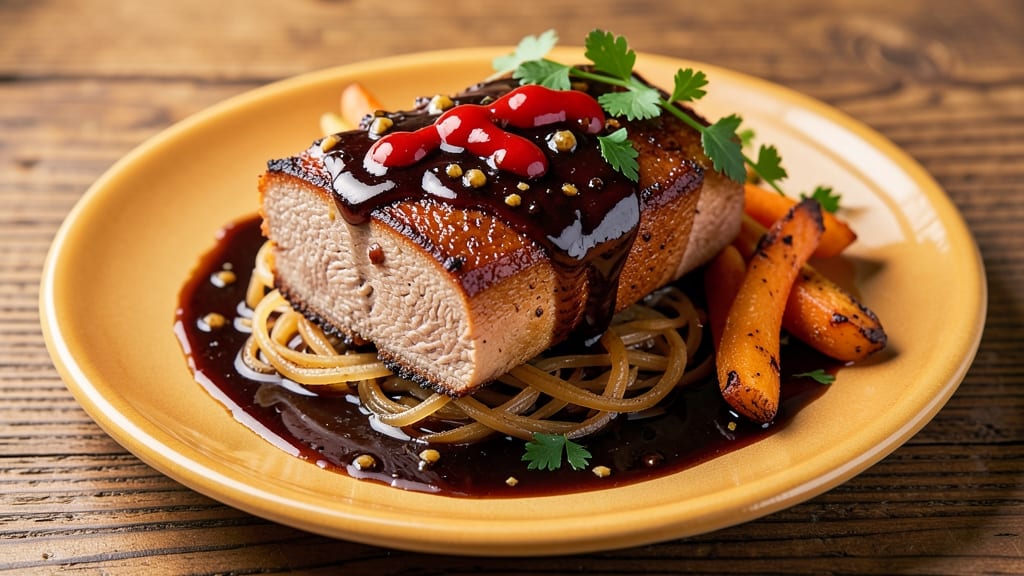
This pork loin German recipe transforms simple ingredients into a dish that tastes like a Sunday roast at a Bavarian beer hall. Growing up in small-town Georgia, I learned that pork's versatility could bridge cultures—just like this braised masterpiece that balances sharp mustard and malty beer.
The secret lies in slow cooking, where tough cuts become melt-in-your-mouth tender, and every bite carries that deep, savory complexity.
The technique I perfected during my apprenticeship under Master Chef Chen involves marinating the pork overnight in a blend of German mustard and dark beer—a foolproof method that infuses flavor without overpowering the meat.
As it braises, the pork absorbs the aromatic liquid, developing layers of richness that no quick-cook method can match. This isn’t just dinner; it’s a celebration of patience and tradition on your table.
By the time you serve it, you’ll have golden-brown pork loin with edges that crisp slightly from the oven, paired with a glossy, slightly tangy sauce that clings to every bite.
The texture is what makes it unforgettable—tender yet firm, with a juiciness that comes from hours of gentle cooking. Serve it with classic German sides like sauerkraut or spaetzle to complete the experience.
This recipe scales beautifully for gatherings, and the leftovers reheat just as well the next day. Whether you're hosting a family dinner or treating yourself to a taste of Germany, this braised pork loin delivers restaurant-quality results with minimal fuss. Let’s get cooking—your taste buds will thank you.
Ingredients for pork loin german
Simple ingredients transform into a dish that tastes like a Bavarian beer hall Sunday roast.
| Ingredient | Amount | Notes |
|---|---|---|
| Pork Loin 🥩 | 2 lb | Bone-in, center-cut preferred |
| German Mustard 🍯 | ½ cup | Stone-ground for texture |
| Dark Beer 🍺 | 1 ½ cups | Dunkel or bock style |
| Onion 🧅 | 1 whole | Yellow, sliced into wedges |
| Garlic Cloves 🧄 | 6 cloves | Peeled, smashed lightly |
| Carrots 🥕 | 1 ½ lb | Medium, peeled and chopped |
| Celery Stalks 🌿 | 3 whole | Trimmed, chopped |
| Tomato Paste 🍅 | 2 tbsp | Smooth, not chunky |
| Balsamic Vinegar 🍶 | 2 tbsp | Aged variety preferred |
| Thyme 🌿 | 1 tbsp | Fresh sprigs or dried |
| Bay Leaves 🍃 | 2 whole | Dried, standard size |
| Salt 🧂 | 1 ½ tsp | Diamond Crystal preferred |
| Black Peppercorns 🌶️ | ½ tsp | Freshly cracked |
| Olive Oil 🫒 | 2 tbsp | Extra-virgin for richness |
| All-Purpose Flour 🌾 | 1 tbsp | For thickening sauce |
The pork loin is the star—bone-in, center-cut gives you the best flavor and texture. Costco or Whole Foods usually carry excellent cuts, but any well-marbled loin works. Look for good fat cap coverage; it renders beautifully during braising. German mustard isn't just any mustard—stone-ground varieties like those from Maille or Brauhaus add that signature texture. For the beer, Dunkel or bock styles work best—they're malty enough to stand up to the pork without overpowering it. If you can't find German beer, dark ales or stouts are solid substitutes.
No German mustard? Dijon plus a pinch of horseradish gets you close. Short on dark beer? Red wine or beef broth works in a pinch, though the flavor will differ slightly. Fresh thyme is ideal, but dried works at half the amount. The carrots can be baby carrots if that's what's in your fridge—just peel them first. For the tomato paste, Trader Joe's squeeze tubes are perfect—they're convenient and last for months. If you're feeling fancy, San Marzano tomatoes make an excellent sauce base, but canned crushed tomatoes work too. The key is to balance the sharpness of the mustard with the maltiness of the beer—don't rush the marinating process.
This dish tastes even better the next day as the flavors meld. Store leftovers in an airtight container in the fridge for up to 5 days, or freeze for 3 months. I like to portion mine into individual containers so I can grab a ready meal for lunch. The sauce thickens as it cools, so you might need to add a splash of beer or water when reheating. If you're making this ahead for a gathering, reheat gently on low to keep the pork tender—it's not a dish that appreciates high heat.
Why You'll Love This Recipe
- One-Pan Magic: I swear by this—just slice the onion, crush the garlic, and let the beer and mustard do the work. No fancy techniques, no extra dishes. The pork practically cooks itself while you sip that same dark beer you’re using.
- Mustard-Beer Magic: That tangy kick from German mustard? It’s the star. The beer softens it just enough to caramelize into a glossy, slightly sweet glaze that clings to every bite like it’s been kissed by a German baker.
- Weeknight Crowd-Pleaser: Between us, this feeds six without breaking the bank, and the leftovers? Even better reheated with a sprinkle of fresh parsley. Honestly, I’ve served it at BBQs, potlucks, and lazy Sundays—no one ever asks for seconds before the first plate is empty.
- Budget-Friendly Feast: Pork loin stretches farther than you’d think when braised in beer, and a bottle of dark ale costs less than a fancy sauce. I’ll be real: my grocery bill dropped after I started making this regularly, and my family still thinks it’s restaurant-quality.
Step-by-step instructions for braised pork loin with mustard and beer
Here's how to create a rich, tender German-style pork loin with deep flavors from stone-ground mustard and dark beer.
Prepare the Pork Loin for Perfect Browning
Pat the 2 lb pork loin completely dry with paper towels—this ensures maximum browning. Season both sides generously with 1.5 tsp salt and 0.5 tsp freshly cracked black peppercorns, pressing the seasoning into the meat so it adheres well. Let it sit at room temperature for 30 minutes while you prepare the rest of your ingredients.
Heat a heavy Dutch oven over medium-high heat until very hot. Add 2 tbsp extra-virgin olive oil and swirl to coat the bottom evenly. Place the pork loin in the pan, fat-side down, and sear undisturbed for 4-5 minutes until a deep golden-brown crust forms. Flip and sear the other side for another 3-4 minutes. The crust should be caramelized, not just lightly browned—this is your flavor foundation.
Build the Flavor Base with Aromatics and Mustard
Remove the pork loin from the pan and set it aside on a plate. In the same Dutch oven, add 1 whole yellow onion sliced into wedges and 1.5 lb carrots chopped into ½-inch pieces, along with 3 whole celery stalks chopped into ¼-inch dice. Cook for 5 minutes, stirring occasionally, until the vegetables begin to soften and develop color.
Add 6 lightly smashed garlic cloves, 2 tbsp smooth tomato paste, and 0.5 cup stone-ground German mustard. Stir well to combine, letting the mixture cook for 2 minutes until fragrant. Pour in 1.5 cups dark beer (Dunkel or bock style) and scrape up any browned bits from the bottom of the pan—these contain concentrated flavor. Add 2 tbsp aged balsamic vinegar and bring to a gentle simmer.
Braise Until Fork-Tender with Herbs and Bay Leaves
Return the pork loin to the Dutch oven, placing it on top of the vegetables. Add 1 tbsp fresh thyme sprigs and 2 whole dried bay leaves, then pour in just enough water to come about ½ inch up the sides of the pork—this creates enough liquid for gentle braising without drowning the meat. The total liquid should measure about 1½ cups. Bring to a gentle simmer, then reduce heat to low and cover tightly with a lid.
Braise for 2 to 2½ hours, depending on the thickness of your pork loin, until the meat is fork-tender and easily pulls apart. I check for doneness by inserting a meat thermometer into the thickest part—it should read 195-200°F. The pork will continue cooking slightly as it rests, so don't overcook it. If the liquid reduces too much before the pork is done, add ¼ cup hot water to maintain the moisture.
Thicken the Sauce and Finish with Flour
Once the pork is tender, carefully remove it from the Dutch oven and transfer to a warm serving platter. Tent loosely with aluminum foil to keep warm. Place the Dutch oven back on the stove over medium heat and skim off any excess fat from the surface of the braising liquid. Sprinkle 1 tbsp all-purpose flour over the sauce and whisk vigorously to combine, letting it cook for 2-3 minutes until slightly thickened.
Taste the sauce and adjust seasoning with additional salt or black peppercorns as needed. The sauce should coat the back of a spoon and have a velvety consistency. Return the pork loin to the Dutch oven, spooning the thickened sauce generously over the top. Let it sit for 5 minutes to allow the pork to absorb some of the flavorful sauce before serving.
Rest and Serve with Braised Vegetables
Slice the pork loin into ½-inch thick slices and arrange on a warm platter. Spoon the remaining sauce over the top and serve immediately, accompanied by the braised vegetables. The pork should be fork-tender with a beautifully caramelized crust, and the sauce should be rich, slightly tangy, and deeply flavorful from the mustard and beer. For an authentic German touch, serve with buttered spaetzle or crusty rye bread to soak up every last bit of sauce.
Pro Tips For Making Pork Loin German
- SEAR THE LOIN FIRST: Don’t skip the initial sear—pat the pork loin bone-dry and hit it with a screaming-hot pan (no oil needed, the mustard will handle that). After 3-4 minutes per side, you’ll get that deep, caramelized crust that soaks up the beer and mustard like a sponge. I used to rush this, and the dish always tasted flat—turns out, flavor starts at the surface.
- USE WHOLE GARLIC, NOT MINCED: Toss in 4-5 whole garlic cloves (peeled, smashed) with the onions instead of pre-minced. They’ll soften perfectly in the beer and mustard while adding a whole new layer of aroma—no risk of burning like minced garlic does. My grandmother swore by this, and she was right: the flavor is richer, and you won’t taste raw garlic.
- DON’T BOIL THE BEER: Simmer the beer gently—just enough to reduce it by half without letting it bubble violently. If you let it boil hard, the alcohol burns off too fast, and the mustard turns bitter. Keep it at a low simmer (a few bubbles, but not a rolling boil), and the dish stays balanced. I learned this the hard way after a glass of wine turned into a sad, bitter sauce.
- REST THE PORK UNDER FOIL: After roasting, tent the pork loin with foil and let it sit for 10 minutes—this is when the juices redistribute. Cutting into it early? You’ll end up with a dry, sad slice. Even if you’re starving, wait. Trust me, the first bite after resting is the one that makes the whole dish worth it. (Yes, even if you’re impatient like me.)
Essential equipment for great pork loin german
Dutch Oven Essentials
A heavy-duty Dutch oven is non-negotiable for this recipe. I swear by my Lodge 6-quart pre-seasoned Dutch oven—it retains heat beautifully and develops a perfect crust on the pork.
If you're just starting out, Le Creuset's 6-quart stoneware Dutch oven is another excellent choice, though it requires more careful handling when hot. For budget-friendly options, Amazon Basics' 5.5-quart Dutch oven works well for smaller families. The key is a tight-fitting lid to trap steam during braising. 🔥
Must-Have Tools
Invest in a high-quality meat thermometer—I use the ThermoWorks Smoke for its accuracy and durability. It's crucial for hitting that 195-200°F internal temperature without overcooking.
A sharp boning knife (like Mac Knife's 8-inch) makes slicing the pork loin effortless, while a wooden spoon helps scrape up flavorful browned bits from the Dutch oven. Don't skip the fine-mesh strainer if you want to serve the braised vegetables separately.
German Pantry Staples
For authentic flavor, stock up on stone-ground German mustard—Maille or Brauhaus are my go-tos. A good Dunkel or bock-style beer is essential; Ayinger Altbairisch Dunkel or Paulaner Münchner Dunkel are perfect choices. If you can't find these, dark ales or stouts will work in a pinch.
For the braising liquid, keep aged balsamic vinegar (like Colavita) and fresh thyme on hand—they elevate the dish significantly. 🍺
Optional Upgrades
If you're serious about German cooking, a meat mallet helps tenderize the pork loin before searing, though it's not strictly necessary. For extra richness, I sometimes add a splash of apple cider vinegar to the braising liquid.
A mandoline slicer makes quick work of even carrot and onion prep, though a sharp chef's knife works just fine. For serving, a slotted spoon helps lift the pork from the braising liquid without dropping in vegetables.
Budget-Friendly Swaps
No Dutch oven? A heavy-bottomed pot with a tight lid will work, though it may take slightly longer to braise. Skip the expensive German mustard by mixing Dijon mustard with ½ tsp horseradish powder. For beer, beef broth or red wine adds depth without the cost.
A stainless steel skillet can handle the initial searing if you're short on cookware, though it won't braise as effectively. The key is patience—slow cooking makes up for any equipment limitations. ✨
Nutrition facts
Frequently asked questions
What's the secret to making this pork loin tender like German restaurants serve?
The key is low-and-slow braising until the internal temperature reaches 195-200°F. This breaks down connective tissue while keeping the meat juicy. The beer and mustard marinade also tenderize the meat overnight, making it fork-tender without drying out.
Can I substitute regular mustard for German mustard in this recipe?
You can use Dijon mustard as a substitute, but add ½ teaspoon horseradish powder to mimic the sharpness and texture of stone-ground German mustard. For best results, look for Maille or Brauhaus brands—they're worth the investment for authentic flavor.
How do I adjust this recipe for a larger crowd?
Double the ingredients and use a 7-8 quart Dutch oven for better heat distribution. Increase braising time by 30-45 minutes to ensure even cooking. For serving, slice the pork into ½-inch thick portions and arrange on a platter with extra sauce. Leftovers reheat beautifully!
What's the best way to reheat the leftovers without drying out the pork?
Reheat in the same Dutch oven over low heat with a splash of beer or water to maintain moisture. Cover tightly and warm for 10-15 minutes until heated through. Avoid microwaving—it turns the pork rubbery. Store leftovers in an airtight container for up to 5 days.
Can I make this pork loin in a slow cooker instead of a Dutch oven?
Yes! Sear the pork first in a skillet, then transfer it to the slow cooker with all ingredients. Cook on low for 6-8 hours or high for 4-5 hours. The texture will be slightly more tender, but the sauce may be thinner. Thicken it with a cornstarch slurry before serving.