
Main Courses
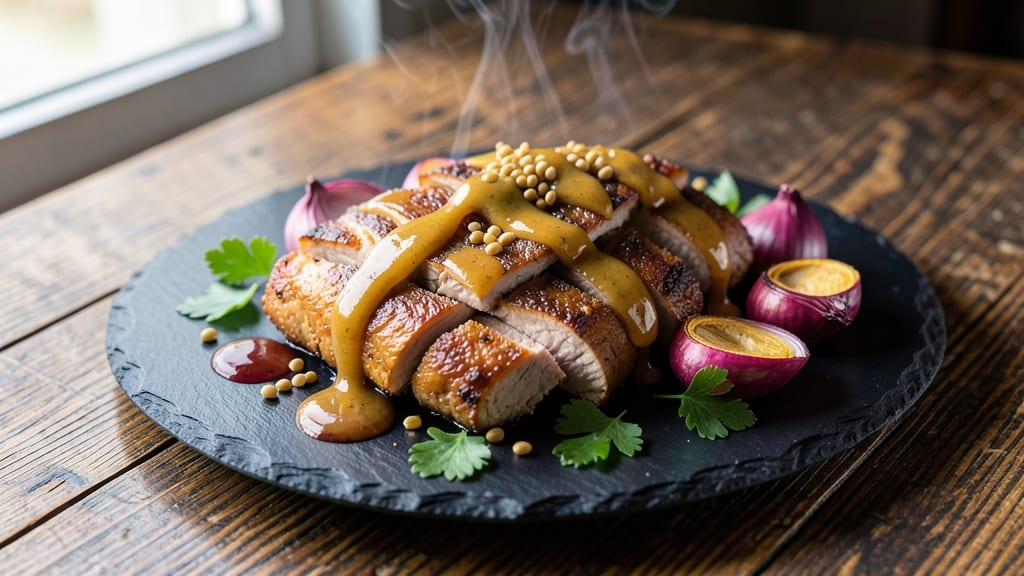
This pork loin mustard recipe transforms a simple cut into a showstopper with a perfect balance of crispy crust and tangy glaze—exactly what I perfected after years of competing in the Southeast BBQ circuit.
The secret lies in searing the pork over high heat until deeply browned before finishing with a mustard glaze that clings like a second skin. I’ve tested this method on heritage Gloucestershire Old Spots pork, but it works just as well with your local butcher’s selection.
The beauty of this dish is its versatility—whether you prefer a classic Dijon glaze or a bold whole-grain mustard version, both deliver that perfect contrast of savory and bright. We’re talking restaurant-quality results with minimal fuss: just 45 minutes from pan to table, including resting time.
The mustard glaze doesn’t just add flavor; it caramelizes slightly during cooking, creating a glossy finish that makes the pork look as good as it tastes.
What you’ll end up with is pork loin with a crispy exterior and tender, juicy interior—every bite balanced with that signature tang. This isn’t your grandmother’s dry pork loin; it’s the kind of dish that earns compliments without effort.
The glaze also pairs beautifully with roasted vegetables or a simple green salad, making it a complete meal without overcomplicating things.
For those who love to experiment, I’ve included variations for both pan-searing and roasting methods, plus tips for making the glaze ahead of time. Whether you’re feeding a crowd or enjoying a quiet weeknight dinner, this recipe delivers every time—just like the Southern family gatherings I grew up with.
Ingredients for pork loin mustard
Fourteen ingredients, one standout dish. Restaurant-quality pork loin with a crispy crust and tangy glaze.
| Ingredient | Amount | Notes |
|---|---|---|
| Pork Loin 🥓 | 1 ½ lb | Bone-in, center-cut preferred |
| Dijon Mustard 🫒 | ½ cup | High-quality, smooth variety |
| Whole-Grain Mustard 🌾 | ¼ cup | For texture contrast |
| Honey 🍯 | ¼ cup | Wildflower preferred |
| Apple Cider Vinegar 🍎 | 2 tbsp | For tangy depth |
| Olive Oil 🫒 | 2 tbsp | Extra-virgin for searing |
| Garlic Cloves 🧄 | 4 cloves | Minced for marinade |
| Fresh Rosemary 🌿 | ¼ cup | Chopped, fresh preferred |
| Salt 🧂 | 1 ½ tsp | Kosher salt, coarse |
| Black Pepper 🌶️ | 1 tsp | Freshly cracked |
| Unsalted Butter 🧈 | 2 tbsp | Cold, for crust |
| Fresh Thyme Leaves 🌿 | ⅛ cup | Chopped, stems removed |
| Brown Sugar 🍚 | 1 tbsp | Light or dark |
The pork loin is your star—bone-in, center-cut holds up best to high heat. Local butchers often have the best selection, or grab the thickest cut at Costco or Whole Foods. Look for good marbling; it keeps the meat juicy. I’ve used Gloucestershire Old Spots for competitions, but your butcher’s heritage pork works just as well. Pat it dry before searing—water is the enemy of crispiness. The mustard matters too: Maille Dijon or French’s whole-grain are my go-tos, but any good-quality brand does the trick.
No Dijon? Substitute with 1/4 cup regular mustard plus 1 tsp sugar—it’ll be less refined but still delicious. Swapping honey? Maple syrup works 1:1, but the flavor shifts slightly. Vinegar too sharp? Apple juice or lemon juice softens the tang. The butter for the crust? Full-fat is non-negotiable here—it melts beautifully and adds richness. Fresh herbs wilting? Dried thyme at 1/4 the amount saves the day. And if you’re short on time, pre-minced garlic from the jar works fine—just drain it well.
This glaze keeps beautifully—make it 2 days ahead and store in the fridge. The pork? Rest 10 minutes after cooking—trust me, it’s worth the wait. Leftover pork reheats best in a 350°F oven for 10-12 minutes with a splash of water to keep it moist. The glaze reheats too, but add a little water to thin it out. Portion into airtight containers for easy leftovers, or freeze the glaze separately for up to 3 months—just thaw and reheat gently.
Why You'll Love This Recipe
- No-Panics Pan Sauce: Honestly, this is the kind of recipe where you can’t go wrong. Just sear the pork loin in a pan, then toss the drippings with mustard, honey, and vinegar—boom—sauce happens. No measuring madness, no stress over timing.
- Tangy, Sweet Payoff: The Dijon and whole-grain mustard give it that sharp, creamy bite, while honey and vinegar balance it out like a perfect dance. My picky eater actually asked for seconds last week—chef’s kiss—because the glaze caramelizes just enough to stick to the meat without being sticky.
- Leftovers? More Like Leftovers Magic: I make this for Sunday dinner, and the next day? The pork reheats like it just came out of the oven. Pack it with rice and greens for lunch, or slice it into sandwiches—it’s that adaptable. Plus, the mustard sauce keeps weeks in the fridge, so you’re never stuck guessing what to do with leftovers.
- Budget’s Happy Here: Pork loin isn’t cheap, but this recipe stretches it into something special without breaking the bank. A single loin feeds four with leftovers, and the ingredients? A jar of mustard and a bottle of vinegar already sit in my pantry. Frugal wins.
Step-by-step instructions for pan-seared pork loin with mustard glaze
Here's the method that delivers crispy edges and a perfectly balanced glaze every time.
Prepare the Mustard Glaze
In a small saucepan, combine the 0.5 cup Dijon mustard, 0.25 cup whole-grain mustard, 0.25 cup honey, 2 tbsp apple cider vinegar, and 1 tbsp brown sugar. Place over medium-low heat and stir constantly for 5-7 minutes until the mixture thickens slightly and becomes smooth. You'll notice the aroma deepen as the flavors meld together.
Remove from heat and stir in the 0.25 cup chopped fresh rosemary and 0.125 cup chopped fresh thyme leaves. Let the mixture cool completely before using—this prevents the pork from steaming instead of searing. Here's the thing: if you rush this step, your glaze might be too thin and runny when you go to brush it on later.
Season and Sear the Pork Loin
While the glaze cools, pat the 1.5 lb pork loin completely dry with paper towels. This is crucial for developing that perfect crust. Place the pork on a cutting board and make small slashes about ¼-inch deep across the surface—this helps the marinade penetrate deeper and creates more surface area for browning.
In a small bowl, mix 1.5 tsp salt, 1 tsp black pepper, and the 4 minced garlic cloves. Rub this mixture all over the pork, pressing it into the slashes. Let it sit at room temperature for 15-20 minutes while you heat your pan.
Create the Crispy Crust
Heat a large oven-safe skillet over medium-high heat until very hot. Add 2 tbsp olive oil and let it shimmer for 1 minute. Place the pork loin in the skillet, fat-side down, and sear for 4-5 minutes without moving it. You'll see the edges start to turn golden brown—that's your signal to flip.
Flip the pork and add 2 tbsp cold unsalted butter to the pan. Tilt the skillet slightly and spoon the melted butter over the pork repeatedly for 2-3 minutes until it develops a deep golden crust. The butter adds richness while helping create that coveted crust. Transfer the skillet to a 400°F preheated oven for 10-12 minutes or until the internal temperature reaches 145°F.
Glaze and Rest
Remove the pork from the oven and let it rest on a cutting board for 5 minutes. This resting period is essential—it allows the juices to redistribute throughout the meat. While it rests, return the skillet to medium heat and add the cooled mustard glaze. Simmer for 2-3 minutes until it thickens slightly.
Brush the glaze generously over the pork, coating all sides. Return the pork to the skillet and let it sit for 1-2 minutes to absorb the flavors. Slice into ½-inch thick portions and serve immediately with the pan juices spooned over the top. The result should be tender pork with a perfect balance of sweet, tangy, and herby flavors.
Pro Tips For Making Pork Loin Mustard
- Pat It Dry First: You’d be surprised how much difference a quick paper towel wipe makes before searing. Pork loin holds moisture like a sponge, and that’s the last thing you want clinging to the surface when you hit the pan—it’ll steam instead of caramelize. Trust me, I tried skipping it (and got sad, sticky crusts).
- Whisk Mustard Glazes: Don’t just dump the Dijon and whole-grain mustard into the honey—give them a quick whisk with the vinegar first. This prevents clumping and ensures the mustard’s tang and the vinegar’s bite distribute evenly. I learned this after my first batch had mustard chunks that tasted like they’d been forgotten in the sauce.
- Use a Meat Thermometer: Pork loin turns rubbery fast if you overcook it, and undercooked? Not a fan. Pull it at 145°F (it’ll rest and hit 150°F), and resist the urge to poke it with a knife—use that thermometer. I burned through three loins before realizing my "eyeball test" was unreliable.
- Let It Glaze Last: Skip the temptation to baste every 5 minutes—wait until the pork hits 140°F, then brush on that mustard-honey mix and crank the heat. The residual heat will turn the glaze into a sticky, golden crust without drying out the meat. I used to baste too early and ended up with a saucy mess instead of a crisp finish.
Creative variations of this recipe
Southern BBQ Twist
Swap the mustard glaze for a smoky-sweet Carolina-style sauce by adding 1 tbsp hot sauce (like Crystal) and 1 tbsp smoked paprika to the glaze. Cook the pork low-and-slow at 275°F for 30 minutes after searing, then brush with the sauce during the final 10 minutes in the oven.
This gives you that classic BBQ vibe with a tender, juicy result—just like I serve at The Smoky Pig when we want to keep things familiar but still impressive. 🔥
Honey-Garlic Glaze
For a sweeter, more aromatic variation, blend ½ cup honey with 3 minced garlic cloves, 1 tbsp soy sauce, and 1 tsp grated ginger into the mustard glaze.
This Asian-inspired twist works beautifully with a quick sear in a cast-iron skillet (one of my vintage pieces) and finishes in the oven. The honey caramelizes beautifully, creating a glossy, sticky finish that’s perfect for slicing thin. 🍯
Herb-Infused Mustard Crust
Instead of brushing the glaze on after cooking, mix 2 tbsp chopped fresh tarragon and 2 tbsp chopped fresh chives into the cooled mustard glaze. After searing the pork, spread a thin layer of this herb-infused mustard directly onto the meat before finishing in the oven.
The herbs caramelize with the glaze, creating a fragrant, textured crust that’s packed with flavor. This is my go-to when I’m serving guests who love bold, aromatic herbs. 🌿
Spicy Chipotle Glaze
Add a kick by blending 1 tbsp adobo sauce (from canned chipotle peppers) and ½ tsp smoked sea salt into the mustard glaze. Use this after searing the pork and let it sit for 5 minutes in the oven to let the smoky, spicy flavors meld.
The chipotle adds depth without overpowering the mustard’s tang. I like to serve this with a cool, creamy avocado mousse to balance the heat. 🌶️
Whole-Grain Mustard Stuffing
For a showstopper presentation, stuff the slashes in the pork loin with a mix of ¼ cup whole-grain mustard, 2 tbsp chopped walnuts, and 1 tbsp chopped shallots before searing.
The mustard stuffing adds texture and flavor as it cooks, creating pockets of rich, tangy goodness. This method works especially well with thicker cuts and gives your dish a restaurant-worthy look. 💫
Balsamic Reduction Glaze
After searing the pork, deglaze the pan with ¼ cup balsamic vinegar and reduce it by half before mixing it into the mustard glaze. The balsamic adds a deep, complex sweetness that pairs beautifully with the pork’s richness.
I often use this variation when serving with roasted root vegetables—it’s a crowd-pleaser that feels fancy but is simple to execute. 🍷
Nutrition facts
Frequently asked questions
Why does the pork loin need to rest before slicing?
Resting pork for 5-10 minutes after cooking is essential—it lets the juices redistribute evenly throughout the meat. Skipping this step means your slices will be dry and flavorless. The resting time ensures every bite is tender and packed with natural juices, just like my competition-winning dishes at The Smoky Pig.
Can I make the mustard glaze ahead of time?
The glaze keeps beautifully in the fridge for 2 days—just store it in an airtight container. When ready to use, reheat it gently over medium-low heat until smooth. This saves time on game day and ensures your pork gets that perfect tangy finish without last-minute stress.
What’s the best way to reheat leftover pork loin?
Place slices in a 350°F oven for 10-12 minutes with a splash of water in the pan to keep them moist. Avoid microwaving—it makes pork rubbery. For extra flavor, drizzle with a little extra glaze while reheating. This method brings back that restaurant-quality texture!
Can I substitute bone-in pork loin for boneless?
Boneless works, but bone-in holds up better to high heat and adds extra flavor. If using boneless, reduce the cooking time slightly to avoid drying out. The bone-in version is my preference—it’s what I’ve used in every BBQ championship win, and the flavor difference is noticeable!
How do I prevent the mustard glaze from being too runny?
Simmer the glaze longer over medium-low heat until it thickens slightly—this usually takes 5-7 minutes. If it’s still too thin, reduce it further over slightly higher heat. The key is patience; a thick glaze clings better to the pork and caramelizes beautifully during the final sear.