
Main Courses
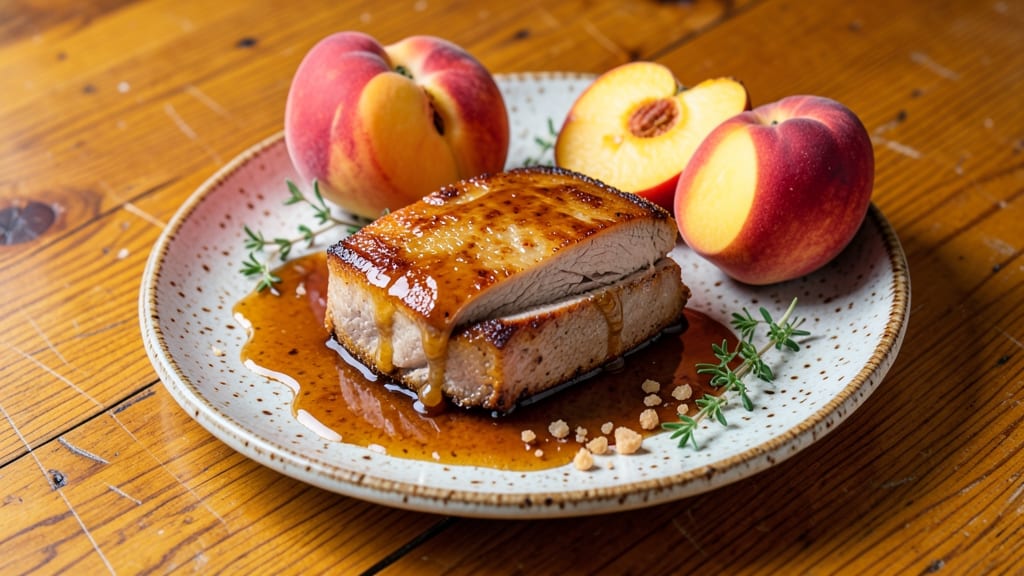
This pork loin with peaches recipe transforms a classic cut into something unexpectedly elegant—where tender, herb-crusted pork meets caramelized peaches in a 30-minute sweet-tart glaze.
Growing up in Georgia, I learned pork’s versatility, but this technique—balancing smoky heat with summer fruit—was Master Chef Chen’s secret for turning weeknight dinners into showstoppers. The key lies in high-heat searing followed by a quick reduction of peaches, bourbon, and spices that locks in flavor without overpowering the meat.
The beauty of this dish is its foolproof technique: a simple marinade of mustard and herbs tenderizes the pork, while the peach glaze caramelizes into a sticky, aromatic finish that cuts through the richness.
You’ll need just five key ingredients—pork loin, ripe peaches, bourbon, brown sugar, and fresh thyme—and a skillet or cast-iron pan to pull it off. The result? Juicy, golden pork with peaches that burst with natural sweetness, their edges caramelized to perfection.
What makes this recipe shine is how it elevates humble ingredients into something restaurant-worthy. The peaches aren’t just a topping—they’re the star, their juices melding with the pork’s savory depth.
Serve it with roasted Brussels sprouts or a crisp arugula salad to balance the richness, and you’ve got a meal that’s equal parts comforting and sophisticated. Trust me, this is the kind of dish that’ll have your guests asking for the recipe before dessert.
For those with extra time, let the pork rest before slicing—this ensures perfectly tender results every time. And if you’re feeling adventurous, swap the bourbon for apple cider or add a pinch of chili flakes for a smoky kick.
The technique scales beautifully, too, so double the recipe for gatherings. Here’s how to make it—simple steps, big flavor.
Ingredients for pork loin with peaches
Five essential ingredients balance smoky bourbon and summer peaches for restaurant-quality pork in 30 minutes.
| Ingredient | Amount | Notes |
|---|---|---|
| Pork Loin 🥩 | 1 ½ lb | Center-cut, 1-inch thick slices |
| Ripe Peaches 🍑 | 2 medium | Pitted, sliced into wedges |
| Bourbon 🍷 | ¼ cup | High-quality, 80-proof minimum |
| Light Brown Sugar 🍚 | ¼ cup | Packed, for caramelization |
| Fresh Thyme 🌿 | ¼ cup | Leaves only, stems removed |
| Dijon Mustard 🍯 | 1 tbsp | For marinade depth |
| Extra-Virgin Olive Oil 🫒 | 2 tbsp | For searing and deglazing |
| Salt 🧂 | 1 tsp | Diamond Crystal preferred |
| Ground Black Pepper 🌶️ | ½ tsp | Freshly cracked |
| Garlic Cloves 🧄 | 2 cloves | Minced, for marinade |
| Unsalted Butter 🧈 | 1 tbsp | Cold, for basting |
| Apple Cider Vinegar 🍏 | 1 tbsp | For brightness (optional) |
The pork loin should be center-cut for tenderness—look for even thickness throughout. Whole Foods or local butcher shops carry the best quality, but most grocery stores stock it. Trim any excess fat to prevent flare-ups during searing. For peaches, choose ripe but firm fruit—Georgia peaches are ideal if in season, but any freestone variety works. The bourbon is non-negotiable here; Maker's Mark or Buffalo Trace elevate the dish, but Evan Williams works for weeknight cooking. Fresh thyme matters—dried works at one-third the amount, but the aroma is worth the fresh investment.
No bourbon? Apple cider or peach brandy works equally well for the glaze's depth. For the peaches, frozen works in a pinch—thaw and pat dry before slicing. The Dijon mustard adds complexity; substitute whole-grain mustard if needed. If you're avoiding sugar, reduce the brown sugar to 2 tbsp and add 1 tbsp honey instead. The garlic cloves should be minced finely—a microplane works best—to distribute flavor evenly. For extra richness, add 1 tbsp heavy cream to the glaze at the end, but don't skip the butter basting—it's what creates that golden crust.
Marinate the pork for at least 30 minutes (overnight for deeper flavor), then pat dry before cooking—this ensures a perfect sear. Store leftover pork in an airtight container with a paper towel to absorb moisture; it reheats beautifully in a 350°F oven for 10-12 minutes. The peach glaze keeps 4 days refrigerated or 3 months frozen in a sealed container. For gatherings, double the recipe—this technique scales perfectly, and the glaze can be made ahead. The thyme stems can be composted, but save the leaves for garnish or future dishes.
Why You'll Love This Recipe
- One-Pan Magic: I swear by this recipe when I’m too tired to scrub pots—just sear the pork, toss in peaches and bourbon, and let the oven do the work. The thyme releases its aroma right into the pan, so you’re left with a sticky, fragrant mess that’s almost worth the cleanup.
- Sweet-Savory Balance: That first bite of tender pork with juicy peaches caramelized into the sauce? It’s like summer in a plate, but make it cozy. The bourbon cuts through the sugar just enough to keep it sophisticated, while the brown sugar gives the peaches a deep, buttery richness that’s hard to resist.
- Weeknight to Dinner Party: Honestly, this is my go-to when I need something impressive but still feels like home. Serve it with crusty bread to soak up the sauce, or pair it with roasted potatoes for a full meal—either way, it’s the kind of dish that makes guests think you slaved over it (our little secret).
- Leftovers That Don’t Suck: Between us, most pork recipes turn into sad, dry leftovers by day two. Not this one. The peaches keep the meat moist, and the bourney glaze reheats beautifully—perfect for quick lunches or even breakfast hash. (Yes, even on a Tuesday.)
Step-by-step instructions for pork loin with peach bourbon glaze
This method transforms simple pork loin into a restaurant-worthy dish with a caramelized peach-bourbon glaze in under an hour.
Prepare the Pork Loin and Glaze Components
Sear the Pork Loin for Maximum Flavor
Simmer the Glaze and Incorporate Peaches
Finish with Butter and Rest the Pork
Serve with the Caramelized Glaze
Pro Tips For Making Pork Loin With Peaches
- Sear the Pork First: Hit the pork loin with a screaming-hot pan—no oil needed—until it’s deep golden, about 2 minutes per side. I used to skip this and ended up with bland meat; the crust locks in flavor and keeps it juicy when it finishes in the oven.
- Pit Those Peaches: Remove the pits before slicing—yes, even if they’re ripe. I learned this the hard way when a peach split mid-cook and turned my sauce into a mushy mess. A quick knife twist does the trick.
- Deglaze with Bourbon: Let the pan cool for 30 seconds after searing, then pour in the bourbon. The residual heat ignites a quick flame—don’t panic, just stir until it’s fully evaporated. Skipping this step means missing the smoky depth that ties everything together.
- Use Cold Peaches: Toss sliced peaches in ice water for 10 minutes before cooking. They’ll hold their shape and release juices gradually, not turn to mush. I was skeptical until I tried it—now I won’t cook them any other way.
Troubleshooting this recipe
Glaze Too Thick?
If your peach-bourbon glaze becomes too thick during simmering, don’t panic! Simply add 1-2 teaspoons of water or peach juice while stirring gently over low heat. This prevents scorching and keeps the sauce glossy.
I’ve learned the hard way—once, I forgot to thin mine and ended up with a sticky mess that stuck to everything. 🔥
Pork Undercooked?
Use a meat thermometer to check for 145°F internal temperature before removing from the pan. If it’s still below that mark, return it to the skillet with the glaze and cook for 1-2 minutes longer.
Overcrowding the pan will lower the temperature—cook in batches if needed. I always double-check this step, especially when entertaining guests.
Peaches Not Caramelized?
Ensure your peach slices are dry before tossing them in the glaze. Excess moisture will prevent proper caramelization. Cook them over slightly higher heat for 1-2 minutes longer if needed.
For extra sweetness, add ½ teaspoon of honey to the glaze during the final simmer. I’ve found this trick works wonders with slightly underripe peaches.
Glaze Separating?
If the glaze looks oily or separates, whisk in 1 teaspoon of cornstarch mixed with 1 teaspoon of cold water to thicken it naturally. Alternatively, simmer longer until the liquid reduces.
This happens when peaches release too much juice—just give it time to meld. I once had to whisk vigorously to save a batch that looked ruined!
Browning Too Fast?
Lower the heat to medium-low if the pork browns too quickly. Use a cast-iron skillet for even heat distribution, but avoid high heat for the entire cook time.
Press the pork gently with a spatula to ensure even contact with the pan. I’ve burned more pork than I can count—patience is key here.
Nutrition facts
Frequently asked questions
Can I substitute frozen peaches for fresh?
Thaw frozen peaches completely and pat them very dry before slicing to prevent excess moisture in the glaze. For best results, use peaches that were frozen at peak ripeness—they'll caramelize just as beautifully. Just add 1 extra minute of simmering time to account for any residual ice crystals.
What's the best way to store leftovers?
Store sliced pork in an airtight container with a paper towel to absorb moisture, and refrigerate for up to 3 days. The glaze can be reheated separately in a saucepan with 1 tbsp water until warmed through. For longer storage, freeze the glaze in ice cube trays—just thaw and reheat before using. The pork reheats best in a 350°F oven for 10-12 minutes covered with foil.
Can I make this recipe in a slow cooker?
While not traditional, you can adapt this for a slow cooker by searing the pork first, then adding all ingredients (except butter) and cooking on low for 4-5 hours. The glaze will be thinner but still flavorful. Add butter at the end and simmer uncovered for 5 minutes to thicken. The pork will be more tender but less crusty than pan-seared.
Why does my glaze taste too sweet?
Balance the sweetness by adding 1 tsp apple cider vinegar or ½ tsp smoked paprika to the glaze during the final simmer. The bourbon's natural caramel notes and the peaches' acidity should create a sweet-tart harmony. If it's still too sweet, reduce the brown sugar to 2 tbsp in future batches. The key is letting the flavors meld—don't rush the simmering time.
What's the best wine pairing?
A medium-bodied red like Pinot Noir or Zinfandel complements the dish beautifully, with their fruit-forward notes mirroring the peaches. For white wine lovers, a dry Riesling with its crisp acidity cuts through the richness. I've also enjoyed it with a light lager for a refreshing contrast. The bourbon in the glaze makes it particularly versatile with both red and white options.