
Main Courses
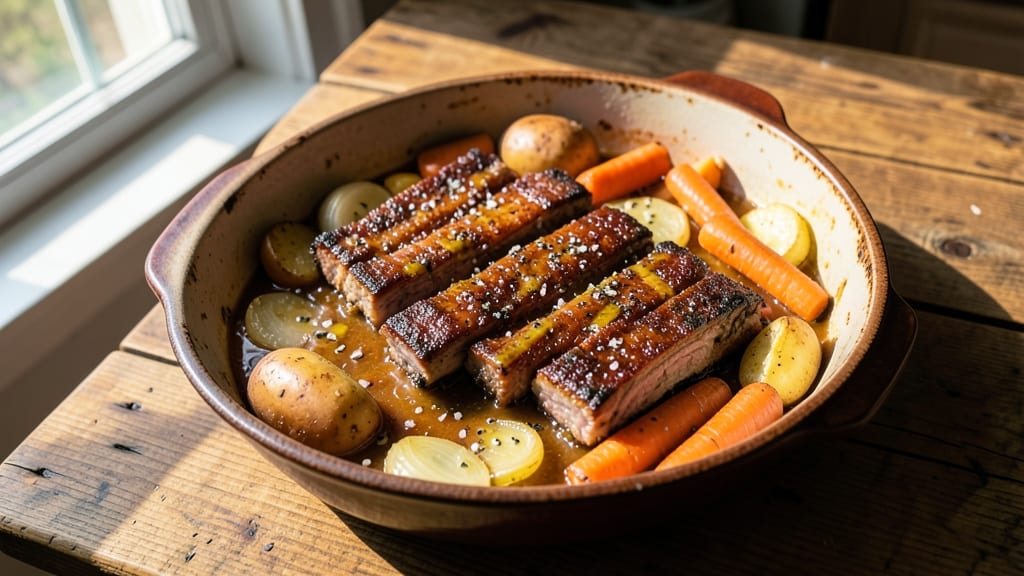
This pork ribs with vegetables recipe transforms weeknight cooking into a hands-off, flavor-packed feast that rivals restaurant-quality results. After years of perfecting slow-cooked meats, I developed this one-pan method that delivers tender ribs with caramelized edges and vegetables that stay vibrant and sweet—all while requiring minimal effort.
The secret lies in balancing dry heat and moisture, creating that signature smoky-sweet harmony without a smoker or grill.
What makes this recipe truly special is its simplicity: just one pan, one hour of active time, and ingredients you likely already have. The ribs develop deep, savory flavors from a dry rub and slow roasting, while the vegetables—carrots, potatoes, and onions—absorb the same rich juices without turning mushy.
This method works perfectly with bone-in ribs or pork chops, making it versatile enough for family dinners or game day gatherings.
By the time you pull that pan from the oven, you'll have ribs that fall off the bone with just a gentle tug, and vegetables that are perfectly tender with a slight caramelized crust.
The aroma alone will have everyone gathering at the table, and the first bite delivers that perfect balance of smoky, sweet, and savory flavors. It's the kind of meal that feels like a celebration, even on a regular Tuesday.
Serve with a drizzle of pan juices for extra richness, or pair with crusty bread to soak up every last bit. The leftovers reheat beautifully, making this an ideal recipe for meal prep or feeding a crowd. Let's get started on creating this showstopping one-pan dinner.
Ingredients for pork ribs with vegetables
Fifteen ingredients, one pan, restaurant-quality harmony with minimal effort.
| Ingredient | Amount | Notes |
|---|---|---|
| Bone-In Pork Ribs 🥩 | 2 ½ lb | Baby back or St. Louis style, cut into individual ribs |
| Yellow Onions 🧅 | 2 whole | Cut into 1-inch wedges, skin on |
| Carrots 🥕 | 1 ½ lb | Whole, unpeeled, cut into 2-inch pieces |
| Russet Potatoes 🥔 | 2 lb | Cut into 1-inch chunks, skin on |
| Extra-Virgin Olive Oil 🫒 | ¼ cup | For drizzling and roasting |
| Dry Mustard 🌶️ | 2 tbsp | Yellow or Dijon, for rub |
| Smoked Paprika 🌶️ | 1 tbsp | For deep smoky flavor |
| Garlic Powder 🧄 | 1 tbsp | Freshly ground preferred |
| Ground Black Pepper 🌶️ | 1 tsp | Freshly cracked for intensity |
| Kosher Salt 🧂 | 1 ½ tbsp | Diamond Crystal preferred |
| Brown Sugar 🍯 | 2 tbsp | Light or dark, for caramelization |
| Apple Cider Vinegar 🍏 | 2 tbsp | For tangy balance |
| Fresh Rosemary 🌿 | ¼ cup | Chopped, for aromatic depth |
| Fresh Thyme 🌿 | ⅛ cup | Leaves only, for herbal notes |
| Honey 🍯 | 2 tbsp | Wildflower preferred for complexity |
The ribs form the foundation of this dish, so selecting the right cut is paramount. Baby back ribs deliver tender meat with less connective tissue than St. Louis-style, though both work beautifully. Purchase from a trusted butcher or high-quality grocer like Whole Foods or Costco—look for ribs with a vibrant pink hue and minimal marbling along the edges. If using frozen ribs, thaw overnight in the refrigerator to ensure even cooking. The vegetables should be fresh but sturdy; organic carrots and potatoes from the produce section at Trader Joe's or your local farmers' market provide superior flavor and texture. For the herbs, fresh is ideal, but if dried is all you have, use one-third the amount and toast them lightly in a dry pan before adding to the rub.
Substitutions can be made thoughtfully without sacrificing quality. No smoked paprika? Swap for 2 teaspoons of liquid smoke plus an extra 1/2 teaspoon of regular paprika. Out of fresh rosemary? Dried rosemary works at one-third the amount, but toast it first to intensify the flavor. Potatoes too starchy? Substitute Yukon Golds for a creamier texture. The apple cider vinegar can be replaced with balsamic vinegar for a slightly sweeter profile, though the tang will differ. For a quicker prep, use pre-cut frozen vegetables—just ensure they're fully thawed before roasting. The honey can be swapped for maple syrup for a different depth of sweetness, though it may darken slightly faster during roasting.
Proper storage extends the life of your ingredients and maintains their quality. Fresh herbs should be wrapped in damp paper towels and stored in a sealed container for up to 5 days. The dry rub ingredients keep indefinitely in an airtight container, though smoked paprika and garlic powder lose potency after 6 months. Roasted vegetables can be refrigerated for 4-5 days or frozen for 3 months—portion them into single-serving containers for easy reheating. The pork ribs are best consumed within 2 days of cooking, though they reheat beautifully in a 350°F oven for 10-15 minutes with a splash of water or broth to retain moisture. For meal prep, store components separately and assemble just before serving to preserve texture.
Why You'll Love This Recipe
- One-Pan Magic: Honestly, this is the kind of dish where you toss everything in one pan and forget about it. The ribs, potatoes, and carrots all cook together—no switching pots, no frantic cleanup. Just dump, drizzle with olive oil, and let the oven do the heavy lifting while you grab a beer.
- Crave-Worthy Caramelization: The onions and potatoes develop this spot-on golden-brown crust while the ribs stay juicy. That sweet, sticky sauce clinging to the ribs? It’s the kind of flavor that makes you pause mid-bite and think, “Yes, exactly what I needed.”
- Leftovers That Shine: I always make extra ribs—trust me, they’re even better the next day. Slice them thin over a fresh salad or mash the potatoes into creamy wedges. Budget-friendly and still feels like a treat, not a repeat meal.
- Weeknight Hero: Between work and errands, this is my go-to. Bone-in ribs mean no fussing with brining or marinating—just season, roast, and serve. The veggies soak up all the rib juices, so nothing goes to waste, and my wallet thanks me.
Step-by-step instructions for one-pan roasted pork ribs with vegetables
This method delivers perfectly caramelized ribs alongside tender vegetables in a single pan.
Prepare the Dry Rub and Marinate the Ribs
In a small mixing bowl, combine the 2 tablespoons dry mustard, 1 tablespoon smoked paprika, 1 tablespoon garlic powder, 1 teaspoon ground black pepper, 1.5 tablespoons kosher salt, and 2 tablespoons brown sugar. Mix thoroughly until the spices are evenly distributed and the sugar is fully incorporated into the dry ingredients.
Place the 2.5 lb bone-in pork ribs in a large bowl and drizzle with the 0.25 cup extra-virgin olive oil. Toss gently to coat the ribs evenly, then sprinkle the dry rub mixture over them. Using your hands, massage the rub into the ribs, ensuring every surface is well-coated. This step is crucial for developing deep flavor and a caramelized crust during roasting.
Transfer the ribs to a plate and let them sit at room temperature for 30 minutes while you prepare the vegetables. This allows the rub to adhere more effectively and ensures even cooking throughout the meat.
Prep and Toss the Vegetables
In a large bowl, combine the 2 whole yellow onions (cut into 1-inch wedges), 1.5 lb carrots (cut into 2-inch pieces), and 2 lb russet potatoes (cut into 1-inch chunks). Drizzle with the remaining 0.25 cup extra-virgin olive oil and toss gently to coat evenly.
In a separate small bowl, mix the 2 tablespoons apple cider vinegar, 2 tablespoons honey, 0.25 cup chopped fresh rosemary, and 0.125 cup fresh thyme leaves. Pour this mixture over the vegetables and toss again to ensure everything is well-coated. The acidity of the vinegar and sweetness of the honey will enhance the natural flavors of the vegetables while preventing them from drying out during roasting.
Let the vegetables sit for 10 minutes while you preheat the oven. This gives the flavors time to meld slightly before hitting the high heat of the oven.
Arrange and Roast the Ribs and Vegetables
Preheat your oven to 425°F with the rack positioned in the middle position. Line a large, heavy-duty baking sheet with aluminum foil for easy cleanup. Arrange the marinated ribs in a single layer on one side of the baking sheet, leaving space between each rib for even air circulation.
Spread the prepared vegetables on the opposite side of the baking sheet, creating a clear separation between the ribs and vegetables. This prevents the vegetables from steaming and ensures they develop a crispy exterior. Roast for 45 minutes, then carefully flip the ribs and toss the vegetables using a large spatula or tongs.
Return the baking sheet to the oven and continue roasting for an additional 30-45 minutes, or until the ribs reach an internal temperature of 195-203°F at the thickest part of the meat. The vegetables should be tender with slightly caramelized edges. If the vegetables begin to brown too quickly, tent them loosely with foil for the final 10-15 minutes of cooking.
Rest and Serve
Once the ribs reach the desired internal temperature, remove them from the oven and transfer the ribs to a cutting board. Tent loosely with foil and let them rest for 15 minutes. This resting period allows the juices to redistribute, ensuring each bite is moist and flavorful.
While the ribs rest, return the vegetables to the oven for an additional 5-10 minutes if needed to achieve your desired level of caramelization. Taste the vegetables and adjust seasoning if necessary, adding a pinch of kosher salt or a splash of apple cider vinegar if needed.
Slice the ribs between each bone and serve them alongside the roasted vegetables. The combination of smoky, sweet ribs and tender, caramelized vegetables creates a harmonious one-pan meal that's perfect for a hearty dinner.
Pro Tips For Making Pork Ribs With Vegetables
- Trim the Fat First: Slice off that thick silver skin and any excess fat from the ribs before cooking—it’s the only way to guarantee even browning and crisp edges. I learned this the hard way when my first batch turned out greasy and uneven; now I do it right after bringing the ribs home from the butcher.
- Par-Cook the Potatoes: Toss the Russets in boiling water for 5 minutes before adding them to the ribs—this softens them faster without turning to mush. After burning three batches where the potatoes stayed rock-hard, I finally cracked this. (Yes, even if you're impatient like me.)
- Layer Onions Last: Add sliced yellow onions in the final 20 minutes of cooking so they caramelize instead of turning to mush. I used to dump them in early and wondered why they always tasted bland—now they’re the star of the dish.
- Use a Roasting Pan: Skip the baking sheet—roasting pans trap moisture and let the ribs and veggies steam slightly, keeping everything juicy. I was skeptical until I tried it; now it’s non-negotiable for this recipe. (Your future self will thank you.)
Creative variations of this dish
Sweet and Spicy BBQ Twist
For a Southern-inspired variation, swap the dry rub for a BBQ-inspired blend using 1 tbsp smoked paprika, 1 tbsp chili powder, 1 tbsp brown sugar, 1 tsp garlic powder, and ½ tsp cayenne pepper.
After roasting, brush the ribs with ½ cup BBQ sauce (I love Sweet Baby Ray's Original) during the last 10 minutes of cooking. The sauce caramelizes beautifully, creating a sticky glaze. Serve with pickled jalapeños on the side for heat lovers. 🌶️
Herb-Crusted French Style
Transform this into a French-inspired dish by coating the ribs in a herb crust made with 2 tbsp Dijon mustard, 1 tbsp chopped fresh thyme, 1 tbsp chopped fresh rosemary, 1 tsp garlic powder, and ½ cup crushed pistachios (for crunch).
Roast the ribs at 375°F instead of 425°F for 1 hour to develop deeper flavors. Pair with roasted fingerling potatoes and sautéed green beans for an elegant twist. 🌿
Asian-Inspired Glazed Ribs
Infuse this recipe with Asian flavors by adding 2 tbsp soy sauce, 1 tbsp sesame oil, 1 tbsp grated fresh ginger, and 2 cloves minced garlic to the vegetable marinade.
For the ribs, use a glaze of 3 tbsp hoisin sauce, 1 tbsp rice vinegar, and 1 tbsp honey, brushing it on during the last 15 minutes of roasting. Serve with steamed bok choy and sliced cucumbers for a refreshing contrast. 🍚
Breakfast Ribs with Hash Browns
Turn dinner into breakfast by adding crispy hash browns to the pan. Toss 2 cups frozen hash browns (thawed) with 1 tbsp olive oil and ½ tsp smoked paprika, then spread them on the baking sheet alongside the ribs and vegetables.
Roast at 400°F for 35 minutes, then add the ribs and vegetables for the remaining time. Top with fried eggs and hot sauce for a hearty brunch. 🍳
Slow-Cooker Adaptation
For a hands-off approach, use a 6-quart slow cooker instead of the oven. Sear the ribs in a skillet first, then place them in the slow cooker with the vegetables. Add ½ cup chicken broth and cook on LOW for 6-8 hours.
Finish by broiling the ribs for 5 minutes to crisp the edges. The slow cooker keeps the vegetables tender without drying them out. Perfect for busy weeknights! ⏰
Vegetable Swaps for Seasonal Eats
Adjust the vegetables based on what's fresh at the market. In spring, use asparagus and snap peas instead of carrots and potatoes. For fall, swap in butternut squash (cut into cubes) and brussels sprouts (halved).
In winter, try parsnips and celery root for extra heartiness. Each seasonal swap brings unique textures and flavors to the dish. 🍂
Nutrition facts
Frequently asked questions
Can I use pork chops instead of ribs in this recipe?
While ribs create that signature tender, fall-apart texture, bone-in pork chops work beautifully here. Cut them into serving-sized portions and follow the same 425°F roasting time, but reduce it to 25-30 minutes for medium-rare results. The vegetables will cook alongside them, absorbing the same smoky-sweet flavors. This makes for a quicker weeknight meal without sacrificing harmony.
Why do the vegetables need to be on the opposite side of the ribs?
Separating the ribs and vegetables prevents the vegetables from steaming and turning mushy. The high heat of 425°F caramelizes the vegetables' edges while keeping their interiors tender. Placing them together would create a steamy environment that softens them too quickly, losing that perfect balance of texture. The ribs benefit too—they crisp up beautifully without soggy edges!
How do I know when the ribs are done?
Use a meat thermometer to check the thickest part of the meat—aim for an internal temperature of 195-203°F. The ribs should feel tender when pressed and easily pull apart at the bone. If they're not quite there after 45 minutes, return them to the oven for another 15-20 minutes, flipping halfway. This range ensures juicy, not dry, results—perfect for slicing and serving.
Can I make this recipe ahead of time?
Yes! The ribs and vegetables reheat beautifully. Store the rested ribs and vegetables separately in airtight containers in the fridge for up to 3 days. Reheat at 350°F for 15-20 minutes, adding a splash of water or broth to the pan to keep them moist. The flavors deepen overnight, making it even more delicious the next day—ideal for meal prep!
What if my oven isn't hot enough?
If your oven maxes out below 425°F, increase the temperature by 25°F and reduce cooking time by 10 minutes. For example, roast at 450°F for 35 minutes, then flip and check for doneness. Use an oven thermometer to confirm accuracy—many home ovens run cooler than advertised. The key is crispy edges and tender centers!