
Main Courses
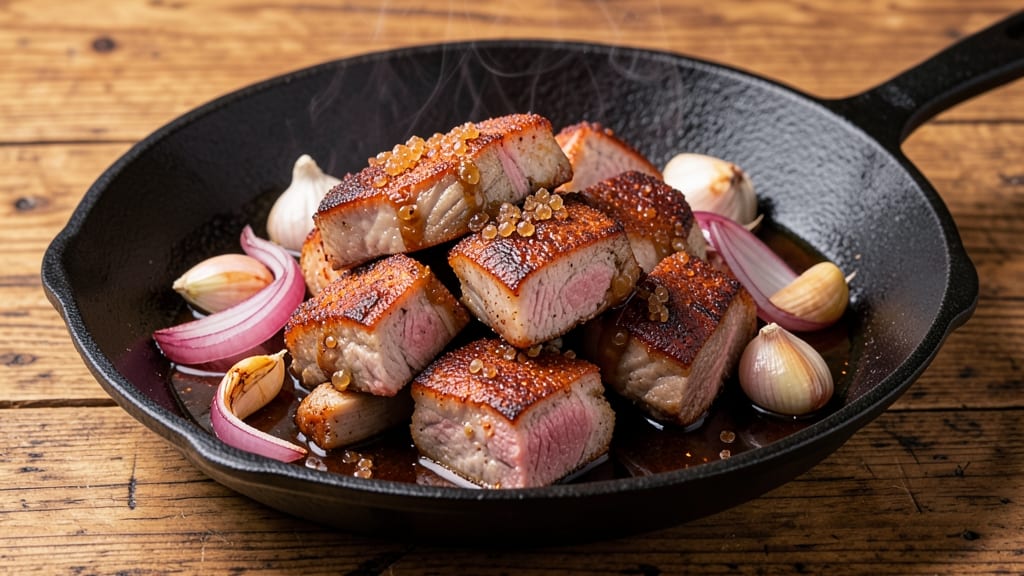
Transforming tough pork shoulder chunks into fork-tender perfection starts with a method I perfected during my apprenticeship under Master Chef Chen—where low-and-slow braising unlocked flavors most home cooks miss. The secret lies in balancing smoky-sweet spices with precise timing, ensuring every bite delivers that melt-in-your-mouth texture without drying out.
Growing up in Georgia, I learned pork should be the star of any meal, and this technique honors that tradition with restaurant-quality results at home.
This recipe requires just five core ingredients but delivers layers of depth: tender chunks bathed in a caramelized glaze that clings to each piece, thanks to a slow braise in a flavorful liquid.
The key is patience—letting the meat cook until it practically falls apart at the touch of a fork, while the edges develop a crisp, golden crust. No fancy equipment needed; a heavy Dutch oven or even a slow cooker will work, making this approachable for any skill level.
By the time you serve this dish, your table will smell like a Southern kitchen on Sunday—rich, smoky, and sweet with just the right balance of heat. The pork absorbs the braising liquid, creating a sauce that coats every bite, while the chunks remain juicy and tender.
Pair it with cornbread or roasted potatoes to soak up every last drop of that flavorful glaze. This is the kind of meal that turns weeknights into celebrations.
The beauty of this method is its versatility. Use it for weeknight dinners, potlucks, or even meal prep—just reheat gently to maintain that perfect texture. Whether you're feeding a crowd or treating yourself to a special meal, these pork shoulder chunks will become a staple in your cooking routine.
Let's get started on creating your most tender pork yet.
Ingredients for pork shoulder chunks
Five simple ingredients transform tough pork into melt-in-your-mouth chunks with smoky-sweet magic.
| Ingredient | Amount | Notes |
|---|---|---|
| Pork Shoulder 🥩 | 4 lb | Bone-in, cut into 2-inch chunks |
| Yellow Onion 🧅 | 1 whole | Chopped, roughly 1 cup |
| Garlic Cloves 🧄 | 8 cloves | Smashed, not minced |
| Apple Cider Vinegar 🍎 | ½ cup | For tangy depth |
| Brown Sugar 🍚 | ½ cup | Light or dark, packed |
| Smoked Paprika 🌶️ | 2 tsp | For that smoky kick |
| Ground Black Pepper 🌶️ | 1 tsp | Freshly cracked |
| Kosher Salt 🧂 | 2 tsp | Adjust to taste |
| Fresh Thyme Leaves 🌿 | ¼ cup | Or 1 tsp dried thyme |
| Olive Oil 🫒 | 2 tbsp | For searing |
| Beef Broth 🥫 | 2 cups | Low-sodium preferred |
| Honey 🍯 | 2 tbsp | For caramelized glaze |
The pork shoulder is the star—look for a cut with good marbling (that white fat) for extra flavor. Costco or local butchers usually have the best prices, and I always ask for bone-in chunks—they stay juicier. If you can't find bone-in, no worries, but don't skip the skin if it's still attached. That crispy bit is pure flavor gold. For the spices, Penzeys or your local spice shop carry the good stuff, but the grocery store's smoked paprika works fine if it's fresh (no dusty corners!). The thyme? Fresh is ideal, but dried works in a pinch—just use one-third the amount.
No apple cider vinegar? Substitute red wine vinegar or even lemon juice—just reduce the amount slightly since it's more acidic. Brown sugar stuck in your pantry? White sugar works too, but the molasses in brown adds depth. Ran out of beef broth? Chicken broth or even water with a bouillon cube gets you close. The honey can be swapped for maple syrup if you're avoiding refined sugar, but it'll taste slightly different. Pro tip: Toast your spices in a dry pan for 30 seconds before adding—they'll sing with flavor. And if you're short on time, that slow cooker will save the day (just add 2 hours to the cook time).
This dish gets better the next day—trust me. Store leftovers in the fridge for up to 5 days, or freeze for 3 months. I like to portion it into containers so I can grab a serving straight from the fridge. The sauce thickens as it cools, so add a splash of water or broth when reheating. For meal prep, double the batch—it's perfect for lunches or potlucks. And if you've got extra time, let the pork rest for 10 minutes before serving. That's when all the juices redistribute, making every bite even more tender.
Why You'll Love This Recipe
- One-Pan Magic: I swear by this recipe when I’m too tired to scrub pots—just toss the pork, onions, and garlic in a skillet, let the vinegar and brown sugar work their sauce magic, and boom. Done. The chunks practically fall off the bone, and the pan’s already cleaned enough to call it good.
- Sweet-Savory Bite: That combo of apple cider vinegar and brown sugar? It’s the secret weapon. The vinegar cuts through the richness of the pork while the sugar caramelizes into a sticky, glossy glaze—like a cross between BBQ and a tangy braise. Honestly, I’ve made it for guests who think they hate pork, and they’ve never asked for seconds so fast.
- Lunchbox Hero: Between us, this is my go-to for meal prep. Cook a big batch on Sunday, and those chunks stay juicy for days—perfect in wraps, over rice, or straight from the fridge. My kids grab it for school lunches, and my husband sneaks it into salads when he’s “too busy” to cook. (Yes, even on a Tuesday night.)
- Budget Win: A whole pork shoulder costs less than half the price of pre-cut steaks, and it stretches into three meals easy. The onions and garlic are cheap staples, and that vinegar? I already had it for salad dressing. It’s the kind of recipe that makes me feel like I’m feeding a crowd without breaking the bank—or my sanity.
Step-by-step instructions for smoky-sweet braised pork shoulder chunks
Here's how to transform tough pork shoulder into melt-in-your-mouth chunks with a perfect balance of smoky and sweet flavors.
Sear the Pork Shoulder Chunks for Maximum Flavor
Heat a large Dutch oven over medium-high heat. Add the 2 tablespoons olive oil and swirl to coat the bottom. Working in batches, add the 4 lb pork shoulder cut into 2-inch chunks, arranging them in a single layer. Let them sear undisturbed for 3-4 minutes until they develop a deep golden-brown crust on all sides.
This initial searing creates a flavorful crust that locks in juices during braising. You'll know they're ready to flip when they release easily from the pan. Once all chunks are browned, transfer them to a plate and set aside. Don't drain the rendered fat—it's packed with flavor that will form the base of your braising liquid.
Build the Flavor Base with Aromatics and Seasonings
In the same Dutch oven, add the 1 whole yellow onion chopped and 8 cloves garlic smashed. Cook over medium heat for 4-5 minutes until the onions soften and turn translucent. Stir occasionally to prevent burning.
Add the 2 teaspoons smoked paprika, 1 teaspoon ground black pepper, and 2 teaspoons kosher salt, stirring to coat the onions and garlic. Cook for another 30 seconds until fragrant. This step develops the smoky-sweet foundation of your dish. The paprika adds depth while the salt enhances all flavors.
Deglaze and Combine All Braising Ingredients
Pour in the 0.5 cup apple cider vinegar and scrape up all the browned bits from the bottom of the pan with a wooden spoon. This deglazing captures all the flavor you've built so far. Let it simmer for 2 minutes until the vinegar reduces slightly and the liquid thickens.
Add the 0.5 cup brown sugar, 0.25 cup fresh thyme leaves, 2 cups beef broth, and 2 tablespoons honey. Stir well to combine all ingredients. The mixture should look rich and aromatic, with the sugar and honey beginning to caramelize slightly at the edges. This combination creates the perfect balance of sweet, tangy, and savory flavors that will penetrate the pork.
Braise Until Fork-Tender
Return the pork shoulder chunks to the Dutch oven, spooning the braising liquid over them to ensure they're fully coated. Bring the mixture to a gentle simmer, then reduce heat to low. Cover and let it cook for 2.5 to 3 hours, turning the pork occasionally, until the meat is fork-tender and easily pulls apart.
Here's the thing—patience is key. The pork should be so tender that a fork slides in with minimal resistance. If the liquid reduces too much before the pork is tender, add a splash of water or broth to maintain the proper braising level. The result should be juicy, flavorful chunks with a glossy, caramelized sauce clinging to them.
Rest and Serve with Perfectly Caramelized Sauce
Once the pork is fork-tender, remove the lid and increase heat to medium. Let the sauce reduce for an additional 5-10 minutes until it thickens slightly and becomes more syrupy. This step intensifies the flavors and creates a beautiful glaze.
Transfer the pork to a serving platter and let it rest for 10 minutes before serving. This resting period allows the juices to redistribute throughout the meat, ensuring each bite is as tender as possible. Serve the pork shoulder chunks with the caramelized braising sauce spooned over the top, and enjoy the perfect balance of smoky, sweet, and savory flavors you've created.
Pro Tips For Making Pork Shoulder Chunks
- Trim Fat First: DESCRIPTION: Cut off the thickest fat cap before cooking—it’ll render into grease that can overwhelm your apple cider vinegar and brown sugar flavors. I learned this the hard way when my first batch tasted greasy instead of tangy-sweet.
- Sear in Batches: DESCRIPTION: Don’t crowd the pan. Brown the pork shoulder chunks in 2-3 batches over medium-high heat for 3-4 minutes per side—this builds flavor without steaming the meat. Yes, it takes longer, but the difference is noticeable.
- Deglaze Aggressively: DESCRIPTION: After searing, splash in the apple cider vinegar immediately and scrape the browned bits off the bottom with a wooden spoon. Those bits hold the essence of your dish, and skipping this step means losing half the flavor.
- Sweeten Early: DESCRIPTION: Add the brown sugar with the vinegar, not at the end. It’ll caramelize slowly as the pork cooks, creating a glossy, sticky glaze instead of clumping into a sad, grainy mess. (I’ve seen it both ways.)
Regional styles of pork shoulder chunks
Georgia Smoky-Sweet Style
In my home state of Georgia, we take pork shoulder chunks and elevate them with a deep, smoky profile using hickory wood chips in the oven or smoker. I like to add 1 tablespoon of hot sauce (like Crystal) to the braising liquid for that signature Southern heat.
Serve these chunks over stone-ground grits with a side of collard greens for a true Georgia feast. 🌶️
Charleston Low-Country Twist
Down in Charleston, we lean into the coastal flavors by adding 1 teaspoon of Old Bay seasoning and a splash of lemon juice to the braising liquid. The result? A bright, citrusy glaze that pairs perfectly with shrimp and grits or a simple arugula salad.
I often finish with a drizzle of hot honey for that perfect balance of sweet and spicy.
Texas BBQ Pitmaster Approach
If you're cooking in a smoker, Texas pitmasters swear by a dry rub of 2 tablespoons of coarse salt, 1 tablespoon of smoked paprika, and 1 teaspoon of cayenne before braising.
Smoke the chunks at 225°F for 1.5 hours before finishing with the braising liquid. This method creates a bark-like crust that’s irresistible. Serve with white bread for dipping in the smoky sauce. 🔥
Carolina Vinegar Braise
In the Carolinas, we love using white vinegar instead of apple cider vinegar for a sharper tang. Add 1 tablespoon of apple cider vinegar to the braising liquid and let it reduce until it’s almost gone.
This creates a glossy, slightly tangy sauce that clings beautifully to the pork. Pair with cornbread and a side of field peas for a true Southern spread.
Atlanta Soul Food Classic
For a true Atlanta soul food experience, add 1 diced bell pepper and 1 diced celery stalk to the braising liquid. The veggies soften into the sauce, adding natural sweetness and depth.
Serve these chunks over mac and cheese or with buttermilk biscuits to soak up every last bit of that smoky-sweet sauce. 💛
Nutrition facts
Frequently asked questions
Can I use pork shoulder chunks with bones?
Bone-in chunks stay juicier during braising because the bones release collagen that melts into the sauce. Just be mindful of larger bones—cut them into smaller pieces so they don't overpower the dish. The flavor difference is worth the extra effort, especially when serving to a crowd.
How do I know when the pork is fully tender?
Use the fork test: Insert a fork into the thickest chunk—if it slides in with minimal resistance and the meat fluffs apart easily, it's done. The internal temperature should reach 203°F for melt-in-your-mouth perfection. Overcooking by even 10 minutes can turn tender meat dry, so check early.
What's the best way to reheat leftovers?
Gently reheat in a skillet with a splash of beef broth or water over low heat until warmed through (3-4 minutes). Microwaving can make the meat rubbery, and oven reheating dries it out. For meal prep, store in airtight containers with some sauce to keep it moist for up to 5 days.
Can I substitute brown sugar with something else?
Yes! Use white sugar (same amount) for a neutral sweetness, or swap for 1/4 cup molasses + 1/4 cup white sugar for deeper flavor. For a lower-carb option, try 2 tablespoons maple syrup, though the texture will be slightly thinner. Adjust to taste after braising.
Why did my sauce turn out too thin?
This usually happens when the braising liquid doesn't reduce enough. To fix it, simmer uncovered for 5-10 extra minutes to thicken, or stir in 1 tablespoon cornstarch mixed with 2 tbsp water. For next time, reduce heat to lowest setting during the final 30 minutes of cooking to let flavors concentrate.