
Soups & Stews
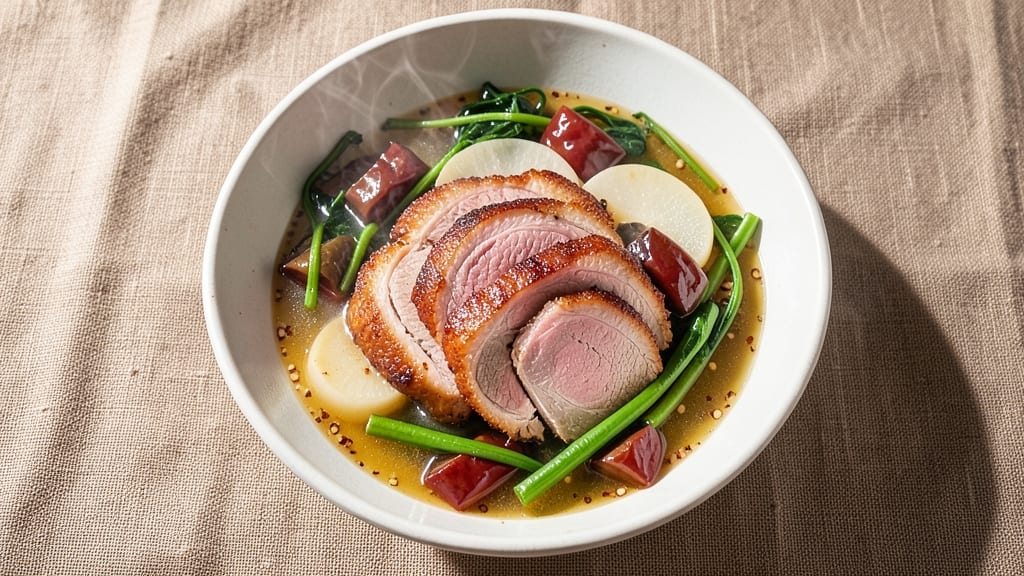
This pork shoulder sinigang recipe brings the soul of Filipino comfort food to your kitchen with its signature tender meat and bright, tangy broth. Growing up in small-town Georgia, I learned that slow-cooked pork transforms tough cuts into melt-in-your-mouth perfection—just like the way sinigang does with its long simmer.
The key lies in balancing sour tamarind or calamansi with savory pork, creating a broth that’s both complex and deeply satisfying.
The secret to achieving restaurant-quality results at home starts with the pork shoulder—braising it until it falls apart while developing rich, flavorful juices. Traditional ingredients like radish, kangkong (water spinach), and eggplant add texture and depth, while hard-boiled eggs provide protein.
This isn’t just a soup; it’s a celebration of Filipino flavors that brings warmth to any table.
By the time you serve this dish, you’ll have a steaming bowl of tender pork shoulder swimming in a vibrant, tangy broth, surrounded by fresh vegetables and garnished with herbs.
The aroma alone will have everyone gathering around the table, eager for that first spoonful. This recipe delivers the heart of Filipino home cooking—simple yet unforgettable.
Perfect for family dinners, potlucks, or when you crave a dish that’s both nourishing and deeply flavorful. Let’s bring the taste of the Philippines to your kitchen with this classic sinigang recipe.
Ingredients for pork shoulder sinigang
Six ingredients transform tough pork into melt-in-your-mouth perfection with tangy, vibrant broth.
| Ingredient | Amount | Notes |
|---|---|---|
| Pork Shoulder 🥩 | 3 lb | Bone-in for maximum flavor |
| Tamarind Paste 🍋 | ½ cup | Or substitute calamansi juice |
| Daikon Radish 🥕 | 1 whole | Peeled, cut into chunks |
| Eggplant 🍆 | 1 lb | Japanese or Asian variety preferred |
| Kangkong (Water Spinach) 🌿 | 1 lb | Fresh, stems trimmed |
| Green Beans 🍃 | 1 lb | Trimmed ends removed |
| Hard-Boiled Eggs 🥚 | 4 whole | Peeled for serving |
| Onion 🧅 | 1 whole | Yellow, sliced thick |
| Garlic Cloves 🧄 | 6 cloves | Minced for depth |
| Fish Sauce 🐟 | 2 tbsp | Red Boat preferred |
| Soy Sauce 🥢 | 2 tbsp | Light or regular |
| Lime Juice 🍋 | ¼ cup | Freshly squeezed |
| Salt 🧂 | 1 ½ tsp | Diamond Crystal preferred |
| Black Peppercorns 🌶️ | ½ tsp | Freshly cracked |
| Fresh Cilantro 🌿 | ¼ cup | Chopped for garnish |
The pork shoulder is your secret weapon here. Bone-in cuts from Costco or local butchers add depth—skip the pre-cut pieces from the grocery store. Look for marbling, not lean cuts. If you can't find tamarind paste, calamansi juice or lime juice with a pinch of sugar works in a pinch. The daikon radish should be firm, not soft—Asian markets often have the best selection. For kangkong, check the refrigerated section at Trader Joe's or any Asian grocery; it wilts fast so use it within 2 days. Eggplant? Japanese varieties are milder and less bitter—worth the hunt if you can find them.
No tamarind paste? Substitute lime juice plus 1 tbsp sugar—it’s not identical, but close. Fish sauce is non-negotiable for that umami punch, but soy sauce at half the amount gets you halfway there. Fresh cilantro is ideal, but dried at one-fourth the amount works if you’re out. The green beans can be French cut or regular—just trim the ends. For extra tang, add 1 tbsp vinegar at the end. The broth should be bright and sour, not sweet—taste as you go.
This soup gets better with time—3-4 days in the fridge lets the flavors meld beautifully. Portion into containers for easy lunches. Freezes for 3 months if you make a big batch. The pork falls apart easily after braising, so use tongs, not forks. Garnish with fresh cilantro right before serving—it wilts fast in hot broth. Leftovers reheat perfectly; just add a splash of water if it thickens too much.
Why You'll Love This Recipe
- One-Pot Magic: I swear by this recipe because it’s literally one pot—no chopping boards, no extra pans, just you, a big stockpot, and 30 minutes of hands-off simmering. The pork shoulder falls apart on its own, and the tamarind paste does all the sour work while you stir in the veggies at the end.
- Tamarind Tang: Here’s what sold me—the tamarind paste isn’t just sour, it’s complex. That deep, funky brightness cuts through the richness of the pork, and the daikon radish soaks it up like a sponge. (Yes, even on a Tuesday night when I’m too tired to think.)
- Leftover Hero: This soup begs to be made in bulk. The flavors actually get better the next day—honestly, the eggplant absorbs the broth like a dream, and the kangkong wilts into perfect texture. I freeze portions all the time; reheating it is just dump-and-warm.
- Budget Win: Pork shoulder is cheap, tamarind paste lasts forever, and seasonal veggies stretch this into a full meal. Between us, I’ve fed six people for under $15 with this—plus, the leftovers make lunch the next day feel like a treat, not a chore. Not the prettiest, but the taste makes up for it.
Step-by-step instructions for pork shoulder sinigang
Here's how to transform tough pork shoulder into melt-in-your-mouth tenderness while building a vibrant, tangy broth.
Prepare the Pork Shoulder for Maximum Tenderness
Begin by rinsing the 3 lb pork shoulder under cold water and patting it completely dry with paper towels. This step is crucial—any moisture left on the meat will prevent the marinade from penetrating properly. Place the pork in a large bowl and combine it with the 0.5 cup tamarind paste, 2 tbsp fish sauce, and 2 tbsp soy sauce. Massage the marinade into every crevice of the meat, ensuring it coats all surfaces evenly.
Cover the bowl with plastic wrap and refrigerate for at least 4 hours, or preferably overnight. This long marinating time breaks down the tough muscle fibers, guaranteeing that fork-tender result we're after. The tamarind paste will infuse the meat with its signature tangy depth, while the fish and soy sauces add umami richness that carries through the entire dish.
Build the Tangy Broth Foundation
In a large Dutch oven or heavy pot, combine 8 cups water (enough to generously cover the pork) with the 1 whole peeled and chunked daikon radish, 1 whole sliced onion, and 6 cloves minced garlic. Bring to a boil over high heat, then immediately reduce to a gentle simmer. Add the marinated pork shoulder and its marinade, then cover partially and cook for 2 hours. This initial cooking period allows the pork to begin tenderizing while extracting flavors from the aromatics.
After 2 hours, carefully remove the pork and set it aside. Strain the broth through a fine-mesh sieve into a clean pot, pressing gently on the solids to extract maximum flavor. Return the strained broth to the pot and add 1.5 tsp salt and 0.5 tsp freshly cracked black peppercorns. Taste and adjust the seasoning—you're aiming for a balance of sour from the tamarind and savory from the fish and soy. The broth should be vibrant and tangy, with a depth that will carry through the entire soup.
Cook the Vegetables and Finish the Broth
While the pork rests, prepare the vegetables. Cut the 1 lb eggplant into 1-inch chunks, trim the ends from the 1 lb green beans, and separate the leaves from the stems of the 1 lb kangkong (water spinach). Add the eggplant and green beans to the simmering broth and cook for 8-10 minutes until they begin to soften but still maintain a slight bite. The eggplant should absorb some of the broth's flavors while retaining its shape.
Add the kangkong stems first and cook for 3 minutes, then add the leaves and cook for another 2 minutes—this ensures the greens cook just enough to soften without turning mushy. Stir in the 0.25 cup freshly squeezed lime juice and simmer for 1 minute to brighten the broth's acidity. The lime juice will cut through the richness of the pork and vegetables, creating that signature sinigang tang.
Reintroduce the Pork and Complete the Soup
Shred the pork shoulder using two forks, pulling it apart into bite-sized pieces. Return the shredded pork to the pot and simmer for 5-7 minutes to heat through completely. The pork should be so tender it practically falls apart at the touch, with juices that mingle seamlessly into the broth. Add the 4 peeled hard-boiled eggs and gently stir to coat them with the flavorful liquid.
Taste the soup one final time and adjust the seasoning if needed—perhaps a splash more lime juice for brightness or a pinch of salt for depth. Ladle the hot sinigang into bowls and garnish each serving with 0.25 cup chopped fresh cilantro. The cilantro adds a fresh, herbal note that balances the dish's rich, tangy, and savory elements. Serve immediately with steamed rice to soak up every last drop of that irresistibly flavorful broth.
Pro Tips For Making Pork Shoulder Sinigang
- Brown the Pork First: Skip the direct braising—sear the pork shoulder in small batches until deep golden on all sides. I learned this the hard way: if you don’t, the broth stays pale and the meat falls apart when shredded. Use a heavy pot and medium-high heat; don’t rush it.
- Slice Daikon Thin: Cut the daikon radish into ¼-inch thick half-moons, not chunks. Thinner slices cook faster and absorb the tangy broth better. I used to leave them thick, and they’d turn mushy—now they stay crisp with just a hint of bite.
- Taste the Tamarind Early: Add half the tamarind paste to the broth first, then adjust after the pork has cooked. Too much upfront makes the soup overly sour; too little later means scrambling for balance. Start conservative—you can always add more.
- Shock the Kangkong: Blanch the water spinach in boiling water for 30 seconds, then plunge into ice water before adding to the pot. This keeps the leaves vibrant and prevents them from turning slimy in the acidic broth. (Yes, it’s extra work, but it’s worth it.)
Dietary considerations for this recipe
Gluten-Free Adaptation
This sinigang recipe is naturally gluten-free when using certified gluten-free fish sauce like Red Boat or Three Crabs brands. The tamarind paste, soy sauce, and other ingredients are also gluten-free, but always check labels—some fish sauces contain wheat-based additives.
I recommend Tamari instead of regular soy sauce for extra safety. The pork itself is naturally gluten-free, but avoid cross-contamination with gluten-containing utensils or cookware. 💪
Vegetarian Substitution
For a vegetarian version, replace the pork shoulder with 1 lb firm tofu or chicken breast (if not strictly vegan). Press and cube the tofu, then pan-fry until golden before adding to the broth. For a plant-based protein, use seitan or tempeh—both absorb flavors beautifully.
The rest of the recipe remains the same, with the same vibrant broth and vegetables. This version keeps the soul of sinigang intact.
Lower-Sodium Adjustments
Sinigang can be surprisingly salty due to the fish sauce and soy sauce. To reduce sodium, cut the fish sauce to 1 tbsp and use light soy sauce or coconut aminos instead. Skip adding extra salt during cooking and taste as you go—your palate will adjust to the natural flavors.
The tamarind and lime juice will still provide the tangy balance without relying on salt. I find this version just as satisfying, just lighter.
Dairy-Free Considerations
This recipe is naturally dairy-free, but if you're adding toppings like cheese or sour cream, opt for dairy-free alternatives like coconut yogurt or vegan cheese. The broth and meat are already rich enough to stand alone without dairy.
If you're using hard-boiled eggs, they're also a dairy-free option. The key is to focus on the bold flavors of the pork, tamarind, and vegetables—no dairy needed to make this dish shine.
Kid-Friendly Tweaks
Kids often shy away from the tangy broth, so reduce the tamarind paste to 0.25 cup and add 1 tbsp sugar to balance the sourness. You can also blend the broth slightly to smooth out any fibrous bits.
Serve the vegetables on the side so picky eaters can choose what to add. The pork remains the star, and the mild lime juice keeps it approachable. It’s amazing how much more appealing sinigang becomes with these subtle adjustments!
Nutrition facts
Frequently asked questions
Why does pork shoulder work best for sinigang?
Pork shoulder's high collagen content breaks down beautifully during the long simmer, creating that signature meltingly tender texture. The fat marbling also enriches the broth, balancing the tangy tamarind and fish sauce flavors. Unlike leaner cuts, it stays juicy even after hours of cooking.
Can I substitute tamarind paste with something else?
Use calamansi juice (if available) or mix lime juice with 1 tbsp sugar per 0.5 cup tamarind paste. For extra depth, add 1 tbsp vinegar at the end. The key is achieving that bright, sour balance—taste as you go.
How do I fix broth that's too sour or too bland?
For too sour: Add 1 tbsp sugar or a splash of coconut milk to mellow the acidity. For bland broth: Simmer longer with the pork (up to 3 hours) or add 1 extra tbsp fish sauce. The pork's natural juices will infuse more flavor over time.
What vegetables can I swap in if I can't find kangkong?
Try baby bok choy, spinach, or green cabbage for the greens. For eggplant, use zucchini or bell peppers—just adjust cooking time to 5-7 minutes instead of 8-10. The key is balancing textures: keep one soft veg (eggplant) and one crisp (green beans).
Can I make this in a slow cooker?
Yes! Brown the pork first in a pan, then transfer everything (including marinade) to your slow cooker. Cook on low for 8 hours or high for 5 hours. Add vegetables in the last 30 minutes to prevent mushiness. The slow cooker's gentle heat works perfectly for tenderizing the pork.