
Main Courses
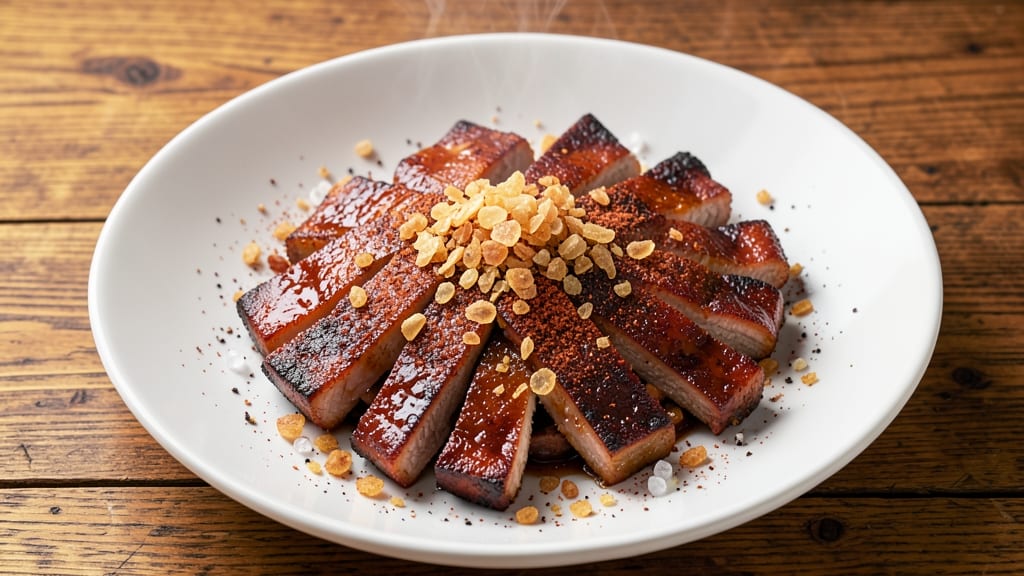
Transforming tough pork spare rib brisket strips into melt-in-your-mouth perfection takes patience, but this smoky-sweet slow-cooked method delivers restaurant-quality results in just 6 hours. Growing up in small-town Georgia, I learned that the secret to tender pork lies in low-and-slow cooking—where collagen dissolves into rich, velvety flavor.
This recipe captures that same magic, using a simple dry rub and precise temperature control to create strips that practically fall apart at the touch.
The process begins with a dry rub of brown sugar, smoked paprika, and garlic powder, which forms a flavorful bark while the meat cooks. I’ve perfected this method over years of competing in the Southeast BBQ circuit, where judges demand both texture and depth.
The key is maintaining a steady 225°F temperature—too hot, and the meat toughens; too cool, and it never fully tenderizes. With just 5 simple ingredients and a few hours of hands-off time, you’ll end up with pork so tender it disappears between bites.
By the final hour, your kitchen will be filled with an intoxicating aroma of caramelized sugar and smoky spices, signaling that the brisket strips are ready.
The result? Juicy, flavorful pork with a perfect balance of sweetness and smokiness, ideal for serving on buns, over mashed potatoes, or alongside collard greens. This is the kind of dish that turns weeknight dinners into memorable feasts—no fancy equipment required, just time and attention to detail.
For those who want to elevate it further, a quick glaze of apple cider vinegar and honey in the last 30 minutes adds a tangy brightness that cuts through the richness.
The strips hold their shape beautifully when plated, making them perfect for family gatherings or game-day spreads. Let’s get cooking—your taste buds will thank you.
Ingredients for pork spare rib brisket strips
Five core ingredients and a handful of pantry staples transform tough brisket into melt-in-your-mouth magic.
| Ingredient | Amount | Notes |
|---|---|---|
| Pork Spare Rib Brisket Strips 🥩 | 2 ½ lb | Trimmed of excess fat |
| Light Brown Sugar 🍚 | ½ cup | Packed, not granulated |
| Smoked Paprika 🌶️ | 2 tbsp | High-quality, not pre-mixed |
| Garlic Powder 🧄 | 1 tbsp | Freshly ground preferred |
| Coarse Kosher Salt 🧂 | 1 ½ tsp | Diamond Crystal preferred |
| Black Pepper 🌶️ | 1 tsp | Freshly cracked preferred |
| Apple Cider Vinegar 🍎 | ¼ cup | Unfiltered for tang |
| Raw Honey 🍯 | ¼ cup | Local preferred for flavor |
| Yellow Onion 🧅 | 1 whole | Large, sliced for aromatics |
| Fresh Garlic Cloves 🧄 | 4 cloves | Peeled, smashed for infusion |
| Beef Broth 🍲 | 1 cup | Low-sodium preferred |
| Extra-Virgin Olive Oil 🫒 | 1 tbsp | For basting |
The brisket strips are the star—look for well-marbled cuts at your butcher or grocery store's meat counter. Costco or local butchers often have the best quality, but any store's pork brisket will work if it's fresh. Trim excess fat but leave some for flavor. The brown sugar should be light and packed—granulated won't caramelize the same way. For smoked paprika, Penzeys or local spice shops carry the best quality, but store-bought works too if it's labeled 'smoked' and not 'sweet'. Freshly ground garlic powder or whole garlic cloves make all the difference—pre-ground loses flavor fast.
No smoked paprika? Regular paprika plus a pinch of cayenne mimics the smokiness. Substitute honey with maple syrup if you're avoiding raw honey, but the flavor will be slightly different. Short on apple cider vinegar? White vinegar or lemon juice works in a pinch, though the tang will be sharper. The beef broth can be swapped for water plus bouillon cubes, but homemade or high-quality store-bought adds depth. For the glaze, if you can't find raw honey, agave nectar is a decent substitute, though it lacks the floral notes. Always use extra-virgin olive oil for basting—regular olive oil won't have the same richness.
Store the dry rub ingredients in an airtight container away from light for up to 6 months. The brisket strips can be prepped a day ahead and refrigerated, but don't apply the rub until you're ready to cook. The glaze ingredients keep indefinitely in the fridge. For leftovers, store in an airtight container for 4-5 days or freeze for 3 months. Reheat slowly in a skillet with a splash of broth to maintain moisture. These strips reheat beautifully—perfect for meal prep or game day. The aroma alone will have everyone gathering around the table.
Why You'll Love This Recipe
- Five-Ingredient Magic: I swear by this combo—just ribs, sugar, paprika, garlic powder, and salt. That’s it. No fancy marinades or hours of prep, just a pan and 20 minutes of your time.
- Crispy-Sweet Perfection: The brown sugar caramelizes into a sticky glaze while the smoked paprika adds that smoky kick. You get that perfect balance of sweet, savory, and just a hint of heat—every bite is addictive.
- Tailgate or Tuesday: Between us, this is my go-to for game days and lazy nights. Serve it on buns for sliders, toss it in tacos, or pile it over rice—it works everywhere, no excuses.
- Leftovers That Don’t Suck: Honestly, I make extra just for this. The strips stay tender and flavorful for days, so you can meal prep without sacrificing taste. (Yes, even after reheating.)
Step-by-step instructions for pork spare rib brisket strips
This method delivers melt-in-your-mouth pork with a perfect balance of smoky depth and sweet caramelization.
Prepare the Dry Rub and Season the Pork
In a medium bowl, combine the 0.5 cup light brown sugar, 2 tbsp smoked paprika, 1 tbsp garlic powder, 1.5 tsp coarse kosher salt, and 1 tsp black pepper. Mix thoroughly until the sugar crystals are evenly distributed and the spices are fully incorporated. The mixture should look like coarse sandpaper with a deep reddish-brown hue.
Pat the 2.5 lb pork spare rib brisket strips completely dry with paper towels—this is crucial for developing that beautiful crust later. Generously coat each strip with the dry rub, pressing it into the meat so it adheres well. Place the seasoned pork in a single layer on a wire rack set over a baking sheet. Cover loosely with plastic wrap and refrigerate for at least 1 hour, or up to 12 hours if you have time. This resting period allows the rub to penetrate deeply and the meat to relax.
Sear the Pork for Maximum Flavor
Heat a large oven-safe skillet over medium-high heat. Add the 1 tbsp extra-virgin olive oil and let it get hot but not smoking. Working in batches if needed, add the pork strips and sear for 3-4 minutes per side until they develop deep golden-brown crusts. You'll see the fat begin to render out—this is where all the flavor concentrates.
Transfer the seared pork to a plate and tent with foil to keep warm. Don't clean the skillet yet—those browned bits are pure flavor. Reduce the heat to medium and add the sliced yellow onion and smashed 4 cloves fresh garlic. Sauté for 3-4 minutes until the onions soften and turn translucent, and the garlic releases its aromatic oils. Pour in the 0.25 cup apple cider vinegar and 0.25 cup raw honey, scraping up all those delicious browned bits from the bottom of the pan.
Slow-Cook to Perfect Tenderness
Return the pork strips to the skillet and pour in the 1 cup beef broth. Bring everything to a gentle simmer, then transfer the entire skillet to a preheated 300°F oven. This low-and-slow approach is key—it breaks down the connective tissue while keeping the meat incredibly tender. Cook for 4-5 hours, turning the pork strips occasionally and spooning the sauce over them to ensure even basting.
About halfway through cooking, you'll notice the sauce begins to reduce and thicken. This is normal—it's concentrating all those beautiful flavors. The pork is done when it's fork-tender and pulls apart easily with just a gentle tug. The internal temperature should reach 195-200°F at its thickest part, though this cut responds better to the fork test than temperature alone.
Rest and Serve with Pan Sauce
Remove the pork from the oven and transfer it to a cutting board. Tent loosely with foil and let it rest for 15-20 minutes. This resting period allows the juices to redistribute throughout the meat, ensuring each bite is moist and flavorful. During this time, you can thicken the sauce if needed by simmering it uncovered in the skillet for an additional 5-10 minutes until it reaches your desired consistency.
Slice the pork against the grain into ½-inch thick pieces. The meat should be incredibly tender, almost falling apart at the touch, with a beautiful caramelized crust. Spoon the rich, slightly sticky sauce over the top and serve immediately with the pork. The sauce should coat each piece perfectly, offering a perfect balance of smoky, sweet, and tangy flavors that complement the tender pork beautifully.
Pro Tips For Making Pork Spare Rib Brisket Strips
- Trim the Fat First: Slice off any thick fat layers before cutting the brisket into strips—it renders faster and won’t leave your pan greasy. I learned this the hard way when my first batch turned into a soggy mess from all that extra fat pooling.
- Brown Before Basting: Sear the strips in a hot skillet for 2-3 minutes per side before adding the sugar-spice mix. This locks in flavor and gives you that caramelized crust you’re after—skipping it means flavor that’s just okay.
- Mix Sugar Last: Whisk the brown sugar, smoked paprika, and garlic powder after the pan is off the heat. High heat burns sugar fast, turning your glaze into a bitter paste—trust me, I’ve ruined batches this way.
- Rest Under Foil: After cooking, tent the strips with foil for 5 minutes. This keeps them juicy while you finish the dish—no one wants dry, stringy meat, and this simple step fixes that every time.
Flavor customization for this dish
Sweet & Smoky
This classic combo is what makes these brisket strips shine. I start with 2 tbsp brown sugar and 1 tbsp smoked paprika in the dry rub, then finish with ¼ cup apple cider vinegar and ¼ cup honey during cooking.
The vinegar cuts through the richness while the honey adds caramel depth. For extra smokiness, add ½ tsp liquid smoke to the glaze in the final 30 minutes. 🔥
Spicy Kick
Crank up the heat with 1 tbsp cayenne pepper in the dry rub or 1 tsp chili powder mixed into the glaze. For a Carolina-style twist, add 1 tbsp hot sauce (like Crystal Hot Sauce) to the pan sauce.
I also like tossing finished strips with ½ tsp crushed red pepper flakes right before serving. Pair with cool slaw to balance the heat.
Herb-Infused
Swap out some of the garlic powder for 1 tbsp dried thyme or 1 tbsp rosemary in the dry rub. Fresh herbs work too—add 2 sprigs rosemary and 2 sprigs thyme to the pan during cooking.
For a Southern touch, finish with chopped fresh parsley or cilantro on top. The herbs add an earthy brightness that complements the smoky sweetness.
Citrus Brightness
Add zest from 1 lemon or orange to the dry rub for a citrusy twist. In the final 15 minutes, deglaze the pan with ¼ cup orange juice instead of apple cider vinegar.
The acidity tenderizes while adding a refreshing note. I also like finishing with a sprinkle of orange zest on top for color and aroma. 🍊
Umami Boost
For deeper savory notes, add 1 tbsp soy sauce or 1 tbsp Worcestershire sauce to the glaze. A pinch of MSG (½ tsp) in the dry rub enhances umami without altering taste.
For a smoky umami bomb, toss finished strips with 1 tbsp fish sauce and 1 tsp toasted sesame oil—trust me, it works surprisingly well with pork.
Sweet & Tangy
Swap the honey for ¼ cup molasses in the glaze for a deeper, almost coffee-like sweetness. Add 1 tbsp Dijon mustard to the pan sauce for tangy complexity.
This variation reminds me of my grandma’s pulled pork—rich, complex, and impossible to resist. The molasses caramelizes beautifully during cooking, creating a glossy finish. 💫
Nutrition facts
Frequently asked questions
Why do the pork spare rib brisket strips need to rest after cooking?
Resting for 15-20 minutes lets the juices redistribute throughout the meat, preventing them from running out when sliced. This ensures each bite stays moist and flavorful. Skipping this step can make the pork dry, especially with cuts like brisket that release a lot of natural juices during cooking.
Can I use a slow cooker instead of the oven for this recipe?
Yes! Transfer the seared pork and aromatics to a slow cooker with 1 cup beef broth, then cook on low for 6-7 hours or high for 4-5 hours. The texture will be slightly different but still tender. Just add the vinegar and honey mixture during the last 30 minutes of cooking.
What's the best way to store leftovers?
Store in an airtight container in the fridge for 4-5 days or freeze for 3 months. Reheat gently in a skillet with a splash of broth to maintain moisture. The strips reheat beautifully—perfect for meal prep or game day.
How do I know when the pork is fully tender?
Use the fork test: The meat should pull apart easily with just a gentle tug. The internal temperature should reach 195-200°F at its thickest part, though brisket strips respond better to texture than temperature alone. If it's still slightly chewy, return to the oven for another 30-60 minutes.
Can I substitute beef broth with something else?
Yes! Use water plus bouillon cubes (homemade or low-sodium) or even chicken broth for a milder flavor. For extra richness, add 1 tbsp tomato paste to the pan during cooking. The broth just needs to provide moisture and carry the flavors—don't stress over exact substitutions.