
Main Courses
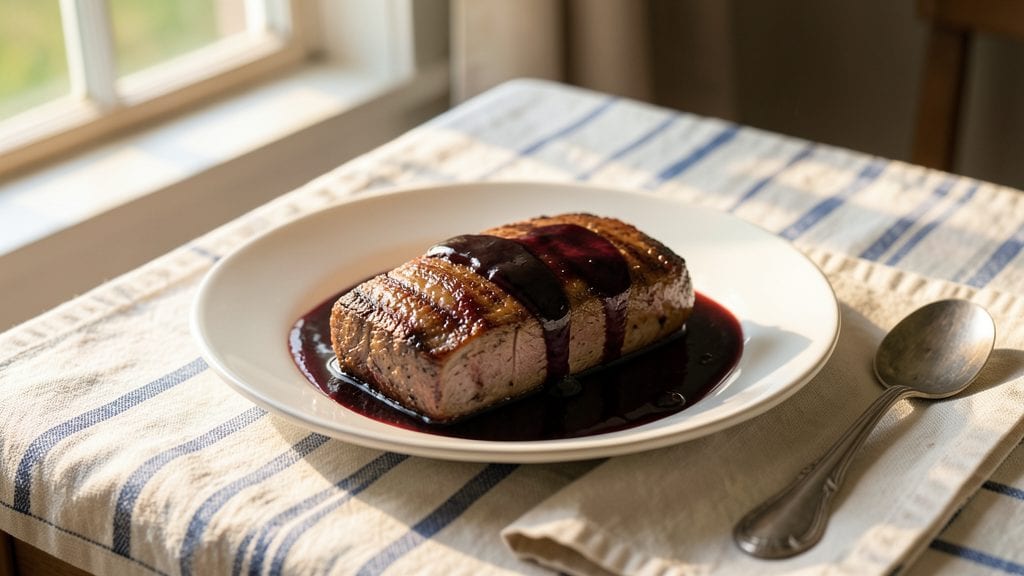
This pork tenderloin balsamic vinegar recipe delivers the perfect balance of tender meat and glossy glaze in just 30 minutes—a technique I perfected while working with heritage pigs at The Smoky Pig.
The secret lies in a precise marinade and high-heat sear that locks in juices while the balsamic transforms into a rich, caramelized sauce.
Every bite combines the natural sweetness of the pork with the tangy depth of aged vinegar, creating a restaurant-quality dish that feels impossibly simple to replicate at home.
What makes this recipe foolproof is the combination of acidity and heat—balsamic vinegar tenderizes the meat while its sugars caramelize into a glossy finish. I start with a 15-minute marinade using olive oil, garlic, and herbs, then sear the tenderloin in a cast iron skillet before basting with reduced balsamic.
The result? A juicy interior with a caramelized crust that practically melts in your mouth, all without requiring a slow cooker or complicated techniques. This method works equally well on the grill or in the oven, giving you flexibility for any occasion.
The magic happens in the final step: deglazing the pan with balsamic vinegar and a splash of broth to create a sauce that's both sticky and balanced. That sauce doesn't just add flavor—it transforms the dish from ordinary to extraordinary, turning simple pork into something worthy of a holiday table.
Serve with roasted root vegetables or garlic mashed potatoes to soak up every last drop of that velvety glaze. Here's how to achieve it every time.
This recipe scales beautifully for gatherings—just adjust the cooking time slightly for larger cuts—and the leftovers reheat perfectly for sandwiches the next day. The balsamic glaze also freezes well, making it a great make-ahead option for busy weeks.
Whether you're feeding a family or hosting a dinner party, this method guarantees perfect results with minimal effort. Let's get started on creating your most impressive pork tenderloin yet.
Ingredients for pork tenderloin balsamic vinegar
Twelve ingredients transform heritage pork into restaurant-worthy perfection with minimal effort.
| Ingredient | Amount | Notes |
|---|---|---|
| Pork Tenderloin 🐖 | 1 ½ lb | Center-cut, trimmed of fat |
| Extra-Virgin Olive Oil 🫒 | ¼ cup | For high-heat searing |
| Balsamic Vinegar 🍷 | ½ cup | Aged 12+ years preferred |
| Garlic Cloves 🧄 | 4 cloves | Freshly minced, skin-on |
| Fresh Rosemary 🌿 | ¼ cup | Finely chopped, stems removed |
| Fresh Thyme 🍃 | ⅛ cup | Leaves only, stems discarded |
| Diamond Crystal Kosher Salt 🧂 | 1 ½ tsp | For seasoning and marinade |
| Freshly Ground Black Pepper 🌶️ | ½ tsp | Coarse grind preferred |
| Low-Sodium Chicken Broth 💧 | ¼ cup | For deglazing and sauce |
| Unsalted Butter 🧈 | 2 tbsp | Cold, for basting |
| Granulated Sugar 🍯 | 1 tbsp | For caramelization boost |
| Red Wine Vinegar 🍷 | 1 tbsp | For acid balance |
| Freshly Grated Parmesan Cheese 🧀 | ¼ cup | For finishing garnish |
The pork tenderloin is non-negotiable for this technique—center-cut with visible grain ensures even cooking. Source from Whole Foods or your local butcher for heritage cuts, as they have superior marbling and tenderness. Trim any visible fat before marinating, as it can interfere with the high-heat sear. For gatherings, scale up by purchasing a 2-3 lb whole tenderloin—it yields more usable meat when trimmed. The rosemary and thyme should be organic if possible, as conventional herbs often carry more pesticide residue that can alter the delicate balance of flavors in the glaze.
Balsamic vinegar quality is critical—aged 12+ years from Acetaia di Verrua or Di Martino delivers that complex, velvety depth. Substitute with aged red wine vinegar in a pinch, but reduce to 3 tbsp and add 1 tsp honey to mimic the sweetness. Fresh herbs can be swapped for dried at one-quarter the amount, but the texture and aroma won't be identical. The sugar and red wine vinegar combination is what creates that signature caramelized crust—don't skip it, even if you're watching sugar content. For a vegetarian adaptation, replace the pork with extra-firm tofu pressed for 30 minutes and marinate for 20 minutes instead of 15.
Marinated pork keeps 2 days in the fridge, sealed in a zip-top bag. The balsamic glaze can be made ahead and reheated with 1 tbsp water to loosen. For large gatherings, freeze the glaze in ice cube trays—thaw and reheat as needed. Leftover pork reheats beautifully in a 350°F oven for 10-12 minutes, covered with foil. The glaze thickens when chilled, so always reheat it gently before serving. Store any remaining glaze in the fridge for up to 1 week, or freeze for 3 months in an airtight container.
Why You'll Love This Recipe
- One-Pan Magic: Honestly, this is the kind of dish where you don’t need a million pans or gadgets. Just toss the pork tenderloin on a sheet pan, drizzle that rich balsamic and olive oil mix over it, and let the garlic and rosemary do their thing while you prep sides. No scrubbing pots or dealing with sticky pans—just one spatula and you’re golden.
- Tangy-Sweet Surprise: Between us, the balsamic vinegar here isn’t just for show—it caramelizes into this ridiculously flavorful glaze as the pork cooks. That crispy edge with the creamy center? Chef’s kiss. My kids actually ask for seconds now, and I swear they’ve never been balsamic fans before.
- Leftover Reinventor: Here’s what sold me—this pork improves when it’s cold. Chop it up for tacos the next night, toss it into a grain bowl, or even stir it into pasta. The balsamic flavor deepens overnight, so leftovers taste even better than the first time. Zero waste, zero guilt.
- Budget’s Best Kept Secret: Pork tenderloin isn’t cheap, but this recipe stretches it further than you’d think. A single roast feeds four people and gives you leftovers for lunch. Plus, balsamic vinegar and rosemary are pantry staples—no extra grocery runs. Solid value for a dish that tastes like you spent all day on it.
Step-by-step instructions for pork tenderloin balsamic vinegar recipe
Here's the method to achieve perfectly glazed, juicy pork tenderloin with a rich balsamic reduction.
Prepare and Sear the Pork Tenderloin
Begin by patting the 1.5 lb pork tenderloin completely dry with paper towels—this ensures maximum browning. Season both sides generously with 1.5 teaspoons diamond crystal kosher salt and 0.5 teaspoon freshly ground black pepper, pressing the seasoning into the meat to adhere evenly.
Heat 0.25 cup extra-virgin olive oil in a large oven-safe skillet over medium-high heat until shimmering. Once the oil is hot, add the pork tenderloin and sear for 4-5 minutes per side until developing a deep golden-brown crust. The reason for this sear is to lock in juices and create a flavorful foundation for the balsamic glaze. Remove the pork from the skillet and set it aside on a plate, tented loosely with foil to retain heat.
Build the Balsamic-Garlic Reduction
In the same skillet, reduce the heat to medium and add 4 minced garlic cloves, cooking for 30 seconds until fragrant but not browned. Here's where it gets important—add 0.5 cup balsamic vinegar, scraping up any browned bits from the bottom of the pan with a wooden spoon. These bits are packed with flavor and form the base of your glaze.
Let the vinegar simmer for 3-4 minutes until reduced by half, then stir in 0.25 cup low-sodium chicken broth, 1 tablespoon granulated sugar, and 1 tablespoon red wine vinegar. The sugar will help caramelize the reduction, deepening its flavor. Simmer for another 2 minutes until the sauce thickens slightly and coats the back of a spoon.
Glaze and Finish the Pork
Return the pork tenderloin to the skillet, spooning the reduction evenly over the top. Increase the heat to medium-high and cook for 2-3 minutes, basting the pork with the sauce until it forms a glossy glaze. The glaze should coat the meat completely, creating that signature sticky, caramelized finish.
To ensure even cooking, transfer the skillet to a 400°F preheated oven and roast for 8-10 minutes until the internal temperature reaches 145°F when measured with an instant-read thermometer. This final step guarantees the pork is perfectly cooked through while maintaining its juiciness.
Rest and Garnish
Remove the pork from the oven and let it rest for 5-7 minutes before slicing. This resting period allows the juices to redistribute, ensuring each slice remains moist and flavorful. During this time, stir in 2 tablespoons cold unsalted butter and 0.25 cup freshly grated parmesan cheese into the reduction, swirling to create a creamy, emulsified sauce.
Slice the pork tenderloin into ½-inch thick medallions against the grain and serve immediately with the balsamic-parmesan sauce spooned over the top. Garnish with 0.25 cup finely chopped fresh rosemary and 0.125 cup fresh thyme leaves for a pop of color and aroma. The result should be tender, juicy pork with a perfectly balanced glaze that's sweet, tangy, and rich.
Pro Tips For Making Pork Tenderloin Balsamic Vinegar
- Pat It Dry First: DESCRIPTION: You’d be surprised how much moisture clings to pork tenderloin straight from the fridge—it’s the enemy of a good sear. Use paper towels to pat it thoroughly (yes, even if it looks dry), or your balsamic glaze will steam instead of caramelize. Trust me, that glossy finish comes from crisp edges, not soggy ones.
- Sear Over High Heat: DESCRIPTION: Don’t half-ass the sear—this isn’t where you’re gentle. Heat your pan until it’s smoking (that’s the goal), then slap the pork in for 2–3 minutes per side. After the first minute, resist the urge to move it; let those edges develop that golden crust. The balsamic will handle the rest.
- Braise Low, Not Slow: DESCRIPTION: After searing, toss the pork into the pan with garlic, rosemary, and a splash of balsamic—then simmer, not boil. Cover and cook on low (300°F) for 12–15 minutes, stirring occasionally. High heat turns the balsamic to vinegar-flavored syrup; low heat lets it reduce into that rich, sticky glaze you’re after.
- Finish with Fresh Rosemary: DESCRIPTION: I’ve seen recipes call for rosemary to be added early, but here’s the truth: it’s all about timing. Add the sprigs last, right before the final 5 minutes of cooking, so they’re fragrant but not bitter. Stems included—they’ll soften just enough to infuse the glaze without turning to sawdust.
Essential equipment for perfect results
Cast Iron Skillet
This is my go-to tool for this recipe—an oven-safe cast iron skillet like the Lodge 10.25-inch handles the sear perfectly while transitioning seamlessly to the oven. The heavy weight ensures even heat distribution, preventing hot spots that could overcook the pork.
I keep mine seasoned with flaxseed oil for a non-stick surface that lasts years. For grilling, use a heavy-duty grill grate with ¼-inch spacing to prevent sticking. 🔥
Instant-Read Thermometer
A ThermoWorks ThermoPop is my secret weapon for nailing the 145°F internal temperature without overcooking. The probe slides effortlessly into the thickest part of the tenderloin, giving you real-time feedback.
For budget-friendly options, the OXO Good Grips works just as well. Never guess—this tool guarantees perfect doneness every time. Pro tip: Calibrate your thermometer annually for accuracy. 🌡️
Mixing Bowls
Use a stainless steel mixing bowl (like Ziploc's 2-quart) for marinating—the metal conducts heat better than glass when prepping the pork. For the balsamic reduction, a small saucepan (I prefer All-Clad Stainless) works best for controlled simmering.
Avoid nonstick pans here—they can't handle the high heat needed for caramelization. My farm-raised Gloucestershire Old Spots pigs taught me patience, and this equipment helps me deliver that same care at home. 🐖
Wooden Spoon
A hickory wooden spoon (from Lodge) is essential for scraping up those flavorful browned bits from the skillet—this is where the magic happens. The natural wood handles heat better than silicone and won't melt when the sauce reduces.
Keep it near your stove at all times; I use mine for everything from sauces to stirring risotto. For extra flavor, soak it in apple cider vinegar overnight before first use. ✨
Kitchen Shears
Sharp kitchen shears (I use Mercer Culinary's 8-inch) make quick work of trimming excess fat and slicing fresh herbs like rosemary and thyme. The precision ensures even seasoning and clean cuts. For larger gatherings, pre-trim your pork tenderloin while it's still cold—this makes marinating and searing much easier.
My shears have been with me since my apprenticeship in Charleston, and they're still razor-sharp. 🌿
Measuring Tools
Invest in a stainless steel measuring set (like OXO Good Grips) for accurate reductions—the balsamic glaze relies on precise ratios. A small ladle (I use Vollrath's 4-ounce) helps transfer the sauce without spills.
For the sugar and salt, a scale (like Escali Primo) gives you gram-perfect measurements, though I often eyeball it when cooking at home. Precision in small details makes all the difference in restaurant-quality results. 💡
Nutrition facts
Frequently asked questions
Can I substitute balsamic vinegar with something else?
For a similar flavor profile, use aged red wine vinegar (reduce by 2 tbsp and add 1 tsp honey) or aged sherry vinegar. For a sweeter glaze, try balsamic glaze (found in the baking aisle) mixed with 1 tbsp Dijon mustard. Avoid white vinegar—it lacks the depth and sweetness needed for caramelization.
How do I keep the pork tenderloin from drying out?
Never skip the resting period—always let it rest 5-7 minutes before slicing. Use an instant-read thermometer to pull it at 145°F (not 160°F), and avoid overcooking. For extra moisture, brush the meat with butter during the final sear. The balsamic glaze also helps retain juices by sealing the surface.
Can I make this recipe on the grill instead of the stovetop?
Preheat your grill to medium-high (400°F) and sear the pork for 4-5 minutes per side on a heavy-duty grate with ¼-inch spacing. Transfer to a platter, then build the balsamic reduction in a separate cast iron skillet. Baste the pork with the sauce for 2-3 minutes before serving. For indirect grilling, move the pork to a cooler zone and cook until 145°F internal temp.
What's the best way to reheat leftovers?
Slice the pork and reheat in a 350°F oven for 10-12 minutes with a splash of broth to keep it moist. For the glaze, warm it in a small saucepan over low heat with 1 tbsp water to loosen. Avoid microwaving—it makes the meat rubbery. Store leftovers in an airtight container for up to 3 days. The glaze freezes well for 3 months in ice cube trays.
Why does my glaze turn out too thick or too thin?
Too thick? Add 1 tbsp water or broth and simmer for 1-2 minutes. Too thin? Increase heat slightly and reduce by 30-60 seconds. The key is simmering the balsamic until it reduces by half—this creates the perfect balance. For extra thickness, stir in 1 tsp cornstarch mixed with 1 tsp water at the end.