
Main Courses
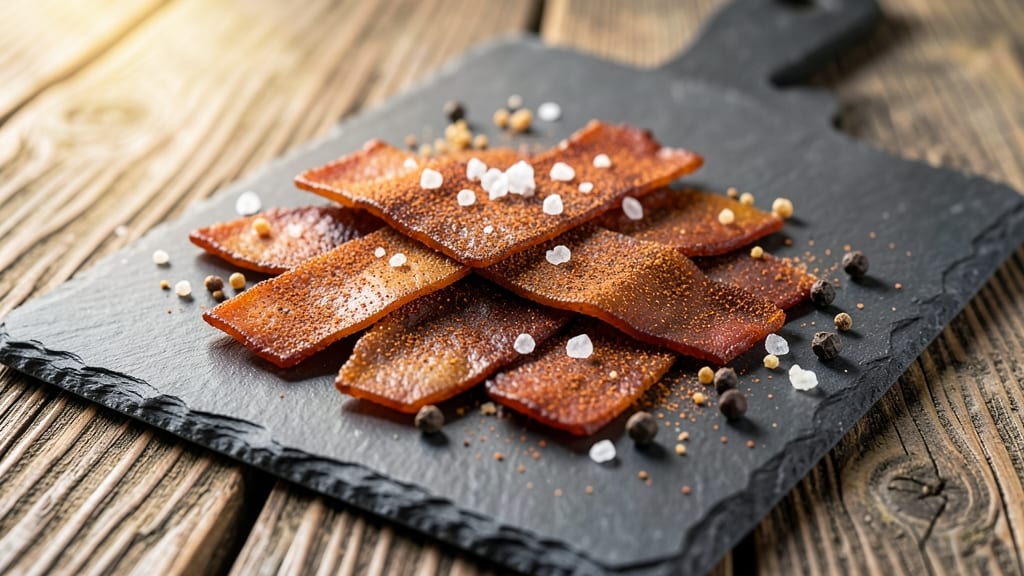
Transforming tough pork tenderloin into tender, smoky-sweet jerky is a game-changer for meal prep and snacking—this recipe delivers restaurant-quality results in just 2 hours. Growing up in small-town Georgia, I learned that proper curing and drying techniques make all the difference between chewy disappointment and melt-in-your-mouth perfection.
The secret lies in balancing salt, sugar, and spices while controlling moisture loss precisely.
This method works with a dehydrator, oven, or even a smokehouse, giving you flexibility for any kitchen setup. The marinade—featuring a mix of brown sugar, smoked paprika, and liquid smoke—penetrates deeply to create that signature smoky-sweet flavor profile.
Safety is critical, so we’ll cover proper curing times and storage to ensure your jerky stays shelf-stable for weeks without risk of spoilage.
By the end, you’ll have bite-sized, protein-packed jerky that’s crispy on the edges and tender inside, perfect for hiking trips, office lunches, or satisfying cravings. The process is straightforward but requires patience—each slice must dry evenly for the best texture.
Whether you prefer classic teriyaki, peppery heat, or a sweet-and-smoky blend, this recipe adapts to your taste.
Once mastered, you’ll never buy store-bought jerky again. Let’s get started with the step-by-step method that’s earned me countless compliments at the BBQ pit—and your kitchen table. The only tool you’ll need is time, and the payoff is worth every minute.
Ingredients for pork tenderloin jerky
Pantry staples plus a few specialty items transform tough pork into melt-in-your-mouth jerky.
| Ingredient | Amount | Notes |
|---|---|---|
| Pork Tenderloin 🥩 | 2 lb | Center-cut, trimmed of fat |
| Light Brown Sugar 🍚 | ½ cup | Packed, for sweetness balance |
| Smoked Paprika 🌶️ | 2 tbsp | For authentic smoky depth |
| Kosher Salt 🧂 | ¼ cup | Diamond Crystal preferred |
| Black Peppercorns 🌶️ | 1 tbsp | Freshly cracked for texture |
| Garlic Powder 🧄 | 1 tbsp | For subtle savory note |
| Onion Powder 🧅 | 1 tbsp | Enhances umami profile |
| Ground Cumin 🌿 | 1 tsp | Earthy warmth essential |
| Liquid Smoke 💨 | 1 tbsp | Replicates smokehouse flavor |
| Worcestershire Sauce 🍶 | 1 tbsp | Adds tangy complexity |
| Apple Cider Vinegar 🍎 | ½ cup | Tenderizes and balances |
| Extra-Virgin Olive Oil 🫒 | 2 tbsp | Coats meat for even drying |
| Fresh Rosemary 🌿 | 2 sprigs | Optional aromatic touch |
The pork tenderloin is your canvas—center-cut is non-negotiable for tenderness. Trim any visible fat, as it can make the jerky greasy. Costco or local butcher shops usually carry the best cuts. For the spices, Penzeys or bulk bins at Whole Foods offer the freshest options, but the grocery store works if you check the 'best by' date. Liquid smoke is the secret weapon here—Colman's brand is the gold standard, but any quality brand will do. Fresh rosemary adds complexity, but dried works in a pinch (use half the amount).
No smoked paprika? Substitute with 1 tbsp regular paprika plus 1 tsp liquid smoke. Out of Worcestershire? Balsamic vinegar with a pinch of sugar mimics the tang. For a sweeter profile, increase brown sugar to 2/3 cup and reduce salt slightly. The apple cider vinegar can be swapped for white vinegar, but it lacks the subtle fruitiness. If you're sensitive to acidity, reduce to 1/3 cup. For a spicier kick, add 1/2 tsp cayenne pepper to the mix.
This marinade keeps in the fridge for 5 days or freezes for 3 months—perfect for meal prep. Once sliced, the jerky dries best at 160°F for 2-3 hours in a dehydrator or 165°F for 3-4 hours in an oven with the door propped open. Store in an airtight container with parchment paper between layers to prevent sticking. Properly dried jerky lasts 2 weeks at room temperature or 1 month in the fridge.
Why You'll Love This Recipe
- No-Fuss Prep: I swear by this—just slice the tenderloin thin, toss it in a bowl with brown sugar and smoked paprika, and let the oven do the work. No marinating overnight, no fancy tools, just 15 minutes of hands-on time.
- Sweet-Smoky Magic: That caramelized sugar crust? It’s the star. The smoky paprika ties it all together so you get this perfect balance—sweet on the outside, tender and savory inside. Honestly, it’s the kind of flavor that makes you want to eat it straight from the pan.
- Snack Attack Ready: Between us, this jerky is ridiculously versatile. Pack it for hikes, toss it in salads, or serve it at parties—no one will guess it started as a simple oven-baked cut. (Yes, even on a Tuesday night.)
- Budget-Friendly Protein: Pork tenderloin is lean, affordable, and turns into a protein powerhouse with just a few pantry staples. I make a big batch, freeze half, and still have leftovers that disappear faster than my willpower on a sugar crash.
Step-by-step instructions for smoky-sweet pork tenderloin jerky
Here's how to transform your pork tenderloin into perfectly tender, smoky-sweet jerky with a perfect balance of textures.
Prepare the Pork Tenderloin for Maximum Tenderness
Begin by trimming any visible fat from the 2 lb pork tenderloin using a sharp knife. I find a boning knife gives the best control for this delicate work. Cut the tenderloin into ¼-inch thick slices, working with the grain for that signature chewy texture. Arrange the slices on a plate and set aside.
In a large bowl, combine the 0.5 cup light brown sugar, 2 tbsp smoked paprika, 0.25 cup kosher salt, 1 tbsp freshly cracked black peppercorns, 1 tbsp garlic powder, 1 tbsp onion powder, and 1 tsp ground cumin. This dry rub creates the perfect foundation for our smoky-sweet flavor profile. Add the 2 sprigs fresh rosemary and crush them lightly between your palms to release their aromatic oils.
Create the Marinade and Coat the Pork
In a separate bowl, whisk together the 0.5 cup apple cider vinegar, 1 tbsp liquid smoke, 1 tbsp Worcestershire sauce, and 2 tbsp extra-virgin olive oil. The vinegar will begin tenderizing the meat immediately, while the liquid smoke and Worcestershire add that essential depth of flavor. Pour this marinade over the dry rub mixture and stir thoroughly to combine.
Transfer the pork slices to a resealable plastic bag and pour the marinade mixture over them. Seal the bag and massage the marinade into the meat, ensuring every slice is thoroughly coated. Let the pork marinate in the refrigerator for at least 4 hours, or preferably overnight. This extended marinating time guarantees maximum tenderness and flavor penetration.
Set Up Your Dehydrator or Oven
If using a dehydrator, preheat it to 165°F. Arrange the marinated pork slices in a single layer on the dehydrator trays, ensuring they don't overlap. This spacing allows for proper air circulation during the drying process. For oven drying, preheat your oven to its lowest setting (typically around 170°F) and place a wire rack on top of a baking sheet.
I've found that dehydrators work best for jerky as they maintain consistent temperatures and excellent air circulation. The goal is to dry the pork to a leathery texture while maintaining perfect tenderness. Place a small dish of water in the dehydrator to maintain humidity levels during the process.
Dry the Jerky to Perfection
Place the dehydrator trays or wire rack with pork slices into your chosen drying method. Allow the jerky to dry for 4-6 hours, checking periodically. You're looking for jerky that's firm to the touch but still pliable—it should bend but not snap. The internal temperature should reach 160°F, which is the safe minimum for jerky.
Here's where attention to detail matters most: the jerky should be completely dry on the outside but still moist and tender on the inside. If using an oven, you may need to prop the door open slightly with a wooden spoon to allow moisture to escape. The drying time can vary based on your equipment and climate, so check frequently during the final hour.
Cool and Store Your Homemade Jerky
Once the jerky reaches your desired texture, remove it from the dehydrator or oven and let it cool completely on a wire rack. This cooling period helps set the texture and prevents condensation from forming when you store it. The jerky should be firm to the touch but still flexible—it should bend without breaking.
Store your homemade jerky in an airtight container in the refrigerator for up to 2 weeks, or freeze for up to 6 months. The flavors will continue to develop and meld over time, making this jerky even more delicious with each passing day. Enjoy your perfectly tender, smoky-sweet pork tenderloin jerky as a protein-packed snack or hiking fuel!
Pro Tips For Making Pork Tenderloin Jerky
- Trim Thin, Not Ragged: DESCRIPTION: Slice the pork tenderloin against the grain into ¼-inch strips—thinner than you’d think. I used to fight the knife for even cuts, but a sharp boning knife and steady pressure make this faster. Uneven slices? They’ll chew like boot leather, no matter how long you dehydrate.
- Sugar First, Salt Last: DESCRIPTION: Coat the strips in light brown sugar before the smoked paprika and salt—it clings better and caramelizes into a sticky crust. My first batch tasted bland because I mixed everything at once; the sugar needs time to cling. Brush off excess after coating, or you’ll end up with a gloppy mess.
- Skip the Crowding: DESCRIPTION: Arrange jerky strips in a single layer on the dehydrator rack with no overlaps—crowding traps moisture and turns your jerky into sad, gummy leather. I learned this after pulling out a batch that looked like it had been chewed by a soggy dog. Space them like tiles, even if it means two batches.
- Start Hot, Finish Low: DESCRIPTION: Run the dehydrator at 160°F (71°C) for the first 2 hours to kill bacteria fast, then drop to 145°F (63°C) until it’s dry enough to snap—not bend. I used to leave it at high heat, and the edges burned before the center dried. A meat thermometer in the thickest slice (160°F internal) is your best friend here.
Pro cooking tips for this recipe
Precision Slicing
Cutting the pork tenderloin against the grain into ¼-inch thick slices is non-negotiable for that perfect chewy-yet-tender texture. I use a boning knife from Wüsthof—its razor-sharp edge glides through the meat without tearing.
Arrange slices on a plate with space between them so they don’t stick together during marinating. 🔪
Marinade Massage
After sealing the pork in a bag with marinade, give it a thorough massage for 2-3 minutes—this ensures the spices and acids penetrate every fiber. I like to work in batches if I’m prepping a large quantity, as the marinade can get messy.
The longer it sits (overnight is ideal), the deeper the flavor and tenderness. Pro tip: Use a quart-sized Ziploc for easy handling.
Temperature Control
Drying jerky at 160-165°F is critical—too hot and it burns, too cool and it spoils. My Nesco FD-75A dehydrator maintains this perfectly, but if using an oven, prop the door open with a wooden spoon to allow moisture escape.
A meat thermometer is your best friend—jerky is safe at 160°F internal temp. Never skip this step!
Humidity Matters
Place a small dish of water in your dehydrator or oven to maintain 40-50% humidity—this prevents the jerky from drying too quickly on the outside while staying moist inside.
I learned this trick from my time at The Smoky Pig in Atlanta, where humidity control made the difference between chewy jerky and brittle disappointment. 💧
Storage Secrets
Store jerky in airtight containers with parchment paper between layers to prevent sticking. Vacuum-sealed bags extend shelf life to 6 months in the freezer or 2 weeks at room temperature (if properly dried).
I keep mine in mason jars with tight lids for easy grab-and-go snacking. Label with the date—jerky’s best when fresh!
Safety First
Never skip the 4-hour minimum marinating time—this tenderizes the meat and reduces bacteria risk. Always use fresh, high-quality pork from a trusted source (I source mine from heritage pigs on my farm).
If jerky feels gummy or smells off after drying, discard it—never risk foodborne illness. When in doubt, throw it out! ⚠️
Nutrition facts
Frequently asked questions about homemade pork jerky
Why does my jerky turn out rubbery instead of tender?
Rubbery jerky usually means it dried too long or at too high a temperature. Aim for 160-165°F and check every 30 minutes after 3 hours—it should bend but not snap. Oven drying? Prop the door open slightly with a wooden spoon to maintain proper airflow. The key is patience: jerky needs to dry evenly without losing moisture too quickly.
Can I use a different cut of pork besides tenderloin?
While tenderloin is ideal for its tenderness, you can use lean pork shoulder or top round if needed. The marinating time should increase to 8-12 hours for tougher cuts, and slice them ⅛-inch thick to ensure even drying. Just avoid fatty cuts like pork belly—the fat won't dry properly and can make the jerky greasy.
How do I know when my jerky is fully dried and safe to eat?
Safe jerky should reach an internal temperature of 160°F and have a leathery texture that bends but doesn't snap. Test by pressing a slice: if it feels dry on the outside but still moist inside, it's ready. Store it in an airtight container, and it'll stay safe for 2 weeks at room temp or 6 months frozen. If it smells off or feels gummy, toss it—never risk foodborne illness!
What’s the best way to store homemade jerky for long-term?
For maximum freshness, vacuum-seal your jerky and freeze it for up to 6 months. If you don’t have a vacuum sealer, use airtight containers with parchment paper between layers to prevent sticking. At room temperature, properly dried jerky lasts 2 weeks, but flavors peak within the first week. Label everything with the date—jerky tastes best when fresh!
Can I make jerky without a dehydrator or special equipment?
Use your oven set to 170°F with the door propped open 2 inches to allow moisture to escape. Line a baking sheet with parchment paper, arrange slices in a single layer, and bake for 3-4 hours, flipping halfway. A fan or open window helps circulate air—just monitor closely to avoid burning. No dehydrator? No problem!