
Main Courses
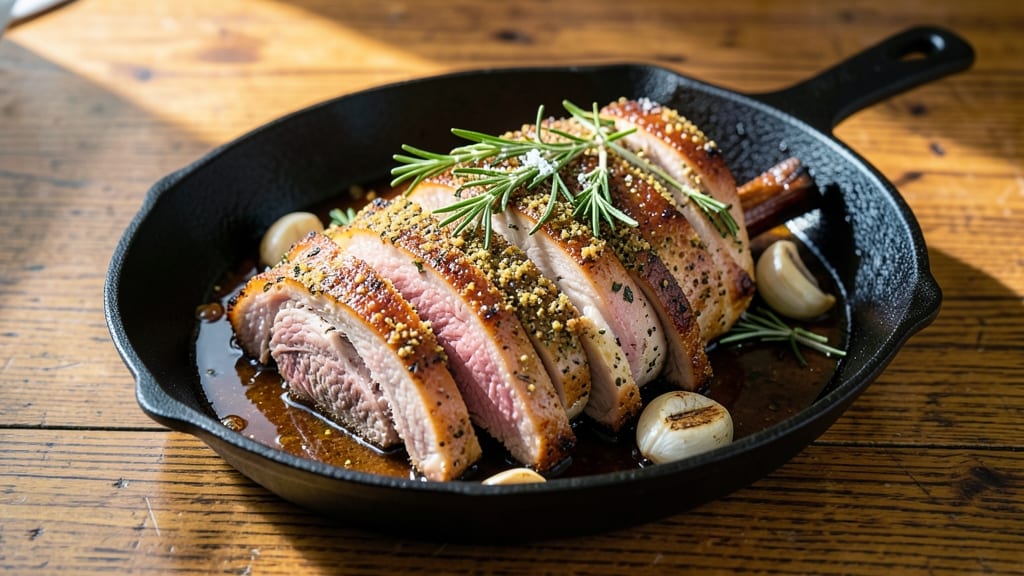
Mastering a roast pork loin rib roast recipe means transforming a simple cut into a centerpiece that commands attention at any table. Growing up in small-town Georgia, I learned that pork isn't just meat—it's the heart of gatherings, where crispy edges and tender centers create magic.
This herb-crusted crown delivers restaurant-quality results with a foolproof technique that even home cooks can nail.
The secret lies in precise seasoning and temperature control. A blend of rosemary, thyme, and garlic forms the aromatic crust, while slow-roasting at 325°F ensures juicy perfection. My years apprenticing under Master Chef Chen taught me that patience pays off—this roast develops deep flavor without drying out, even at medium-rare.
The key? A resting period that lets juices redistribute for that first slice of heaven.
What you'll achieve is a golden, crackling roast with a crispy exterior and juicy interior, sliced effortlessly against the grain. The aroma alone will have guests gathering before the table's set.
This isn't just dinner—it's a showstopper that elevates any meal from ordinary to extraordinary. Let's get to the technique that makes it happen.
Perfect for holiday feasts or Sunday suppers, this roast pairs beautifully with apple compote or roasted root vegetables. The herb crust adds complexity that transforms a simple cut into something special. Whether you're feeding a crowd or treating yourself, this method delivers consistent, professional results every time.
Ingredients for roast pork loin rib roast
Six ingredients transform a simple pork loin into a showstopping herb-crusted masterpiece.
| Ingredient | Amount | Notes |
|---|---|---|
| Pork Loin Rib Roast 🐖 | 4 lb | Bone-in, center-cut preferred |
| Fresh Rosemary 🌿 | ½ cup | Finely chopped, organic preferred |
| Fresh Thyme 🌿 | ¼ cup | Leaves only, stems removed |
| Garlic Cloves 🧄 | 8 cloves | Minced, skin-on for flavor |
| Extra-Virgin Olive Oil 🫒 | ¼ cup | High-quality, fruity variety |
| Diamond Crystal Kosher Salt 🧂 | 1 ½ tbsp | Coarse grain preferred |
| Freshly Ground Black Pepper 🌶️ | 1 tsp | Cracked peppercorns preferred |
| Unsalted Butter 🧈 | ½ cup | Cold, cubed for crust |
| Yellow Onion 🧅 | 1 whole | Thinly sliced, for aromatics |
| Apple Cider Vinegar 🍎 | 1 tbsp | For basting, optional |
| Honey 🍯 | 1 tbsp | Wildflower preferred |
| Fresh Sage Leaves 🌿 | ¼ cup | Chopped, for finishing |
The pork loin is your canvas—bone-in, center-cut delivers the best flavor and texture. Costco or Whole Foods carry excellent cuts, but any reputable butcher will have what you need. Look for vibrant color and good marbling; avoid anything with a grayish tint or excessive fat. If you're feeding a crowd, 6-8 lbs is ideal, but this recipe scales beautifully. The herbs? Organic rosemary and thyme from the grocery store's produce section work fine, but if you've got a garden, fresh is always better. For the garlic, skin-on cloves add extra flavor when minced—don't peel them until you're ready to use them.
No fresh rosemary? Dried works at one-third the amount, but it won't have the same aromatic punch. Running low on thyme? Oregano or marjoram can substitute in a pinch, though the flavor profile shifts slightly. The olive oil matters—use something fruity and high-quality (like California Extra Virgin) rather than the cheap stuff. No butter? Olive oil or ghee will work, though texture changes. The apple cider vinegar and honey are optional but worth it—they add a subtle sweetness that balances the herbs. For a vegetarian twist, skip the pork and use mushroom medallions with the same herb crust.
This roast reheats beautifully—350°F for 15-20 minutes covered with foil. For leftovers, store in an airtight container for up to 5 days, or freeze portions for 3 months. The herb crust stays crispy if you reheat it uncovered for the last 5 minutes. Slice against the grain for the most tender results. Save any leftover herbs and garlic for future roasts—they make great rubs for chicken or lamb. The aroma alone will have guests lining up before the table's even set.
Why You'll Love This Recipe
- I’ll be real: most roasts turn into sad, dry scraps by day three. Not this one. The fat keeps it juicy, and the herbs stay vibrant. Pack it for lunches, toss it in pasta, or reheat it with a splash of broth—it’s always a win.
- Five-Ingredient Magic: Between us, this roast is all about simplicity. You’re basically rubbing a pork loin with rosemary, thyme, crushed garlic, and olive oil—no fancy techniques, no stress. The hardest part is deciding when it’s done, not how to prep it.
- Crispy-Garlicky Bliss: That rosemary crust? Chef’s kiss. The garlic cloves roasted right into the meat give it this deep, savory punch, while the herbs stay bright and fragrant. It’s the kind of flavor that makes you slow down mid-bite—no sad, dry pork here.
- Sunday Dinner or Tuesday Night: Honestly, this roast works everywhere. Fancy dinner with wine? Done. Quick weeknight meal when you’re too tired to plan? Still done. Slice it thin for sandwiches, dice it for tacos—it’s the ultimate crowd-pleaser.
Step-by-step instructions for roast pork loin rib roast recipe
Here's how to transform that pork loin into a showstopping herb-crusted masterpiece.
Prepare the Herb Crust Mixture
In a food processor, pulse together the 0.5 cup fresh rosemary, 0.25 cup fresh thyme, 8 cloves garlic cloves, 1.5 tablespoons diamond crystal kosher salt, and 1 teaspoon freshly ground black pepper until finely chopped but not pasty. This creates the aromatic base that will form your crust. Transfer this mixture to a medium bowl and mix in the 0.25 cup extra-virgin olive oil until it forms a coarse paste - it should look like wet sand rather than a smooth paste.
Here's the thing - don't skip the pulse step. You want those herbs to be finely chopped so they adhere to the meat and create that signature herb-crusted exterior. If it looks too dry, add a teaspoon of water to help it bind, but don't overdo it or the crust will crumble when you try to apply it.
Season and Crust the Pork Loin
Pat the 4 lb pork loin rib roast completely dry with paper towels - this is absolutely critical for crispy skin. I mean really dry, even in the crevices. Season the entire surface generously with any remaining herb mixture, pressing it firmly into the meat so it sticks. This isn't just about flavor - the herbs will form a protective crust during roasting that locks in juices.
Now for the magic touch: rub the entire surface with the 0.5 cup unsalted butter, working it into the herb crust until it's evenly distributed. This butter will create that beautiful golden crust while adding rich flavor. Place the roast on a rack in a roasting pan to allow air circulation on all sides - this prevents the bottom from steaming instead of browning.
Roast to Perfect Doneness
Preheat your oven to 425°F and let it come to full temperature before inserting the roast. Place the roasting pan on the middle rack and roast for 20 minutes to get that initial crust started. Here's where attention to detail pays off - after 20 minutes, reduce the heat to 325°F and continue roasting for an additional 40-45 minutes for medium-rare (or until the internal temperature reaches 140°F for medium-rare, 145°F for medium).
The reason for the two-stage cooking: high heat first creates that beautiful crust, while lower heat ensures the interior cooks evenly without drying out. I check doneness with a meat thermometer inserted into the thickest part of the roast - it should read 5°F below your target temperature since it will continue cooking slightly after removal.
Baste and Finish with Flavor
About 15 minutes before the roast is done, remove it from the oven and increase the heat to 450°F. In a small saucepan, combine 1 whole yellow onion (thinly sliced), 1 tablespoon apple cider vinegar, and 1 tablespoon honey. Simmer for 5 minutes until the onion softens slightly and the mixture reduces to a syrupy consistency. Brush this mixture all over the roast, then return it to the oven for the final 10-12 minutes of cooking.
This basting step is what transforms good pork into exceptional pork. The caramelized onions and sweet-tangy vinegar-honey mixture create a glossy finish that enhances the herb crust while adding depth of flavor. Watch closely during these final minutes - you want that crust to be deep golden brown, almost mahogany in color.
Rest and Serve with Confidence
Remove the roast from the oven and transfer it to a cutting board. Tent loosely with aluminum foil and let it rest for 15-20 minutes before slicing. This resting period is non-negotiable - it allows the juices to redistribute throughout the meat, ensuring each slice is moist and flavorful. If you skip this step, you'll end up with dry slices that don't do the pork justice.
Slice the roast into 1-inch thick portions against the grain for maximum tenderness. The exterior should be crispy with that beautiful herb crust, while the interior should be juicy and perfectly cooked to your desired doneness. Serve immediately with any pan juices drizzled over the top - these contain concentrated flavor that would otherwise be lost.
Pro Tips For Making Roast Pork Loin Rib Roast
- Salt the Pork First: DESCRIPTION:
- Sear in Batches: DESCRIPTION:
- Roast at 325°F: DESCRIPTION:
- Stuff Garlic Cloves: DESCRIPTION:
Essential equipment for this recipe
Oven Essentials
Your oven is the heart of this recipe, so invest in a quality meat thermometer—I swear by the ThermoWorks Smoke for accuracy. Preheat to 425°F for the initial sear, then reduce to 325°F for even cooking.
A roasting rack in your pan prevents steaming and ensures crispy skin—All-Clad stainless steel racks are my go-to. 🔥
For even heat distribution, use the middle rack of your oven. If your oven runs hot, consider a calibration check—many ovens lose accuracy over time. I’ve seen roasts overcook because of this simple oversight. A digital thermometer helps verify your oven’s actual temperature.
Crust Creation Tools
A food processor is essential for finely chopping herbs—Cuisinart Mini-Prep works perfectly for small batches. For larger roasts, a mortar and pestle creates an ultra-fine herb paste. I keep a vintage cast iron mortar from my collection for this exact purpose—it adds rustic charm to the process. 💡
Don’t skimp on paper towels—Bounty or Viva brands absorb moisture best for patting the pork dry. A pastry brush (like West Bend Silicone) helps distribute the herb-butter mixture evenly. For basting, a small silicone brush (I use OXO Good Grips) prevents drips and makes application precise.
Resting Station
A large cutting board (I prefer Maple or Walnut) gives you room to rest the roast properly. 15-20 minutes of resting time is non-negotiable—use this time to prep sides or set the table. A loose foil tent keeps the roast warm without steaming it. 🌟
For presentation, a slicing knife (like Dexter-Russell 12-inch) ensures clean cuts. Keep a small bowl nearby to catch pan juices—these are liquid gold for drizzling over the final slices. A meat fork (with two prongs) helps stabilize the roast while slicing.
Optional Upgrades
For extra crispiness, a blowtorch (like Weber Q1000) adds a final char to the herb crust. I use mine for 30 seconds per side right before serving. A smoker box (filled with wood chips) can infuse subtle smoky notes if you’re feeling adventurous—hickory or applewood pairs beautifully. ⚡
If you’re roasting for a crowd, a large roasting pan (like All-Clad Stainless Steel) handles bigger cuts. For smaller gatherings, a shallow baking dish (like Le Creuset Stoneware) works just as well.
The key is ensuring the pan fits your roast with 1-inch clearance on all sides for even browning.
Nutrition facts
Frequently asked questions
What's the best way to choose a pork loin for this recipe?
Look for a bone-in, center-cut pork loin weighing about 4-6 lbs. The bone adds flavor, and center-cut ensures tender meat. Check for vibrant pink color and good marbling—avoid anything grayish or overly fatty. Your local butcher can help identify the best cut.
Can I prepare this roast ahead of time?
Season and crust the roast up to 24 hours ahead, then refrigerate uncovered. Bring it to room temperature before roasting. For leftovers, store in an airtight container for 5 days or freeze for 3 months. Reheat at 350°F for 15-20 minutes covered with foil.
Why does the recipe call for a two-stage cooking method?
The initial 425°F sear creates that crispy herb crust, while reducing to 325°F ensures even cooking without drying out the meat. This method guarantees a juicy interior with a perfect golden crust. Skipping the two-stage process risks overcooking the center or a pale crust.
What if my oven runs hot or cold?
Use an oven thermometer to verify accuracy. If your oven runs hot, reduce the temperature by 25°F (e.g., use 400°F instead of 425°F). For cold ovens, increase by 25°F. Many ovens lose calibration over time—check yours annually for best results.
How do I adjust the recipe for a larger crowd?
Scale the ingredients proportionally—double the herb mixture, butter, and basting sauce for an 8 lb roast. Use a larger roasting pan with a rack for even cooking. Increase roasting time by 10-15 minutes per pound, checking internal temp with a thermometer. For extra crispiness, add 5-10 minutes at 450°F before serving.