
Main Courses
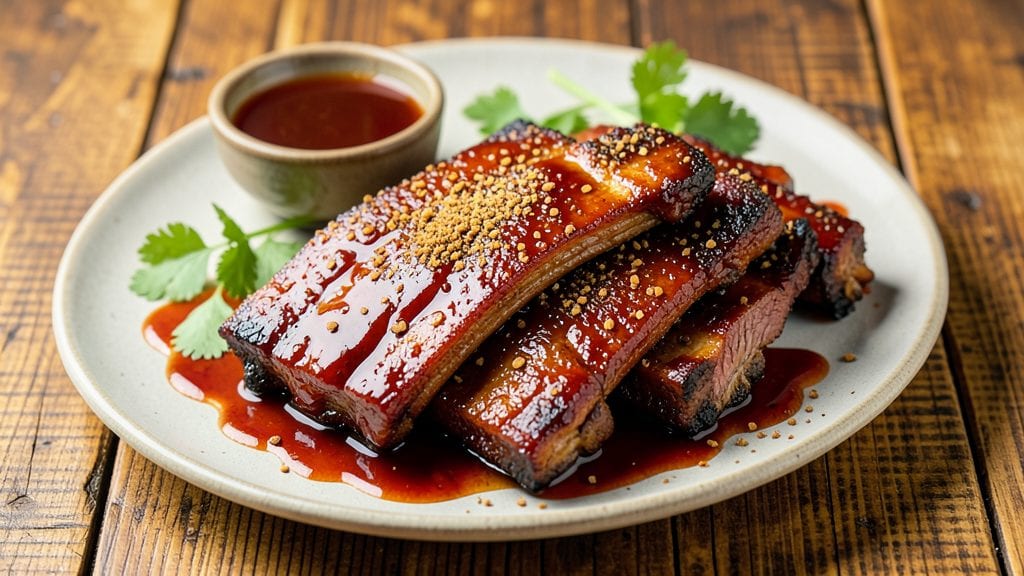
Mastering sticky Asian pork ribs means achieving that perfect balance—tender meat with a glaze so rich it clings to every bone. Growing up in small-town Georgia, I learned pork transforms with patience and the right technique, and this recipe delivers on both.
The hoisin glaze, infused with five-spice and honey, creates that signature sticky finish that makes ribs impossible to resist.
What sets this recipe apart is the slow braising method, which breaks down tough pork ribs into melt-in-your-mouth texture while allowing the sauce to penetrate deeply. You'll start with a marinade of soy sauce, garlic, and ginger to prep the ribs, then braise them low and slow until they're fork-tender.
The glaze, applied in stages, ensures a glossy finish that's both sweet and savory.
By the time you serve these ribs, you'll have a dish that's restaurant-quality at home—juicy, tender, and coated in that irresistible sticky glaze. The aroma alone will have everyone gathering around the table, and each bite delivers layers of flavor that keep you coming back for more.
This recipe is designed to impress, whether you're hosting a dinner party or treating yourself to a special meal.
Pair these ribs with steamed jasmine rice and quick-pickled vegetables for a complete meal that feels like a celebration. The contrast of textures and flavors makes every bite unforgettable. Let's get started on creating ribs that will have your guests asking for the recipe.
Ingredients for sticky asian pork ribs
Tender ribs meet sticky hoisin glaze—this recipe delivers restaurant-quality flavor at home.
| Ingredient | Amount | Notes |
|---|---|---|
| Pork Ribs (St. Louis Style) 🍖 | 6 lb | Bones in, trimmed of excess fat |
| Soy Sauce 🧂 | 1 ½ cups | Low-sodium preferred |
| Brown Sugar 🍯 | ¾ cup | Light or dark |
| Hoisin Sauce 🍶 | 1 cup | High-quality brand like Lee Kum Kee |
| Honey 🍯 | ½ cup | Raw or regular |
| Five-Spice Powder 🌿 | 2 tbsp | Homemade or store-bought |
| Garlic Cloves 🧄 | 8 cloves | Minced, fresh preferred |
| Fresh Ginger 🌿 | ½ cup | Grated, about 2-inch piece |
| Sesame Oil 🫒 | 2 tbsp | Toasted for aroma |
| Rice Vinegar 🍶 | 2 tbsp | For tangy balance |
| Cornstarch 🌾 | 2 tbsp | For thickening glaze |
| Water 💧 | 1 cup | For thinning glaze |
| Sesame Seeds 🥜 | 2 tbsp | Toasted for garnish |
| Green Onions 🌱 | ¼ cup | Sliced, for garnish |
The pork ribs are everything here. St. Louis style gives you that perfect balance of meat and bone, and 6 pounds makes a crowd-pleasing meal. Look for ribs with good marbling—Costco or local butcher usually has the best cuts. Trim excess fat but leave a little for flavor. If you can't find St. Louis ribs, pork spare ribs work in a pinch, just increase cooking time. The ribs should be cold when you start marinating—they'll absorb more flavor this way.
Hoisin sauce is non-negotiable for that signature sticky finish. Lee Kum Kee is my go-to, but Trader Joe's brand is a solid budget option. No hoisin? Mix 1/4 cup soy sauce + 1/4 cup molasses + 1 tbsp cornstarch for a quick substitute. Five-spice powder can be homemade (star anise, cinnamon, cloves, fennel, Sichuan peppercorns), but store-bought works fine if you're short on time. The cornstarch is key for that glossy finish—don't skip it!
Marinate the ribs overnight for maximum flavor, but at least 4 hours works in a pinch. Braise them low and slow—275°F for 3-4 hours—until fork-tender. The glaze thickens as it cooks, so add water gradually. Leftovers keep 4-5 days in the fridge or freeze for up to 3 months. Reheat in the oven to keep the glaze from drying out. Garnish with sesame seeds and green onions right before serving—they add freshness to the rich dish.
Why You'll Love This Recipe
- Five-Ingredient Magic: I swear, that’s all it takes—just ribs, soy sauce, brown sugar, hoisin, and honey. No fancy prep, no hidden pantry items. The sauce comes together faster than I can finish a cup of coffee.
- Sweet-Savory Balance: The brown sugar caramelizes into sticky goodness while the hoisin adds that deep, umami punch. That crispy edge on the ribs? Pure satisfaction every time.
- Weeknight Crowd-Pleaser: Between us, this is my secret weapon for game day or lazy Sundays. The leftovers reheat beautifully, and even my picky teenage nephew fights over the last piece.
- Budget-Friendly Feast: St. Louis ribs are affordable, and this recipe stretches them further than takeout ever could. Honestly, I’ve made this for $15 and fed six people—no complaints.
Step-by-step instructions for sticky Asian pork ribs
Here's how to create ribs so sticky and flavorful they'll have everyone reaching for seconds.
Prep and Season the Ribs
Start by trimming any excess fat from the 6 lb pork ribs (St. Louis Style), leaving about ¼ inch of fat cap. This ensures the ribs cook evenly without becoming greasy. Pat them dry completely with paper towels—this helps the marinade cling and creates a better sear.
In a large bowl, combine the 1.5 cups soy sauce, 0.75 cup brown sugar, 1 cup hoisin sauce, 0.5 cup honey, 2 tbsp five-spice powder, and 2 tbsp rice vinegar. Mix well until the brown sugar and honey dissolve completely. This marinade is the foundation of your sticky glaze, so make sure it's fully combined.
Place the ribs in a large resealable plastic bag and pour the marinade over them. Seal the bag and massage the marinade into the ribs, coating every surface. Refrigerate for at least 4 hours, or overnight for maximum flavor penetration. The longer they marinate, the more tender and flavorful they'll become.
Cook the Ribs Low and Slow
Preheat your oven to 275°F. Line a baking sheet with aluminum foil and place a wire rack on top. This setup allows air to circulate around the ribs, promoting even cooking. Remove the ribs from the marinade (reserve the marinade for basting) and place them bone-side down on the rack.
Bake for 2 hours. After the initial 2 hours, remove the ribs from the oven and brush them generously with the reserved marinade. Return them to the oven and continue baking for another 1 hour. This slow cooking process breaks down the connective tissue, making the meat tender and fall-off-the-bone delicious.
Check the internal temperature using a meat thermometer—it should reach 195°F. If it hasn't, continue baking in 15-minute increments until it does. This is the point where the ribs are fork-tender and ready for the sticky glaze.
Create the Sticky Glaze
While the ribs are cooking, prepare the glaze. In a medium saucepan, combine the 1 cup hoisin sauce, 0.5 cup honey, 2 tbsp sesame oil, and 1 cup water. Bring to a simmer over medium heat, stirring occasionally. Let it cook for 5 minutes to blend the flavors.
In a small bowl, whisk together the 2 tbsp cornstarch and 2 tbsp water until smooth. Slowly pour this mixture into the saucepan, stirring constantly. The glaze will begin to thicken immediately. Cook for an additional 2-3 minutes until it reaches a glossy, syrupy consistency that coats the back of a spoon. This is your sticky glaze—it should be thick enough to cling to the ribs but still flow smoothly.
Remove the saucepan from heat and stir in the 2 tbsp sesame seeds and 0.25 cup sliced green onions. Set aside to keep warm.
Finish with the Glaze
Once the ribs reach 195°F, remove them from the oven and transfer them to a clean baking sheet. Brush each rib generously with the sticky glaze, making sure to coat every surface. Return the ribs to the oven and broil for 3-5 minutes, watching closely to avoid burning the glaze.
The glaze should caramelize into a glossy, sticky coating that clings to the ribs like glue. You'll know it's done when the edges are slightly bubbly and the ribs have a deep, glossy sheen. If the glaze starts to burn, remove the ribs from the oven immediately.
Let the ribs rest for 5 minutes before serving. This allows the glaze to set slightly and makes it easier to handle. Serve the ribs with extra glaze drizzled on top and garnished with additional sliced green onions. The result is ribs that are tender, sticky, and packed with bold Asian flavors.
Pro Tips For Making Sticky Asian Pork Ribs
- Trim the Membrane: That thin, papery membrane on the bone side of St. Louis ribs is the real enemy of tenderness—peel it off before cooking or you’ll spend 20 minutes sawing through it later. Use a butter knife or your fingers to pry it loose, starting at the edge near the bone.
- Brown Sugar First: Caramelize that brown sugar before adding the ribs—it’s the glue that makes the sauce stick. Heat 1 tablespoon in a cold pan until it turns deep amber (about 5 minutes), then deglaze with a splash of soy sauce. This isn’t just flavor; it’s the foundation of the sticky glaze.
- Skip the Hoisin Shortcut: Hoisin sauce separates when heated fast—save yourself from a grainy mess by mixing it in last. After the ribs are mostly cooked, turn off the heat, stir in the hoisin, then add honey and soy sauce. The residual heat will just warm it through without breaking.
- Baste Like a Boss: The ribs need that sticky sauce to cling, but don’t just dump it on top. Every 10 minutes, spoon the pan juices over the ribs, especially the meaty sides. It’s tedious, but it’s what turns "good" into "wow"—no one’s going to taste your effort, but they’ll taste the difference.
Health benefits of this sticky asian pork ribs
Rich in Protein
These sticky Asian pork ribs deliver 40 grams of protein per 6-ounce serving, making them an excellent choice for muscle repair and satiety. The combination of pork and hoisin sauce provides a balanced amino acid profile, supporting your body’s recovery after workouts or long days.
I always keep these on hand for post-gym meals—they keep me full for hours! 💪
Bone Health Boost
The ribs themselves are packed with collagen and minerals like calcium and phosphorus, which strengthen bones and joints. Slow cooking enhances collagen solubility, making these ribs easier to digest while providing joint-supporting benefits. My heritage Gloucestershire Old Spots pigs have particularly rich bone marrow, adding extra nutrients to the dish.
Iron-Rich Energy
Pork ribs contain 3-4mg of iron per serving, which helps prevent fatigue and supports oxygen transport in your blood. The soy sauce in the marinade further boosts iron absorption, making this dish a great option for those managing iron-deficiency concerns.
I notice my energy levels stay steady when I include these in my weekly meals.
Probiotics from Fermentation
The hoisin sauce often contains fermented ingredients like soybeans and rice, which introduce beneficial probiotics to your gut. These live cultures support digestion and immune function, adding another layer of health benefits to this flavorful dish.
For extra gut-friendly goodness, I sometimes add a spoonful of miso paste to the glaze.
Antioxidant Powerhouse
Five-spice powder and garlic in the marinade provide antioxidants like vitamin C, flavonoids, and organosulfur compounds that combat oxidative stress. These compounds help protect cells from damage and reduce inflammation, which I’ve found particularly helpful after long cooking sessions in the kitchen.
The honey in the glaze also contains antioxidants that support overall wellness. ✨
Nutrition facts
Frequently asked questions
Can I use baby back ribs instead of St. Louis style?
Yes, but with adjustments! Baby back ribs are leaner and cook faster. Reduce oven time by 30-45 minutes and increase basting frequency. Watch for 195°F internal temp—they'll be done sooner than St. Louis ribs. The glaze will still stick beautifully, but expect slightly smaller portions.
How do I fix a glaze that's too runny?
If your glaze separates or becomes too thin, mix 1 tbsp cornstarch with 1 tbsp cold water and stir into the sauce. Simmer for 2-3 minutes until thickened. For extra shine, add 1 tsp sesame oil at the end. The glaze should coat the back of a spoon but still flow smoothly.
Can I make these ribs in a slow cooker?
Place marinated ribs in the slow cooker on low for 6-7 hours or high for 4-5 hours, bone-side down. Add ½ cup water to prevent drying. In the last 30 minutes, transfer ribs to a baking sheet, brush with glaze, and broil for 3-5 minutes to caramelize.
What's the best way to reheat leftovers?
Reheat ribs in a 350°F oven for 10-15 minutes with a splash of water in the pan to keep the glaze moist. For microwave reheating, cover with a damp paper towel and heat in 30-second intervals on 50% power—this prevents the glaze from drying out.
How can I make these ribs spicier?
Add 1 tbsp gochujang or 1 tsp chili flakes to the marinade, or mix 1 tsp sriracha into the glaze. For heat lovers, sprinkle ½ tsp crushed red pepper over the ribs before broiling. Start with small amounts—you can always add more!