
Main Courses
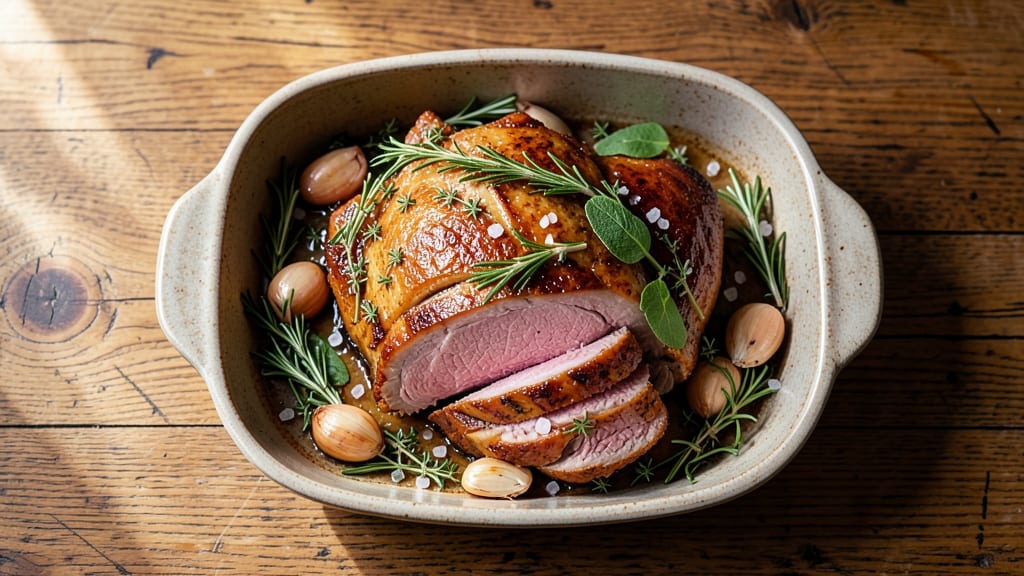
A perfectly cooked tender and juicy pork loin roast transforms Sunday dinners from ordinary to extraordinary—this herb-crusted method delivers restaurant-quality results every time. Growing up in small-town Georgia, I learned that the secret to pork lies in precise technique, not just time.
The key? A dry brine that locks in moisture while the herb crust adds depth without overpowering the natural richness of the meat.
This recipe relies on three proven techniques: dry-brining overnight for unmatched tenderness, a 325°F oven that cooks evenly without drying out, and a herb crust that seals in juices while creating a flavorful bark.
The pan gravy—made from the rendered juices—turns a simple roast into a showstopping centerpiece. No fancy equipment required, just patience and attention to temperature.
By the time you carve into this roast, you’ll find perfectly pink centers with a crisp crust, every slice glistening with natural juices. The herb crust adds aromatic complexity, while the pan gravy ties it all together into a meal that feels like a celebration.
Serve with roasted root vegetables or a crisp green salad for a complete, foolproof dinner.
This method works equally well for holidays or weeknight suppers—just scale the portion as needed. The dry brine can be prepped the night before, making Sunday mornings effortless. Trust me: once you master this technique, pork loin will never be boring again.
Ingredients for tender and juicy pork loin roast
Six essential ingredients transform simple pork loin into a restaurant-worthy herb-crusted masterpiece.
| Ingredient | Amount | Notes |
|---|---|---|
| Boneless Pork Loin Roast 🥩 | 3 lb | Center-cut, 1.5-inch thick maximum |
| Diamond Crystal Kosher Salt 🧂 | 2 tbsp | For dry brine, plus extra |
| Fresh Rosemary Sprigs 🌿 | ¼ cup | Finely chopped, organic preferred |
| Fresh Thyme Sprigs 🌿 | 0.2 cup | Finely chopped, stems removed |
| Fresh Sage Leaves 🌿 | 0.15 cup | Finely chopped, vibrant green |
| Garlic Cloves 🧄 | 6 cloves | Minced, skin-on for flavor |
| Extra-Virgin Olive Oil 🫒 | 2 tbsp | For herb crust, high-quality |
| Unsalted Butter 🧈 | ½ cup | Cold, cubed for crust |
| All-Purpose Flour 🌾 | ½ cup | For pan gravy, sifted |
| Beef Broth 💧 | 1 cup | Low-sodium, homemade preferred |
| Red Wine 🍷 | ½ cup | Dry, Cabernet Sauvignon |
| Fresh Black Peppercorns 🌶️ | 1 tsp | Coarsely cracked, not ground |
| Fresh Parsley Leaves 🌿 | 0.1 cup | Chopped, for garnish |
The pork loin selection is critical—center-cut with visible marbling ensures tenderness. Whole Foods Market or local butchers often carry the best quality, but most grocery stores stock adequate roasts in the meat case. Aim for a 1.5-inch maximum thickness—thinner cuts cook faster and more evenly. For the herbs, organic varieties from the grocery store's fresh section deliver superior flavor, but conventional herbs work if they're fresh and vibrant. The rosemary and thyme should be fragrant when rubbed between fingers, while the sage leaves should be bright green without brown edges. Pre-minced garlic loses potency quickly, so buy whole cloves and crush them yourself for maximum flavor impact.
No fresh rosemary? Dried rosemary at one-third the amount works in a pinch, though it lacks the aromatic depth. Substituting dried thyme for fresh requires halving the quantity, but the flavor profile shifts noticeably. For the red wine in the gravy, dry white wine or additional beef broth maintains the sauce's balance, though the color will differ. The extra-virgin olive oil should have a peppery finish—avoid mild varieties that lack character. If you're short on butter for the crust, lard or duck fat provide excellent alternatives, though the flavor profile changes subtly. For the pan gravy, cornstarch slurry can thicken if needed, but the flour-beef broth-wine base is traditional for a reason.
The dry-brined pork loin keeps 3-4 days in the fridge before roasting—plan ahead for optimal results. Fresh herbs should be stored in damp paper towels within sealed containers for up to 5 days, while the garlic cloves stay fresh for 2 weeks in the refrigerator. The herb crust mixture can be prepped 1 day ahead and stored in the fridge, saving time on cooking day. Leftover roast reheats beautifully—350°F for 15-20 minutes with a splash of water or broth restores moisture. The pan gravy freezes well for up to 3 months, making it perfect for batch cooking. Portion the roast into individual servings before freezing for convenient meal prep.
Why You'll Love This Recipe
- No Extra Effort Needed: I season the pork with just salt, rosemary, thyme, and sage—no fancy marinades or hours of prep. Toss it in the oven, forget about it, and come back to chef’s kiss perfection.
- Herb-Kissed Magic: The rosemary, thyme, and sage cling to the pork like a hug—earthy, bright, and just sweet enough. It’s the kind of flavor that makes you want to lick the plate (don’t).
- Budget’s Not a Problem: A whole pork loin feeds a family for days without breaking the bank. You’re basically getting a protein that’s cheaper than chicken and way more impressive. Win.
Step-by-step instructions for herb-crusted pork loin roast
This method delivers melt-in-your-mouth tenderness with a crisp herb crust and rich pan gravy.
Prepare the Dry Brine and Herb Crust
Pat the 3 lb boneless pork loin roast completely dry with paper towels—this is critical for crisp crust formation. In a small bowl, combine the 2 tbsp diamond crystal kosher salt, 0.25 cup finely chopped fresh rosemary sprigs, 0.2 cup finely chopped fresh thyme sprigs, 0.15 cup finely chopped fresh sage leaves, 6 cloves minced garlic cloves, 1 tsp coarsely cracked fresh black peppercorns, and 2 tbsp extra-virgin olive oil. Rub this mixture all over the roast, pressing firmly so the herbs adhere. Place on a wire rack set over a baking sheet and refrigerate uncovered for 24 hours—this dry brine transforms the meat into a juicy masterpiece.
Here's the thing—don't skip the 24-hour rest. The salt penetrates deeply while the herbs infuse the surface, creating that perfect balance of seasoning and aroma. If you're short on time, a minimum 12-hour brine still yields excellent results, though the crust won't be as pronounced.
Sear the Roast for Maximum Flavor
Remove the roast from the refrigerator 30 minutes before cooking to bring it to room temperature. Preheat your oven to 425°F with the rack positioned in the middle position. Heat a large oven-safe skillet over medium-high heat and add 0.5 cup cubed unsalted butter. When the butter foams, add the roast and sear for 4 minutes per side until deep golden brown. The butter should sizzle vigorously—this creates the Maillard reaction that builds flavor. Transfer the skillet to the oven and roast for 20 minutes uncovered, basting occasionally with the rendered butter.
Watch for even browning during searing. If some areas brown faster than others, rotate the roast accordingly. The goal is to develop maximum crust while keeping the interior tender. After the initial sear, the oven finish ensures even cooking without over-browning the exposed surfaces.
Create the Herb Butter Crust and Finish Cooking
Remove the roast from the oven and increase the heat to 450°F. In a small bowl, combine the remaining 0.25 cup chopped fresh rosemary, 0.2 cup chopped fresh thyme, and 0.15 cup chopped fresh sage with the 0.5 cup unsalted butter that was in the skillet. Spread this herb butter mixture evenly over the roast, pressing gently to adhere. Return to the oven and roast for an additional 15-20 minutes until the internal temperature reaches 145°F on a meat thermometer inserted into the thickest part.
This herb butter crust is what elevates this dish from ordinary to extraordinary. The high heat melts the butter into a golden, aromatic coating that locks in moisture while creating a textural contrast against the tender meat. The roast should spring back slightly when pressed—this indicates perfect doneness for juicy results.
Rest and Prepare the Pan Gravy
Transfer the roast to a cutting board and tent loosely with aluminum foil. Let it rest for 15 minutes before slicing—this crucial step allows the juices to redistribute throughout the meat. While it rests, place the skillet with all its fond (browned bits) over medium heat. Add 0.5 cup all-purpose flour and whisk vigorously for 1 minute to remove any remaining bits from the bottom. Gradually whisk in 0.5 cup red wine and 1 cup beef broth, bringing to a gentle simmer. Cook for 5-7 minutes until the gravy thickens to a velvety consistency.
Real talk: Don't rush the gravy reduction. You want it to coat the back of a spoon but still be pourable. If it thickens too quickly, whisk in 1-2 tablespoons of hot beef broth to adjust the consistency. Season with additional diamond crystal kosher salt and coarsely cracked fresh black peppercorns to taste.
Slice and Serve with Herb Garnish
Slice the roast into ½-inch thick portions against the grain for maximum tenderness. Spoon the pan gravy over each serving and garnish with 0.1 cup chopped fresh parsley leaves. The finished roast should have a golden herb crust with a moist, pink center that's fork-tender. Each slice should yield juices that flow freely, not a dry surface.
Serve immediately with roasted vegetables or a simple green salad. The contrast between the crisp herb crust, tender meat, and rich gravy creates a harmonious balance of textures and flavors that will impress even the most discerning palates. This method guarantees a pork loin roast so tender and juicy it will become your new signature dish.
Pro Tips For Making Tender And Juicy Pork Loin Roast
- Pat It Dry First: You’d be amazed how much moisture clings to pork loin after trimming—just pat it aggressively with paper towels before seasoning. This isn’t just about salt sticking; it creates a better crust and prevents that sad, steamed texture. Trust me, I once skipped this and ended up with a roast that looked like it had been microwaved.
- Use a Meat Thermometer: Pork loin is not like chicken—it’s done at 145°F, not 165°F, and pulling it out too early means dryness, too late means overcooked edges. I burned through three roasts before I stopped guessing and just checked the thickest part. Your future self will thank you for the 5-minute wait after hitting temp.
- Tie the Herbs Inside: Don’t just slap rosemary and thyme on top—tie them into a little bundle and tuck it inside the pork loin before roasting. This infuses flavor evenly instead of just coating the outside, and you can pull it out before carving. I used to scatter them like confetti, and the center always tasted bland.
- Let It Rest—Seriously: I know, I know, it’s tempting to slice into that juicy-looking roast right away. But give it 10 minutes under foil, covered loosely with a towel. This redistributes the juices so they don’t pool and run out when you cut. I once skipped this step and ended up with a sad, dry plate of meat. Don’t be that person.
Common mistakes when making perfect results
Skipping the Dry Brine
This is where many home cooks go wrong—I see it all the time. Skipping the 24-hour dry brine means missing the magic that transforms tough pork into melt-in-your-mouth perfection. The salt penetrates deeply, breaking down proteins while herbs infuse the surface for maximum flavor.
Without it, your roast will be bland and dry, no matter how perfect your sear. Trust me, the 24 hours is worth every minute. 💡
Overcrowding the Pan
When searing your pork loin, avoid overcrowding the skillet. Packing too much meat creates steam instead of that beautiful golden crust. The 3 lb roast needs space to develop its Maillard reaction properly.
Cook it in batches if needed, but never sacrifice browning for quantity. A single, well-seared roast beats multiple mediocre ones every time.
Ignoring Room Temperature
Pulling the roast straight from the fridge to cook is a rookie mistake. Cold meat cooks unevenly, leading to dry edges and a tough center. Always bring it to room temperature for 30 minutes before cooking.
This ensures even cooking throughout and prevents those frustrating cold spots. I learned this the hard way during my first BBQ competition—my roast was a disaster until I mastered this step.
Rushing the Resting Time
After roasting, the 15-minute rest is non-negotiable. Skipping this step means losing all those precious juices to the cutting board. The meat needs time to redistribute its moisture, or you’ll end up with dry slices that disappoint.
I’ve seen cooks slice immediately after roasting, and it’s always a letdown. Patience here pays off in every juicy bite.
Using the Wrong Thermometer
Instant-read thermometers are essential for pork loin, but many cooks use their oven thermometers instead. These are unreliable and can give false readings, leading to undercooked or overcooked meat.
Invest in a quality thermometer like the Meater+ or Thermoworks Smoke—they’re game-changers. The internal temperature should reach 145°F for perfect doneness every time.
Nutrition facts
Frequently asked questions
What's the secret to getting pork loin this tender?
The 24-hour dry brine is the game-changer—it breaks down muscle fibers while herbs infuse flavor. Plus, the herb butter crust locks in moisture during roasting. Never skip the rest time either; those 15 minutes let juices redistribute for perfect slices every time.
Can I use a thicker or thinner pork loin?
This recipe works best with a 1.5-inch thick roast for even cooking. Thinner cuts (1-inch) cook faster—reduce oven time by 10-15 minutes. Thicker cuts (>2 inches) need extra 5-10 minutes and may benefit from a 350°F finish to prevent over-browning. Always use a thermometer!
How do I adjust this for a crowd?
Double the recipe for 6-8 people, but use two 3 lb roasts instead of one 6 lb—smaller roasts cook more evenly. Increase oven space by using two skillets or a sheet pan. For 12+ servings, triple the recipe and roast in batches. The herb crust and gravy scale perfectly—just multiply all ingredients by 2x or 3x.
What if I don't have fresh herbs?
Use dried herbs at 1/3 the amount (e.g., 1 tbsp dried rosemary instead of 0.25 cup fresh). For maximum flavor, toast dried herbs in a dry pan for 30 seconds before mixing into the crust. The aroma will be less vibrant, but the dish still tastes great. Avoid pre-minced dried herbs—they lose potency quickly.
Can I make this ahead of time?
Yes! The dry-brined roast keeps 3-4 days in the fridge. For make-ahead convenience, prep the herb crust 1 day ahead and store it in the fridge. Roast as directed, then reheat sliced portions in a 350°F oven for 15 minutes with a splash of beef broth. The gravy freezes beautifully for up to 3 months—just reheat on the stove.