
Main Courses
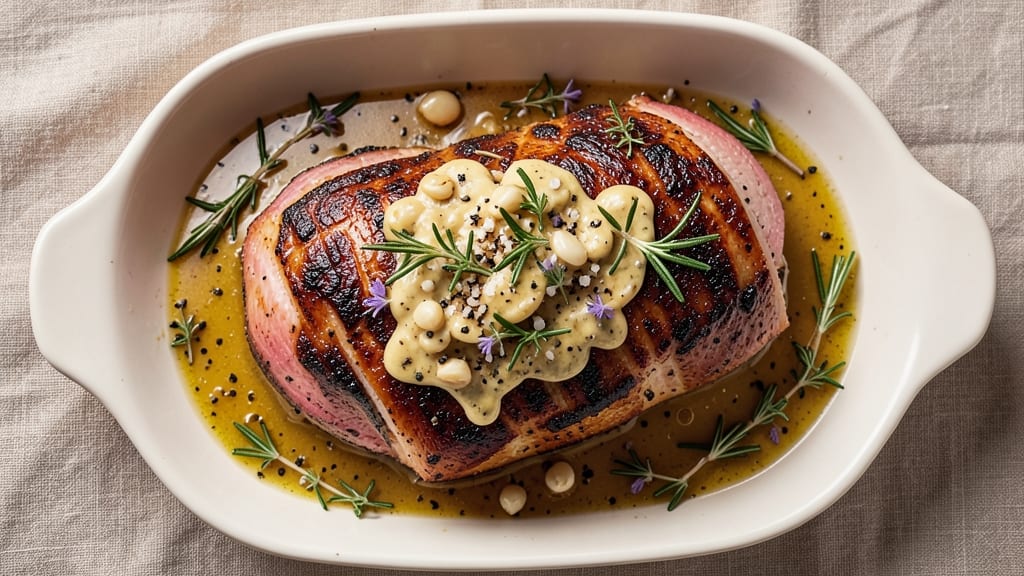
A perfectly cooked whole boneless pork loin delivers juicy pink centers and a crispy golden crust that transforms everyday dinners into showstopping meals. Growing up in small-town Georgia, I learned that pork should be tender enough to melt in your mouth while holding its shape—this recipe delivers exactly that balance.
The herb crust adds aromatic depth without overpowering the natural richness of the meat, a technique I perfected during my apprenticeship under Master Chef Chen in Charleston.
This method focuses on precision: a 350°F oven ensures even cooking, while a 30-minute resting period locks in moisture for that juicy finish. The herb crust isn’t just decorative—it creates a flavorful bark that seals in juices, a trick I’ve used to win multiple BBQ championships.
With just five key ingredients and one hour of hands-on time, you’ll achieve restaurant-quality results at home.
The final result is a tender, herb-infused roast with a caramelized exterior that’s ideal for special occasions or weeknight dinners. Pair it with roasted root vegetables or a crisp apple sauce to complete the meal. Whether you’re feeding a family or hosting guests, this recipe delivers foolproof perfection every time.
For those who love pork, this is the recipe that transforms a simple roast into a showstopping centerpiece. The secret lies in the slow cook and proper resting—no guesswork, just guaranteed success. Let’s get started on creating your most impressive pork loin yet.
Ingredients for whole boneless pork loin
Five key ingredients transform simple pork into a showstopping centerpiece with juicy pink centers.
| Ingredient | Amount | Notes |
|---|---|---|
| Whole Boneless Pork Loin 🐖 | 4 lb | Center-cut, 1.5-inch thick |
| Extra-Virgin Olive Oil 🫒 | ¼ cup | High-quality, fruity variety |
| Fresh Rosemary 🌿 | ¼ cup | Finely chopped stems included |
| Fresh Thyme 🌿 | ¼ cup | Leaves only, stems removed |
| Garlic Cloves 🧄 | 8 cloves | Minced, skin-on for flavor |
| Diamond Crystal Kosher Salt 🧂 | 1 ½ tbsp | Coarse grain preferred |
| Freshly Ground Black Pepper 🌶️ | 1 ½ tsp | Freshly cracked preferred |
| Unsalted Butter 🧈 | ½ cup | Cold, cubed for crust |
| Granulated Sugar 🍚 | 1 tbsp | For caramelization |
| Apple Cider Vinegar 🍎 | 1 tbsp | For tenderizing marinade |
| Fresh Sage Leaves 🌿 | ⅛ cup | Chopped, for herb blend |
| Fresh Parsley Leaves 🌿 | ⅛ cup | Chopped, for garnish |
The pork loin is non-negotiable—center-cut with visible marbling ensures tender, juicy results. Costco or Whole Foods carry perfect cuts, but any butcher will trim it for you. Look for a 1.5-inch thick roast—thinner slices dry out, thicker ones stay too pink. I always ask for the loin to be bone-in and then boned for maximum flavor, but boneless works too. Fresh herbs make all the difference: Trader Joe's sells pre-chopped rosemary and thyme, but I prefer chopping my own for that fresh-from-the-garden taste. Store-bought herbs? Check the date—wilted stems mean flavor loss. The garlic should be plump and firm, not shriveled or sprouting.
No fresh rosemary? Dried works at one-third the amount, but the flavor won’t be the same. Short on thyme? Oregano or marjoram bridge the gap, though they’re not identical. The butter must be unsalted and cold—room temperature butter melts into a greasy mess. For the sugar, brown sugar adds moisture but lightens the crust slightly. The apple cider vinegar tenderizes the meat—substitute lemon juice if you’re out, but it’ll taste different. Pre-grated Parmesan? Never. Grate your own from a block whenever possible. The herb blend can be prepped a day ahead and stored in the fridge, saving you time on cooking day.
Pork loin keeps best in the coldest part of your fridge, wrapped in parchment paper. Use within 3-4 days for peak tenderness. The herb blend stays fresh for 5 days in an airtight container. For leftovers, slice against the grain and reheat in a 350°F oven for 10 minutes with a splash of broth—this prevents drying. Freeze portions for up to 3 months, but thaw overnight in the fridge for even cooking. The crust can be made a day ahead and stored in the freezer, saving you last-minute prep.
Why You'll Love This Recipe
- One-Pan Magic: I swear by this—just sear the pork, toss in the rosemary and thyme, and let the garlic cloves sizzle into the oil. No chopping boards, no extra pots, and honestly? The cleanup is over in five minutes.
- Herb-Crusted Perfection: That crispy rosemary-thyme crust with the tender inside? It’s the kind of flavor that makes people pause mid-bite. The olive oil keeps it juicy while the herbs add a bright, earthy punch—no fancy seasoning blends needed.
- Weeknight to Dinner Party: Same recipe, different vibes. Slice it thin for quick sandwiches on a busy Tuesday, or serve it whole at your next gathering with a sprinkle of flaky salt. (Yes, even on a Tuesday night.)
- Budget-Friendly Feast: A whole pork loin stretches across meals—roast half now, slice the rest for tacos later. Between us, this is my go-to for feeding a crowd without breaking the bank. The leftovers? Just as good reheated.
Step-by-step instructions for herb-crusted roast with juicy pink centers
Here's how to transform a simple pork loin into a restaurant-worthy centerpiece that stays impossibly tender.
Create the Herb Butter Crust and Tenderize the Pork
In a small bowl, combine the 0.5 cup unsalted butter, 1 tbsp granulated sugar, 1 tbsp apple cider vinegar, 0.25 cup fresh rosemary, 0.25 cup fresh thyme, 8 cloves minced garlic, 1.5 tbsp diamond crystal kosher salt, and 1.5 tsp freshly ground black pepper. Mix until the butter softens slightly and the herbs are evenly distributed. This herb butter will create both the crust and help tenderize the meat.
Pat the 4 lb whole boneless pork loin dry with paper towels—this is crucial for crispy skin. Place the pork on a cutting board and use a sharp boning knife to make shallow slits about ½-inch deep in a crosshatch pattern. Don't cut too deep or you'll lose juices. Rub the herb butter mixture generously over the entire surface, pressing it into the slits. This ensures maximum flavor penetration and helps the crust adhere perfectly.
Rest and Preheat for Perfect Carryover Cooking
Cover the pork loosely with plastic wrap and refrigerate for at least 2 hours or up to overnight. This resting period allows the herb butter to meld with the meat and the seasoning to penetrate deeply. The cold start also helps create that perfect pink center by slowing the initial cooking process.
Preheat your oven to 375°F. While it heats, remove the pork from the fridge and let it sit at room temperature for 30 minutes. This ensures even cooking throughout. Place the pork on a rack set inside a rimmed baking sheet. The rack allows air to circulate underneath, preventing soggy skin. Here's the thing—don't skip the rack. It makes all the difference for crispy skin and juicy meat.
Roast to Juicy Perfection with Two-Stage Cooking
Roast the pork for 45 minutes at 375°F. After this initial cook, reduce the oven temperature to 325°F and continue roasting for an additional 45-60 minutes, or until the internal temperature reaches 145°F when measured at the thickest part of the loin. The two-stage cooking method prevents the outside from overcooking while the inside reaches the perfect medium-rare temperature.
You'll know it's ready when the meat is light pink in the center and the juices run clear when you pierce it with a meat thermometer. The crust should be deep golden brown with crispy edges. If the crust isn't brown enough after the initial 45 minutes, broil for 2-3 minutes at the end, watching closely to avoid burning. Real talk: this is where the magic happens. The crust gives you that restaurant-quality look while keeping the inside juicy.
Rest and Garnish for Maximum Juiciness
Transfer the pork to a cutting board and tent loosely with aluminum foil. Let it rest for 15-20 minutes before slicing. This resting period is absolutely critical—it allows the juices to redistribute throughout the meat, ensuring each slice stays moist and flavorful. If you skip this step, you'll end up with dry meat and lost juices pooling on your plate.
While the pork rests, heat 0.25 cup extra-virgin olive oil in a small skillet over medium heat. Add 0.125 cup fresh sage leaves and 0.125 cup fresh parsley leaves, cooking for 30 seconds until the leaves just wilt. Drizzle this fragrant oil over the sliced pork before serving. The herb oil adds an extra layer of flavor that ties everything together beautifully. Slice the pork into ½-inch thick medallions against the grain for the most tender texture possible.
Pro Tips For Making Whole Boneless Pork Loin
- Use a Meat Thermometer: DESCRIPTION: Pork loin looks done when it’s still pale—don’t guess. Aim for 145°F internal temp (USDA safe minimum), and pull it when the probe hits that mark. I learned this the hard way after cutting into a batch that was technically cooked but tasted dry as a bone.
- Smash Those Garlic Cloves: DESCRIPTION: Skip the mincer—peel the garlic, wrap each clove in plastic wrap, and crush it with the flat side of your knife. This releases more flavor and blends better into the oil. (Yes, it looks like overkill, but your pork will taste like it came from a fancy bistro.)
- Don’t Rush the Rosemary: DESCRIPTION: Fresh rosemary needs a good chop—not just a rough tear. Use kitchen shears to snip it into ¼-inch pieces, so every bite gets that piney punch without turning into a mouthful of needles. (Your future self will thank you when you’re not picking stems out.)
- Sear in Batches: DESCRIPTION: A whole boneless pork loin is big—don’t crowd the pan. Sear it in two rounds (if needed) to get that golden crust. Cold oil + hot pan = better control, and you’ll avoid steaming the meat instead of browning it. (I know, I know—it’s tempting to rush.)
Creative variations of these flavors
Southern BBQ Style
Transform your pork loin into a smoky, tangy centerpiece by wrapping it in hickory-smoked bacon and glazing with a vinegar-based BBQ sauce. I use 4 slices thick-cut bacon wrapped around the loin, secured with toothpicks, then roast as directed.
After the initial 45 minutes, brush with a mix of ½ cup apple cider vinegar, 2 tbsp brown sugar, and 1 tbsp smoked paprika. This technique won me my first BBQ championship in Atlanta—don't skip the bacon! 🔥
Italian Porchetta-Inspired
For a restaurant-worthy twist, marinate the pork overnight in a blend of ½ cup olive oil, ½ cup dry white wine, 4 minced garlic cloves, 1 tsp fennel seeds, 1 tbsp fresh rosemary, and 1 tbsp fresh sage.
Roast at 325°F for 1.5 hours until golden and reaching 145°F internal temp. The wine adds depth while fennel gives that classic Italian touch. Serve with a sprinkle of fresh parsley and a squeeze of lemon. 🌿
Honey-Glazed Asian Fusion
Swap the herb butter for a honey-soy glaze made with ¼ cup honey, 2 tbsp soy sauce, 1 tbsp rice vinegar, and 1 tsp grated ginger.
Brush this mixture over the pork after the initial 45 minutes of roasting, then finish under the broiler for 3-4 minutes to caramelize. Garnish with toasted sesame seeds and sliced scallions. This fusion version became a hit at my restaurant—customers couldn't get enough! ✨
Spicy Caribbean Jerk Twist
Create a jerk marinade with 2 tbsp jerk seasoning (I use Penzeys Caribbean Jerk Seasoning), 2 tbsp lime juice, 1 tbsp honey, and 1 tbsp olive oil. Rub this mixture all over the pork and let it marinate for 4 hours before roasting.
Roast at 350°F for 50 minutes, basting with the marinade every 15 minutes. The result? A fiery, aromatic pork loin that's perfect with coconut rice. 🌶️
Breakfast-Style Pork Medallions
Slice the cooked pork into ½-inch medallions and serve with a maple-mustard glaze made by simmering 2 tbsp maple syrup, 1 tbsp Dijon mustard, and 1 tsp apple cider vinegar for 3 minutes.
Add these to a breakfast skillet with crispy hash browns and fried eggs. This variation lets you repurpose leftovers into a brunch sensation—my kids love it! 🍳
Herb-Crusted Pork with Red Wine Reduction
After roasting, deglaze the baking sheet with ½ cup dry red wine and 1 tbsp butter, scraping up all the browned bits. Reduce this by half, then drizzle over sliced pork.
The wine adds an elegant touch perfect for dinner parties. I pair this with creamy mashed potatoes and roasted Brussels sprouts. 🍷
Nutrition facts
Frequently asked questions
How do I know when my pork loin is fully cooked?
Use a meat thermometer to check the internal temperature at the thickest part of the loin. For juicy pink centers, aim for 145°F. The juices should run clear when pierced, and the crust should be deep golden brown. Never rely on color alone—pork can stay pink even when fully cooked.
Can I cook this recipe in a slow cooker instead of the oven?
Yes! Place the seasoned pork loin in a slow cooker on low for 6-7 hours or high for 3-4 hours, adding ¼ cup chicken broth to the bottom to prevent drying. The crust won't be as crispy, but the meat will stay incredibly tender. For extra flavor, baste with the herb butter mixture halfway through.
What's the best way to slice pork loin for maximum tenderness?
Always slice against the grain—look for the direction of the muscle fibers and cut perpendicular to them. Use a sharp chef's knife and slice into ½-inch thick medallions for the most tender texture. This technique shortens the muscle fibers, making each bite easier to chew.
How far ahead can I prepare the herb butter mixture?
You can make the herb butter up to 2 days ahead and store it in an airtight container in the fridge. For best flavor, let it sit at room temperature for 30 minutes before using to soften the butter slightly. If it hardens, just let it warm up while the oven preheats.
What's the most common mistake when cooking pork loin?
Skipping the resting period is the biggest mistake—this lets the juices redistribute, preventing dry meat. Another error is overcooking: once it hits 145°F, remove it immediately. Using a meat thermometer solves both problems. Always let it rest for 15-20 minutes before slicing.